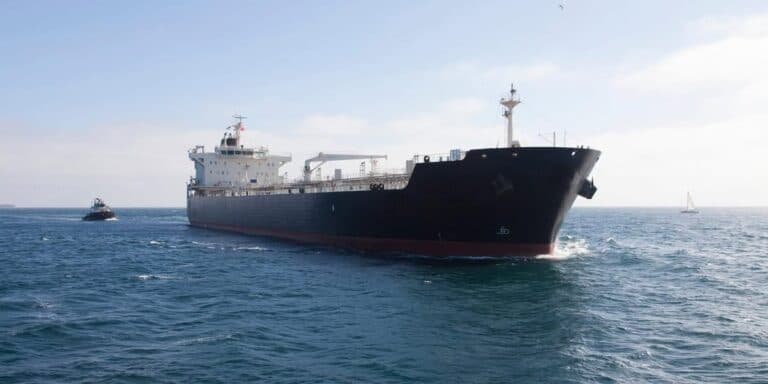
A London courtroom drama that briefly froze 600,000 barrels of South Sudan’s Dar Blend crude last November did far more than expose a broken financing deal.
It ripped open a hidden world of opaque intermediaries, shell-layered trading structures and politically connected middlemen who, investigators now believe, have quietly captured the lifeblood of one of Africa’s most fragile and oil-dependent economies.
When British commodity trader BB Energy obtained an emergency injunction from the High Court of England and Wales on November 18, 2025, the order specifically named Dubai-based EuroAmerican Energy and Singapore-registered Cathay Petroleum International Pte Ltd as the firms seeking to receive the disputed cargo.
Neither had made any prepayment to Juba for the oil they intended to take, a barrister for BB Energy told Justice Christopher Butcher.
Court documents showed the cargo was awarded by South Sudan to EuroAmerican, and that Meridian Energy Pte Ltd paid $30 million for it with the intention to resell to Cathay Petroleum International.
A four-company chain had formed around a single shipment of crude oil belonging to one of the world’s poorest nations — and the government that owned that oil had no public explanation for why.
Sudan’s Ministry of Energy and Oil, which processes and transports South Sudan’s crude through its territories before export at Port Sudan’s Bashayer terminal, has been explicit about the limits of what it knows.
A ministry source told the Sudanese outlet Al-Mohagig that Khartoum issues shipping bills to both the government of South Sudan and to companies, but has no knowledge of who is actually purchasing the crude, because the sale “takes place directly between those companies and the government of South Sudan.” That admission, intended to deflect responsibility, instead crystallises precisely what investigators and creditors have been screaming about for months: nobody appears to know, or is willing to say, who is actually buying South Sudan’s oil.
The answer, pieced together from court filings, leaked shipping records and investigative reports obtained by Africa Intelligence, is deeply troubling.
A trading network built on bribery’s ruins
The investigation traces how a high-risk oil trading continuum linking Arcadia Petroleum, Glencore and Cathay Petroleum converged with EuroAmerican Energy to quietly take control of South Sudan’s oil export system.
The lineage of the players matters enormously. Arcadia Petroleum collapsed in 2018 amid allegations of massive fraud involving $349 million.
Glencore, which had traded South Sudanese crude through the local firm Trinity Energy under an Afreximbank facility, later made a far more damning public admission: the UK Serious Fraud Office found that over $25 million in bribes were paid across multiple African states, including South Sudan, between 2011 and 2016 for preferential access to oil.
Personnel from those networks did not disappear. According to investigators with access to internal shipping allocation records, several core traders from Arcadia migrated to Glencore, and from Glencore migrated again into Cathay Petroleum, a firm founded in March 2003 by a Chinese national operating between Hong Kong and Singapore, which had for years traded crude linked to Libya, Yemen and North Sudan before its abrupt expansion into South Sudan’s market in 2025.
While Cathay provides the trading platform, the physical and commercial seizure of cargoes is executed by EuroAmerican Energy under the direction of Idris Taha, a Sudanese trader holding British nationality and frequently traveling on a German passport.
Taha’s network allegedly captured more than 80 percent of South Sudan’s crude oil exports at the height of its dominance.
That a single offshore trader, operating through layered intermediaries and with no disclosed prepayment obligation to Juba, could come to control the overwhelming majority of a sovereign nation’s primary revenue stream is a finding of staggering consequence.
Oil service firms linked to former Vice President Benjamin Bol Mel, to Dutch national Cornelis Nicolaas Abraham Loos and to Idris Taha are alleged to have charged up to three times standard international rates for oilfield services, figures fully reimbursed under cost-oil rules, transferring the financial burden directly onto public revenue.
Loos, described by sources as a close associate of Bol Mel, allegedly managed financial flows through Dubai and handled UAE real estate assets on behalf of senior officials.
The cargo chain that nobody will explain
The architecture of the trading structure revealed in court proceedings and shipping records is deliberately designed to obscure beneficial ownership and dilute accountability. Rather than flowing directly from a producing consortium to a refiner or end-user, South Sudanese crude now passes through first-level intermediaries before being resold to a second tier, which then delivers to a final buyer. At each layer, revenue is diluted, traceability is weakened and beneficial ownership becomes harder to identify. Large portions of proceeds now disappear outside the formal banking system altogether.
The consequences for Juba’s treasury have been catastrophic. South Sudan’s Ministry of Finance has been cut off from export data and no longer receives official reports on output, prices or destinations of crude sales.
The Central Bank, deprived of incoming foreign currency, reports severe shortages, triggering the collapse of the South Sudanese pound. The Ministry of Petroleum has not published an annual report since May 2021, leaving a complete blackout in public financial transparency.
Into this institutional void stepped Benjamin Bol Mel and the network around him.
As Vice President, and previously as a politically connected businessman with companies awarded contracts under the “Oil for Roads” programme, Bol Mel allegedly presided over the systematic redirection of oil revenues away from the Treasury.
UN investigators found that the “Oil for Roads” infrastructure programme, budgeted at $2.2 billion since 2020, delivered less than five percent of promised works.
The money instead flowed into political patronage networks. President Salva Kiir dismissed Bol Mel on November 12, 2025, stripping him of his general’s rank, demoting him to private and placing him under house arrest in Juba.
Where did $25 billion go?
The scale of what has been lost is almost incomprehensible for a country where, according to international aid agencies, 7.7 million people face hunger.
The UN Commission on Human Rights in South Sudan concluded that the government’s oil inflows have exceeded $25.2 billion since independence in 2011, including revenues and oil-backed loans, yet systemic corruption and diversion of revenues mean hardly any money reaches essential services.
Most civil servants are underpaid or unpaid.
International donors now spend more on South Sudan’s basic services than the government itself, and the country ranks last out of 180 nations in Transparency International’s Corruption Perceptions Index.
The UN report, titled “Plundering a Nation,” was not an abstract finding. It named schemes, named figures, and named the precise mechanisms through which a nation’s wealth was extracted. Yet those mechanisms continued to function until an injunction in a London court briefly made them visible to the outside world.
South Sudan currently owes commodity traders and financiers an estimated $2.3 billion, much of it tied to oil-backed loans that creditors are increasingly pursuing in foreign jurisdictions.
Qatar National Bank secured a $1 billion award against South Sudan after years of unpaid loans, with the government failing to even defend itself in arbitration. Afreximbank obtained a judgment worth $657 million in a London court in 2024 after South Sudan defaulted on pandemic-era credit facilities.
The question of who knew, and when
The former administration’s defenders argue that the pipeline rupture of February 2024, which halted exports for months and sent the government scrambling for emergency financing, explains much of the chaos. BB Energy itself acknowledged the disruption as an “exceptional circumstance” that caused delays under the prepayment agreement it signed with Juba in February 2025. But investigators close to the new administration reject the explanation as convenient cover.
The redirection of cargoes to EuroAmerican Energy and Cathay Petroleum was not a response to an emergency. It was, according to officials who have reviewed internal records now in the hands of probers, a structural feature of how the petroleum ministry operated under the previous leadership.
Former petroleum undersecretary Deng Lual Wol, dismissed alongside Bol Mel, is identified in investigative reporting as the day-to-day architect of the ministry’s commercial relationships with these opaque trading networks.
Former Nilepet chief executive Ayuel Ngor Kacgor, also removed in November, is said to still hold board positions at operating companies registered in Mauritius and to receive remuneration linked to legacy arrangements. Investigators say key contracts were destroyed or removed by former officials before the new leadership could access them. The current team operates, in the words of one official, “blind.”
Khartoum’s position and the Heglig complication
Sudan’s statement that it has no knowledge of who buys the crude it transports is, from a narrow technical standpoint, accurate. Juba sells the oil; Port Sudan ships it. But the admission also illustrates the near-total absence of any transit-country oversight over who ultimately receives the cargo and on what financial terms.
The Heglig processing hub, which handles South Sudan’s Unity State crude and which was briefly threatened by Sudan’s Rapid Support Forces at the end of 2024, remains a critical chokepoint.
Its vulnerability adds yet another layer of operational leverage that external actors, including Chinese state firms CNPC and Sinopec, have been accused of exploiting to extract commercial concessions.
China’s dominance in South Sudan’s oilfield services sector, from drilling to logistics, has given it outsized leverage over production decisions. Policymakers have warned that this influence has become a structural threat to South Sudan’s economic sovereignty, allowing external actors to dictate the pace at which national revenues are realised.
A new administration, a test of resolve
The appointment in November 2025 of Dr Bak Barnaba Chol as Finance Minister, Emmanuel Athiei Ayual as Nilepet managing director and Dr Chol Thon Abel as petroleum undersecretary has been accompanied by the launch of formal investigative proceedings into the Petronas acquisition failure and the EuroAmerican network.
Idris Taha himself travelled to Juba in December, his first known personal visit to the capital in years, in a bid to rebuild political access. He found locked doors. The new leadership has signalled that it will not engage with him.
Whether that resolve holds is the question that now shadows every cargo that loads at Bashayer terminal. Taha and the traders he works with have spent decades perfecting their craft in sanctioned and conflict-affected markets. They know how to wait out political transitions.
They know how to identify new officials who might be susceptible to inducements. They know that even when caught, as Glencore was when it admitted to bribery, the consequences are often manageable and the networks can survive to operate under new names.
BB Energy has now lifted its first cargo under the reconstituted prepayment arrangement, with CEO Mohamed Bassatne calling it “an important first step.” The legal case against Juba remains technically alive, suspended pending finalisation of a comprehensive agreement. The company has $61.5 million outstanding at minimum and continues to operate under a framework where the full terms of delivery are still being negotiated.
For South Sudan, the arithmetic is bleak. Oil generates more than 90 percent of government revenue. The buyers of that oil have, for years, been operating behind a veil that even Sudan’s own pipeline ministry admits it cannot penetrate.
The traders who moved into that vacuum came from networks that paid bribes, collapsed under fraud allegations and then reconstituted themselves under new names.
The officials who gave them preferential access are now under house arrest or under investigation.
What remains is a nation whose most vital resource continues to flow outward every few weeks in 600,000-barrel cargoes, to buyers whose ultimate identities and the precise financial arrangements that govern their purchases remain, deliberately and systematically, unknown.
That, more than any single legal filing, is the scandal at the heart of South Sudan’s oil industry.

Comments