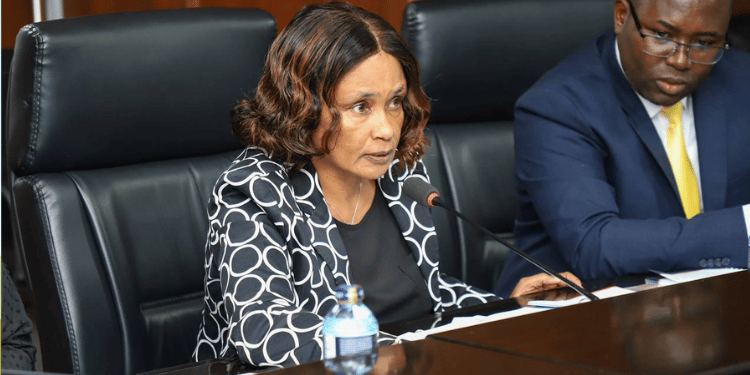
The Teachers Service Commission has introduced stringent new academic requirements for senior leadership positions in secondary schools, marking a significant shift in the qualifications needed to helm Kenya’s post-primary institutions.
Under the revised guidelines presented to the Senate Education Committee on September 12, principals of secondary schools must now hold a master’s degree in a relevant field, while their deputy counterparts are similarly bound by this elevated academic threshold.
The new framework represents a departure from previous requirements where a master’s degree, though advantageous, was not mandatory for these positions.
The commission’s document outlines comprehensive criteria for appointment, stipulating that prospective principals must possess a bachelor’s degree in education or equivalent qualification, demonstrate classroom competence, and have served as deputy head or in an equivalent position for at least three years.
Additionally, candidates must complete relevant Teacher Professional Development modules and meet Chapter Six constitutional requirements regarding integrity and leadership.
For deputy principals, the requirements mirror those of their senior counterparts, though they must have served as senior masters for a minimum of three years before consideration.
The policy extends beyond secondary schools, with primary school head teachers now required to hold bachelor’s degrees in education, while maintaining their Primary Teacher Education certificates.
The commission has also reinforced geographical deployment restrictions, ensuring that institutional heads do not serve in their home counties despite President William Ruto’s earlier directive to abolish the delocalisation policy.
School administrators are further limited to nine continuous years at any single station, with tertiary institution deans and registrars restricted to six-year tenures.
However, the new requirements have sparked considerable opposition from teacher unions. The Kenya Union of Post-Primary Education Teachers and the Kenya National Union of Teachers have condemned the changes as abrupt and discriminatory, arguing that they unfairly disadvantage experienced educators who lack master’s degrees.
Moses Nthurima, Kuppet’s deputy secretary-general, criticised the timing of the directive, noting that the recent Collective Bargaining Agreement deliberately excluded master’s degrees as promotion requirements.
He argued that the commission should have first supported teachers in pursuing advanced qualifications rather than imposing sudden mandates.
The unions have also challenged the continued enforcement of delocalisation policies, particularly when combined with promotions that separate teachers from their families or remove them from hardship areas where they receive additional allowances.
These changes reflect the commission’s broader alignment with the Competency Based Education framework, emphasizing enhanced academic credentials and professional development in educational leadership.
However, the implementation faces significant resistance from educators who view the requirements as punitive rather than progressive, setting the stage for potential industrial relations challenges as the policy takes effect.








Comments