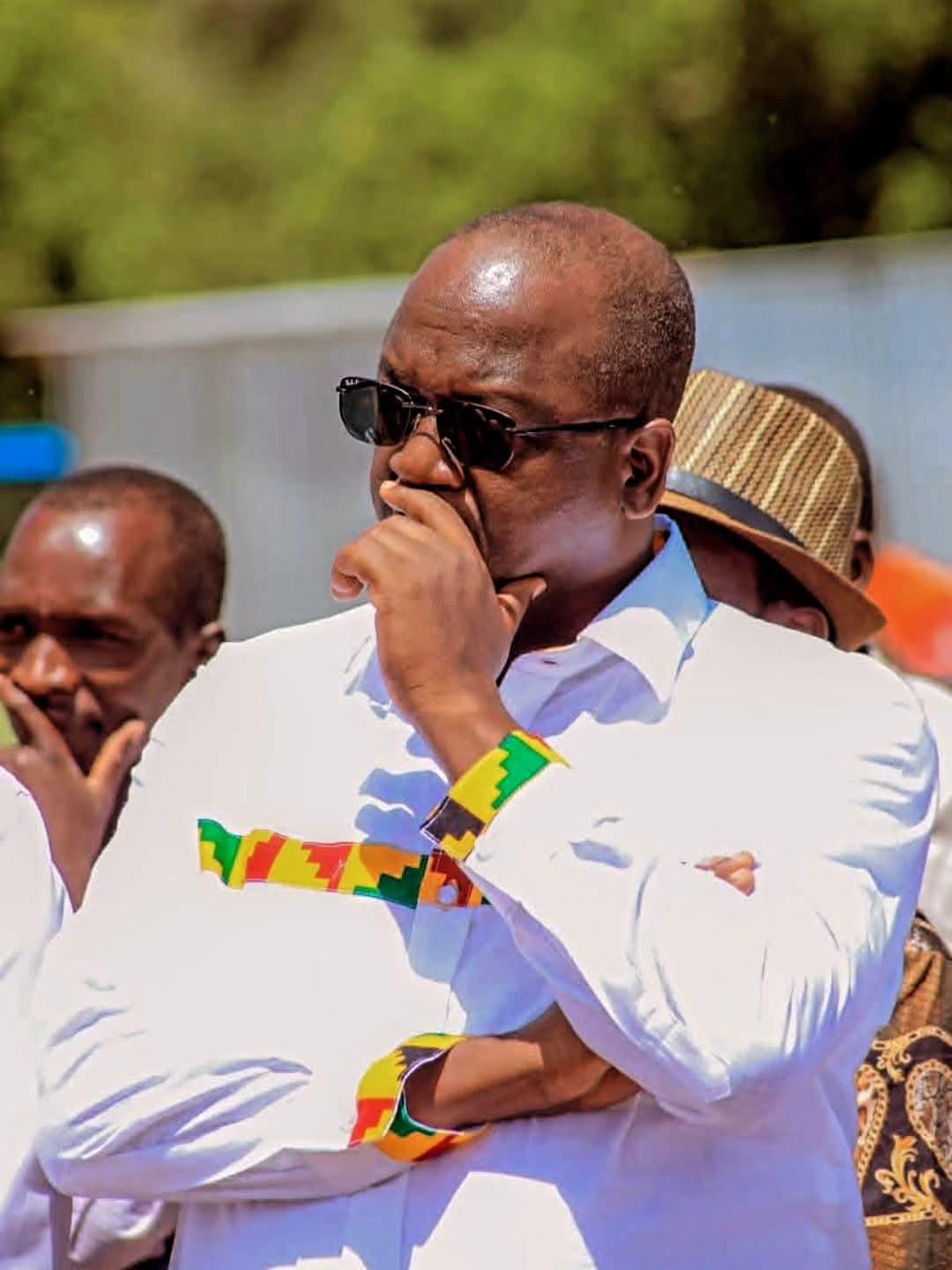
A freshly dug grave in the red soil of Kositei, Tiaty, received the body of 13-year-old Bill Lorupe Ballot Kassait on Monday, March 23, 2026. But it was not grief alone that hung over those hills in Baringo County. It was fury. And that fury, directed squarely at Gertrude’s Children’s Hospital in Muthaiga, came from the boy’s father — outspoken Tiaty Member of Parliament William Kamket — in a graveside declaration that has since exploded into national controversy.
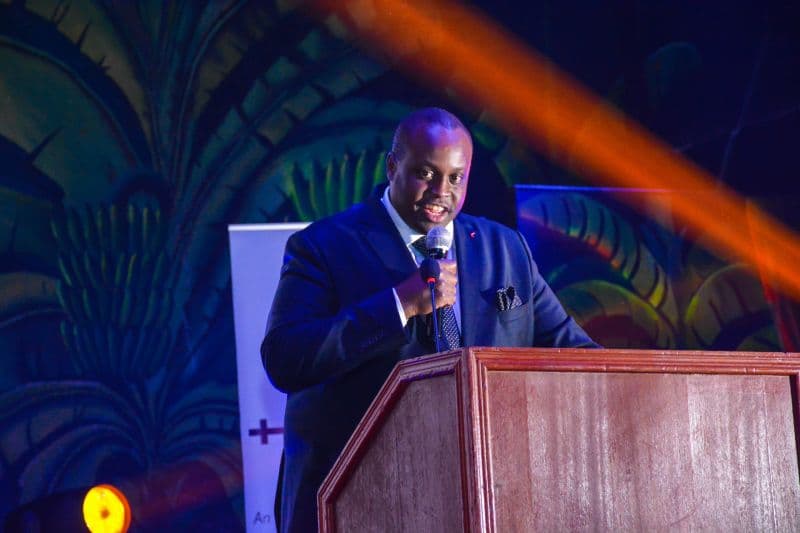
Standing before a crowd of mourners, MPs and church choirs dressed in white at the requiem mass, a visibly shaken Kamket said what many grieving Kenyan parents have felt but rarely had the platform or the political capital to say aloud.
He accused the hospital of administering medication to his son before conducting proper diagnostic tests, of failing to carry out a critical chest X-ray in a timely manner, and of allowing a window of clinical inaction during which the boy’s condition likely became irreversible. “Doctors are being careless; it has become a business, not treatment,” the legislator declared. “I will talk with regulators. I will talk with the government.”
His son, known affectionately as Ballot, died at approximately 8 a.m. on Tuesday, March 17, 2026, reportedly from pneumonia complications — a diagnosis that Kamket says should have been identified far sooner. Bill had a documented history of asthma, a condition that renders pneumonia particularly lethal, and had reportedly developed breathing difficulties over the previous weekend before being admitted to Gertrude’s flagship Muthaiga facility.

The MP’s wife, Kenya’s inaugural Data Protection Commissioner Immaculate Kassait, spoke at a separate memorial held at the Shrine of Mary Help of Christians at Don Bosco Catholic Church in Upper Hill. Her account added devastating emotional context to her husband’s clinical accusations.
As the boy was being wheeled into the intensive care unit, his last words to his mother were: “Mum, I love you.” The day before he died, she said, he had asked her: “Mum, will I make it? Mum, am I dying?” She found herself unable to answer. Within hours, she no longer had to.
“That Is My Question As Parents Here In Gertrude’s Hospital”
In his roughly three-minute graveside speech, Kamket posed a pointed question that has since circulated widely on social media: “Why did it take so long for an X-ray to be conducted?” He claimed that while a chest X-ray was purportedly completed at 9 a.m., the results were not acted upon promptly, a delay he believes cost his son his life.
Kamket further alleged that doctors began administering treatment before basic tests had been run — a practice that, he argued, amounted to diagnostic recklessness in a child presenting with respiratory distress and a pre-existing asthma history. “Be very careful,” he told the mourners, many of them Nairobi parents who had made the journey to Tiaty for the burial. “There are a lot of parents here in Nairobi and I am talking from the worst experience.”
He pledged to escalate the matter to Parliament and to engage health regulators, vowing to speak on behalf of those who “cannot and are suffering in silence.” The implicit acknowledgement was sharp: only his public stature ensured his complaint would receive a hearing that thousands of Kenyan families never get.

National Assembly Speaker Moses Wetang’ula, who was present at the burial and conveyed condolences from President William Ruto, pledged to dedicate one sitting hour when Parliament resumed to eulogise the boy. As of press time, Gertrude’s Children’s Hospital had issued no public response to the specific allegations raised by Kamket. An earlier report noted the facility denied claims that it had detained the boy’s body over unpaid bills before repatriation.
Bill Ballot Kassait was born in August 2011, during the period his mother was serving at the Independent Electoral and Boundaries Commission overseeing voter registration — hence his middle name, a tribute to democracy. His siblings described him as the youngest of them all but with the biggest presence. Teachers at the Aga Khan Academy, where he studied, remembered a dedicated student with a passion for the Japanese language and a faith-rooted confidence that drew peers and teachers alike to him. He was 13 years old.
A Hospital With a History: Past Negligence Accusations At Gertrude’s
Kamket’s accusations do not fall into a vacuum. Gertrude’s Children’s Hospital, established in 1947 and widely marketed as the most established paediatric facility in Eastern and Central Africa — the first in Sub-Saharan Africa to earn accreditation from the United States-based Joint Commission International — has in fact accumulated a significant legal and disciplinary record that the hospital’s polished branding has consistently obscured.
The most striking precedent dates to 2008, when a 10-year-old named Master Leroy Rapenda Odundo was first taken to the Othaya Road clinic of Gertrude’s Children’s Hospital following a trip to Siaya County, where malaria is endemic. Leroy was subsequently admitted to the hospital’s Muthaiga flagship. His condition worsened during his stay; he was eventually transferred to Aga Khan Hospital on September 6, 2008, where he died. What followed was a protracted disciplinary saga that dragged the hospital by name before the Medical Practitioners and Dentists Board Tribunal.
The tribunal found Gertrude’s Children’s Hospital guilty and ordered the institution to put in place proper systems, including the employment of an adequate number of specialist paediatricians available on a 24-hour call-cover basis. A senior doctor at the hospital was found to have put in place “inappropriate systems of work” that contributed to the child’s death. Among the disturbing facts that emerged at the proceedings was evidence that quinine, a key malaria treatment drug, was not available at Gertrude’s during the earlier period of Leroy’s treatment.
The tribunal’s indictment of the hospital, however, was later overturned on appeal by the High Court, which found that the proceedings against Gertrude’s as an institution were procedurally defective because the hospital had not been formally charged nor given the opportunity to appear and defend itself. Critically, the High Court’s intervention was on grounds of procedural fairness, not a finding that no negligence occurred. The civil suit filed by Leroy’s father, James Odundo, against both the doctor and Gertrude’s, proceeded separately and turned on the same factual claims.
In a further negligence-adjacent matter, the Kenya Law database reflects an appeal filed in 2019 — Amadiva v Gertrude’s Children’s Hospital and Two Others (Civil Appeal 177 of 2019) — in which a complainant sought to pursue claims against the hospital. The appeal was dismissed for want of prosecution by 2025, not on its merits, after the applicant failed to advance it despite the passage of six years, a pattern that lawyers who represent patients in negligence claims say is distressingly common. Families run out of money, will, or legal support long before institutions with deep pockets and experienced legal teams exhaust their options.
Online reviews and consumer feedback platforms also paint a picture inconsistent with Gertrude’s international accreditation.
Multiple parents have described alarming encounters with clinical errors at its satellite facilities. One account described a six-month-old baby being prescribed five medicines after a visit, three of which contained allergens that the parent had flagged on every prior hospital visit. When the infant broke out in a severe rash and the parent returned for a review, a different doctor at the facility proposed a hydrocortisone injection at double the medically recommended dose for the child’s age. At the hospital’s Nairobi West branch, reviewers have cited waits of over an hour for emergency consultations involving children with actively bleeding injuries. Such accounts are anecdotal, but they accumulate.
The Broader Collapse: Kenya’s Medical Negligence Crisis
What the Kamket case has ignited is a deeper and more disturbing national conversation about whether Kenya’s private healthcare sector has made accountability structurally impossible for ordinary families. As a legislator married to the country’s Data Commissioner, William Kamket possesses social and political capital that most Kenyan parents never will. His graveside speech reached millions within hours. For the grieving mother in Kisumu whose child died after a misdiagnosed respiratory infection, or the father in Mombasa fighting a hospital over a botched surgical procedure, the path to justice is profoundly different.
Kenya’s courts have in recent years seen a sharp increase in medical negligence litigation, with landmark awards signalling a judiciary increasingly willing to hold health institutions to account.
In June 2025, the High Court awarded Naila Qureshi Ksh157 million in a negligence case against Aga Khan University Hospital, in a ruling that established critical new standards for informed consent and institutional accountability in Kenya. In December 2025, the High Court ordered Ladnan Hospital to pay Sh3 million to a woman whose ovaries were removed without her consent during a separate procedure, in a ruling that legal advocates described as a watershed for patient rights.
The court found that performing surgery beyond the scope of a patient’s consent violates foundational principles of Kenyan medical ethics and constitutional rights to dignity.
The Kenya Medical Practitioners and Dentists Board has, since 1997, received at least 985 recorded complaints of medical negligence — a figure analysts believe represents a fraction of actual incidents, as the majority of families never file a formal complaint, lack knowledge of their rights, or cannot afford the years-long legal battle that follows.
In February 2025, a High Court judge called on the Attorney-General, the Kenya Law Reform Commission, and the Health Principal Secretary to urgently review the Medical Practitioners and Dentists Act after finding it structurally incapable of disciplining hospitals as institutions. The judge noted that many patients had died in the custody and care of hospitals that could not be formally disciplined under existing law, because the Act’s provisions applied primarily to individual practitioners rather than institutional actors.
That legislative gap is precisely the architecture that has shielded institutions like Gertrude’s from sustained accountability in the past. The Quality Healthcare and Patient Safety Bill 2025, currently before Parliament, proposes fines of up to Ksh50 million and jail terms of up to 10 years for gross negligence, but it remains the subject of fierce opposition from medical professional unions who argue it concentrates regulatory power in ways that threaten both clinical independence and patient safety.
What Kamket’s Fight Could Mean
The MP’s threat to take this to Parliament is not idle bluster. He serves as vice-chair of the National Assembly’s Justice and Legal Affairs Committee, placing him strategically within striking distance of the legislative levers that govern health regulation. His political proximity to the Ruto administration, having aligned himself with Kenya Kwanza after years on the Azimio side, also gives him access to executive ear that opposition figures routinely lack.
Should Kamket follow through on his pledges and trigger a parliamentary inquiry into clinical standards at Gertrude’s, it would be the most significant political scrutiny the institution has faced in its 78-year history. The hospital’s JCI accreditation and its status as a not-for-profit institution have long insulated it from the kind of reputational damage that profit-driven hospitals face. An MP-driven investigation, especially one backed by the emotional gravity of a child’s death, could crack that insulation in ways no previous legal case has managed.
For the moment, the story remains unresolved at almost every level. No independent medical review of Bill Ballot Kassait’s treatment has been publicly announced. The Kenya Medical Practitioners and Dentists Board has not confirmed whether a complaint has been lodged. Gertrude’s Children’s Hospital has said nothing. And in Kositei, the family is still burying a child who, by his siblings’ account, was the youngest of them but carried the biggest presence. His older brother, assigned as his guardian after finishing high school, had been tasked with driving Bill to school and to hospital. He found himself doing the latter for the last time on the morning of March 17, 2026.
As the political and regulatory battle begins to take shape, one question posed at the graveside by a grieving father remains unanswered: why did it take so long?






Comments