
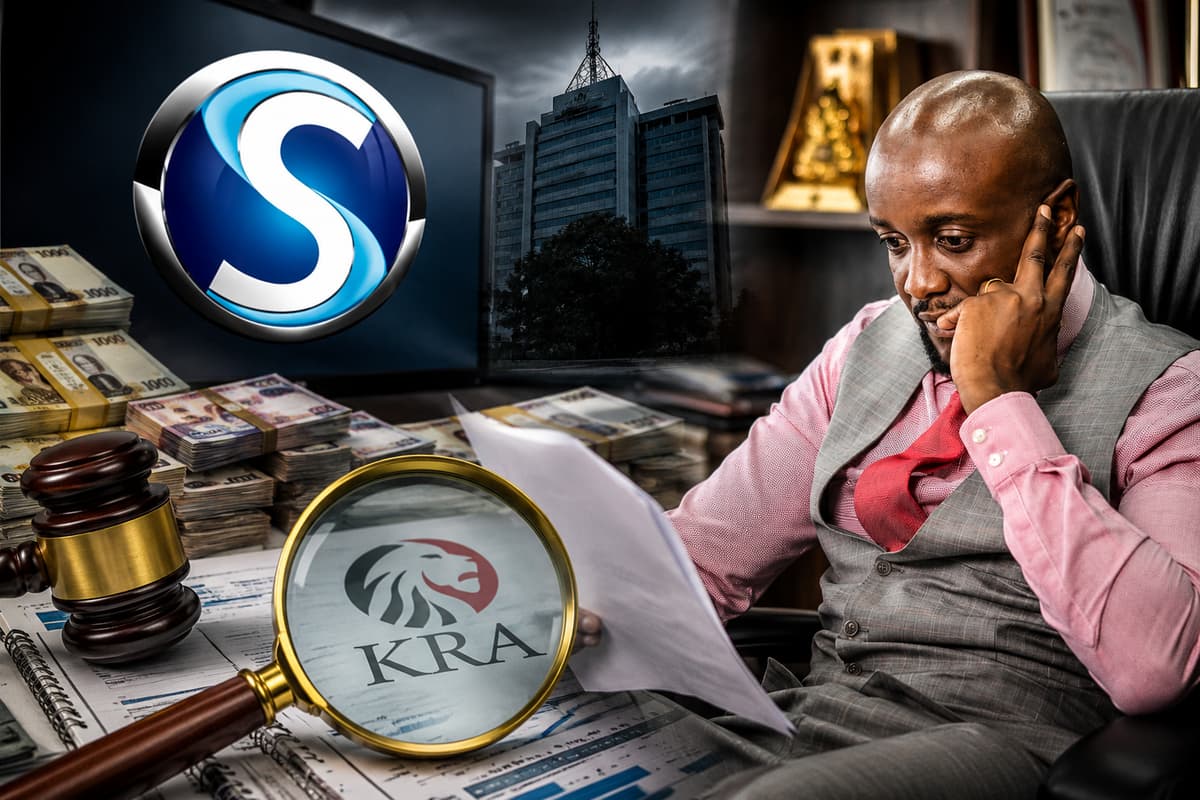
Former Kenya Rural Roads Authority Director General Philemon Kandie did not just walk away quietly when he resigned in July.
Behind the scenes, the now-arrested roads boss was executing a calculated plan to ensure his handpicked cronies secured top management positions at the agency, creating a protective shield around years of alleged corruption and theft of public funds.
Fresh revelations emerging from sources within the roads parastatal and the Ethics and Anti-Corruption Commission paint a damning picture of a man desperate to cover his tracks.
Even as EACC officers were building their case and preparing the dramatic midnight raid that saw him hauled to Integrity Centre on October 3, 2025, Kandie was busy lobbying furiously to have his associates appointed to key positions that would give them control over crucial departments where evidence of his alleged crimes lay buried.
The plot centered on 18 senior management positions that KeRRA advertised in recent months.
Intelligence reports indicate that Kandie wanted his preferred candidates to land the most sensitive roles, including Director General, Director Internal Audit, Deputy Director Roads, Deputy Director Enterprise Risk Management, Deputy Director Planning, Deputy Director Legal Affairs, Deputy Director Survey, Deputy Director Supply Chain Management, Deputy Director Research and Innovation, and Deputy Director Administration.
The crown jewel of this scheme was the Director General position itself.
Sources familiar with the lobbying efforts say Kandie threw his weight behind Enock Kombo, who had served under him as an assistant director, to take over the top seat.
The strategy was simple but audacious. If Kombo secured the position, he would be perfectly placed to sanitize records, shield compromised officials, and ensure that any incriminating evidence disappeared into the bureaucratic maze.

But Kombo was not just any candidate.
Those who worked alongside him at KeRRA during the Kandie era describe him as a trusted insider who understood where the bodies were buried.
When EACC officers raided Kandie’s Nairobi residence and seized electronic gadgets and key documents, Kombo went into hiding and was rarely seen in his office.
Sources reveal he has been avoiding his Nairobi residence on Fridays and weekends, fearing a night arrest similar to the one that befell his former boss.
The lobbying campaign was relentless and politically connected. Kombo, a Kisii, is reportedly using Chief Whip in Parliament Silvanus Osoro to advance his candidacy for the lucrative DG position.
The operation demonstrates how deeply political networks can be exploited to protect corruption cartels even after their leaders have been removed from office.
One insider who spoke on condition of anonymity described the operation as brazen.
Reports have established that Kombo has been on EACC’s radar just like Kandie for years.
It is said that due to his name featuring in almost every scandal at KeRRA, he was not named acting DG when Kandie was forced out.
The plan extended beyond just the top job. Kandie also wanted Julius Gakubia and Peter Gichohi, both former directors who served during his tenure, to secure senior positions in the new management structure.
However, as a defacto DG during the Kandie era, Kombo had fallen out with Gakubia, Gichohi, and of course Jackson Magondu, who eventually became acting DG.
Investigators believe these individuals were intimately familiar with the shell companies that received inflated payments for non-existent or incomplete works.
They knew which contractors shared directors or bank accounts with KeRRA officials. They understood how funds were withdrawn in cash or transferred to offshore accounts, raising red flags that auditors would eventually spot.
But there was another player in this web of influence.
Sources say Dan Manyasi, described as a one-time director of corporate services, had previously worked within the KeRRA system.
Kombo had fallen out with Manyasi, adding another layer of internal conflict to an already fractured management structure.
Kombo’s role in the alleged corruption network was particularly strategic. He was initially in charge of the lucrative roads asset management department. While at roads asset management, Kombo’s suspicious operations allegedly saw him become a billionaire.
It is said that Magondu moved Kombo from assets to clean the rotten department that was the center of corruption during the Kandie era. Another rotten department Magondu is cleaning is that of human resources.
Kombo was a regular face in Kandie’s convoy of three Toyota Land Cruiser Prados with multiple bodyguards.
To show how close Kombo was as an errand boy of Kandie, when the DG was out of the country, responsibilities were delegated to Kombo, then director of road asset management.
Sources reveal that Kombo allegedly received kickbacks from cowboy contractors, mostly from the Somali community, to influence tender awards.
Whenever Kandie was summoned by various parliamentary committees, Kombo accompanied him and was allegedly the man to bribe MPs to write favorable reports in favor of Kandie.
In private, Kombo has been boasting that local MPs are cheap and with even Sh50,000, one can influence positive reports.
Both Kandie and Kombo are said to own prime properties not only in Kenya but also in Dubai, with offshore dollar accounts that investigators are now tracking.
Kandie’s desperation became even clearer when viewed against the backdrop of what he was running from.
The cartel he allegedly oversaw diverted millions meant for rural road development into personal and political projects.
Court documents filed in June accused him of using public funds to support violent protests, with money from KeRRA procurement accounts allegedly channeled into logistics and payments for demonstration organizers.
He faced allegations of breaching Chapter Six of the Constitution, abuse of office, violation of public trust, and misuse of state resources.
His sudden resignation on July 11, two years before his term was set to expire, raised immediate suspicions.
The resignation letter offered no real explanation, citing only a standard three-month notice period and a request to proceed on annual leave.
But insiders knew better.
The pressure was mounting. EACC had been quietly building its case since early 2024, collecting bank statements, procurement files, and communication records. Kandie could feel the walls closing in.
The plan to install Kombo and other loyalists was his insurance policy.
If he could not be there to control the narrative, at least his people would be. They could slow down investigations, make documents disappear, ensure that whistleblowers were silenced, and generally create enough chaos and obstruction to buy time or even derail prosecutions altogether.
However, the scheme hit a major obstacle.
The government, perhaps sensing the impropriety or receiving intelligence about the lobbying campaign, appointed Jackson K. Magondu as acting Director General instead. Magondu, who had been serving as Director in charge of Planning, Design, and Environment, was seen as a cleaner choice, someone not tainted by the Kandie years and capable of restoring transparency.

The appointment of Magondu was a blow to Kandie’s carefully laid plans.
Without Kombo at the helm, the protective cover would be thinner.
The cartel had previously sidelined Magondu, but his ascension to acting DG represented a direct threat to their interests.
Magondu has publicly pledged to rebuild public confidence in KeRRA and restore transparency, a direct rebuke to the culture of corruption that allegedly flourished under his predecessor.
But the story does not end with Kombo.
Investigators are now looking closely at the entire network that Kandie tried to install.
They want to know who else was involved in the lobbying, where the money came from to fund these efforts, and what promises were made to secure loyalty.
The seized documents and electronic devices from Kandie’s home are being subjected to forensic examination, and early indications suggest they contain a treasure trove of information about the inner workings of the alleged corruption ring.
Sources within EACC say the commission is particularly interested in communications between Kandie and his preferred candidates in the weeks leading up to and following his resignation.
They want to establish whether there was a coordinated effort to obstruct justice, destroy evidence, or intimidate witnesses.
If proven, such actions could lead to additional charges beyond the abuse of office, money laundering, and conspiracy to defraud that Kandie already faces.
The arrest has sent shockwaves through the infrastructure sector, where Kandie was once considered untouchable.
His fall from grace is being watched closely by other officials who may have engaged in similar schemes. Social media has been flooded with demands for accountability, with Kenyans calling on EACC to pursue not just Kandie but everyone who enabled or benefited from the alleged theft of public funds.
The lobbying scandal also raises serious questions about the integrity of recruitment processes in government agencies.
If a disgraced and soon-to-be-arrested official could mount such an aggressive campaign to install his cronies in top positions, what does that say about the safeguards meant to protect public institutions from capture by corrupt networks?
KeRRA has also announced the recruitment of 290 permanent and pensionable employees on a large scale across multiple grades, presenting even more opportunities for manipulation if the wrong people control the hiring process.
This makes the stakes of who becomes DG even higher.
Magondu now faces the unenviable task of cleaning house at KeRRA while navigating the political and bureaucratic landmines left behind by his predecessor.
He will need to identify and remove officials who were part of Kandie’s network, strengthen internal controls, restore donor confidence, and ensure that road projects are delivered on time and within budget.
It is a tall order for an agency that has become synonymous with corruption and mismanagement.
For Kandie, the future looks bleak.
EACC has indicated that the investigation will be conducted professionally and without political interference.
The commission is expected to forward a completed file to the Director of Public Prosecutions in the coming weeks. If charged and convicted, Kandie could face lengthy prison time and the permanent loss of his freedom and reputation.
His attempt to plant cronies in top positions to cover up his dirt may have failed, but it has provided investigators with yet another line of inquiry.
The lobbying scheme is now part of the larger case against him, evidence of a man who knew he was guilty and was willing to do anything to escape justice.
The midnight raid that saw EACC officers storm his home, seize his gadgets, and haul him away for interrogation was just the beginning. The real reckoning is still to come, and it promises to expose the full extent of corruption at one of Kenya’s most important infrastructure agencies.
As the investigation unfolds, Kenyans are watching and waiting. They want to see justice served. They want to see the stolen millions recovered. And they want to see a system that finally holds powerful officials accountable, no matter how elaborate their schemes to escape punishment.





Comments