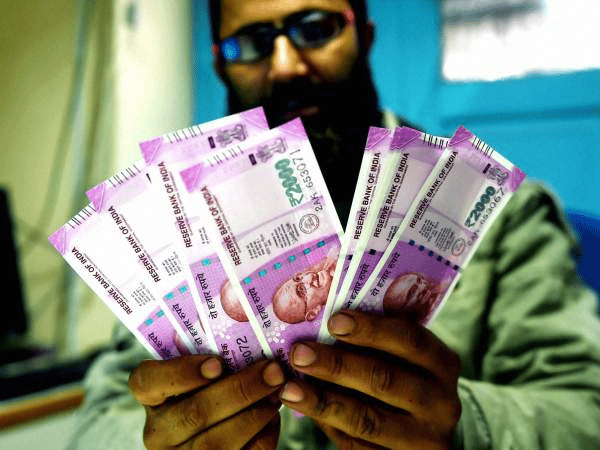
NAIROBI, Kenya — When American authorities raided the offices of Feeding Our Future in January 2022, they uncovered what would become one of the largest pandemic fraud schemes in United States history.
What started as an investigation into a Minnesota nonprofit stealing money meant to feed hungry children during COVID-19 has mushroomed into a sprawling international probe touching Kenya, Somalia, Turkey, and China. At the center of growing scrutiny stands Taaj Money Transfer, a Minneapolis-based remittance service operating in the heart of America’s largest Somali diaspora community.
The scale of theft is staggering.
Federal prosecutors say $250 million in taxpayer money vanished through fraudulent meal claims submitted by Feeding Our Future and its network of shell sites.
Court documents reveal the money flowed rapidly overseas, purchasing luxury properties from Nairobi apartments to beachfront resorts in Diani, funding lavish honeymoons in the Maldives, and allegedly filling the coffers of terrorist organizations like al-Shabaab in Somalia.
Now, as 77 people face indictment and billions remain unaccounted for, investigators are asking uncomfortable questions about the financial infrastructure that made such massive theft possible.
Taaj Money Transfer, while not accused of direct involvement in the Feeding Our Future scheme, has become a focal point in the broader investigation into how stolen American dollars disappeared into the global hawala system.
A System Built on Trust, Vulnerable to Exploitation
Taaj operates as a licensed money service business in the United States, serving primarily Somali Americans who send remittances to relatives in East Africa. The company bridges the formal American banking system with Somalia’s informal hawala network, where most transactions occur outside traditional banking channels.
In a country where only 15 percent of 15.5 million Somalis have bank accounts, hawala remains the primary method for transmitting an estimated $1.3 billion sent by the diaspora annually.
The hawala system operates on trust and speed.
A sender in Minneapolis hands cash to a Taaj agent, who contacts a partner in Mogadishu.
Within hours, the recipient collects equivalent local currency, often delivered to their doorstep. No wire transfers cross borders.
No paper trail connects sender to receiver. The agents settle accounts later through various mechanisms, from trade goods to bulk cash shipments.
This efficiency makes hawala indispensable for Somali families.
But the same opacity that enables rapid transfers also creates vulnerabilities for money laundering and terrorist financing. Federal authorities have long worried that hawala channels, once money leaves American oversight, become virtually impossible to trace or control.
The Compliance Crisis
In 2024, the Minnesota Board of Accountancy invalidated financial audits for six Somali money transmitters, including Taaj’s prior legal entity, Taaj Services US LLC, which now operates as Rasmi Pay LLC.
The audits were conducted by Charles Amevo, a certified public accountant later exposed as an unindicted co-conspirator in the Feeding Our Future fraud. His CPA license was revoked after investigators discovered his role in helping fraudsters create false financial records.
The invalidation left Taaj and five other transmitters in regulatory limbo, lacking the audited financial statements and surety bonds required under Minnesota law.
Critics argue this compliance gap could facilitate money laundering, particularly given the fraud’s pattern of wiring millions overseas to countries including China, Kenya, and Somalia.
Taaj’s compliance troubles extend beyond Minnesota.
In San Diego federal court in 2024, Taaj Services pleaded guilty to violating the Bank Secrecy Act by failing to report currency transactions exceeding $10,000.
Court documents revealed the company conspired with an unlicensed transmitter, collecting over $700,000 in unreported funds.
After COVID-19 disrupted physical currency shipments, Taaj allegedly used creative methods to move money, including depositing cash into partner banks for subsequent wire transfers.
The San Diego case resulted in probation and fines, but the systemic reporting failures it exposed align uncomfortably with patterns investigators found in the Feeding Our Future scheme, where fraudsters allegedly used similar channels to move stolen funds internationally.
Following the Money to Kenya
As convictions mount in Minnesota courts, a clear pattern has emerged.
Multiple defendants used stolen COVID relief funds to purchase real estate in Kenya, creating a money laundering pipeline that investigators are still attempting to trace.
Liban Yasin Alishire, who operated Community Enhancement Services and Lake Street Kitchen as Feeding Our Future sites, pleaded guilty in January 2023 to his role in the scheme.
As part of his plea agreement, he forfeited numerous assets including an apartment unit in Nairobi and the 27.9 million shilling Karibu Palms Resort on the Indian Ocean at Diani Beach.
Court documents show Alishire conducted a wire transfer of $216,300 toward purchasing the beach resort in November 2021, just months before federal agents raided Feeding Our Future offices.
Abdiaziz Shafii Farah, described by prosecutors as a scheme leader who defrauded taxpayers of at least $47 million, purchased real estate in Kenya and a high-rise apartment building in Nairobi.
The 26-year-old former refugee was sentenced to 28 years in federal prison in August 2024.
Prosecutors revealed that Farah laundered fraud proceeds through China and invested in international real estate holdings that remain beyond the reach of American law enforcement.
When FBI agents executed a search warrant at Farah’s home in January 2022, they seized his passport.
Two months later, he appeared at the Minneapolis Passport Agency and applied for a new one, falsely claiming his original was lost rather than seized.
Within two weeks, Farah purchased a one-way ticket to Kenya, attempting to flee to property he had purchased with stolen taxpayer money.
Federal agents arrested him at the airport, charging him with passport fraud.
Abdimajid Mohamed Nur, 24, received a 10-year prison sentence last month and must pay $48 million in restitution.
Prosecutors said Nur and his co-conspirators engaged in a conspiracy to launder proceeds through shell companies in both the United States and Kenya.
Besides purchasing luxury vehicles and jewelry in Dubai, Nur funneled stolen money overseas, creating layers of corporate entities to obscure the funds’ criminal origins.
The Justice Department acknowledges that much of the money transferred to Kenya and other countries remains beyond recovery.
International property holdings purchased with fraud proceeds cannot be seized under American law, representing a permanent loss to taxpayers. The inability to recover these assets has intensified scrutiny of the financial channels that facilitated their purchase.
The Broader Pattern of Somali Money Service Vulnerabilities
Kenya’s involvement in the Minnesota fraud is not isolated.
A 2020 report by the Geneva-based Global Initiative Against Organised Crime examined hawala operations across East Africa and found troubling patterns of money laundering and potential terrorist financing.
The report, authored by former UN Expert panelist Jay Bahadur, analyzed $3.7 million in transactions between 2014 and 2020 sent via money transfer operators including Amal Express and Iftin Express.
Investigators detected payment batches totaling approximately $40,000 to individuals sanctioned by the US Treasury, including Abdulrab Salem al-Hayashi, who was sanctioned in October 2017 for allegedly providing weapons and financial support to al-Qaeda in the Arabian Peninsula and Islamic State in Yemen.
Somalia’s port city of Bossaso in Puntland state was identified as the origin of most illegal payments to arms dealers in Yemen.
While the report found no evidence that Taaj directly transferred money to sanctioned individuals, it noted instances where customers of multiple money service operators used different names and phone numbers to conduct transactions, violating Somali law.
One individual used 24 different names across four companies.
The report emphasized that parent companies may often be unaware of compliance lapses among agents or franchisees operating in Somalia.
More troubling are allegations from whistleblowers in Kenya.
A person identified only as AL claimed that Taaj Money Transfer operates two financial systems in Nairobi.
One system is visible to the Central Bank of Kenya during compliance visits. A second hidden system allegedly launders large sums through deposits, transfers, and off-record transactions.
AL claimed that during CBK inspections, the real owner goes into hiding while a woman named Sarah poses as the manager and face of the company.
These allegations remain unverified, but they raise serious concerns about financial oversight in Kenya’s money service sector.
The whistleblower further alleged that money sent through Taaj to Somalia returns as bulk cash used to purchase property and invest in real estate, forming a major money laundering pipeline.
AL claimed Kenya’s corruption environment has made the country a safe zone for such operations, contrasting it with the United States, where stricter laws and enforcement limit similar activities.
The Al-Shabaab Connection
Perhaps most alarming are allegations that Somali money service operators, whether knowingly or through coercion, facilitate terrorist financing. UN Security Council investigations found that al-Shabaab generated approximately $13 million in just four case studies.
In only 10 weeks, a zakat account controlled by al-Shabaab showed deposits of $1.7 million, with the entire balance transferred onward during that period.
Despite territorial losses and increased aerial strikes, al-Shabaab operates multiple checkpoints across Somalia, extorts businesses in numerous cities, and holds multiple bank accounts to facilitate systematic taxation.
The UN panel assessed that the group maintains a strong financial position, generating significant budgetary surplus and investing in various enterprises, including property purchases and market investments in Mogadishu.
US intelligence reports suggest some hawala transfers to Somalia may end up funding extremist groups, though no specific company has been named in those assessments.
The concern is that in territories controlled or influenced by al-Shabaab, hawala agents have little choice but to comply with demands for payments or information.
Money sent legitimately by diaspora families for food, school fees, or medical care can be intercepted or taxed by the terrorist group.
The Federal Government of Somalia is developing a financial disruption plan to address al-Shabaab’s systematic use of domestic financial systems.
However, Somalia’s financial sector remains limited to eight reporting banks, while hawala operators far outnumber formal institutions.
The Central Bank of Somalia reports receiving compliance data from banks but has limited capacity to monitor the vast hawala network.
Local Fraud Adds to the Pattern
Beyond the massive Minnesota scheme, Taaj has faced fraud allegations closer to home.
In February 2025, Rahma Abdullahi Adam, a Kenyan-born Somali woman living in the United States, came forward with allegations of being defrauded of 29 million shillings by a former Taaj agent in Nairobi’s Eastleigh area.
Adam alleges that Abdullahi Abdi Hussein, once a senior manager at Taaj Money Transfer, convinced her in May 2024 to invest $100,000 in what he claimed would be a lucrative stake in a new Taaj branch.
Driven by ambition to invest in Kenyan real estate and provide for her family, Adam transferred the funds through an agent in Minneapolis. Hussein confirmed receipt of the money, solidifying her trust.
In October 2024, Hussein allegedly persuaded Adam to invest an additional $113,000 in a real estate opportunity.
By November, when she sought updates on her investments, Hussein responded with excuses about personal issues, including his mother’s illness, without providing evidence of business progress.
When Adam demanded return of her investment, Hussein initially agreed but later claimed the money was lost within Taaj’s system.
Adam filed a complaint at Kilimani Police Station, resulting in Hussein’s arrest and appearance at Kibera Law Courts on January 6, 2025.
He was released on cash bail of 100,000 shillings with a plea scheduled for February 5, 2025.
Adam expressed frustration over attempts to mediate through community elders, which she described as a charade. She alleges Hussein boasted that her case would go nowhere in Kenya’s criminal justice system.
The incident raises questions about oversight in money transfer operations and the vulnerabilities that investors and expatriates might face. Taaj Money Transfer has not commented on the allegations or the involvement of its former employee.
Political Firestorm and Community Defense
The Minnesota fraud has ignited political controversy, particularly after President Donald Trump revoked temporary protected status for Somali refugees and ordered Immigration and Customs Enforcement raids in Minneapolis.
Trump and FBI Director Kash Patel have accused Governor Tim Walz’s administration of lax oversight, claiming state officials feared accusations of racism against the Somali community and allowed fraud to flourish unchecked.
Trump has framed Minneapolis as a hub of fraudulent money laundering, using the scandal to justify immigration enforcement actions.
Whistleblowers, including a former Transportation Security Administration agent, report seeing suitcases stuffed with millions in cash carried by Somali travelers at Minneapolis-St. Paul International Airport, potentially linked to the fraud schemes.
Minneapolis Mayor Jacob Frey and Council Member Jamal Osman have pushed back, arguing that investigations unfairly target immigrants and erode community trust.
Frey stated that targeting Somali people means due process will be violated, emphasizing the community’s contributions to the city.
Somali leaders note that the vast majority of money transfers are legitimate remittances supporting families in one of the world’s poorest countries, and that painting the entire community with the fraud’s brush is both unfair and damaging.
Federal prosecutors insist the fraud’s scale demands accountability regardless of political sensitivities.
US Attorney Joseph Thompson said the scheme eroded Minnesota’s collective sense of statewide self-esteem and betrayed taxpayers who trusted that pandemic relief would reach vulnerable children. With 59 convictions secured so far and more trials pending, Thompson emphasized that justice must be served.
Unanswered Questions
As the House Oversight Committee delves deeper and the US Treasury Department investigates terror-financing links, fundamental questions about Somali money service operators remain unanswered.
How much stolen money ultimately reached Somalia, Kenya, and other countries? What percentage of transfers through companies like Taaj involved fraud proceeds? Did any remittance operators knowingly facilitate money laundering, or were they simply exploited by sophisticated criminals?
The World Bank has recommended that Somalia develop a robust national identification system to eliminate loopholes in money transfer operations.
Better mobile money regulation and identification systems need to be developed in parallel, the bank advised.
An effective identification system would help narrow Somalia’s significant financing gap and address de-risking issues that have led many international banks to refuse business with Somali money service operators.
For Kenya, the scandal highlights weaknesses in financial oversight and anti-money laundering enforcement.
If American fraud proceeds can so easily purchase Nairobi apartments and beach resorts, what other illicit funds are flowing through Kenyan real estate and banking systems?
The Central Bank of Kenya has not publicly addressed the Minnesota fraud connections or the whistleblower allegations about Taaj’s Nairobi operations.
Taaj Money Transfer maintains that it operates legally and in compliance with all applicable regulations. Company representatives did not respond to requests for comment on this story.
The firm continues serving Minneapolis’s Somali community, processing remittances that represent economic lifelines for thousands of families in East Africa.
But in a scandal where $250 million in pandemic relief vanished through opaque financial channels, where terrorist organizations allegedly intercept diaspora funds, and where compliance failures enabled systematic fraud, even tangential connections invite intense scrutiny.
For Minnesota taxpayers who lost billions, for Somali families who depend on remittances, and for Kenyan authorities confronting money laundering, the full truth about how this fraud succeeded remains maddeningly out of reach.
As federal trials continue through 2025 and investigators chase money trails across three continents, one thing is certain.
The Minneapolis billion-dollar scam has exposed vulnerabilities in the global hawala system that criminals and terrorists have long exploited.
Whether regulatory reforms can secure these vital financial channels without destroying their utility for legitimate users may determine not just the future of companies like Taaj, but the economic survival of millions who depend on remittances to live.



Comments