
Investigations
Nestlé Accused of Risking Babies’ Health in Africa with ‘Toxic’ Cerelac Product Sold Highest in Kenya
In stark contrast, equivalent products sold in Nestlé’s home market of Switzerland, as well as in Germany, France, and the UK, boast zero added sugars.

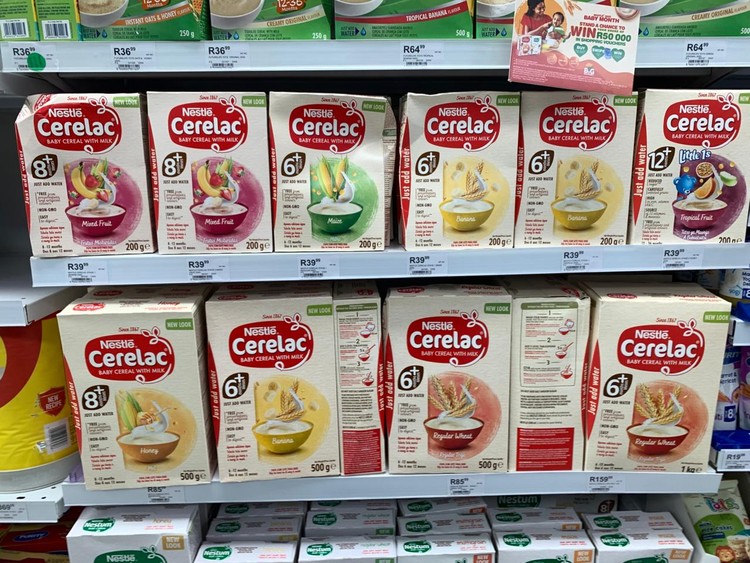
NAIROBI, Kenya — A bombshell investigation has thrust Swiss food giant Nestlé back into the spotlight, accusing the company of peddling baby cereals laced with excessive added sugars across Africa, with Kenya bearing the brunt of the highest concentrations.
The report, released last week by Swiss watchdog Public Eye, labels Nestlé’s flagship Cerelac product as potentially “toxic” for infants due to its sugar content, which far exceeds World Health Organization (WHO) guidelines and mirrors formulations banned in Europe.
At the heart of the scandal is Cerelac, Nestlé’s infant cereal marketed as a nutrient-packed essential for growing babies.
In Kenya, where Cerelac commands the lion’s share of the baby food market and is the top-selling product, lab tests revealed a staggering 7.5 grams of added sugar per serving, equivalent to nearly two sugar cubes, in one variant.
That’s more than the entire daily recommended sugar intake for children under two, according to WHO standards, which call for a complete ban on added sugars in foods for babies and toddlers up to age three.
Public Eye’s probe analyzed over 100 Cerelac samples from 20 African countries, finding that more than 90 per cent contained added sugars like sucrose, glucose-fructose syrup, and maltodextrin.
In stark contrast, equivalent products sold in Nestlé’s home market of Switzerland, as well as in Germany, France, and the UK, boast zero added sugars.
The discrepancy has fuelled outrage, with critics branding it a “double standard” that prioritizes profits over the health of vulnerable African infants.
“This isn’t just about taste. It’s about engineering addiction from the cradle,” said Dr. Susan Goldstein, associate professor at the University of the Witwatersrand’s SAMRC Centre for Health Economics and Decision Science in South Africa.
In an interview, Goldstein, who has long tracked multinational food practices, warned that early exposure to added sugars predisposes babies to lifelong sweet tooths, skyrocketing risks for obesity, diabetes, hypertension, and even cancer.
In South Africa alone, childhood obesity rates hover at 13 per cent, double the global average of 6.1 per cent, a trend mirrored across the continent where overweight children under five have surged 23 per cent since 2000.
Kenya’s predicament is particularly acute.
As Africa’s largest economy and a hub for Nestlé’s operations, the country sees Cerelac flying off shelves in supermarkets and pharmacies, often promoted as “little bodies need big support” with claims of 12 essential vitamins and minerals.
Yet, the product’s high sugar load undermines these promises, experts say. “Babies eat small portions, so every gram of food must be nutrient-dense, not calorie-dense from empty sugars,” Goldstein added.
The Public Eye report estimates that Nestlé’s added sugars contribute to widespread malnutrition paradoxes in Africa, where undernutrition coexists with rising obesity.
Nestlé, which controls about 20 per cent of the $70 billion global baby food market, vehemently denies the allegations.
In a statement to Al Jazeera, a company spokesperson insisted: “We do not have double standards. Nestlé is committed to treating all children equally, irrespective of where they live.”
The firm claims its formulations comply with local regulations and that sugars in Cerelac are “naturally occurring” from ingredients like milk and fruits, though independent lab results contradict this, detecting free added sugars in most samples.
Nestlé dismissed the report as “misleading,” arguing it ignores regional nutritional needs, such as combating micronutrient deficiencies in low-income settings.
This isn’t Nestlé’s first brush with controversy in Africa. Back in April 2024, a similar exposé revealed added sugars and honey in infant milks sold in South Africa, the Philippines, and Thailand, absent from European versions.
Historical scandals, including the 1970s formula marketing push that contributed to infant deaths from contaminated water, have long stained the company’s reputation.
Civil society groups, including those in Kenya, are now demanding accountability. “Nestlé must stop this predatory practice regardless of skin colour or nationality,” reads an open letter from African consumer protection advocates, urging boycotts and regulatory crackdowns.
Health experts and activists are calling for urgent action from African governments.
South Africa has salt limits but needs caps on added sugars and oils in baby foods, alongside taxes on sugary products akin to those on fizzy drinks.
Front-of-pack warning labels, like those proposed by South Africa’s Department of Health, could empower parents to spot hidden sugars in seemingly healthy yoghurts and cereals.
In Kenya, the Kenya Bureau of Standards (KEBS) faces scrutiny for lax oversight, with social media erupting in calls like, “Why do we pay you?” amid fears that weak enforcement lets multinationals off the hook.
The WHO has amplified the alarm, highlighting how inappropriate baby foods exacerbate Africa’s dual burden of malnutrition.
As obesity rates climb, projected to affect one in five African children by 2030, the onus falls on regulators to level the playing field.
“The world is watching,” one Kenyan mother told AJ+ in a viral video. “Do the right thing, Nestlé, for our babies.”
For now, parents in Kenya and beyond are urged to scrutinize labels and prioritize breastfeeding or unsweetened alternatives.
But as Goldstein puts it, “Multinationals like Nestlé benefit from addictive formulations that hook consumers young. It’s time Africa says no more.“
Kenya Insights allows guest blogging, if you want to be published on Kenya’s most authoritative and accurate blog, have an expose, news TIPS, story angles, human interest stories, drop us an email on [email protected] or via Telegram


Blocked: How Mombasa Tycoon Ashok Doshi Has Stopped Imperial Bank Depositors From Getting Their Money

SEX SCANDAL ROCKS KISUMU POLYTECHNIC: Top Officials Linked as Secretary Accuses New Council Chairman of Naivasha Advances

Why Ruto’s Favourite Candidate Adan Mohammed Could Be Locked Out of the KRA Top Job

DCI Arrests Woman in Sh55.7 Million Gold Fraud Targeting American Citizen in Nairobi

Court Confirms Safaricom Customers Data Was Sold To Betting Companies In Seven-Year Cover-Up

Paybill 585555: How Airtel Kenya’s Interoperability Gateway Became A Criminal Pipeline Draining Millions From Unsuspecting M-Pesa Users

The Man Who Starved Kenya’s Voice

The Rot Inside Absa: How Bank Insiders Are Looting Nairobi’s Customers

The President’s Helicopter: How Ruto’s Aviation Empire Lands a Historic Airbus Milestone While His Government Writes the Tax Code

“TikTok Who? YouTube Sorry. A Kenyan-Built Platform Just Dropped—and 20 African Ministers Showed Up To Launch It.”

How Did a Sh468K KRA Salary Allegedly Turn Into Sh30 Billion? Questions Deepen Over Commissioner George Obel and Ciala Resort Owner’s Wealth

Nairobi Freezes Binance Accounts in Sweeping Anti-Fraud Crackdown as Global Scandal Record Haunts World’s Largest Crypto Exchange

THE UNTOUCHABLE CLERK: How Fatuma Mwalupa Allegedly Turned Kwale Assembly Into a Personal Treasury and Outsmarted Scrutiny

The Man Behind the Badge: How Prof. Erastus Kanga Turned Kenya’s Premier Wildlife Agency into a Theatre of Corruption, Fear and Impunity

THE BRAZEN RETURN: Triton Thief Yagnesh Devani, Who Pillaged Kenya of Sh7.6 Billion and Fled, Now Asks the Same Courts He Escaped to Restore His Stolen Wealth
Why Ruto’s Favourite Candidate Adan Mohammed Could Be Locked Out of the KRA Top Job

Green Gold, Rotten Roots: How Kenya’s Biggest Avocado Firms Hijacked a Sh5.8 Billion Harvest Ban

Why the April 21 Flopped Protests Expose Kenya’s Rudderless Opposition

KETRACO CEO Advert Marred By Controversies As Fears Grow That Kipkemoi Kibias Is A Predetermined Candidate

64-Year-Old KIM Faces Shutdown As Regulator Declares Its Certificates Worthless, Orders Employers To Shun Graduates
-
 News3 days ago
Why Ruto’s Favourite Candidate Adan Mohammed Could Be Locked Out of the KRA Top Job
-

 Business2 weeks ago
Safaricom’s Sh1.4 Billion Reckoning: How Kenya’s Most Profitable Company Stole a Man’s Idea and Got Caught
-
 Investigations2 weeks ago
Denial Under Duress: The Untold Collapse Threatening David Lagat’s DL Group’s Empire
-
 Business2 weeks ago
THE INSURER THAT TOOK YOUR PREMIUM AND FORGOT YOUR NAME: How ICEA Lion Left a Client Begging for Sh7.8 Million Across Four Months
-
 Business7 days ago
The Rot Inside Absa: How Bank Insiders Are Looting Nairobi’s Customers
-

 Business2 weeks ago
Bush Air Safaris Founder John Ndiritu Risks Losing Property Over Disputed Loan Claim
-
 Business1 week ago
The President’s Helicopter: How Ruto’s Aviation Empire Lands a Historic Airbus Milestone While His Government Writes the Tax Code
-
 Arts & Culture2 weeks ago
KDC Accelerates the Creative Economy, Innovation and Youth-Led Enterprise Growth at Africa Forward Summit