When security forces in Juba swept through the Ministry of Finance and the state oil company in a dramatic wave of arrests in late February, the government of President Salva Kiir framed the crackdown as a routine investigation into what a spokesman called “financial malpractices.”
The euphemism barely scratches the surface.
What investigators have since begun to piece together is something far more alarming: for the better part of three years, a network of shell companies and complicit officials routed South Sudan’s sovereign oil revenues into private bank accounts stretching from Nairobi to Dubai, with at least one channel flowing directly into the coffers of Iran’s Islamic Revolutionary Guard Corps.
The story that emerges from court filings in Washington, intelligence cooperation between Nairobi and Juba, and a cascade of arrests reaching the highest levels of the South Sudanese state is, at its core, a story of a country being systematically looted through its own oil tap while nearly two-thirds of its twelve million citizens teeter on the edge of famine.
“The hyena was in charge of the goats. There was no one left to count.”
The Shamkhani Connection
On March 6, 2026, the United States Department of Justice filed two civil forfeiture complaints in the District of Columbia against more than $15.3 million in funds linked to an illicit Iranian oil distribution network.
At the centre of those complaints was Mohammad Hossein Shamkhani, son of Ali Shamkhani, who had served as secretary of Iran’s Defence Council and for a decade as chief of the Supreme National Security Council, the body that coordinates the country’s most sensitive intelligence and military decisions.
Both father and son were killed in the American-Israeli strikes that began on February 28.
The younger Shamkhani, according to the complaint filed under case number 1:26-cv-00802, had acquired and quietly operated two Singapore-registered companies: Wellbred Capital Pte Ltd and its subsidiary Wellbred Trading DMCC, registered in Dubai.
The companies were maintained as a clean-faced brand, their nominal leadership serving as a front for what US prosecutors describe as the Shamkhani Network, a sprawling apparatus of vessels, trading firms and shipping companies designed to move sanctioned Iranian crude onto world markets in violation of the International Emergency Economic Powers Act.
Investigators allege that Shamkhani maintained internal organisational charts that showed Wellbred’s precise position within that network, documents that prosecutors obtained and cited in both complaints.
What those complaints did not fully spell out, but what well-placed security sources and investigators with knowledge of proceedings in multiple jurisdictions now confirm, is the specific geography of Wellbred’s oil supply.
Wellbred was not only trading Iranian barrels. It had, through contacts cultivated at the highest levels of South Sudan’s Ministry of Petroleum and the state company Nile Petroleum Corporation, secured preferential allocations of South Sudanese crude at prices investigators say were set substantially below market value.
In a country where oil accounts for more than ninety per cent of government revenue, every barrel sold below market price is a dollar taken directly from a population that cannot afford to lose it.
KEY FIGURES
Benjamin Bol Mel | Former Vice President, arrested November 12, 2025
Bak Barnaba Chol | Former Finance Minister, arrested February 28, 2026 at Uganda border
Deng Lual Wol | Former Petroleum Undersecretary, detained February 2026
Ayuel Ngor Kacgor | Former Nilepet Director General, believed to have fled to Netherlands
Maj. Gen. Manasseh Machar Bol | Former Petroleum Ministry security director, detained
Mohammad Hossein Shamkhani | Wellbred operator, killed in US-Israeli strikes, Feb. 28
The Architecture of the Scheme
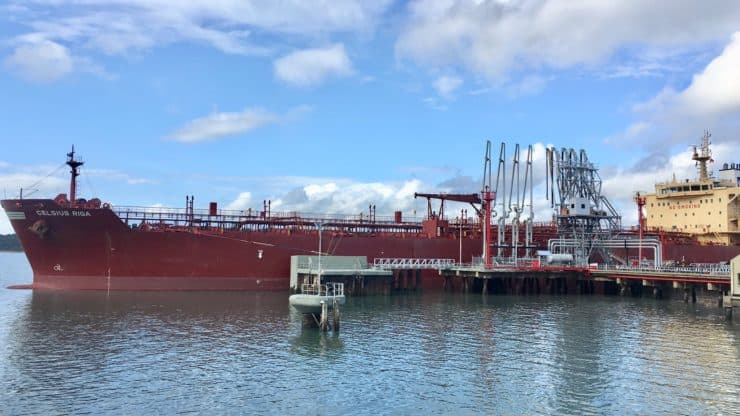
South Sudan exports approximately 150,000 barrels of oil per day, most of it Nile Blend or Dar Blend crude shipped through a pipeline running north through Sudan to the terminal at Port Sudan. The Ministry of Petroleum controls cargo allocation, deciding which trading companies receive the right to lift barrels at the Bashayer terminal.
Those allocation decisions, on paper bureaucratic and technical, are in practice among the most lucrative exercises of state power in the country. A single cargo of South Sudanese crude, at pre-conflict prices, was worth tens of millions of dollars.
A two-year investigation by the United Nations Commission on Human Rights in South Sudan, whose findings were published in September 2025 in a report titled “Plundering a Nation,” found that political elites had engaged in the systematic looting of national wealth.
The commission documented that $1.7 billion was channelled through the “Oil for Roads” programme between 2021 and 2024 to companies linked to then-Vice President Benjamin Bol Mel for road construction contracts that were never fulfilled.
In total, the UN estimated that $2.2 billion was siphoned off-budget during that period, while over ninety per cent of the promised roads remained unbuilt.
Bol Mel, already under US sanctions since 2017 and again in 2025, was dismissed by President Kiir on November 12 last year, stripped of his rank, demoted from general to private and placed under house arrest at his residence in the Jebel neighbourhood of Juba.
Security forces seized documents, laptops and an undisclosed sum of cash. His lawyers filed a petition in March noting that after 120 days of incommunicado detention, their client had not been formally charged and that his health was deteriorating. The government has offered no public explanation for the arrest.
The men who carried out the mechanics of the scheme operated beneath Bol Mel. Eng. Deng Lual Wol, the Petroleum Ministry’s undersecretary, signed the documents.
Two letters he dispatched in October 2025, one to ONGC Nile Ganga B.V. seeking an advance of one billion dollars against future crude entitlements, another to CNPC requesting one and a half billion dollars against production held under the Greater Nile Petroleum Operating Company, effectively mortgaged the majority of South Sudan’s core oil output through opaque bilateral arrangements.
Both letters promised repayment through oil shipments, with unnamed nominated lifters to take the volumes.
Sources inside the government told this newspaper that the letters were prepared on behalf of Bol Mel, with the intent to divert the requested funds for personal use. Deng Lual Wol was detained in late February after presenting himself for questioning at the National Security Service headquarters.
Ayuel Ngor Kacgor, appointed Managing Director of Nilepet in October 2024, is alleged to have served as the operational hub within the state company.
Whistleblower testimony collected before his dismissal describes a Nilepet in free fall: salaries unpaid since April 2025, medical insurance suspended, workers dying of treatable illnesses, children withdrawn from school, food rations halted. Multiple employees described an absentee chief executive who would arrive for an hour and disappear. Kacgor is believed to have fled to the Netherlands, of which he also holds nationality, prior to the February crackdown.
Kenyan security cooperation has reportedly been essential in identifying assets held in his name: a mansion in Nairobi’s exclusive Karen suburb, registered in the name of his wife, valued at approximately two million dollars.
Investigators say the true magnitude of the Kenya and Uganda banking trail dwarfs anything previously reported in relation to the UAE or Turkey.
The Nairobi Trail
In the months following the Bol Mel arrest, intelligence services in Kenya moved quietly to assist their South Sudanese counterparts. The cooperation produced results that have since shocked even experienced investigators.
Bank assets worth several tens of millions of dollars have been identified in Kenya and Uganda as belonging to Deng Lual Wol and Ayuel Ngor Kacgor.
The discovery upended a central assumption embedded in most prior investigations: that the primary offshore repositories for looted South Sudanese oil money were in Dubai or Istanbul. The real repositories, it turns out, were closer to home.
The pattern is not without precedent in the region. As far back as 2021, UN investigators documented how South Sudanese officials had channelled payments through Nairobi accounts held at Equity Bank, noting with forensic precision the deposits and cash withdrawals made at the Lavington branch.
The Sentry, a Washington-based investigative organisation, had separately called on Kenyan and Ugandan authorities to investigate trade-based money laundering flows from South Sudan as early as 2023. Those calls went largely unheeded. The February crackdown may have finally changed the calculus.
Judicial cooperation between Juba, Nairobi and Kampala will now determine whether these assets can be repatriated to the Central Bank of South Sudan, where they should, according to government regulations, have been deposited in the first place.
Investigators familiar with the proceedings acknowledge that the process is likely to be protracted, contested and complicated by the dual nationality of at least one suspect.
The Finance Minister Who Kept the Wrong Friends
Against this backdrop, the brief three-month tenure of Bak Barnaba Chol as Finance Minister is particularly instructive.
Appointed in late November 2025 in the immediate aftermath of the Bol Mel scandal to replace Athian Diing Athian, Chol was, by nearly universal assessment among political observers and private sector actors in Juba, a capable and professionally grounded administrator.
He moved quickly to sever the ministry’s relationships with the cluster of outsider trading firms that investigators had already identified as problematic: Wellbred, Cathay Petroleum International, and Euroamerican Energy were cut off despite what sources describe as intensive lobbying by each company.
What Chol did not do was cut ties with BGN. The Dubai-based firm, whose controlling shareholder Ruya Bayegan has been linked to Turkish intelligence networks close to President Recep Tayyip Erdogan, had operated at the margins of South Sudan’s oil allocation system for years and had cultivated relationships with precisely the officials now at the centre of the corruption investigation.
Rather than declare BGN unwelcome, Chol moved closer to the company, awarding new cargo allocations under conditions that multiple sources describe as improbably favourable.
Days before his removal from the ministry on February 23, Chol was in Doha, Qatar, for a working meeting with senior BGN officials. Investigators have since established that he had committed to allocating one final cargo to BGN in March under terms that, in retrospect, appear grotesque: BGN holds an option to purchase the cargo at February’s price.
The conflict in Iran, which erupted on February 28, pushed Brent crude from below sixty-three dollars a barrel in February to a historic intraday high of $119.50 on March 9.
The spread between the price BGN locked in and the market price at which the cargo will actually be lifted represents, by the calculations of investigators who have reviewed the terms, a loss to the South Sudanese state budget of between ten million and twenty million dollars on a single shipment.
Whether that loss is realised will depend on whether the new finance minister, Salvatore Garang Mabiordit, honours the commitment or repudiates it. The government has not confirmed whether the BGN cargo arrangement remains in force. BGN did not respond to requests for comment.
Chol himself did not reach Uganda. Security forces intercepted him at approximately eight in the evening on February 28 near the Elegu-Nimule border crossing, travelling on a commercial motorcycle taxi.
He was carrying $30,000 in US dollars and 27 million South Sudanese pounds concealed in a travel bag. Video footage that circulated on social media showed the former minister with apparent bloodstains on his clothing following the pursuit. He has been held since without formal charge.
His arrest came on the same day as the American-Israeli strikes on Tehran that killed, among many others, the man whose company had been buying South Sudan’s oil.
The timing is not merely coincidental. It is structurally revealing. What the Shamkhani Network’s presence in South Sudan’s oil allocation system illuminates is the specific economics of sanctioned-country oil trading.
An actor that cannot access legitimate financial markets, that must move funds through webs of front companies and correspondent bank accounts, and that faces a constant threat of exposure and seizure, has a powerful incentive to secure barrels at the deepest possible discount.
The gap between the price paid and the market price is not merely profit. It is the cost of doing business in the shadow economy, the premium extracted in exchange for absorbing legal and reputational risk that a conventional trader would not bear.
For the South Sudanese officials allocating those barrels, that same premium was the mechanism of personal enrichment.
A cargo sold to Wellbred at twenty or thirty dollars below market did not generate a loss that landed visibly in government accounts. It generated a private transfer, untraceable in the formal ledger, from the public treasury to the private pockets of those who controlled the allocation.
The UN estimates that $2.2 billion was diverted through off-budget schemes in a three-year window. South Sudan’s total population is twelve million people. More than nine million of them require humanitarian assistance.
The arithmetic of what has been stolen, set against the arithmetic of need, is not one that the government of President Kiir has shown any inclination to dwell on in public.
What is clear is that the current crackdown, whatever its political motivations, has exposed the machinery of the scheme in a degree of detail not previously available to investigators.
The US Justice Department has its forfeiture complaints. Kenya has its bank records.
The Netherlands has, if it chooses to act, a fugitive with European nationality and alleged stolen assets scattered across East Africa.
The question now is whether the architecture of accountability is adequate to the scale of what has been stolen, or whether this, like so many previous episodes in South Sudan’s short and violent history, ends not in justice but in the renegotiation of impunity.

Comments