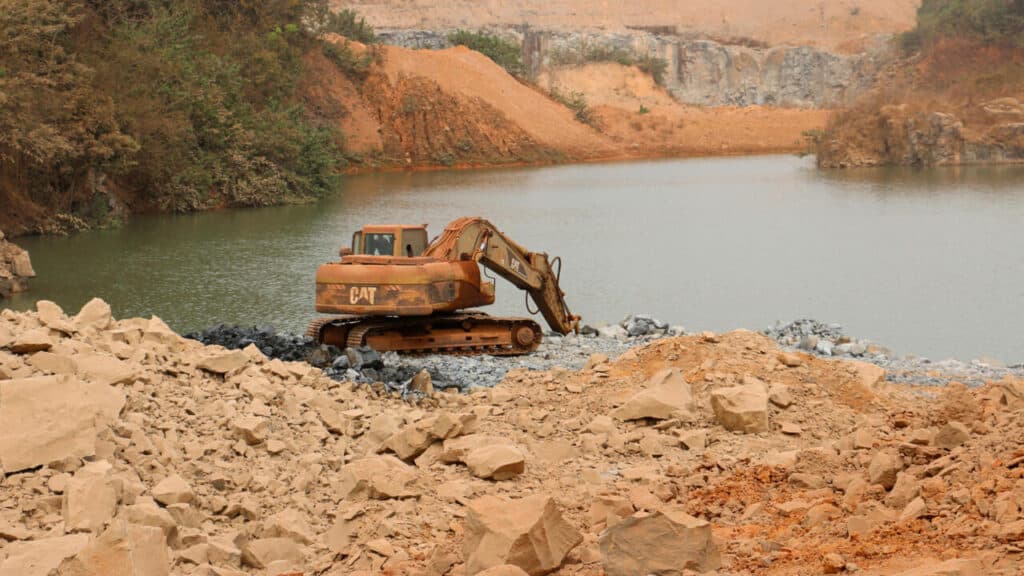
The Ministry of Mining and Blue Economy recently published notice that Halal Mining Company Limited, Shanta Gold Kenya Limited, Royal DFC Limited, Rotor Systems Limited and Altona Mining Ltd have submitted formal applications for mining licenses. Cabinet Secretary Hassan Joho has granted the public 42 days to file objections.
Kenya Insights’s investigations desk spent time dissecting each applicant. What we found should give the Cabinet Secretary serious pause.
Kenya’s mining sector has historically been a stage for spectacular wealth extraction and equally spectacular betrayals of communities and the public purse.
From the Goldenberg scandal of the 1990s, which bled the state of the equivalent of ten percent of GDP through fictitious gold exports, to the phantom Mrima Hill licensing scandal of 2013, which was so riddled with irregularities that the incoming Kenyatta administration cancelled every license issued in the transition period, this country has been here before.
The five firms now standing at the gate are not all equal in their problems.
But none of them arrives without questions that demand answers before a single license is signed.
“Kenya has been here before. The five firms now standing at the gate are not all equal in their problems. But none arrives without questions that demand answers.”
I. SHANTA GOLD KENYA LIMITED — BLOOD ON THE GROUND IN KAKAMEGA
Of the five applicants, Shanta Gold Kenya Limited carries the most immediate and viscerally documented record.
The British-owned firm, incorporated locally as Shanta Gold Kenya Limited in 2010 and listed on the London Stock Exchange’s AIM market as the parent Shanta Gold, has become the most politically explosive name in Kenya’s extractive sector. Its application concerns gold mining rights in Kakamega County, a county the company has already turned into a war zone.
The facts are on the record.
On December 4, 2025, a National Environment Management Authority public participation forum in Ikolomani’s Emusali Primary School disintegrated into deadly violence.
At least four people were killed when police opened fire on artisanal miners and residents opposing the company’s bid to acquire 337 acres of ancestral land to establish what it describes as an underground mining operation at the Isulu-Bushiangala site. Six others were hospitalised, including two police officers. Scores were arrested. Journalists covering the forum were assaulted and had their equipment seized.
Two days after the December 4 killings, a mine shaft in the same district collapsed at Wangoto village, killing three more artisanal miners who had been scrambling for survival since Shanta’s arrival began displacing their livelihoods. These deaths did not occur in a vacuum.
The artisanal mining community of Kakamega has consistently levelled a damning accusation against Shanta Gold: that the company has been conducting mining operations in Ikolomani under the legal pretence of conducting mere exploration. Artisanal miners who have worked the Isulu and Bushiangala sites for generations accused the firm of exploiting local resources for years while its exploration license technically barred it from commercial extraction. The accusation is not new. Similar allegations preceded Shanta’s operations in Siaya County, where the government issued a mining license in late 2025 over the objections of residents in seven villages. No member of affected communities attended the stakeholders’ workshop in Kisumu at which the government proclaimed the project would benefit locals.
Shanta Gold’s own Environmental Impact Assessment, submitted to NEMA and prepared in partnership with South Africa’s Digby Wells Environmental, confirmed 1.27 million ounces of gold at the Isulu-Bushiangala site, placing its total value at an estimated Ksh 683 billion. The arithmetic of extraction that follows from these figures has detonated public fury. The national government stands to collect between Ksh 555 million and Ksh 607 million in annual royalties, plus Ksh 193.8 million through the Mineral Development Levy. Kakamega County would receive approximately Ksh 111 million from its 20 percent share. The 800 households being displaced from their ancestral land would collectively receive a community share of approximately Ksh 55 million per year, which breaks down to less than Ksh 7,000 per household annually from a Ksh 683 billion operation built on their land.
Trans-Nzoia Governor George Natembeya and Kakamega Senator Dr. Boni Khalwale, speaking on behalf of leaders from five Western counties, were categorical: the proposed Ksh 3 billion compensation package for relocation is a grotesque insult when the gold beneath these villages is worth more than Ksh 680 billion. They accused the national government of enabling a foreign-driven land grab disguised as development. Their demands included the immediate suspension of Shanta’s operations and full accountability for the deaths on December 4.
The Kenya Human Rights Commission added its institutional voice to the chorus of condemnation. In a formal press release on December 8, 2025, KHRC registered outrage at the killings, arbitrary arrests and procedural chaos at the December 4 forum, noting that what should have been a lawful civic process had degenerated into intimidation and impunity. The Commission found that artisanal miners had been systematically excluded from the consultations required by law under the Mining Act 2016, that no transition or inclusion plan had been presented to thousands of families whose sole livelihood depended on small-scale mining, and that the approval process itself was riddled with what it called flawed NEMA approvals and violations of the right to Free, Prior and Informed Consent.
Environmental research compounds the human rights indictment. Soil, sediment and water analysis from 19 artisanal and small-scale gold mining villages in Kakamega and Vihiga counties found arsenic concentrations at mining and ore processing sites reaching up to 7,937 times the United States Environmental Protection Agency’s safety standards for residential soils. Chromium, mercury and nickel concentrations in a majority of samples exceeded applicable safety thresholds. These are the villages into which Shanta Gold proposes to sink its billion-shilling operation.
The governance pattern visible in Shanta’s Kenyan trajectory raises a legal question that the Mineral Rights Board must answer before any further license is granted: can a company whose exploration activities in Siaya have been formally challenged by community groups for procedural flaws, and whose December 2025 public participation forum in Kakamega produced four civilian deaths, lawfully be granted an additional mining license in the same political and social environment before those deaths have been accounted for?
“800 households face displacement from Ksh 683 billion of gold. Their annual community share works out to less than Ksh 7,000 per family.”
II. HALAL MINING COMPANY LIMITED — A NAME THAT DEMANDS SCRUTINY
Halal Mining Company Limited presents a different category of concern. The company is seeking a mining license in Kilifi County to extract lead, zinc and barytes. On its surface, it is an application for a relatively conventional industrial mining operation. But the name itself, in the context of Kenya’s extractive history and the documented trajectory of similarly-named entities in the Horn of Africa, demands a level of due diligence that goes beyond routine bureaucratic processing.
Nairobi Law Monthly’s research found no publicly available records establishing the ownership structure, directorship or corporate history of Halal Mining Company Limited in Kenya’s official registries or in the mining ministry’s publicly accessible license database. This opacity is in itself a compliance issue. The Mining Act 2016 requires prospective license holders to demonstrate technical and financial capacity, and the ministry’s due diligence framework is premised on the assumption that it knows who it is dealing with.
The naming concern is not merely semantic. In March 2024, the United States Department of the Treasury’s Office of Foreign Assets Control imposed sanctions on a network of entities across the Horn of Africa that raised and laundered funds for al-Shabaab, the al-Qaeda-affiliated terror organisation responsible for some of the worst attacks in East African history. Among the sanctioned Kenya-based entities was Haleel Commodities Limited, a business identified as a key node in al-Shabaab’s financial facilitation network. Though Haleel and Halal are distinct names and distinct entities, the pattern of naming in the region’s informal financial networks frequently involves deliberate proximity to established, credible-sounding names. The ministry owes the public a transparent disclosure of the full ownership and directorship of Halal Mining Company Limited, its source of capital and its previous commercial activities.
Beyond the naming question, the mineral combination that Halal Mining proposes to extract in Kilifi requires careful environmental scrutiny. Lead and zinc mining carries significant contamination risks to groundwater and coastal ecosystems, particularly in Kilifi’s topography where rivers flow toward the Indian Ocean and where communities depend heavily on subsistence agriculture and fishing. Barytes extraction, while commercially low-risk from a toxicity standpoint, is frequently used in the oil and gas drilling sector as a weighting agent, raising the question of who the end buyer for Kilifi barytes would be and whether Kenya’s royalty calculations reflect the market value of what is being exported.
The Kilifi region has already experienced the political fallout of mining ambitions that went badly for local communities. Marula Mining’s acquisition of the Kilifi manganese processing plant through its subsidiary Muchai Mining Kenya has proceeded under conditions of limited public transparency, while community expectations around employment and environmental management have frequently outpaced the delivery. Halal Mining Company Limited must demonstrate, before any license is granted, that its Kilifi application is not another instance of extractive opportunism cloaked in a thin corporate structure.
III. ALTONA MINING LTD — A DELISTED SHELL CHASING COASTAL SAND
Of all five applicants, Altona Mining Ltd presents perhaps the most structurally ambiguous profile. The company has submitted two applications seeking rights to mine heavy mineral sands in Kwale County. Kwale is a county whose extractive history is deeply instructive, and the timing of Altona’s applications, coming as the county’s residents continue to await royalty payments owed to them from a decade of titanium extraction under Base Titanium, makes it among the most sensitive license decisions the ministry will face.
The Altona Mining referenced in Australian Securities Exchange records was an ASX-listed copper company, ticker code AOH, which focused its operations on a copper-gold project in Queensland, Australia. That company was acquired by Canadian copper producer Copper Mountain Mining Corporation in 2018, through a scheme of arrangement approved by courts on both the ASX and Toronto Stock Exchange. Following the acquisition, the Altona Mining entity on the ASX was delisted. The company that acquired Altona’s Cloncurry Project was subsequently itself absorbed, creating a chain of corporate succession that makes the lineage of any entity currently trading under the Altona Mining name in Kenya deserving of the most rigorous verification.
Nairobi Law Monthly’s research could not confirm that the Altona Mining Ltd applying for Kwale heavy mineral sand mining licenses has any verified structural or operational connection to the Australian entity that was previously publicly traded. The ministry must establish and publicly disclose whether the Altona Mining Ltd appearing in the Gazette notice is a genuine mining enterprise with documented technical capacity and capital resources sufficient for heavy mineral extraction, or a shell incorporation.
The Kwale heavy mineral context raises the stakes considerably. Base Titanium, which operated the Kwale Mineral Sands Project as Kenya’s largest mining project from 2013 until depletion of its ore reserve in December 2024, was absorbed by Arizona-based Energy Fuels Inc in October 2024. In 2023, its final substantial year of production, Base Titanium paid Ksh 2.9 billion in royalties, of which Kwale County was entitled to Ksh 1.2 billion under the 20 percent county allocation stipulated in the Mining Act. As of early 2026, Kwale County Governor Fatuma Achani has publicly stated that not a single shilling of those royalties has reached the county. The community’s 10 percent share, mandated by law, has similarly vanished into the national government’s account without disbursement.
Governor Achani’s response to new mining applications in Kwale has been unambiguous. Speaking in the context of prospecting interest in Mrima Hill, she stated that she would not allow any new mining until the government could demonstrate that Kwale residents would actually benefit, referencing the billions in unpaid royalties as proof that formal legal frameworks are routinely ignored when it comes to revenue sharing. Altona Mining Ltd’s two applications land directly in this political environment. For the Ministry of Mining to grant Kwale heavy mineral sand licenses to an entity of uncertain provenance while the county waits for Ksh 1.2 billion in lawfully owed royalties from the previous operation would be an act of institutional contempt toward both the county government and the communities it serves.
The Kwale coastal ecosystem adds a further dimension. Heavy mineral sand extraction involves hydraulic mining and wet concentrator processing that historically creates significant pressure on water sources, coastal vegetation and marine environments. Kwale’s communities have already lost agricultural land, fishing resources and cultural assets in the course of Base Titanium’s operations. Any entity proposing to commence a new extraction cycle in this environment must face the highest level of technical, financial and corporate scrutiny the ministry can apply.
“Kwale County is still waiting for Ksh 1.2 billion in royalties from the last mining operator. Granting Altona a license before that debt is settled would be institutional contempt.”
IV. ROTOR SYSTEMS LIMITED — GOLD IN SAMBURU, QUESTIONS WITHOUT ANSWERS
Rotor Systems Limited is seeking gold mining rights in Samburu County. Of the five applicants, it is perhaps the most opaque. Nairobi Law Monthly’s exhaustive search of public records, corporate registries, mining databases and media archives produced no substantive information about the company’s ownership, directors, financial standing, technical capacity or previous mining or commercial activities. It does not appear in any publicly accessible list of licensed mining operations in Kenya. It does not appear in media coverage of Kenya’s extractive sector. It is, for practical purposes, invisible.
This invisibility is itself a serious red flag. Any company seeking a gold mining license in Kenya is expected to demonstrate, under the Mining Act 2016, that it possesses the technical expertise, financial resources and institutional capacity to conduct mining operations responsibly, manage environmental impact and fulfil its royalty and reporting obligations. A company with no verifiable public footprint cannot satisfy that standard on the available evidence.
The Samburu context sharpens the concern. Samburu County is home to one of Kenya’s most historically marginalised pastoralist communities, the Samburu people, who have experienced repeated cycles of state-facilitated displacement from their ancestral grazing lands. The Samburu have been subjected to what Cultural Survival and other international human rights organisations have documented as systematic land dispossession, often justified through development framings. The history of Laikipia, which borders Samburu and hosts overlapping Samburu pastoralist land claims, is a chronicle of eviction, violence and legal subordination of indigenous land rights to commercial and political interests.
Kenya’s record on mineral rights in pastoralist and indigenous counties is troubling. Gold deposits have been identified in Samburu’s Nachola area. Copper, chromite and other minerals are documented across northern Kenya’s geological belt. The Ministry of Mining’s own critical minerals catalogue acknowledges that most of these areas remain at reconnaissance or early exploration stages, with limited systematic evaluation of economic viability. The rush to license before adequate assessment exposes communities to speculative operations that will extract and depart without adequate accountability.
Rotor Systems Limited must, before any license decision is made, publicly disclose its directors, shareholders, source of capital, technical team, previous corporate activities in Kenya and elsewhere, and evidence of its capacity to meet the financial assurance requirements for environmental rehabilitation mandated by the Mining Act 2016. In the absence of that disclosure, the Ministry should decline the application on grounds of insufficient documentation.
V. ROYAL DFC LIMITED — KITUI’S RARE METALS AND UNANSWERED QUESTIONS
Royal DFC Limited is seeking a mining license in Kitui County to extract minerals classified under Group E: Base and Rare Metals. This is a broad and commercially significant category that includes niobium, tantalum, cobalt, lithium, manganese and related strategic minerals that have become the focus of intense global competition as demand for battery technology and defence manufacturing accelerates. Kitui County is known to host deposits of iron ore, coal, copper, amethyst and sapphire, and its geological profile makes it a legitimate target for base and rare metal exploration.
Like Rotor Systems Limited, Royal DFC Limited has left no visible trace in the public record. Nairobi Law Monthly found no company by that name in publicly accessible Kenyan corporate or mining license databases, no media coverage, no industry association membership and no prior licensing history. Its application for what is potentially a strategically important category of minerals in a politically sensitive county arrives without a public identity.
The rare metals dimension places Royal DFC’s application in a geopolitical context the Ministry of Mining cannot afford to treat lightly. Kenya’s Critical Minerals Catalogue, released in August 2024, explicitly identifies Kitui as among the counties with the highest mineral wealth prospects. The global scramble for rare earth elements and critical minerals has seen Kenya targeted by interests from the United States, China, Europe and the Gulf states, all seeking to secure supply chains for the energy transition and advanced manufacturing. In this environment, opaque license applications for rare metal extraction in high-value counties represent a potential national security concern, not merely a regulatory compliance issue.
The Ministry of Mining must conduct a full beneficial ownership disclosure process for Royal DFC Limited before this application is processed. The source of the company’s capital, the nationality of its ultimate beneficial owners and the identity of any foreign partners or investors must be placed on the public record. Kenya has no sovereign wealth fund stake, no mandatory state equity participation requirement and no publicly disclosed critical minerals strategy that would ensure the national interest is protected in any licensing arrangement. Until those gaps are addressed, granting a rare metals license to an entity with no public profile is a gamble with Kenya’s long-term strategic mineral wealth.
VI. THE SYSTEMIC ROT: WHAT THESE FIVE APPLICATIONS REVEAL
Taken individually, each of these five applications presents specific concerns that the Ministry of Mining and the 42-day public objection window should be used to address. Taken together, they reveal something more troubling: a licensing system that consistently serves the interests of capital over community, obscures corporate identity behind bureaucratic form-filling and deploys the language of development to justify extraction that leaves counties poorer and communities displaced.
The figures are stark. Kenya’s total mineral production value stood at Ksh 25.5 billion in the most recent official reporting period. Gold accounted for Ksh 3 billion. Base minerals added Ksh 801 million. Against the Ksh 683 billion sitting beneath Ikolomani’s fields alone, the scale of what Kenya is giving away is extraordinary. The Goldenberg scandal of the 1990s, which cost the state between Ksh 158 billion and the equivalent of Ksh 3.4 trillion in today’s money depending on the estimate used, was a lesson about what happens when licensing is captured by political and commercial interests that have no accountability to the communities above whose land extraction occurs.
The pattern has not broken. Kwale County is still owed Ksh 1.2 billion in royalties from an operation that closed more than a year ago. Affected residents of Tiomin’s original titanium operations in Kwale were displaced from their land in 2007 and have spent seventeen years seeking adequate compensation. The Ramula and Mwibona communities in Siaya, where Shanta Gold has already been granted a license, conducted a community survey showing that most households had not reviewed the Environmental Impact Assessment document they were supposedly consulted on. The EIA for Kakamega was prepared in Kiswahili, which a significant proportion of the affected Luhya-speaking community could not read.
Mining Cabinet Secretary Hassan Joho is not without options. The 42-day objection window is not a formality designed to absorb public comment before a predetermined outcome. It is, in law and in constitutional principle, a genuine accountability mechanism. The Kenya Human Rights Commission has already placed its formal objection to Shanta Gold’s Kakamega application on the public record. Civil society organisations, county governments, artisanal mining associations and individual residents in all five affected counties have both the right and the legal standing to submit objections that the ministry is constitutionally obligated to consider.
What is required, before any of these five licenses is granted, is a transparent public hearing process that discloses the full beneficial ownership of every applicant, publishes their financial and technical capacity documentation, mandates community impact assessments in accessible languages, establishes binding royalty disbursement mechanisms with independent oversight, and holds any company with a documented record of community harm to the highest possible standard of justification.
“The 42-day objection window is not a formality. It is a constitutional accountability mechanism. Communities, counties and civil society have every right to use it.”
Five firms. Five counties. Five applications that between them could reshape Kenya’s mineral landscape for decades. The question is not whether mining should happen. The question is whether it can happen in a Kenya where the law means what it says, where communities own what the Constitution says they own, and where no company gets to build its profits on the graves of the Kenyans who had the misfortune to live above what their country calls wealth.
NOTE
This investigation relied on government gazette notices, court records, parliamentary transcripts, environmental impact assessments, official corporate registries, US Treasury OFAC records, documented media reporting from accredited outlets, and statements by county governments, civil society organisations and human rights bodies. All claims attributed to named parties are drawn from publicly available documents and verified statements. Readers, affected communities, county governments and members of civil society are encouraged to utilise the 42-day objection mechanism by submitting formal objections to: The Cabinet Secretary, Ministry of Mining, Blue Economy and Maritime Affairs, Works Building, Ngong Road, P.O. Box 30009-00100 Nairobi, or by email to cs@mining.go.ke. You can also write a confidential report to us.


Comments