
News
Plan To Triple Universities Fees Gets State’s Approval

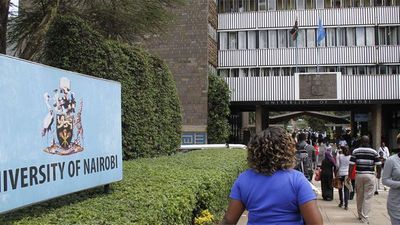
The government has backed proposals by vice chancellors to increase university fees to keep the institutions afloat.
Higher Education Principal Secretary (PS) Simon Nabukwesi told Parliament that a technical committee has proposed to the Cabinet the increase of the fees from the current Sh16,000 paid per student each academic year.
This comes amid opposition from students to push the tuition charges to Sh48,000.
“In our very simplistic way we thought that it is necessary to increase the contribution by individual students, so that funding is adequate for every university,” he told the National Assembly committee on Education.
The vice chancellors propose that the enhanced fees be introduced for fresh students to ease opposition from continuing learners
The technical committee that came up with the proposals was comprised of seven PSs, representation from the Commission for University Education (CUE), the Higher Education Loans Board (Helb) and Universities Funding Board (UFB).
Mr Nabukwesi said the team felt that students who are unable to pay the fees can apply for a loan through Helb.
The National Treasury has also backed the proposals by vice chancellors to triple university fees to keep the institutions afloat.
National Treasury Principal Secretary Julius Muia told Parliament reviewing fees is part of policy options to ensure financial sustainability in universities.
“Our suggestion is that we increase tuition fee to Sh48,000, then raise bursary allocation for those students not able to raise that amount,” Mr Muia told the National Assembly Committee on Education.
Tripling the fees will mark the first major shake-up of university fees since the end of free university education in 1991 and introduction of the student’s loans scheme-Higher Education Loans Board (Helb)- in 1995.
In 2017, government funding to universities shifted to the Differentiated Unit Cost (DUC) model that pegged allocation of budgets on number of undergraduate students registered and courses they take.
Before the DUC, each academic programme was allocated a flat rate of Sh120,000 per year per student.
Students’ fees has remained unchanged at Sh16,000 since 1989.
The cost of taking a student through college has since ballooned to Sh254,644 per year where the government caters for 80 percent of the fees, the institution provides for 10 and the student 10 percent.
The government recently increased funding per student to Sh171,051 on average, but even this left a shortfall of Sh67,593 for the institutions that are already running on deficits.
Kenya Insights allows guest blogging, if you want to be published on Kenya’s most authoritative and accurate blog, have an expose, news TIPS, story angles, human interest stories, drop us an email on [email protected] or via Telegram


FBI Foils Drone Attack Targeting White House

Messi, Ronaldo Set To Play In World Cup For 6th Time

How Joho Brokered Deal to Free 7 Kenyan Seafarers Jailed in Tanzania for 20 Years Over Human Trafficking

Calls Mount for Probe Into Garissa Woman Rep Edo Udgoon Siyad Over Alleged Role in Controversial Land Transactions Linked to Nzoia Sugar Disputes

Embarrassing State House Gaffe as Hussein Mohamed Names Wrong Japanese Prime Minister, Then Quietly Deletes Statement

A Packet of Milk, A Public Strip Search and 26 Years Thrown Away: The Ugly Face of Lipton Teas’ Kenyan Operations Exposed

The Listing That Doesn’t Lie: What the Market Isn’t Saying About Family Bank’s NSE Debut

8 Dead After US Air Force B-52 Bomber Crashes Shortly After Takeoff In California

Sh11 Billion Zakhem Debt Bombshell Rocks Kenya Pipeline Three Months After IPO, As Questions Mount Over What Investors Were Told

How A Convicted Zimbabwean Fraudster Quietly Bought His Way Into Kenya’s Sh375 Billion JKIA Mega-Deal

Inside NCBA’s Decline: How a Banking Giant Lost Its Strategic Edge

Businessman Philip Waithaka Kinuthia’s Minor Son Allegedly Drove Drunk, Killed Two Peponi Students in Ngong Road Horror Crash as Claims of Cover-Up Intensify

Cement, Cash and Courts: How the Hashu Dynasty Crushed the Ramji Brothers for Fourteen Years and Why the Walls Are Now Closing In

Standard Chartered Ghosts Haunt Joshua Oigara At Stanbic As Whistleblower Spills Beans

Inside The Urban Planning Cartel That Owns Nairobi

South Sudan: Adut Salva Kiir’s Shadow Treasury Exposed

Why Ruto’s Favourite Candidate Adan Mohammed Could Be Locked Out of the KRA Top Job

Why John Ngumi Is Running From the EACC and Why the Sh415 Million Payday May Be the Least of His Worries

The President’s Daughter and The Missing Witness: How Adut Salva Kiir’s Shadow Treasury Silenced Its Most Dangerous Critic

Betika Faces DCI Probe, Directors Arrest and License Revocation Over Massive 29.5 Million Safaricom Customers’ Data Breach
-
 Business6 days ago
Inside NCBA’s Decline: How a Banking Giant Lost Its Strategic Edge
-
 News1 day ago
Businessman Philip Waithaka Kinuthia’s Minor Son Allegedly Drove Drunk, Killed Two Peponi Students in Ngong Road Horror Crash as Claims of Cover-Up Intensify
-
 Investigations2 weeks ago
Cement, Cash and Courts: How the Hashu Dynasty Crushed the Ramji Brothers for Fourteen Years and Why the Walls Are Now Closing In
-
 Business6 days ago
Standard Chartered Ghosts Haunt Joshua Oigara At Stanbic As Whistleblower Spills Beans
-
 Investigations2 weeks ago
Inside The Urban Planning Cartel That Owns Nairobi
-
 Africa5 days ago
South Sudan: Adut Salva Kiir’s Shadow Treasury Exposed
-
 Business5 days ago
Why John Ngumi Is Running From the EACC and Why the Sh415 Million Payday May Be the Least of His Worries
-
 Africa5 days ago
The President’s Daughter and The Missing Witness: How Adut Salva Kiir’s Shadow Treasury Silenced Its Most Dangerous Critic