
Business
Nairobi Residents Ditch City Estates Due To Exorbitant Rent

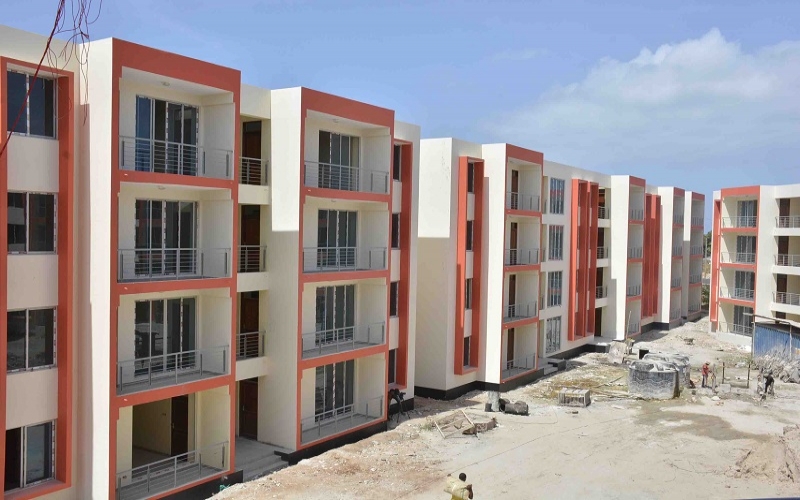
Kenyans living in Nairobi are moving out of the cities rented spaces and moving to satellites towns out of the city as rent continues to soar unabated.
Realtor HassConsult while releasing its first quarter residential and land price indices, showed that asking rents in the city have surged nearly threefold since 2007, pushing many Kenyans working in the city out. More movement can be seen in satellite towns like Ngong, Kitengela, Rongai, Ruai and Ruiru. The influx of tenants has also seen rents in these town rise, Thika, Ruiru, Ongata Rongai, Ruaka and Kitengela, saw an average rental increase of 2.1 percent on the lower side and up to 26.5 percent on higher side, between quarter three of 2018 and same quarter in 2019.
In Kitengela and Thika, the monthly median rental price for a one-bedroomed house stood at Sh15, 000, In Ongata Rongai, the monthly mean price of a one-bedroom rental stood at Kshs9,500. In Ruiru, the monthly mean rental price for a one-bedroom house stood at Sh12,000 while Ruaka’s monthly mean price of a one-bedroom rental stood at Sh24,000. “Asking rents for a modern apartment here may cost as little as Sh23,400 and this bodes well for many tenants who are now preferring affordable units as they take caution to save in the wake of job losses across all sectors,” Hass Consult head of development, consulting and research Sakina Hassanali said.
Ms. Hassanali notes that Kenyans would now rather pay more in transport and spend more time in traffic and pay cheaper rent. “As the cost of living soars, the lower middle class is opting to pay slightly more in transport but less in rents.”
Land prices within the city have increased 638% since 2017 with Kiambu and Kajiado have witnessing a 894% price jump over the same period. The report says apartments in Thika recorded the highest annual growth in rents at 13.3 percent while Tigoni had the highest quarterly rate increase at 3.5 percent
The production of housing units is currently at less than 50,000 units, well below the estimated two million units Kenya’s housing deficit target. Jubilee committed itself in the 2017 campaigns to construct one million houses by 2022. More recently that figure has been revised down to 500,000.
The government should provide incentives to developers to create affordable housing as stipulated in the Constitution of Kenya and the National Development Plan, Vision 2030 Strategy according to the World Bank.
Kenya Insights allows guest blogging, if you want to be published on Kenya’s most authoritative and accurate blog, have an expose, news TIPS, story angles, human interest stories, drop us an email on [email protected] or via Telegram


Nyali MP Moha Jicho Pevu Caught Up In Alleged Sh44 Million KPA Debt Scam

Somalia Deputy PM Held at JKIA, Deported Over Questionable Acquisition of Kenyan Passport

The White-Coat Heist: How MP Shah Hospital Ran a Decade-Long Double-Extraction Racket While Hiding Behind Charity Status

The Patriarch, His Children, and a Buried Sh3.9 Billion Fraud: The Story of Titus Muya That Kenya Was Never Meant to Read

The Founder’s Ransom: How Titus Muya Had to Be Paid Sh231 Million to Let Go of Family Bank and Why That Bill Is Now Yours

Kenya’s gambling industry pushes back against a licensing bill

Kenya Airways Sinks Into Deeper Turbulence As American Supplier Sues In New York Court Over Sh129 Million Unpaid Debts

Kenyan player wins a Ksh3.2 million jackpot

IEBC Sets August 10 Date For 2027 General Election

Furious Ruto Lashes Out at Gideon Moi Over Repeated ‘Blackmail, Extortionist’ Headlines on The Standard and KTN

Businessman Philip Waithaka Kinuthia’s Minor Son Allegedly Drove Drunk, Killed Two Peponi Students in Ngong Road Horror Crash as Claims of Cover-Up Intensify

Inside NCBA’s Decline: How a Banking Giant Lost Its Strategic Edge

South Sudan: Adut Salva Kiir’s Shadow Treasury Exposed

Cement, Cash and Courts: How the Hashu Dynasty Crushed the Ramji Brothers for Fourteen Years and Why the Walls Are Now Closing In

Standard Chartered Ghosts Haunt Joshua Oigara At Stanbic As Whistleblower Spills Beans

Inside The Urban Planning Cartel That Owns Nairobi

THE VULTURE AND THE SCHEME How Nairobi West Hospital Became the Most Dangerous Institution in Kenya’s SHA Ecosystem and Why the Books Must Be Audited Now

The President’s Daughter and The Missing Witness: How Adut Salva Kiir’s Shadow Treasury Silenced Its Most Dangerous Critic

How Adil Popat Saved His Empire On The Eve Of Imperial Bank Collapse and Why Kenya’s Mainstream Media Buried The Story

Why John Ngumi Is Running From the EACC and Why the Sh415 Million Payday May Be the Least of His Worries
-
 News2 weeks ago
Businessman Philip Waithaka Kinuthia’s Minor Son Allegedly Drove Drunk, Killed Two Peponi Students in Ngong Road Horror Crash as Claims of Cover-Up Intensify
-
 Investigations1 week ago
THE VULTURE AND THE SCHEME How Nairobi West Hospital Became the Most Dangerous Institution in Kenya’s SHA Ecosystem and Why the Books Must Be Audited Now
-
 Business16 hours ago
The Patriarch, His Children, and a Buried Sh3.9 Billion Fraud: The Story of Titus Muya That Kenya Was Never Meant to Read
-

 Business5 days ago
BURRIED TWICE: The Victoria Bank CEO Yogesh Pattni Files
-

 Business1 week ago
Inside the Billion-Shilling Betrayal: How Senior Treasury Officials Plundered a UN Poverty Fund and Built a Real Estate Empire on the Backs of Kenya’s Rural Poor
-

 Business2 weeks ago
The Listing That Doesn’t Lie: What the Market Isn’t Saying About Family Bank’s NSE Debut
-

 Business1 week ago
The Banker Who Walked Away: How Yogesh Pattni Survived a Financial Crime Scandal That Shook Kenya
-

 News7 days ago
My Life Is In Danger: Investor Drops Bombshell Expose On Thomas Ogutu CEO VeGrid Ltd And Fugitive Nairobi CEC Charles Kerich – DCI Inaction And Corruption Network Exposed