
The clock is ticking on one of the most consequential asset sales in Kenya’s post-independence history, and the experts tasked with scrutinising it are growing increasingly restless.
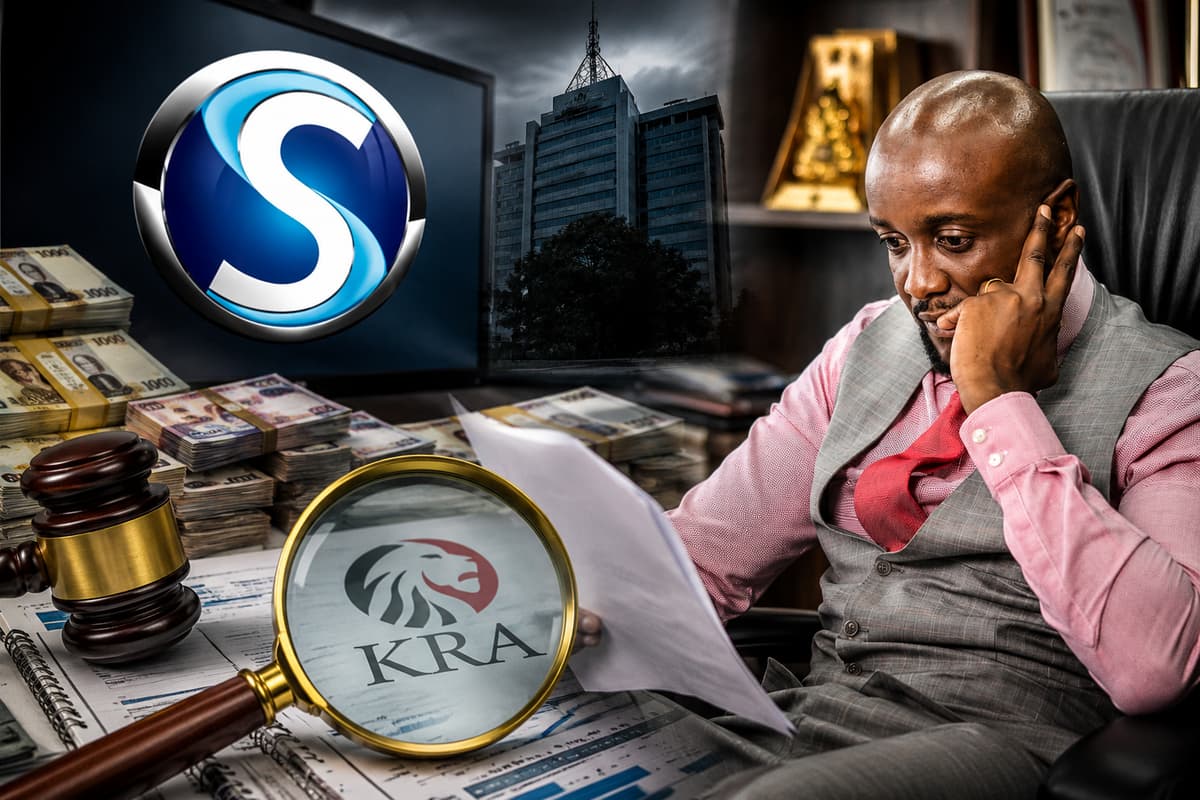
As Parliament races to clear the proposed sale of the government’s 15 percent stake in Safaricom to South Africa’s Vodacom Group, a mounting chorus of accountants, lawyers, opposition lawmakers and civil society organisations are sounding the alarm: Kenya could bleed up to Sh7 billion in dividends alone if the transaction closes at the wrong moment, and potentially up to Sh80 billion in long-term value if the deal is not restructured entirely.
The proposed divestiture, which would hand Vodacom a controlling 55 percent interest in the country’s most profitable company, is set to generate gross proceeds of Sh204.3 billion at a price of Sh34 per share.
When combined with a controversial upfront dividend payment of Sh40.2 billion that Vodafone Kenya is making to the Treasury for the right to collect future dividends on the government’s remaining 20 percent stake, total inflows are projected at Sh244.5 billion.
The Treasury has said the money will seed the National Infrastructure Fund and finance commercially viable projects in energy, transport and water.
On the surface, the numbers look impressive. Beneath the headline figures, however, a troubling web of timing risks, valuation questions and governance gaps is emerging that has sent shockwaves through Parliament and the professional bodies that advise it.
The Dividend Trap That Could Cost Kenya Sh7 Billion
At the very heart of the controversy lies a deceptively simple question: who gets paid when Safaricom declares its next dividend? Under basic stock market rules, dividends belong to whoever holds the shares at the time they are declared. That rule creates a dangerous overlap in the current timeline.
The National Assembly has until approximately March 10 to conclude its review of the divestiture under Sessional Paper No. 3 of 2025.
That window lines up almost exactly with the period in which Safaricom is expected to announce its interim dividend for the financial year ending March 2026. In previous years, Safaricom has declared interim dividends in mid-February, with payments made around the end of March.
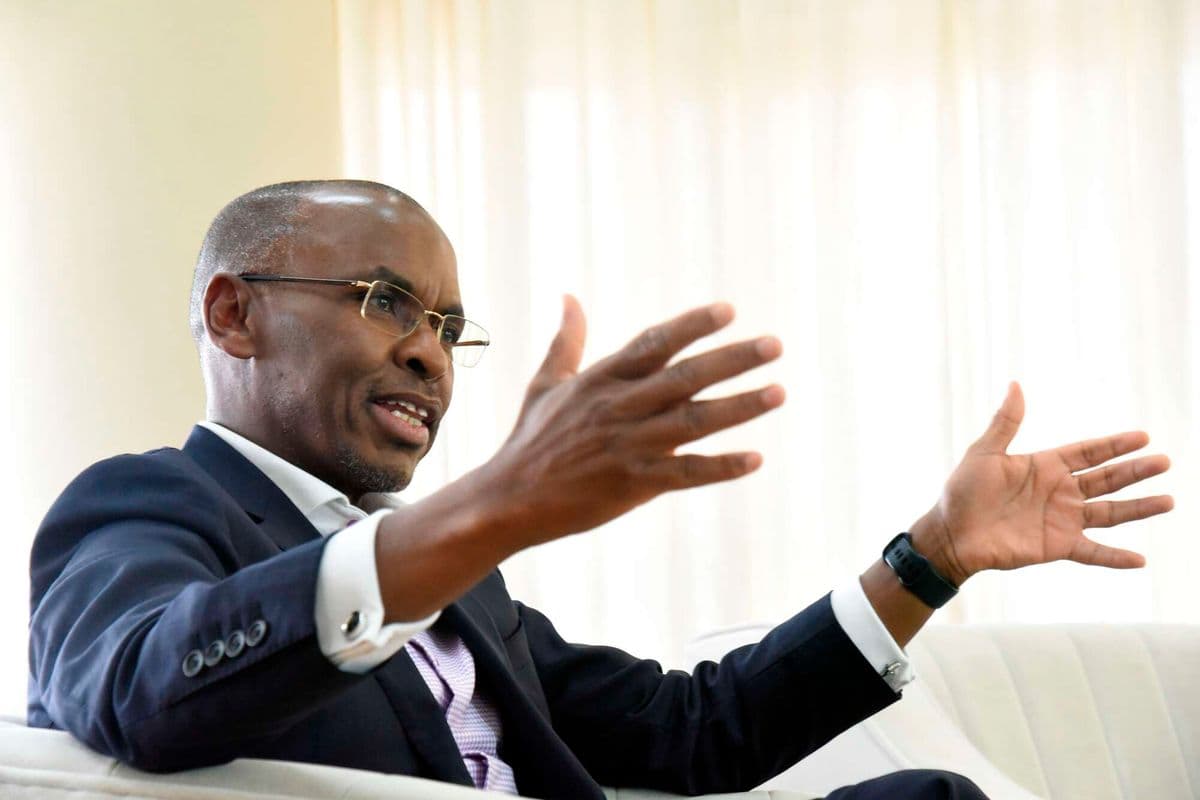
Safaricom CEO Peter Ndegwa, appearing before Parliament’s joint committee on Finance and Privatisation, acknowledged the fundamental mechanics plainly.
If dividends are declared after the transaction is completed, the new shareholder, in this case Vodacom, would be entitled to the payout.
He attempted to reassure lawmakers by pointing to what he called an “advance dividend clause” in the deal, arguing that the government would not lose out regardless of timing. MPs were not convinced.
Kinangop MP Thuku Kwenya challenged the explanation head on, telling the committee that the timing of the transaction was suspicious and that the public was paying close attention.
His arithmetic was blunt: if the sale goes through before Safaricom declares its interim dividend, the government stands to forfeit billions of shillings that would otherwise have flowed into the public purse. MPs have put the figure at approximately Sh7 billion.
Finance Committee chairperson Kuria Kimani conceded the point was legitimate, telling members that Parliament’s decision on the timing of approval would directly determine who collects the dividend.
It was a rare moment of candour in a process that critics have accused the Executive of rushing.
The Rush That Raised Eyebrows
The speed at which this deal has moved through the system has itself become a flashpoint. MPs were recalled from their Christmas recess at the Express request of the Executive to fast-track the approval process. National Assembly Speaker Moses Wetang’ula granted the two relevant committees, Finance and National Planning, and Public Debt and Privatisation, special permission to sit outside the normal House calendar, a provision usually reserved for matters with strict constitutional deadlines.
Critics see in that urgency something more than fiscal necessity.
The Law Society of Kenya, in a formal submission to Parliament, labelled the transaction “rushed, opaque and non-competitive” and called on lawmakers to reject the deal in its current form until an independently verified valuation and a properly competitive sale structure are established.
LSK Vice President Mwaura Kabata went further, warning that handing a foreign entity majority control of a company that processes M-Pesa transactions, handles sensitive citizen data and underpins Kenya’s digital economy posed a genuine threat to national security and data sovereignty.
The Consumer Federation of Kenya, COFEK, has formally petitioned Parliament to halt the sale entirely, branding it “asset stripping” dressed up as fiscal reform.
The watchdog raised alarms over the valuation, the governance framework and what it described as a failure by the Executive to conduct meaningful public participation in violation of Article 10 of the Constitution. COFEK also argued that selling during Safaricom’s capital-intensive expansion into Ethiopia unfairly transferred risk to Kenyan taxpayers while denying them the upside once the Ethiopian operation matures.
A Price Tag That Does Not Add Up
The Sh34 per share price has drawn the sharpest scrutiny of any element of the deal.
The Institute of Certified Public Accountants of Kenya told Parliament that the price was set using a 33.9 percent premium to the volume-weighted average trading price over the 180 days before Vodacom filed its buyout disclosure.
That approach, ICPAK chairperson Professor Elizabeth Kalunda argued, relies on historical market data and liquidity conditions rather than Safaricom’s intrinsic value. She called for the valuation to be anchored instead to the company’s expected future earnings, its sector outlook and relevant macroeconomic trends.
The concern is not academic. Safaricom’s shares traded above Sh44 as recently as 2021, when the company was valued at approximately Sh1.8 trillion before its Ethiopia investment. Kiharu MP Ndindi Nyoro, one of the deal’s most vocal opponents, has argued that the government should not be entertaining any figure below Sh45 per share.
At Sh34, the implied valuation of Safaricom comes in at roughly Sh1.36 trillion, a decline of more than 24 percent from its 2021 peak.
Nyoro has warned that at the current price, taxpayers stand to forfeit tens of billions of shillings.
The Technology Service Providers Association of Kenya joined ICPAK in flagging the absence of any publicly disclosed methodology behind the Sh34 figure.
There has been no independent benchmarking or third-party validation made available to Parliament or the public, a gap that has fuelled accusations of a lack of accountability in price discovery.
The Dividend Rights Deal Within the Deal
Buried inside the larger transaction is a second arrangement that has attracted far less public attention but carries its own set of risks.
As part of the sale, Vodafone Kenya is paying the government Sh40.2 billion upfront for the right to collect all future dividends on the Treasury’s remaining 20 percent stake.
The actual value of those future dividends, according to Vodacom’s own disclosures to the Johannesburg Stock Exchange, is projected at Sh55.7 billion. The gap between the two figures represents a discount of Sh15.5 billion handed to the South African firm.
Treasury CS John Mbadi has defended the arrangement as a calculated trade-off, arguing that receiving cash now carries value that future, uncertain payouts do not.
He pointed out that Safaricom’s dividend performance, while historically strong, is not guaranteed in perpetuity and that the markets are dynamic.
Vodacom’s own financial controller has said the company structured the upfront payment based on expected dividends over three years, discounted at an internal rate of return of 16.5 percent, and expects to recoup the facility within two to three years.
For the Treasury, the maths looks different. In the year ending March 2025, the government banked full-year dividends of Sh16.83 billion from its 14.02 billion Safaricom shares.
Once its stake drops to 20 percent, the projected annual dividend income on those shares would be roughly Sh9.6 billion, assuming the current payout rate holds.
At that rate, it would take the government approximately six years to recover the value of the dividend rights it has surrendered. Critics argue that mortgaging a reliable, predictable revenue stream for a one-off cash injection weakens the State’s long-term fiscal position.
What the Regulators Are Saying
Not everyone in the regulatory ecosystem has raised objections. The Communications Authority of Kenya, the Capital Markets Authority and the Competition Authority of Kenya all told Parliament they view the price as competitive and did not expect the transaction to negatively affect the market.
Communications Authority Director General David Mugonyi noted that there is no local shareholding threshold requirement under current policy and that the deal retains government equity participation through the 20 percent stake.
Treasury PS Chris Kiptoo, appearing before Parliament on January 29, maintained that the Sh34 price represented the best premium available in the market and provided value for money.
When pressed on whether an independent valuation had been conducted, he did not deny the gap but told lawmakers the Treasury would welcome any pathway that delivered better value to Kenyans.
The Constitutional Question
Beneath the financial debate lies a bigger structural problem. MPs have flagged the fact that the Infrastructure Fund, which is supposed to receive and ring-fence the Sh204 billion in share sale proceeds, does not yet have a proper legal foundation. Without an Act of Parliament establishing the fund, the Constitution requires that the money flow into the Consolidated Fund, where it can be spent on anything from salaries to debt servicing.
Kitui South MP Rachael Nyamai put it bluntly: the country already has a mountain of debt and pending bills, and money deposited in the Consolidated Fund is vulnerable to being redirected to those pressing obligations before it ever reaches an infrastructure project.
Kuria Kimani, the Finance Committee chair, confirmed the concern was legitimate. Dr Kiptoo told MPs the Treasury had set up the Infrastructure Fund as a limited liability company under the Companies Act as a faster alternative to legislation, but acknowledged the arrangement needed further consultation.
Safaricom is not just Kenya’s largest listed company.
It is the backbone of the country’s mobile money system, a platform that processes over 100 million M-Pesa transactions every single day.
Selling majority control of that infrastructure to a foreign entity is, in the words of several of the bodies that have submitted views to Parliament, an irreversible decision.
Once the shares change hands, the government’s ability to influence the strategic direction of a company that touches virtually every corner of the Kenyan economy will diminish considerably.
The Executive has framed the sale as a bold, fiscally necessary move in an environment where borrowing is no longer politically or economically viable. Parliament has until the end of March to decide whether the nation agrees.
What is becoming increasingly clear is that the deal, as currently structured, carries risks that have not been adequately disclosed, a valuation that has not been independently verified and a timeline that appears designed to close before all the questions have been properly answered.
Whether Kenya can afford to accept those terms is, ultimately, the question Parliament must answer before the clock runs out.






Comments