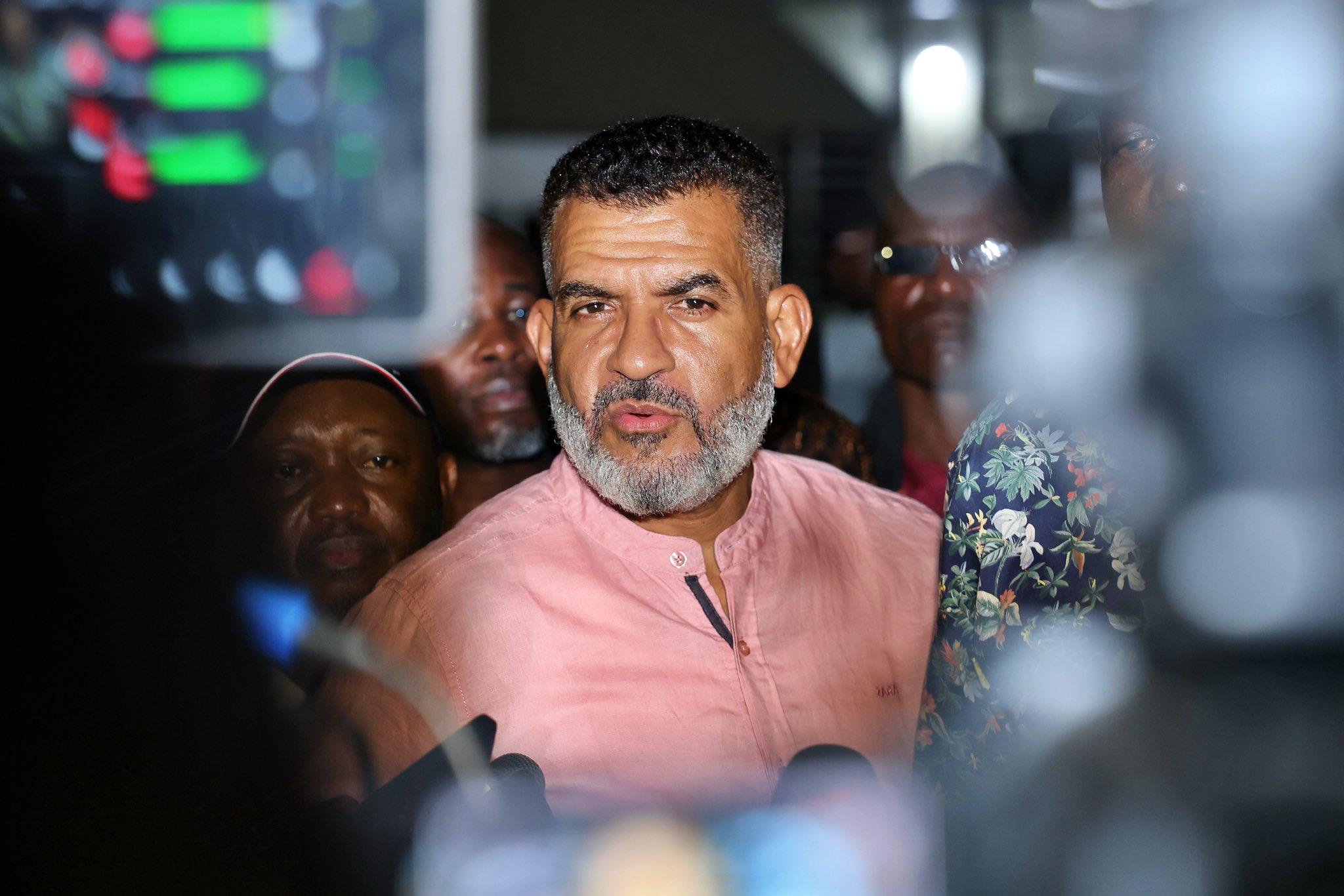
Court orders rushed as scandal deepens over secretive deal with foreign conglomerate
A storm is brewing over Governor Abdulswamad Nassir’s administration as disturbing details emerge about a colossal Sh17 billion waste management contract awarded to a Ghanaian firm amid allegations of secrecy, constitutional violations and complete disregard for public participation.
The High Court in Mombasa has certified as urgent a petition that threatens to blow the lid off what could be one of the most questionable procurement deals in Kenya’s devolution era, with the county government now cornered and forced to answer hard questions about how public funds are being managed behind closed doors.
The Centre for Litigation Trust has gone to court demanding answers about the mysterious tender awarded to Jospong Group of Companies, a Ghanaian conglomerate, for a 35-year waste-to-energy processing plant in Mwakirunge that has never been debated by elected representatives in the County Assembly.
Justice Jairus Ngaah, in a ruling delivered on December 4, declared the petition urgent and gave the county a mere seven days to file responses, setting up a dramatic legal showdown that could expose systemic governance failures in the coastal county.
At the heart of the controversy is a tender process that appears to have been conducted in the shadows, bypassing constitutional requirements that mandate county assemblies to scrutinize such massive financial commitments involving devolved funds.
The constitutional principles at stake are not minor technicalities but fundamental pillars of Kenya’s democratic governance: the rule of law, public participation, accountability and transparency.
The Centre for Litigation Trust, led by its Executive Director Julius Ogogoh, has painted a damning picture of a county government that has stone-walled legitimate requests for information and conducted a tender process that violated every principle of open governance.
The lobby group had written to the county on October 24 seeking basic details about the tender, only to be met with deafening silence.
What information is Mombasa County so desperate to hide? The questions are straightforward yet explosive. How many entities applied for this lucrative tender? Who was shortlisted? What were the evaluation criteria and score sheets for each bidder? Is this a public-private partnership, and if so, was it tabled before the County Assembly as required by the Urban Areas and Cities Act 2011? What are the exact contract details, including its value, duration and specific terms?
The county’s refusal to provide these basic details has raised alarm bells across the Coast region, with many wondering what Governor Nassir’s administration is hiding from the public.
The petition argues that this conduct violates Article 35 of the Constitution, which guarantees every Kenyan the right to access information held by the state.
County Executive Committee Member for Environment and Water Kibibi Abdalla has offered contradictory explanations that have only deepened the mystery.
In one breath, she claims the tendering process is still ongoing despite the tender already having been awarded.
In another, she describes it as a World Bank project that was costed in the 2023/24 financial year, raising questions about why it bypassed budget scrutiny in subsequent years.
Her excuses for failing to provide documents to the County Assembly committee investigating the matter read like a comedy of errors.
She was on leave, she claimed, and had delegated to Traded CEC Mohamed Osman, who was attending to his ailing father, while County Secretary Jeizan Faruk had travelled with the governor.
If true, these excuses reveal a county government so poorly organized that a Sh17 billion contract can slip through without proper oversight.
Members of the County Assembly have expressed outrage at being kept in the dark.
Bamburi MCA Patrick Mwavule categorically denied that the assembly had ever approved the project, contradicting claims that such authorization existed.
The assembly’s Environment and Solid Waste Disposal Committee accused the Department of Environment of deliberately evading their invitation to answer questions about the controversial tender.
The timing of events adds another layer of intrigue to this scandal.
In early August, just months before the tender controversy erupted, Governor Nassir led a high-profile delegation to Ghana, where they reportedly explored partnerships in waste management and renewable energy.
Was this trip a legitimate benchmarking exercise or was it the foundation for a pre-determined deal with Jospong Group that would later be rubber-stamped through irregular processes?
Jospong Group of Companies is no small player.
The Ghanaian conglomerate, founded by businessman Joseph Siaw Agyepong, operates 76 subsidiary companies across 15 sectors in Africa and Asia.
Its Environmental and Sanitation division accounts for 60 percent of group operations, with waste management as its flagship business through Zoomlion Ghana Limited and numerous affiliated companies.
The group has signed similar waste management deals across Africa, including partnerships with Lagos State in Nigeria, Uganda’s capital city authority for the Kiteezi Landfill, and Zimbabwe’s Geo Pomona.
While Jospong has built a reputation as a solution provider for waste management challenges in developing African countries, questions remain about why Mombasa County felt compelled to bypass competitive tendering processes and public scrutiny to award them this contract.
Mombasa County produces between 900 and 1,200 tonnes of waste daily, with the current infrastructure capable of collecting only 52 to 56 percent of this volume.
A 2024 report by Haki Yetu Organization identified over 74 illegal dumpsites in the county, with Likoni and Kisauni being the worst affected.
The waste management crisis is real, but does that justify circumventing the Constitution and established procurement procedures?
The county has touted the deal as a job creation initiative, claiming that over 3,000 youth will be employed through 41 youth groups earning between Sh100,000 and Sh150,000 per group monthly during a three-month pilot phase.
While job creation is laudable, it cannot be used as a smokescreen to obscure questionable procurement practices and the absence of public participation.
The Centre for Litigation Trust is seeking far-reaching remedies from the court.
Beyond compelling the county to release all requested information at its own cost, the lobby group wants a declaration that the county’s conduct violated constitutional principles of the rule of law, public participation, human rights, good governance and accountability.
These declarations, if granted, would set a powerful precedent for how counties must conduct major procurement processes.
The case has been scheduled for directions on December 15, setting up what promises to be a defining moment for devolution and accountability in Kenya.
Will Mombasa County finally come clean about how this Sh17 billion contract was awarded, or will it continue to hide behind excuses and bureaucratic doublespeak?
For Governor Nassir, this scandal threatens to undermine his administration’s credibility barely two years into his tenure.
His ten-point campaign manifesto prominently featured access to clean water and proper waste management services, but voters did not sign up for secretive deals that bypass constitutional oversight.
The silence from the county government speaks volumes.
As pressure mounts from civil society, County Assembly members and now the courts, the administration finds itself backed into a corner with nowhere to hide.
The seven-day deadline set by Justice Ngaah is ticking, and Kenyans are watching to see whether Mombasa County will finally embrace transparency or continue down the path of opacity and constitutional violations.
This case is about more than just one tender.
It is about whether devolution will deliver the accountability and public participation promised in the 2010 Constitution, or whether it will become another avenue for backroom deals that shortchange citizens.
The stakes could not be higher, and the outcome will reverberate far beyond Mombasa County’s borders.
As the legal battle unfolds, one question hangs heavy in the coastal air: What exactly is Mombasa County hiding, and why?





Comments