
A petroleum company linked to Mombasa billionaire Mohammed Jaffer was quietly allowed to import expensive petrol at three times the normal cost in early March, positioning the politically connected businessman to reap billions in profits as Kenya grappled with the fallout from the US-Israel war with Iran.
One Petroleum, a subsidiary of Jaffer’s Mbaraki Bulk Terminal Ltd, was among two local firms cleared by the Ministry of Energy to ship in 60 tonnes of petrol each outside the government-to-government deal that Kenya signed with three Gulf oil majors.
The emergency imports came as the government scrambled to avert shortages tied to the closure of the Strait of Hormuz following Iranian drone attacks on oil facilities in the Gulf region.
Industry sources revealed at the time that One Petroleum quoted a premium of $290 per tonne, equivalent to Sh37,691.3, which was three times the $84, or Sh10,917.48, quoted for a similar quantity of fuel under the G-to-G deal involving Saudi Aramco, Emirates National Oil Company, and Abu Dhabi National Oil Company.
The two cargo consignments imported outside the deal were to be part of those used in setting monthly pump prices from April 15, meaning Kenyan consumers were staring at a potential steep climb in fuel costs.
“We are looking at an increase of at least Sh19 per litre on account of the premiums alone. Then we also add the global benchmark prices of fuel for the month of March which are higher than those from the month of February. The effect is going to be huge unless the government goes for a significant subsidy,” an industry source was quoted at the time.
The empire of Mohammed Jaffer
One Petroleum is a subsidiary of Mbaraki Bulk Terminal Ltd, a multi-petroleum products handling facility at the port of Mombasa that is partly owned by Jaffer, a businessman who has managed to secure safe ties with political regimes since the era of President Daniel arap Moi.
Jaffer, who founded the MJ Group conglomerate now valued at over Sh16.3 billion, was previously a supporter of the late opposition leader Raila Odinga but has since made peace with President William Ruto, whom he had opposed in the last election.
Company records show Jaffer’s family members, including Mojtaba Mohamed Jaffer, Ali Abbas Jaffer and Mohamed Husein Jaffer, are listed as directors of One Petroleum.
Others are Solomon Esebwe Mwanjuma Ondego, Ali Salaah Balala, who serves as executive director, and Jonathan James Stokes. Nicholas Kokita is the company secretary.
The Jaffers are also associated with Africa Gas and Oil Company, One Gas Ltd and Grain Bulk Handlers.
Africa Gas is partly controlled by the billionaire, who also owns Grain Bulk Handlers, which imports the bulk of the liquefied petroleum gas consumed in Kenya and controls a significant transit market to neighbouring countries.
A monopoly under threat
The businessman has been able to maintain a monopoly not only in port operations but also in the LPG industry.
His empire, however, came under threat from President Ruto’s decision to bring in a new entrant, Taifa Gas, owned by Tanzanian billionaire Rostam Aziz, who put up a 30,000-tonne gas plant at the Dongo Kundu Special Economic Zone in Likoni.
Jaffer appeared to have made peace with the president and won another tender.
His company, Grain Bulk Handlers, launched a new grain-handling and storage terminal in Embakasi, Nairobi, in April 2023, with President Ruto attending the event and expressing confidence that the terminal would play a vital role in addressing food security in the country.
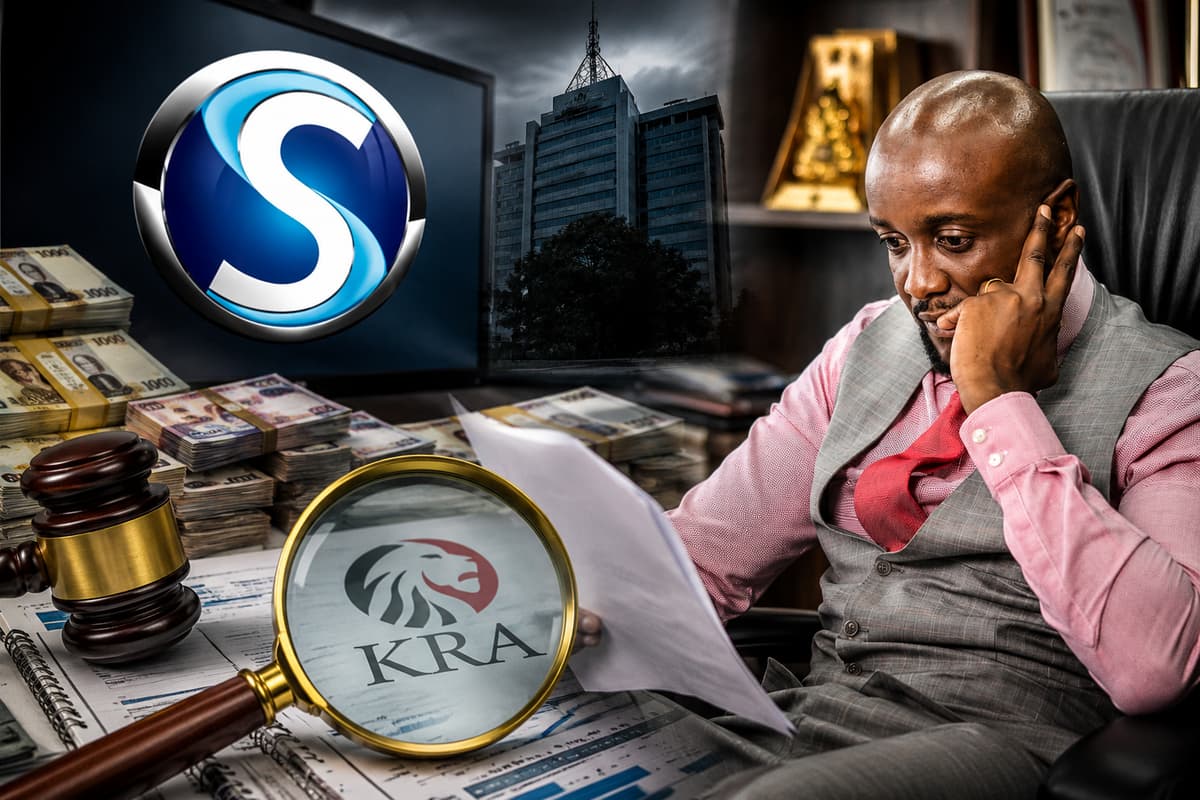
But the Jaffer empire has faced scrutiny before. In 2021, the Kenya Revenue Authority went to court accusing the family’s oil and gas firms of Sh68 million tax evasion.
How the crisis created opportunity
The emergency imports that allowed One Petroleum to charge inflated premiums were necessitated by the closure of the Strait of Hormuz following Iran’s drone attacks on oil facilities in Gulf countries.
Iran attacked at least 18 merchant ships along the strategic waterway in response to US-Israel strikes against it, significantly hindering the movement of fuel from the oil-rich region.
Nearly 25 per cent of the global liquefied natural gas and fuel passes across the Strait of Hormuz, enabling its movement from the Persian Gulf to the Gulf of Oman, the Arabian Sea and beyond.
Iran, Iraq, Kuwait, Qatar and Bahrain rely on the strait to deliver the vast majority of their oil exports.
A vessel carrying 114.7 million litres of super from Emirates National Oil Company was unable to leave the Port of Jebel Ali in Dubai due to the closure, prompting the Ministry of Energy to float the idea of shipping fuel outside the G-to-G deal.
Sources said a section of importers under the deal did not support the idea, citing the potential impact of steep premiums compared to the fixed ones under the government-backed arrangement.
But the ministry went ahead and cleared One Petroleum and Oryx Energies to ship in the combined 120 tonnes of petrol.
One Petroleum discharged its cargo, while that for Oryx arrived later.
The G-to-G deal under the spotlight
The G-to-G deal, which was designed to address dollar shortages and stabilise fuel supply through six-month credit arrangements backed by Kenyan bank letters of credit, has been a centre of controversy since its inception in March 2023.
The deal involves Gulf firms Saudi Aramco, Emirates National Oil Co, and Abu Dhabi National Oil Co, and has been running through three main oil companies, Galana Energies, Gulf Energy, and Oryx Energies, which have been distributing fuel on behalf of the three Gulf oil companies.
According to the Ministry of Energy and Petroleum, Kenya extended the G-to-G deal with the Gulf oil firms to 2028. The three firms will continue to supply gasoline, diesel, kerosene and jet fuel under the 180-day credit arrangement until early 2028.
By mid-November 2023, oil imports under the scheme amounted to about $3.7 billion, equivalent to Sh592 billion. Letters of credit worth over $784 million, or Sh125.4 billion, were also settled, underlining the lucrative nature of the deal for players involved.
What the windfall meant for One Petroleum
With One Petroleum importing petrol at a premium three times higher than the G-to-G rate, the potential profits were staggering.
The company invoiced oil companies, with the price build-up showing a premium of $290 per tonne. For a 60-tonne consignment, this translated to a premium payment of $17,400, or approximately Sh2.26 million, above the normal rate.
But the real money lay in the fact that the cargo was to be used to set pump prices nationwide.
With the premium factored into the pricing formula, the company stood to make billions in additional revenue from the inflated cost structure that would be passed on to consumers.
Political connections paying off
The addition of One Petroleum to the exclusive circle of firms allowed to import fuel represents a significant victory for Jaffer, who has maintained a delicate balancing act in Kenya’s turbulent political landscape. His ability to secure favour from successive regimes, from Moi to Ruto, speaks to a sophisticated understanding of how political connections translate into business opportunities.
Jaffer’s empire spans grain handling, oil and gas, and port operations, giving him control over critical infrastructure that handles the bulk of Kenya’s imports. With the government allowing his firm to import fuel at bloated prices during a national crisis, his dominance over the country’s energy sector was set to grow even further.
Global disruptions and the changing landscape
Following the closure of the Strait of Hormuz, oil exporters from the Gulf, including Saudi Aramco which is part of the G-to-G deal, turned to alternative routes. They began using the Sikka Port in India, the Port of Antwerp-Bruges in Belgium and the ports situated along the Red Sea for the transportation of oil to markets such as Kenya.
About 239.1 million litres of petrol were set to be loaded onto two vessels at the Port of Antwerp-Bruges in Belgium. The vessels were to sail towards Kenya via the Red Sea-Mediterranean route and dock at the Port of Mombasa between April 16 and April 27. Another 81.15 million litres of dual-purpose kerosene and 75.6 million litres of diesel were to be loaded onto vessels at the Sikka Port in India, with those vessels expected to dock at the Port of Mombasa between April 12 and April 21.
The cost to Kenyans
While One Petroleum and its politically connected owners stood to make billions from the arrangement, ordinary Kenyans faced the prospect of yet another punishing price hike. The April 15 price review was expected to deliver the highest pump prices in months, reflecting the impact of the fuel supply disruptions caused by the attacks on oil facilities in the Gulf.
The global energy markets reacted sharply to the crisis, with oil prices surging after Iran threatened shipping routes through the Strait of Hormuz. Treasury Cabinet Secretary John Mbadi warned lawmakers that the longer the conflict dragged on, the greater the economic shock could become, cautioning that prolonged disruptions to global energy and trade routes could have massive consequences for Kenya’s economy.
But for Jaffer and One Petroleum, the crisis presented a golden opportunity. The company not only secured a place in the exclusive circle of importers but was also allowed to import fuel at bloated prices that would be passed directly to consumers. It was a classic case of crisis capitalism, where those with the right connections turn national emergencies into personal windfalls.
What followed
The Ministry of Energy and Petroleum did not immediately respond to queries over the two vessels and how the government would treat the significantly high premiums in order to protect consumers. Without a steep subsidy, the April 15 to May 14 prices were expected to be the highest in months.
Energy and Petroleum Regulatory Authority Director General David Kiptoo later revealed in a television interview that the regulator had incorporated One Petroleum and Asharami Synergy into the G-to-G deal, bringing the number of oil firms to five. Under the current arrangement, three Kenyan oil marketing companies, Galana Oil, Gulf Energy and Oryx Energy, own cargo upon delivery to Mombasa port by the international Gulf-based oil giants.
The expansion of the deal to include Jaffer’s company raised fresh questions about transparency and whether the government was using the cover of a global crisis to reward its political allies. For now, one thing was certain. While ordinary Kenyans braced for another round of punishing price hikes, the politically connected players in the lucrative oil import game were counting their billions.







Comments