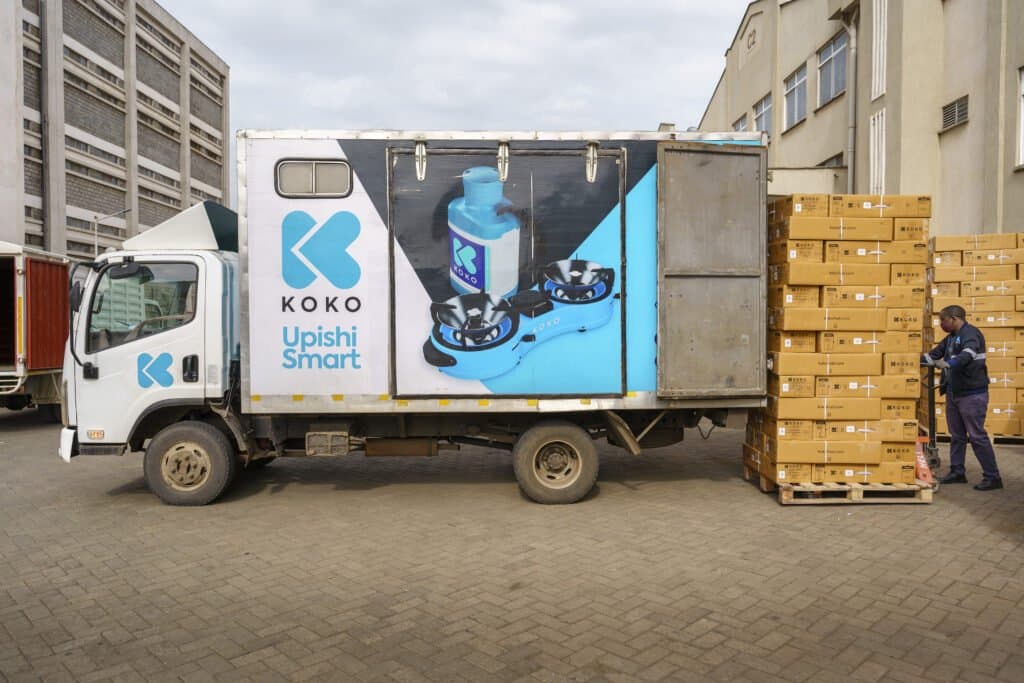
Government’s Rejection of Carbon Credit Sales Triggers Instant Shutdown of Clean Energy Pioneer, Crushing Dreams of 1.5 Million Poor Households
Nairobi’s Baba Dogo industrial area fell silent on Friday evening after clean cooking fuel firm Koko Networks made the dramatic decision to shut down all operations and send home its entire 700-strong workforce, following a bitter standoff with the Kenyan government over carbon credit sales that has cost the country billions of shillings in climate financing and left more than 1.5 million low-income households facing a return to dangerous and polluting charcoal.
The collapse of the once-celebrated climate technology company came after two days of tense boardroom deliberations, during which executives wrestled with the harsh reality that without government approval to sell carbon credits internationally through a Letter of Authorisation, the company’s entire business model had become financially unviable overnight.
Management delivered the crushing news to staff members on Friday afternoon, telling them not to report to work on Monday.
The abrupt closure marks one of the most spectacular corporate failures in Kenya’s emerging clean energy sector and raises serious questions about the government’s commitment to supporting climate action despite its public pronouncements on environmental protection.
“We are just from a meeting with the management, and they have communicated the decision to close operations. Nobody is supposed to be in the office tomorrow, the decision has been made,” a devastated staff member told Business Daily on Friday, speaking on condition of anonymity.
The shutdown represents a stunning reversal of fortune for a company that just eight months ago was celebrating a historic Sh23.18 billion guarantee from the World Bank’s Multilateral Investment Guarantee Agency, the largest political risk insurance policy ever issued to support carbon market activities under the Paris Agreement.
At the heart of Koko’s collapse lies the government’s refusal to issue a Letter of Authorisation that would have allowed the company to sell its carbon credits in lucrative international compliance markets, particularly the Carbon Offsetting and Reduction Scheme for International Aviation, which requires credits backed by government approval and corresponding adjustments under Article 6 of the Paris Agreement.
The LOA rejection has effectively strangled Koko’s revenue stream. The company had generated approximately six million tonnes of carbon credits annually through its operations, which involved replacing charcoal and firewood with cleaner bioethanol cooking fuel in low-income households. These credits, certified under the rigorous Gold Standard methodology, were supposed to fund the massive subsidies that made Koko’s products affordable to Kenya’s poorest families.
Without carbon credit revenues, the mathematics of Koko’s business model simply do not work. The company was selling bioethanol at Sh100 per litre, half the market price of Sh200, while absorbing an even more dramatic subsidy on its cooking stoves, which retailed at Sh1,500 compared to a true cost of Sh15,000. This nine-tenths discount on hardware alone required consistent carbon credit sales to international buyers willing to pay premium prices for high-integrity, correspondingly adjusted credits.
The government’s decision appears particularly puzzling given that Kenya has been actively developing its carbon market infrastructure and passed amendments to the Climate Change Act in 2023 specifically to enable participation in Article 6 mechanisms. The country has also been drafting regulations for a National Carbon Registry designed to facilitate the issuance of Letters of Authorisation and track corresponding adjustments.
Industry insiders suggest the LOA rejection may stem from broader concerns about how Kenya manages its carbon accounting under its Nationally Determined Contributions to the Paris Agreement. When the government issues an LOA and applies corresponding adjustments, it must subtract those carbon reductions from its own national climate targets, potentially making it harder to demonstrate progress on emissions reduction commitments.
However, this explanation rings hollow to many observers who note that Koko’s projects were delivering genuine, additional carbon reductions that would not have occurred otherwise. The company had issued over 10 million vintage credits from 2021 to 2024 and was on track to continue generating substantial volumes that could have attracted hundreds of millions of dollars in foreign climate finance.
The timing of the collapse could not be worse for Kenya’s clean cooking sector. The country has been struggling to transition households away from charcoal and firewood, which contribute to deforestation, indoor air pollution, and health problems that kill thousands of Kenyans annually. Koko had emerged as the most successful scalable solution, reaching 1.5 million customers across eight cities including Nairobi, Mombasa, Kisumu and Nakuru.
The company’s innovative distribution model, which placed over 3,000 cloud-connected automated refilling machines at small shops owned predominantly by female entrepreneurs, had created employment and income opportunities for thousands of agents while providing convenient access to clean fuel in low-income neighborhoods where such services are typically scarce.
The economic devastation extends far beyond Koko’s direct workforce. The company employed 650 people directly in Kenya and worked with thousands of agents and distributors. Its supply chain included partnerships with major firms like Vivo Energy for bioethanol procurement and Indian manufacturer SAARUS for cookstove production. All of these stakeholders now face uncertain futures.
For Koko’s 1.5 million customers, the shutdown represents a forced return to dirtier, more dangerous cooking methods. With liquefied petroleum gas prices averaging Sh1,350 for a six-kilogram refill, far beyond the reach of most low-income households, many will have no choice but to resume using charcoal and kerosene despite the health risks and environmental damage.
The collapse also raises troubling questions about the effectiveness of development finance instruments. The World Bank’s MIGA guarantee was specifically designed to protect against political risks including breach of contract by host governments. However, it appears the insurance mechanism could not prevent the government decision that ultimately destroyed Koko’s business model.
MIGA’s guarantee was supposed to enable Koko to expand to serve three million additional customers by December 2027, supporting Kenya’s clean cooking targets and climate commitments. That expansion plan now lies in ruins, along with the potential for billions of shillings in additional investment and the environmental benefits that would have flowed from displacing millions of tonnes of charcoal consumption.
Founded in 2013 by entrepreneur Greg Murray to combat deforestation driven by charcoal production, Koko had raised over $100 million in debt and equity financing from investors including Mizuho Bank of Japan, Rand Merchant Bank of South Africa, France’s Mirova, and the Microsoft Climate Innovation Fund. The company was recognized in 2021 as the world’s leading emerging markets climate technology solution by the Financial Times and International Finance Corporation.
The startup had been selected as a “Lighthouse” project by the African Carbon Markets Initiative precisely because of the high integrity of its carbon credits and the genuine development impact of its operations. Japanese trading giant ITOCHU had signed an emissions reductions purchase agreement to market Koko’s credits in Asian compliance markets.
All of that promise has now evaporated in the span of 48 hours, destroyed by a government decision whose full rationale remains unclear. By press time, Koko Networks had not responded to requests for comment submitted through the company’s media portal. The Ministry of Environment and Climate Change also did not respond to inquiries about the reasons for rejecting the LOA application.
The Koko collapse stands as a cautionary tale about the challenges of building climate technology businesses in emerging markets, where regulatory uncertainty and political risk can destroy even the most innovative and well-funded enterprises. For Kenya’s ambitions to become a leader in African carbon markets and attract climate finance, the episode sends a deeply troubling signal to investors who may now question whether the government is a reliable partner for carbon market development.
As Koko’s automated fuel dispensing machines fall silent across Nairobi’s low-income neighborhoods and charcoal smoke begins rising once again from millions of cookstoves, the human and environmental costs of this regulatory failure will become impossible to ignore. What was supposed to be a model for using carbon markets to deliver clean energy access to Africa’s poor has instead become a stark reminder of how quickly political decisions can crush climate progress and entrepreneurial innovation.
The government now faces mounting pressure to explain how it plans to support the 1.5 million households left stranded by Koko’s closure and what steps it will take to restore confidence among climate investors who are watching Kenya’s carbon market prospects with increasing skepticism.








Comments