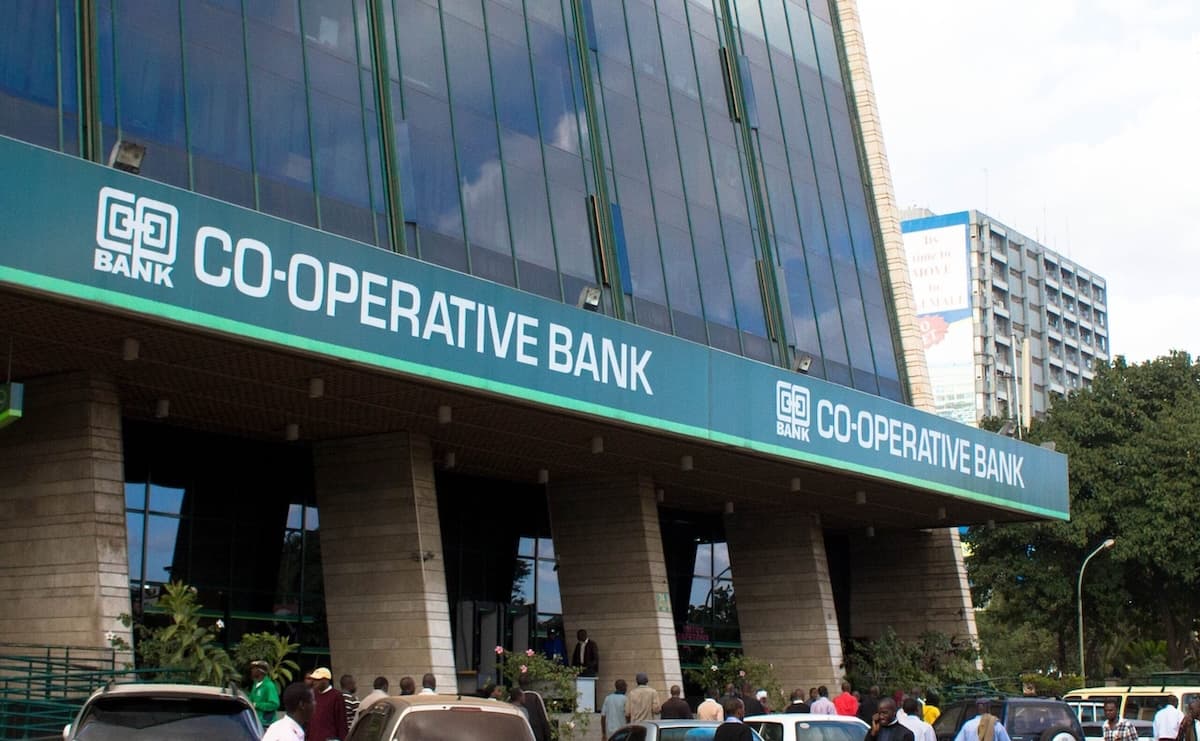
Co-operative Bank of Kenya has stepped deeper into Kenya’s fast-moving digital credit battleground with the launch of Kamilisha, a mobile overdraft facility that signals the lender’s intent to compete head-on with telcos and banks for the country’s most contested space: instant liquidity.
Kamilisha allows customers to overdraw up to Sh100,000 straight from their phones to cover everyday expenses like rent, electricity and business supplies. It is unsecured and available on demand, designed for a market where millions rely on short-term loans to plug cash-flow gaps. While the product looks simple, it enters a crowded and highly competitive field dominated by Safaricom’s Fuliza, Equity’s Boostika and several digital credit apps that have reshaped how Kenyans manage daily finances.
Co-op Bank has set a pricing model it believes will attract borrowers without drifting into predatory territory. Users pay a one-off access fee of 2 per cent, a daily charge of 0.2 per cent on the utilised amount and a small monthly credit insurance cost. A borrower taking Sh1,000 and settling it after a month would pay about Sh84, slightly below Fuliza’s cost and almost equal to the charge under Equity’s Boostika. That places Kamilisha in a strategic middle ground and positions the bank as a competitive alternative among regulated lenders.
The timing suggests Co-op Bank sees room for expansion despite an already saturated market. Fuliza alone disbursed more than Sh900 billion in 2024 and still commands over eight million active users. Equity’s Boostika is gaining traction, while NCBA continues to dominate mobile lending platforms such as M-Shwari and Fuliza, which together pushed more than a trillion shillings last year. Co-op Bank’s digital credit portfolio, including Flexi Plus and salary advances, already has a strong customer base and Kamilisha adds to its bid to control more of the digital wallet.
But the numbers behind the sector paint a story of both opportunity and escalating risk. By mid-2025, licensed digital lenders had issued more than 5.5 million loans worth nearly Sh77 billion, almost triple the volume recorded in 2023. The number of licensed digital lenders had climbed past 150 firms, a sign of intense competition. Yet this surge has come with worrying fundamentals. Default rates in digital lending hover around 40 per cent, with micro-loans under Sh1,000 recording default levels as high as 80 per cent. Many borrowers rely on these facilities to fund recurrent spending, a habit that deepens indebtedness and undermines repayment patterns.
This is the landscape into which Kamilisha launches, one under stricter oversight following the Central Bank’s 2022 regulations that brought discipline to what was once an unchecked digital lending space. Licensed providers must now disclose full charges, protect user data and follow ethical collection standards. These rules, backed by the Office of the Data Protection Commissioner and the Competition Authority, have curbed some of the more aggressive practices that alarmed regulators and consumers. But even tight regulation cannot fully contain the pressures of a high-cost borrowing culture fuelled by irregular incomes and growing reliance on overdraft facilities.
Co-op Bank’s edge is the trust and transparency expected of a regulated banking product. Kamilisha uses customer account behaviour to set limits and manage risk, mirroring fintech speed while keeping within traditional compliance frameworks. It offers quick relief for customers short on cash, but like all overdrafts, the cost compounds quickly for those who fail to repay promptly. For the bank, the real test will be whether it can scale the product while keeping defaults under control in a market already grappling with runaway credit habits.
Kamilisha’s launch is a sign of where Kenya’s financial sector is heading. Banks are borrowing from the fintech playbook, regulators are tightening their grip and consumers are demanding speed without losing protection. The success of Co-op Bank’s new overdraft will depend on how well it navigates this balance between access, affordability and risk in a credit environment that keeps evolving by the day.







Comments