
When James Mworia took the wheel at Centum Investment Company in 2010, inheriting an institution whose roots stretch back to Kenya’s post-independence ambitions in 1967, he arrived as the steward of one of East Africa’s most formidable investment portfolios.
He had blue-chip stakes in the country’s most dependable income-generating businesses: beverages, insurance, financial services, a fast-growing micro-lender and a publisher that had served generations of Kenyan schoolchildren. The company was a machine that made money for its more than 36,000 shareholders. Sixteen years later, the machine is producing losses.
The announcement on Friday that Centum had completed the sale of its entire residual stake in Sidian Bank, exiting a 25-year investment at what the company itself described only as a “modest financial gain” relative to book value, has crystallised what many analysts and shareholders have long feared: that Mworia has methodically sold every business that was generating returns and left investors stranded with the ones haemorrhaging cash.
The reaction in market forums was immediate, visceral and almost unanimous in its condemnation. It is not difficult to understand why.
Centum always sells the profitable businesses and ends up holding the loss-making ones. Mworia killed ICDC long time ago.
THE EXIT LEDGER: NINE PROFITABLE DEPARTURES, ONE DAMNING PATTERN
The numbers are now on the record and they tell a story that no public relations exercise can soften. According to data compiled by financial research platform PesaWall, Centum has made at least nine major exits over the course of Mworia’s tenure.
Without exception, every single one of those businesses generated a positive gross internal rate of return. Not one was a distressed sale. Not one was a company that needed to be exited. They were, by the company’s own published performance metrics, exactly what a holding company is supposed to accumulate and retain.
The exits begin with Carbacid Investments in 2011. Centum had acquired a 22.8 percent stake at a cost of Sh400 million.
It was sold after just 23 months, generating Sh1.2 billion in exit proceeds for a gross IRR of 66.9 percent. On the face of it, a spectacular return. But Carbacid, a carbon dioxide manufacturer serving both industrial and medical clients, was a low-risk, annuity-style business with inelastic demand.
At a 23-month holding period, Centum surrendered decades of compounding income for a single-event gain.
The Minet exit, selling a 21.5 percent stake in the insurance brokerage formerly known as AON after a 85-month holding period, returned Sh1 billion on a Sh200 million investment for a gross IRR of 52.4 percent.
UAP Insurance, now subsumed into Old Mutual, was sold in 2015 at a gross IRR of 39.9 percent: Sh5.5 billion in exit proceeds on a Sh900 million cost over 69 months. Insurance is one of the most durable recurring-income businesses on any continent. Once a customer is on a policy, the renewal rates are extraordinary. Centum sold it.
Platinum Credit, the micro-lender operating as Platcorp Holdings across Kenya, Uganda and Tanzania, was exited in 2018 after a 63-month holding period.
Exit proceeds of Sh2.7 billion on a Sh800 million investment produced a gross IRR of 38.9 percent. Consumer lending to underbanked populations in East Africa was, and remains, a growth business with structural tailwinds.
The company went to other owners who continued to harvest it. Nairobi Bottlers generated Sh8.6 billion in exit proceeds on a Sh700 million cost over a 126-month holding period for a gross IRR of 34.3 percent.
Almasi Beverages delivered Sh10.9 billion in proceeds on Sh1.8 billion over the identical 126-month period for a gross IRR of 25.9 percent. These were Coca-Cola franchise bottlers with the most recognised consumer brand on the planet behind them.
GenAfrica Asset Managers, Kenya’s second-largest pension fund manager at the time of exit, was sold to New York-based Kuramo Capital in 2018. Centum realised Sh2.4 billion on a Sh1.1 billion investment over 53 months for a gross IRR of 24.4 percent.
Asset management is a recurring-fee business with negligible capital requirements and extraordinary margins at scale. Centum gave it up.
Kenya Wine Agencies Limited, the KWAL spirits and wines distributor sold to South Africa’s Distell in 2017, generated Sh1.1 billion on a Sh300 million entry cost over 96 months for a gross IRR of 20.8 percent. Even Rift Valley Railways, a quick-turnaround trade that returned only 4.4 percent gross IRR in 14 months, was at least a profitable exit.
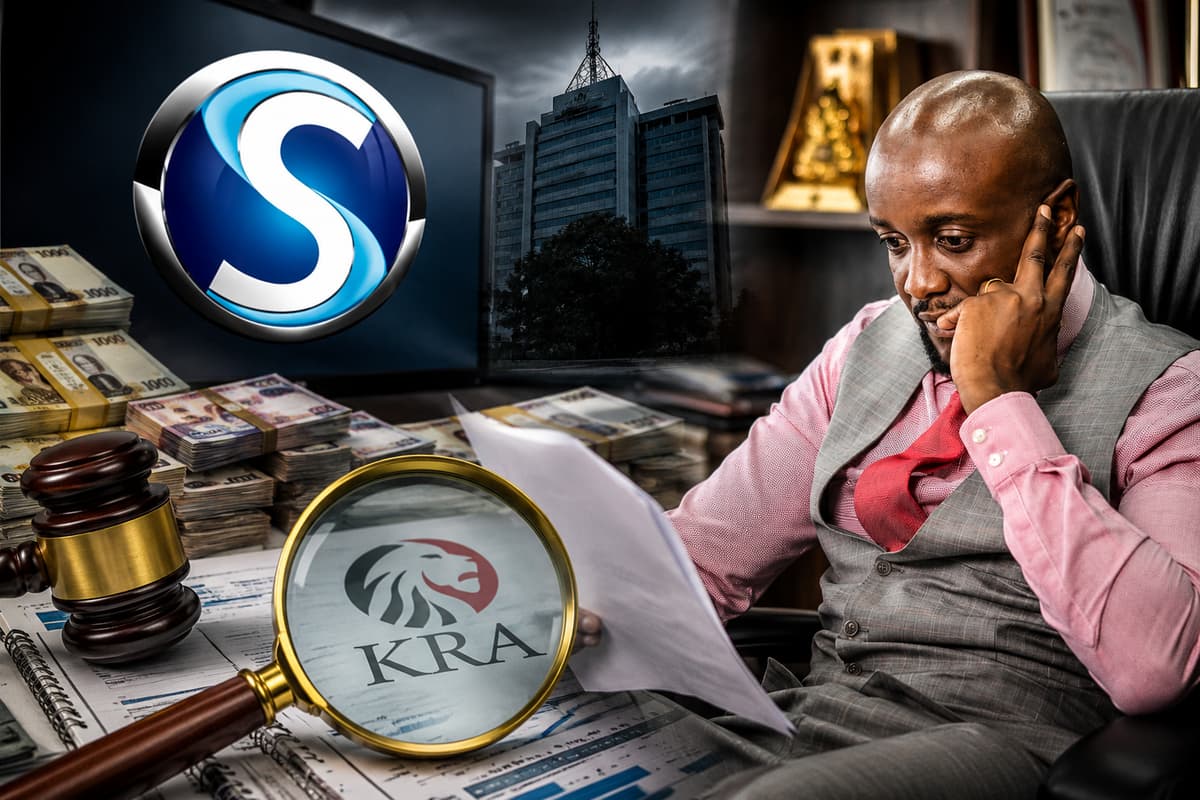
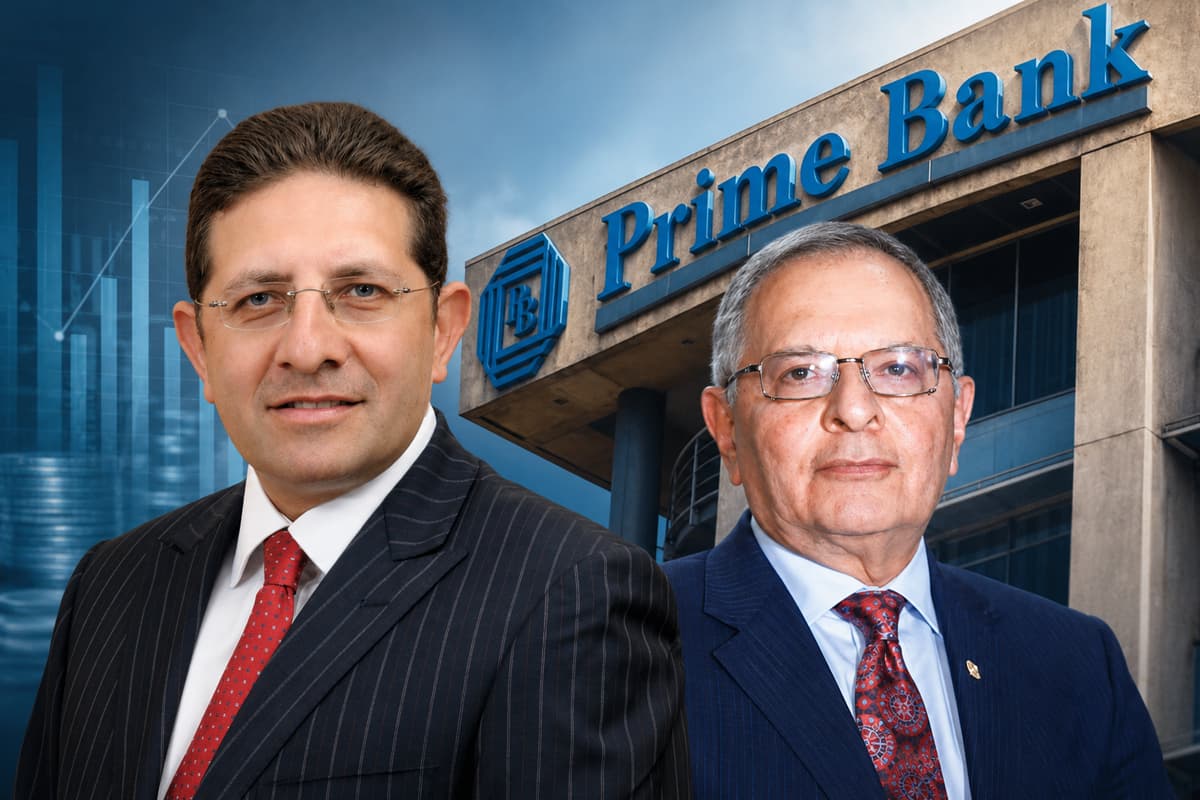
Now comes Sidian Bank. Centum first invested in the lender in 2001 when it operated as K-Rep Bank, lifted its stake to 67.54 percent with a Sh4.3 billion acquisition in November 2014, began disposing in 2023 and has now exited entirely via the sale of its remaining 50 percent stake in Bakki Holdco Limited, the vehicle that held a 27.2 percent direct stake in the bank.
The carrying value of the investment was Sh1.1 billion. The gain, by Centum’s own description, was “modest.” At the moment of final sale, Sidian’s assets had grown to Sh94.8 billion from Sh44.79 billion in December 2023 and deposits had more than doubled to Sh78.11 billion in September 2025 from Sh27.6 billion two years prior. The bank had been promoted to mid-tier status in September last year. They sold it on the way up.
CENTUM’S NOTABLE EXITS: THE COMPLETE SCORECARD
Source: PesaWall Research / Centum Investment Company annual disclosures. Gross IRR is before costs and fees and excludes dividends received during holding period.
|
Company Exited |
Stake |
Cost |
Holding Period |
Exit Proceeds |
Gross IRR |
|
Carbacid Investments |
22.8% |
Sh 0.4bn |
23 months |
Sh 1.2bn |
66.90% |
|
Minet (formerly AON) |
21.5% |
Sh 0.2bn |
85 months |
Sh 1.0bn |
52.40% |
|
UAP Insurance (Old Mutual) |
24.2% |
Sh 0.9bn |
69 months |
Sh 5.5bn |
39.90% |
|
Platinum Credit |
36.0% |
Sh 0.8bn |
63 months |
Sh 2.7bn |
38.90% |
|
Nairobi Bottlers Ltd |
27.6% |
Sh 0.7bn |
126 months |
Sh 8.6bn |
34.29% |
|
Almasi Beverages Limited |
53.9% |
Sh 1.8bn |
126 months |
Sh 10.9bn |
25.90% |
|
GenAfrica Asset Managers |
73.4% |
Sh 1.1bn |
53 months |
Sh 2.4bn |
24.40% |
|
Kenya Wine Agencies (KWAL) |
26.4% |
Sh 0.3bn |
96 months |
Sh 1.1bn |
20.76% |
|
Rift Valley Railways |
10.0% |
Sh 0.06bn |
14 months |
Sh 0.08bn |
4.40% |
|
Sidian Bank (via Bakki Holdco — final exit March 2026) |
Carrying value Sh 1.1bn — “Modest gain” (undisclosed proceeds) |
||||
Note: The table does not include dividends received from investments, which formed part of the IRR calculation in each case.
Selling a profitable bank to put money in failed real estate is crazy. I hope they return this cash to shareholders as a special dividend.
WHAT WAS KEPT: A PORTFOLIO OF COMPOUNDING DESTRUCTION
The combined exit proceeds from the nine major divestments enumerated above run into the tens of billions of shillings.
The question that 36,000 shareholders deserve answered is: where did the money go? The answer is on Centum’s balance sheet, buried under impairment lines, finance cost disclosures and subsidiary loss statements. It went into Two Rivers Development.
It went into the Akiira Geothermal project. It went into the Lamu coal-fired power plant. It went into Longhorn Publishers. These are not speculative conclusions. They are the publicly stated capital deployment decisions of the company’s own management.
Two Rivers Mall and its associated development vehicle, Two Rivers Development Limited, is the single largest destroyer of value in Centum’s history.
The mixed-use development along the Northern Bypass, financed with an Sh8 billion facility from Co-operative Bank that was later refinanced through Standard Bank and subsequently through multiple restructuring rounds, was presented to shareholders as a transformative urban project at a total investment cost of Sh25 billion. What it has delivered instead is a cascade of financial catastrophe.
In the financial year ended March 2021, Two Rivers’ finance costs drove Centum to a loss before tax of Sh2.33 billion. Without the Two Rivers drag, the loss would have been a comparatively manageable Sh473 million.
This was Centum’s first net loss in 42 years of operating history. The following year the group loss continued. In the year ended March 2023, the consolidated net loss after tax exploded to Sh7.31 billion, driven by a Sh3.87 billion impairment provision on TRDL’s undeveloped land and sustained high finance costs. The subsidiary in which Centum holds a 58 percent stake booked a standalone loss of Sh7.09 billion in that year alone.
The Two Rivers SEZ, branded as TRIFIC, was supposed to be the redemptive chapter in this saga.
It has not been. In the six months to September 2025, the TRIFIC SEZ lost Sh584.5 million, more than doubling the Sh288 million loss in the same period the prior year.
The core Two Rivers Development subsidiary added a further Sh90.68 million in losses over the same half-year, widening from Sh67.7 million.
In total, four of Centum’s six reporting business units were posting losses in the latest available half-year results. Pre-tax losses more than tripled compared to the prior period.
The headline net loss of Sh326 million in the six months to September 2025 was only partially disguised by a Sh296.71 million tax credit that flatters the reported figure.
The Akiira Geothermal project occupies its own chapter in this ledger of misjudgement. Centum invested Sh1.97 billion in Akiira Power in 2016 for a 37.5 percent stake in a proposed 140-megawatt plant in the Greater Olkaria area. Shareholders were also told that Centum had invested Sh2 billion in Amu Power, the consortium behind the now-dead 1,050-megawatt Lamu coal power plant.
By 2022, the Lamu investment had been written to zero. The Sh2 billion was gone.
On the geothermal side, two exploratory wells sunk at a cost of approximately Sh1.2 billion failed to meet production capacity. By September 2022, the carrying value of the Akiira investment had fallen to Sh1.07 billion from the original Sh1.97 billion entry cost.
In FY2023, a further Sh900 million impairment was recognised. The total destruction of value across just the two energy projects runs to approximately Sh5 billion.
Undeterred by this record, Centum in May 2024 acquired a further 37.5 percent stake in Akiira from a UK fund, using more shareholder capital to double down on a project that had by then absorbed billions without producing a single kilowatt of electricity.
The book value of the expanded position at March 2024 stood at approximately Sh1 billion. There is no publicly disclosed timeline for the 140-megawatt plant to be commissioned.
Longhorn Publishers rounds out the gallery.
The NSE-listed educational publisher in which Centum holds a significant stake posted a net loss of Sh571.33 million in the financial year ended June 2023, the worst since its listing in 2012, on revenues that fell 27.3 percent to Sh1.07 billion.
In the year to June 2025, revenue fell a further 56 percent to Sh672 million while losses came in at Sh261.44 million. The company’s equity turned negative in the first half of the year to December 2024, with accumulated losses exceeding total equity.
Centum’s thesis that the Competency Based Curriculum transition would create a supercycle for educational publishers has instead produced the opposite: a company so damaged by procurement delays and curriculum uncertainty that it is now technically insolvent on a standalone equity basis.
THE LOSSES IN NUMBERS: WHAT SHAREHOLDERS ARE HOLDING
Two Rivers Development (TRDL) group loss FY2023: Sh7.09 billion | TRDL impairment provision FY2023: Sh3.87 billion | Centum consolidated net loss FY2023: Sh7.31 billion | Two Rivers SEZ (TRIFIC) loss — 6 months to Sept 2025: Sh584.5 million | Core TRDL loss — 6 months to Sept 2025: Sh90.68 million | Akiira Geothermal: Sh1.97bn invested (2016) + additional stake (2024) against zero electricity produced | Lamu coal project write-off: Sh2 billion | Two Akiira exploratory wells: Sh1.2 billion, failed to meet production capacity | Longhorn Publishers FY2025 loss: Sh261.44 million | Longhorn FY2025 revenue decline: 56%
THE SHARE PRICE: THE UNIMPEACHABLE VERDICT
Capital markets are the most honest long-run appraisers of management performance. Centum’s share price has delivered a judgment that no annual report narrative can overturn. The stock reached its all-time high of Sh31.50 on December 9, 2019, almost precisely at the moment the Almasi and Nairobi Bottlers divestment to Coca-Cola completed. The market was registering its last cheer before realising what had been sold and, more critically, what had been retained.
From that peak, the stock entered one of the most prolonged declines in the history of large-cap investment companies on the Nairobi Securities Exchange.
By May 22, 2023, it had hit an all-time low of Sh7.60, a collapse of 75.9 percent from the 2019 high in less than four years. Shareholders who bought at the peak have lost more than three-quarters of their investment.
The stock currently trades at approximately Sh15, meaning it remains more than 52 percent below its all-time high. The market is not predicting a recovery. It is pricing in the portfolio that Mworia built.
The dividend trajectory confirms the same story. In 2019, Centum paid Sh1.20 per share to shareholders. By 2021, the dividend had fallen to Sh0.33 per share.
In 2024, in a year the company reported returning to profit partly because of Two Rivers SEZ property revaluations, the dividend was Sh0.32 per share, a 73 percent collapse from 2019 levels.
Net asset value per share fell from Sh62.10 to Sh54.00 in the single financial year ended March 2023. That is not a macroeconomic accident. It is the direct consequence of capital allocation decisions made at the top.
They have destroyed shareholder value since Chris Kirubi left. Nothing tangible is left.
THE BUYBACK: A COSMETIC SUBSTITUTE FOR RETURNS
In February 2023, Centum shareholders approved a Sh600.8 million share buyback programme, authorising the company to repurchase up to 66.5 million shares over 18 months.
By August 2024, the company had bought back 9.76 million shares. The buyback is dressed as a reward to shareholders, but the market has not been fooled. A buyback at distressed prices, funded by proceeds that should have been distributed as dividends, is not a reward.
It is a mechanism to support a share price that has collapsed because the underlying portfolio is producing losses. Shareholders who needed liquidity could not benefit from a buyback; they needed cash in their hands.
The conventional corporate response when a major asset divestment closes is a special dividend. Investors expect it. The market prices it in.
When the Sidian sale was confirmed on Friday, there was no share price rally. There was fury. Because shareholders have absorbed years of write-downs and annual losses, and the carrying value at which the Sidian stake sat in Centum’s books, Sh1.1 billion, was already considered by the market to be at or above the likely disposal price. The “modest gain” Centum described leaves almost no residual capital to distribute. The market already knew.
The broader question shareholders are now demanding be answered is whether the Sidian proceeds, whatever their quantum, will be returned via a special dividend or recycled into the same loss-making portfolio.
Mworia’s track record on this front is not reassuring. Proceeds from the beverage sales in 2019 went toward debt repayment and project funding. Proceeds from GenAfrica and Platinum Credit were reinvested.
There has been no special dividend in the modern era of Centum. Each exit has been followed by a fresh commitment of capital to long-dated development projects that have consistently underdelivered.
THE KIRUBI QUESTION: AN INHERITANCE MISMANAGED

The late Chris Kirubi, who died in June 2021 and whose estate remains the beneficial controlling shareholder at approximately 30.94 percent, was the architect of Centum’s diversified portfolio model. Kirubi understood that a holding company’s legitimacy rests on the quality and durability of its underlying businesses.
He assembled a portfolio spanning beverages, insurance, financial services and publishing that threw off consistent cash flows across economic cycles. He understood the difference between a business worth holding and a project worth speculating on.
Under Mworia, that philosophy has been inverted. The businesses that generated the cash flows have been sold. The projects that absorb the cash flows have been built.
A Sh25 billion real estate complex that required an Sh8 billion development loan and has since spawned billions in impairments and annual operating losses. A geothermal project that has consumed nearly Sh4 billion in committed capital and produced no electricity. A coal power plant written to zero. A publisher so damaged it has technically negative equity. An SEZ burning through more than Sh1 billion annually in losses.
Mworia’s stated defence of this strategy is that Centum is not a passive holding company but an active value creator that enters businesses, creates value and exits at a premium. This is a coherent argument for a private equity fund with a 10-year fund life and institutional limited partners who understand the model.
It is a catastrophic model for a listed investment company whose shareholders include retail investors who bought shares expecting dividend income and price appreciation, and who have received neither for six years. The 36,000 shareholders of Centum are not limited partners in a closed-end fund. They cannot redeem their capital except by selling on the secondary market at prices that reflect the wreckage beneath.
There is also a less visible dimension to this story. Multiple market observers who have tracked Centum’s evolution note an exodus of senior investment professionals from the company since Kirubi’s influence waned.
The institutional knowledge that identified Carbacid at Sh400 million and sold it for Sh1.2 billion, that bought into UAP when it was a regional insurer and exited with Sh5.5 billion, has largely departed. What remains is a management culture oriented toward project development and real estate, domains where capital is patient and illiquid, rather than the disciplined exit-focused private equity model that built Centum’s original reputation.
WHAT SHAREHOLDERS ARE OWED
The Sidian Bank exit proceeds, undisclosed in quantum at the time of going to press, are now sitting at the company level.
The market consensus, expressed with unusual force by analysts and shareholders across every platform monitoring CTUM, is unambiguous: those proceeds must be distributed as a special dividend. Not reinvested in Longhorn Publishers, which has negative equity on a standalone basis.
Not added to Akiira Geothermal, a project that has now absorbed billions over nearly a decade without producing electricity. Not channelled into the Two Rivers SEZ, which lost Sh584.5 million in six months. Distributed. Returned. To the 36,000 shareholders who have watched their investment halve over six years while being told that transformation is underway.
The Centum board faces the most serious credibility test in its 59-year history.
The Centum 5.0 strategy, built around value optimisation and sustained portfolio performance, has delivered three consecutive years of consolidated group losses at the last full-year audit.
Net asset value per share has declined. The share price is at less than half its peak. The businesses sold were all profitable. The businesses retained are all loss-making. The dividend has been cut by 73 percent. The buyback programme has done nothing to arrest the share price decline.
From a pure investment standpoint, the current Centum portfolio is structurally challenged in ways that a single asset sale cannot remedy. Real estate in Kenya is illiquid and oversupplied in the commercial segment.
Akiira is a long-dated greenfield energy project with no commissioned output and a track record of failed wells. Longhorn is a distressed publisher in a government-dictated curriculum environment. The TRIFIC SEZ is an unproven concept in a market where industrial zones have historically struggled to attract anchor tenants at the pace required to service the development debt.
The one genuine bright spot is Nabo Capital’s management of Centum’s marketable securities portfolio, which returned 13 percent in FY2024 and outperformed major regional indices. But a well-run liquid securities book cannot indefinitely subsidise billions in real estate impairments and geothermal write-downs.
The Sidian proceeds represent the last meaningful pool of clean liquidity Centum will generate before the company is entirely dependent on long-dated development assets to monetise its portfolio.
That liquidity belongs to the shareholders who have waited, and suffered, through six years of this strategy. The market has rendered its verdict on the NSE’s secondary screen.
The question now is whether James Mworia and the Centum board are listening, or whether the proceeds from Sidian Bank will quietly disappear into the next development project on the pipeline.






Comments