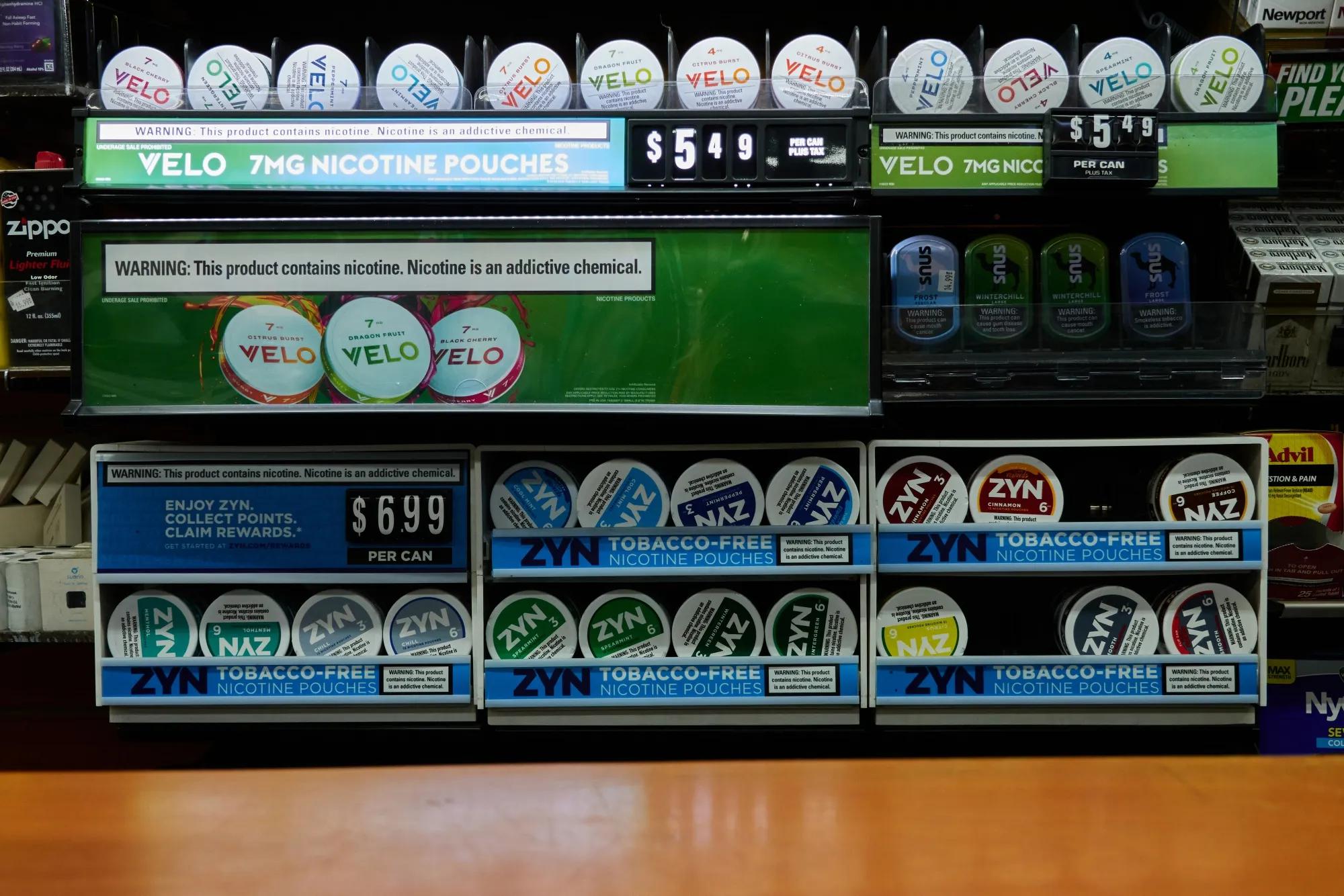
British American Tobacco Kenya has resumed selling nicotine pouches after a five-year hiatus, rebranding a product once banned for illegally targeting minors and now projecting it to deliver up to a quarter of its revenues despite overwhelming evidence that the new generation of oral nicotine products is hooking school-going children on addiction.
The cigarette manufacturer booked Sh232 million from sales of its Velo nicotine pouches in the six months to December 2025, contributing one percent of total turnover in its first half-year back on the market.
Finance Director Philemon Kipkemboi told investors the product could grow to contribute between 15 and 25 percent of total revenues within three to five years.
What the company calls a triumphant return, public health advocates describe as a predatory resurrection.
The product now sold as Velo first entered Kenya in 2019 under the brand name Lyft, marketed through influencer campaigns on social media and sold on Jumia as a party product before the government intervened.
“The registration and marketing of the nicotine pouch was shrouded by controversies,” stated a 2021 investigative report. “It is suspected that licensing officials were compromised to allow the product illegally into the market.” The Pharmacy and Poisons Board had granted import approval before the government reversed course and banned the product in October 2020 following public outcry.
BAT Kenya Managing Director Crispin Achola, who admitted in a lifestyle interview that he does not use any tobacco products himself, had pushed for the company to sell remaining stock worth Sh33 million even after the ban was imposed, arguing that repackaging with warning labels would be sufficient.
Anti-tobacco lobby groups protested that this would expose 400,000 young people to addiction.
The company has now returned with a familiar playbook. After threatening to walk away from its Sh2.5 billion Nairobi plant, BAT successfully lobbied the Ministry of Health to relax warning label requirements.
Investigative reporting by The Examination, Africa Uncensored and The Guardian revealed that BAT pressured the government to dilute health warnings, allowing the company to sell products with labels that only state “this product contains nicotine and is addictive” while omitting mention of carcinogenic tobacco-specific nitrosamines .
In the United Kingdom, BAT informs consumers that nicotine pouches contain these cancer-causing compounds. Kenyan consumers are not afforded the same transparency.
“The tobacco industry will stop at nothing to achieve its known objective of making profits, even at the detriment of public health,” the African Tobacco Control Alliance warned in 2021 when the bribery scandal broke.
A public relations firm hired by BAT had attempted to bribe an investigative journalist for inside information on a report exposing the company’s marketing tactics.
The company’s global strategy makes no secret of its ambitions. BAT Group aims to reach 50 million consumers of non-combustible products by 2030, having already secured 34 million users by the end of 2025 . In investor presentations, BAT speaks of “stimulating the senses of new adult generations” and expanding the overall nicotine market.
Public health experts argue there is only one interpretation. “The only rationale for a corporation like BAT to spend big money on marketing the new product is not just to increase the overall size of the nicotine product but a clever way of recruiting a new generation of nicotine addicts,” an earlier investigative report concluded.
The evidence from the ground supports this grim assessment. Velo has become immensely popular among Kenyan teenagers, with short videos of young TikTokers using the product garnering millions of views.
Field surveys have revealed the products are being sold in schools. A draft report released by a government-appointed task force highlighted that young people are more susceptible to the influence of tobacco companies.
The product itself is deceptively simple: small white pouches containing nicotine derived from tobacco mixed with fibres from pine trees, eucalyptus and flavouring agents. Users slip them between gum and lip, where the nicotine absorbs directly into the bloodstream. No smoke, no smell, no tell-tale signs. For a student in a classroom, it is undetectable.
“Nicotine is toxic to the developing adolescent brain,” health experts warn. Yet BAT was forced to withdraw its nicotine pouches in Russia after products made by other brands were blamed for teenage hospitalisations and linked to one death. The company pressed on in Kenya regardless.
The regulatory environment remains deeply concerning. The Tobacco Control (Amendment) Bill 2024 currently before the Senate seeks to ban flavoured vapes and nicotine pouches while restricting advertising and banning influencers from promoting tobacco products . Offenders would face up to three years imprisonment or fines of up to Sh500,000.

But traders are pushing back. The Bar, Hotels and Liquor Traders Association has petitioned the Senate to shelve the Bill, arguing that banning flavours would drive consumers to illicit products. Secretary General Boniface Gachoka claimed the products are priced out of reach for minors at Sh600 per tin, despite clear evidence of widespread youth uptake.
“Bans and excessive restrictions will only drive consumers to criminals, fuel unemployment and deepen poverty,” Gachoka argued . The association urged lawmakers to focus on enforcing existing laws, including the ban on sales to under-18s.
Yet it was precisely the failure to enforce those laws that necessitated the 2020 ban. BAT had marketed Lyft as a harmless lifestyle accessory, hiring influencers to pose with the pouches and frame them as trendy, aspirational and classy. Because it was smokeless, young people deemed it safe. They were wrong.
The company has since divested from its Nairobi manufacturing plant and now imports Velo from Pakistan, though it says local production may be reconsidered depending on performance.
The shift to imports means Kenya loses jobs and investment while BAT retains the profits.
Globally, non-combustible products account for 18 percent of BAT Group’s revenue. The target is 50 percent by 2035 . Kenya, described in leaked documents as one of BAT’s “most exciting trial markets” for low and middle-income countries, serves as the launch pad for East and Southern Africa.
The human toll is already being felt. Studies show that more than 8,000 Kenyans die annually from tobacco-related diseases, part of what the World Health Organization calls the biggest public health threat the world has ever faced. Cigarettes kill about 15 people every minute.
BAT’s response to questions about youth uptake remains consistent: “All marketing activity for our products will only be directed towards adult consumers and is not designed to engage or appeal to youth.” The company insists it follows local laws, legislation and platform policies.
Investigative journalists have documented otherwise. The Bureau of Investigative Journalism established that BAT’s tactics in different countries have attracted a new generation including non-smokers to highly addictive nicotine products. BAT’s own research shows that at least half of adult vapers and those using nicotine pouches were not using nicotine before.
BAT Kenya welcomed the Ministry of Health’s advisory that Lyft should be sold and regulated under the Tobacco Control Act, which demands graphic images and warnings on packages, sales only to adults, and higher taxation. But the damage, as one commentator put it, was already done.
The company now has 13.5 million consumers of its nicotine pouches globally, a growth of three million in 2020 alone. Its Kenyan subsidiary defied Covid-19 business disruptions to record a 42 percent jump in net earnings that year.
When Achola was asked whether he uses any tobacco product, his answer was no. The man steering BAT Kenya’s push into nicotine pouches does not consume his own product. He knows what the company’s internal research confirms: nicotine is toxic, addictive and harmful.
But the numbers tell their own story. Cigarette sales are declining as taxes rise and health awareness grows. The solatium levy introduced by government now funds tobacco cessation programmes, but it also cuts into profits. Nicotine pouches offer a way forward: a new product, a new market, a new generation of addicts.
The company argues it is helping smokers quit. Public health advocates see a corporation doing what corporations do: maximising profits by any means necessary. The difference is that the product kills. Cigarettes kill 15 people every minute. By the time this article is read, more than 100 will have died. Tobacco firms‘ profits will not.
Kenya faces a choice. The Tobacco Control Bill offers an opportunity to ban flavoured pouches, restrict advertising and protect children. Or the country can continue as a trial market for multinational corporations willing to bribe, lobby and threaten their way into the pockets of young Kenyans.
The evidence is overwhelming. BAT knows its product is dangerous. It warns British consumers about cancer-causing compounds while telling Kenyans only that nicotine is addictive. It claims to target only adults while its products flood schools and generate millions of TikTok views.
“BAT was fully aware of what it was doing and the dark recruitment of addicts they were bringing without considering the future health of the young generation,” concluded the 2021 investigation.
Nothing has changed except the name. Lyft became Velo. The factory closed then reopened. The product was banned then unbanned. Through it all, the pouches keep coming and the teenagers keep using them.
The government has tools to act. The WHO Framework Convention on Tobacco Control, which Kenya ratified, requires a comprehensive ban on all tobacco advertising, promotion and sponsorship. Marketing tobacco products online through influencers is a flagrant violation of Article 13.
Yet influencers are precisely how the product spreads. Young Kenyans see their favourite personalities posing with pouches, framing them as fashionable and safe. They do not see the cancer warnings hidden in small print. They do not know that nicotine damages their developing brains. They only know it looks cool.
BAT Kenya projects Velo will contribute up to 25 percent of revenues in the medium term. That projection depends on one thing: young people starting and continuing to use nicotine. It depends on recruitment. It depends on addiction.
The company calls it growth. Public health calls it a tragedy.
By the time the Senate finishes debating the Tobacco Bill, thousands more young Kenyans will have tried nicotine pouches for the first time. Some will get sick. Some will switch to cigarettes. Some will die. BAT’s profits will not.







Comments