
Investigations
City Tycoons, MD Under Probe Over Multibillion Kenya Power Tender Scam
A Sh21 billion procurement scandal at Kenya Power and Lighting Company has placed politically connected businessmen, a sitting governor’s husband, and a senior state official at the centre of an EACC investigation that sources describe as the most consequential probe the utility has faced in a decade.

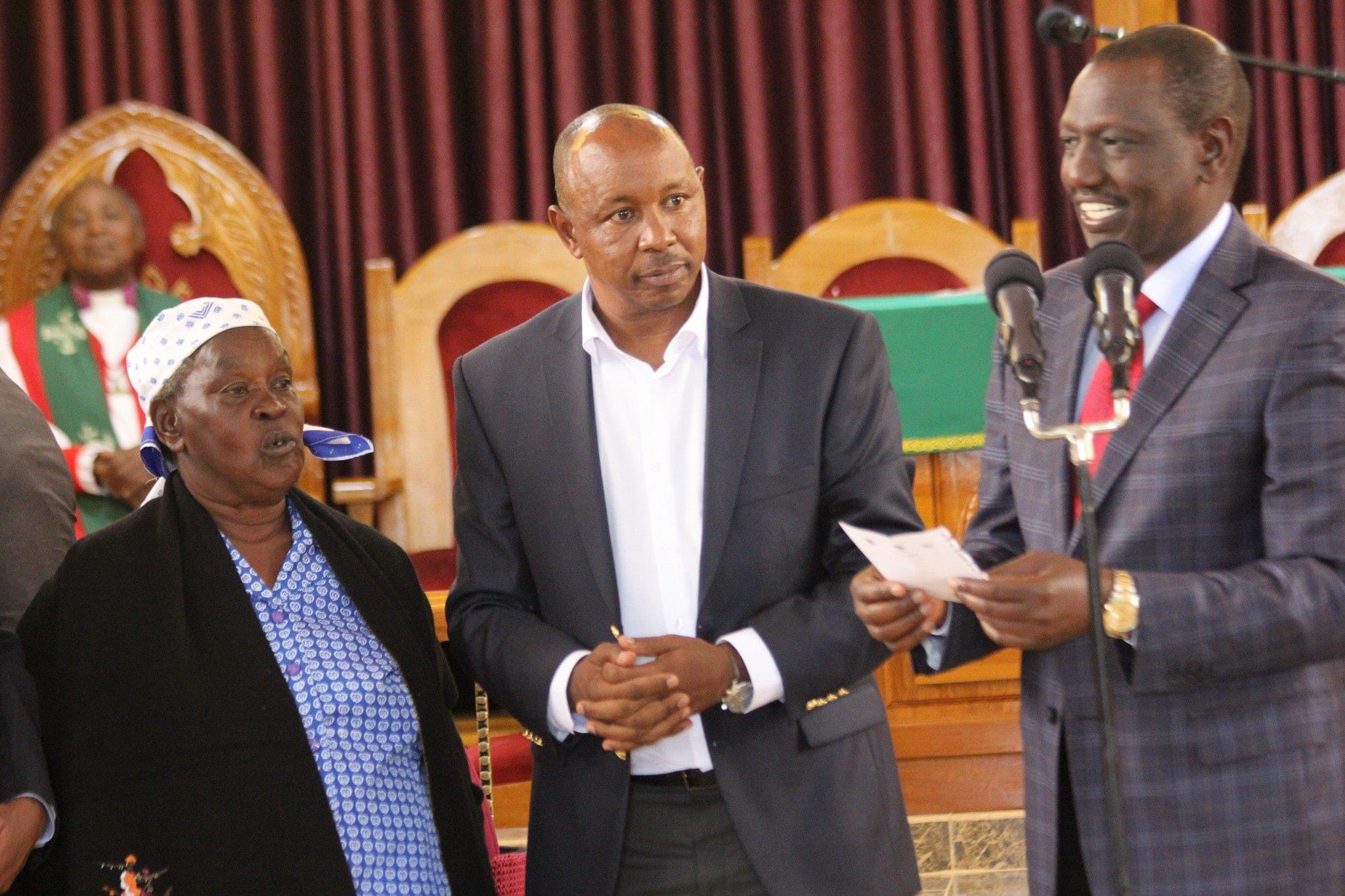
SIDEBAR: The Four Companies and What They Were Paid
Smart Meter Technology Ltd (linked to Sam Mburu, husband of Nakuru Governor Susan Kihika): Sh4.66 billion
Inhemeter Africa Company Ltd (linked to William Kabinga Gatheca): Sh5.46 billion
Magnate Ventures Ltd (linked to Stanley Ngethe Kinyanjui): Sh5.44 billion
Yocean Group Limited (led by Dylan Yu): Sh5.48 billion
Total: approximately Sh21 billion across four awards
Comparison: Kenya Power’s existing supplier charged Sh4,000 per unit; the contested contracts price units at approximately Sh7,000 each.
Somewhere inside the labyrinthine corridors of the Ethics and Anti-Corruption Commission’s Integrity Center on Milimani Road, the name Dr John Ng’eno appears in a dossier alongside twenty-seven other state officers under active investigation.
The file, according to sources with direct knowledge of the proceedings, concerns one of the most audacious procurement schemes ever executed at Kenya Power and Lighting Company: the systematic corruption of a Sh21 billion smart meter tender, parcelled out in four tranches to companies whose common thread is not manufacturing expertise, but political proximity to the highest reaches of power.
The EACC probe, which sources say carries an urgency absent from the commission’s previous performative sweeps of the utility sector, implicates Ng’eno in his capacity as General Manager for Supply Chain and Logistics at Kenya Power — a position from which he is alleged to have wielded extraordinary and unchecked authority over one of the largest procurement exercises in the company’s recent history.
The Tender and Its Discontents
The origin of the scandal lies in a tender advertised by Kenya Power for the supply of single-phase smart meters to approximately two million of its customers. On paper, the exercise was framed as a contribution to the national agenda of modernising the country’s electricity metering infrastructure.
The original tender documents were unambiguous: only genuine local manufacturers with verifiable production capacity and demonstrable Kenyan ownership would qualify. The logic was sound. Kenya had invested in building a domestic meter manufacturing base. The restriction was designed to leverage that investment.
What followed, according to a complaint filed with the Public Procurement Administrative Review Board by businessman Benedict Kabugi Ndung’u, was a masterclass in the art of regulatory capture. Through six successive addenda issued over the course of the tender process, the eligibility criteria were progressively and selectively rewritten.
By the time the final addendum was published, the tender had been quietly opened to include meter assemblers — entities that perform a fundamentally different commercial function from manufacturers and that Section 155 of the Public Procurement and Asset Disposal Act explicitly excludes from local preference provisions.
Ndung’u’s complaint alleges that the addenda process was not a routine clarification exercise but a deliberate re-engineering of the tender to favour a predetermined set of beneficiaries.
He has forwarded his documentation to the Directorate of Criminal Investigations, the Office of the Director of Public Prosecutions, and the EACC, describing the affair as a conspiracy executed by a criminal enterprise operating within Kenya Power’s procurement function.
At the centre of that enterprise, according to the complaint and multiple sources familiar with internal Kenya Power operations, sits Ng’eno.
Sources told Kenya Insights that procurement documentation in the smart meter tender moved in a direction that defied institutional protocol: bypassing both the procurement manager and the assistant procurement manager and travelling directly to Ng’eno’s desk. Professional assessments from the senior procurement officers whose statutory function is to provide independent technical oversight were excluded from the process entirely.
“The evaluation report moved straight to Dr Ng’eno,” one source with direct knowledge of the internal process said. “All the line managers were bypassed. That is a serious red flag. He is a Director, not the end point of an evaluation chain.”
The Four Beneficiaries
The tender was ultimately distributed among four companies, each awarded contracts valued in the billions and each, according to Ndung’u’s complaint, falling into the category of assembler or tender intermediary that the original criteria were designed to exclude.
Smart Meter Technology Ltd walked away with Sh4.66 billion. The company is associated with Sam Mburu, the husband of Nakuru Governor Susan Kihika. Mburu has been photographed at State House functions alongside President William Ruto, an association that has fuelled speculation about the level of political protection surrounding the award. Neither Mburu nor the governor’s office has commented publicly on the association.

Governor Susan Kihika and husband Sam Mburu
Smart Meter Technology was among the firms that the PPRA subsequently told Parliament had previously failed to deliver meters under an earlier contract, yet was nonetheless included in the fresh tender process.
Inhemeter Africa Company Ltd, awarded Sh5.46 billion, is linked to William Kabinga Gatheca. Magnate Ventures Ltd, which received Sh5.44 billion, is associated with Stanley Ngethe Kinyanjui, a businessman whose corporate footprint across public sector procurement extends well beyond the meter trade.
Yocean Group Limited received Sh5.48 billion. The company, whose operations in Kenya are led by founder and CEO Dylan Yu, describes itself as a manufacturer of transformers and smart meters, but Ndung’u’s complaint characterises it, along with the other three awardees, as functioning primarily as an assembly operation or tender intermediary.
The cost implications of the arrangement are staggering. Kenya Power’s existing supplier was providing functionally comparable meters at approximately Sh4,000 per unit.
The contracts under scrutiny value the meters at roughly Sh7,000 each — a seventy-five percent markup that, applied across a procurement worth tens of billions of shillings, represents hundreds of millions in excess expenditure drawn directly from an institution whose billing irregularities have for years been transferring the cost of institutional dysfunction onto ordinary Kenyan consumers.
Magnate Ventures: A Pattern of Procurement Controversy
Of the four beneficiaries, Magnate Ventures presents perhaps the most extensively documented history of contested public procurement. The company, headquartered at the Magnate Centre on Lantana Road in Westlands, describes itself as engaged in manufacturing and outdoor advertising, and its managing director Stanley Kinyanjui built a reputation as one of the Jubilee era’s most connected businessmen.
Well before the smart meter controversy, the Directorate of Criminal Investigations launched a separate probe into Magnate Ventures over a Sh600 million airport security tender at Jomo Kenyatta International Airport, where the company allegedly supplied faulty X-ray scanners to the Kenya Airports Authority.
Court documents in that matter reveal that DCI officers sought production of KAA board papers and tender committee minutes in connection with the award, with investigators examining whether Kinyanjui’s political connections were deployed to influence the procurement. The tender, referenced as KAA/ES/JKIA/918/E, became the subject of a miscellaneous criminal application as far back as 2019.
The smart meter litigation has added further chapters to Magnate’s complex relationship with Kenya Power. The company has litigated furiously on multiple fronts: in 2021 it challenged a Sh6.67 billion contract awarded to Chinese firm Hexing Technology Ltd, arguing before the PPARB that Hexing had registered its Kenyan subsidiary only eleven months before the tender and could not have met the eighteen-month audited accounts requirement.
The PPARB agreed, nullifying the Hexing award and noting that the public stood to lose Sh1.2 billion through the inflated contract.
Magnate then found itself on the other side of a similar challenge in the 2025 iteration of the tender, when its own award in Categories 2 and 3 was cancelled by the PPARB on grounds of selective due diligence and inconsistent evaluation.
The High Court ultimately ordered Kenya Power to execute the Sh6 billion tender in February 2026, with Magnate among the beneficiary firms, after Magnate and Hexing separately challenged the PPARB’s cancellation as a violation of binding court orders. The court battles have by then consumed years and generated a paper trail documenting how systematically the smart meter procurement process has been manipulated at each stage.
Ng’eno: A Career Built on Survived Scandals
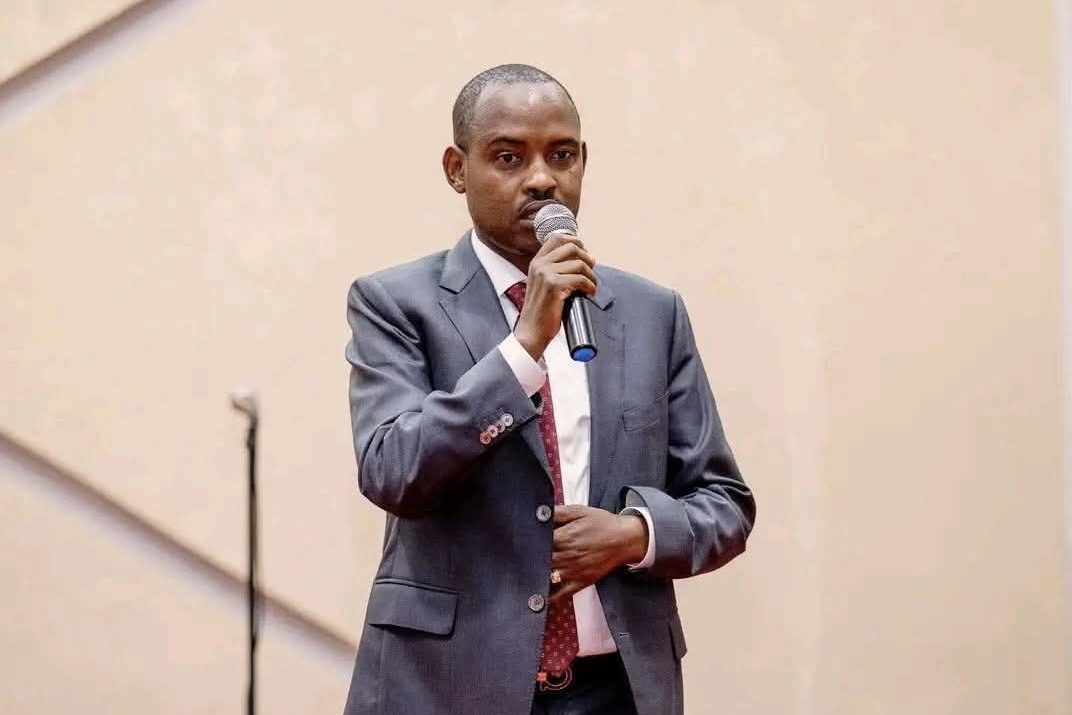
Dr John Ng’eno
Dr John Ng’eno’s trajectory through Kenya’s public sector is, in itself, a forensic study in institutional impunity. He did not arrive at Kenya Power with a clean record. His transfer to the utility followed a disruptive exit from the Kenya Bureau of Standards, where his tenure was tainted by allegations involving the manipulation of an insurance tender. The DCI, according to sources familiar with that chapter, made recommendations that he be charged in connection with a separate vehicle inspection tender dispute. No charges were ever filed.
At Kenya Power, where he holds the title of General Manager for Supply Chain and Logistics, Ng’eno has accumulated a dossier of controversy that includes allegations from local contractors of politically biased contract awards.
Contractors have accused him of refusing to sign off on agreements with firms they associate with opposition-aligned constituencies, leaving labour and transport contracts unsigned for extended periods and triggering formal complaints demanding his removal.
Multiple suppliers, speaking to media on condition of anonymity, have described the procurement department under his supervision as an extortion operation in which firms are expected to pay multimillion-shilling bribes to secure contract approvals.
One contractor, quoted in reporting by Kenya Today in November 2024, described paying Sh5 million personally to have a contract approved, and said the practice was widespread throughout the procurement chain.
The EACC investigation that has placed Ng’eno among its twenty-eight named persons of interest is not his first brush with the commission, but sources say it is the one most likely to produce a consequential outcome.
The Regulator’s Verdict
The Public Procurement Administrative Review Board, in its August 2025 ruling partially cancelling the smart meter tender, produced findings that aligned closely with the substance of Ndung’u’s original complaint. The PPARB found that due diligence had been conducted selectively and inconsistently, contrary to the law.
It found that entities with no prior supply history with Kenya Power were not subjected to any due diligence, while the process applied to those with prior relationships was inconsistent with the applicable evaluation framework. The board further found that the notification letters issued to successful tenderers failed to disclose unit prices per lot, in direct contravention of the procurement regulations.
“A transparent procurement system, as envisaged by the law, would ordinarily require that due diligence be conducted on entities with no prior record of supply with the procuring entity,” the PPARB noted in its ruling. “In the present case, several entities with no history of dealings with the procuring entity were not subjected to any due diligence.”
The PPRA, for its part, told Parliament in October 2023 that Kenya Power had awarded Smart Meter Technology Ltd a fresh contract despite the company’s failure to deliver 91,000 meters under a previous agreement, and that the utility had flouted its own tender requirements in doing so. PPRA Director-General Patrick Wanjuki told a Senate Energy Committee hearing that bidders with more than fifty percent of outstanding Kenya Power obligations on prior contracts were explicitly barred from participation, a condition apparently disregarded in the award process.
Billions in Dead Stock, Consumers Bearing the Cost
The smart meter scandal does not exist in isolation. It sits within a broader pattern of procurement dysfunction at Kenya Power that Parliament has sought, repeatedly and largely unsuccessfully, to address.
A preliminary audit report produced in the course of the EACC’s 2023 investigation into senior Kenya Power managers revealed that the utility was holding approximately Sh9.8 billion in dead stock — cables, meters, and transformers purchased at inflated prices from connected suppliers and sitting in warehouses unused for periods exceeding five years. The same audit period saw the EACC raid the homes of six senior managers, carting away evidence in an investigation into procurement irregularities, insider trading, unexplained wealth, and conflict of interest.
Parliament has separately identified ghost suppliers at Kenya Power who received full payment for goods never delivered, with investigators concluding that artificial shortages of essential materials including prepaid meters were manufactured to justify emergency purchases at prices disconnected from market reality.
The East Africa Meter Company received Sh1.54 billion for cables and smart meters in contracts awarded without public advertisement. Briskmove Investment Limited collected Sh440 million for surge arresters. None of these contracts underwent competitive bidding.
The Sh9.8 billion dead stock figure and the cascading emergency purchases represent the financial signature of a system not simply tolerating corruption but structurally designed around it. The smart meter scam, in this context, is not an aberration. It is a continuation.
The Investigation and Its Stakes
The EACC’s current investigation is described by sources close to the commission as qualitatively distinct from the rolling inquiries that have periodically disrupted but never fundamentally reformed Kenya Power’s procurement culture. The forensic audit that members of Parliament demanded in the aftermath of the 2018 transformer scandal, and which was never delivered, may now find a successor process in the EACC’s current scrutiny — one not dependent on the cooperation or goodwill of the individuals under investigation.
The PPARB’s August 2025 cancellation order, Kenya Power’s subsequent High Court challenge, and the February 2026 court order directing execution of the tender have collectively produced a paper trail of exceptional density.
That record, combined with Ndung’u’s formal complaints to the DCI, ODPP, and EACC, and the PPRA’s own parliamentary testimony, constitutes an evidentiary base that sources say investigators are actively working through.
What remains to be seen is whether the institutional momentum will translate into prosecution. Ng’eno has never been charged despite the DCI’s earlier recommendations in the KEBS-era dispute. The politically connected beneficiaries of the smart meter awards have navigated years of controversy without legal consequence. The EACC’s record on bringing state capture cases to charge and conviction is, to put it charitably, mixed.
But the twenty-eight names in the current dossier, the scale of the alleged excess expenditure, and the number of institutional actors from the PPRA to the PPARB to the Auditor General who have independently flagged the same procurement as irregular create a convergence of pressure that is harder to manage through the usual mechanisms of delay and political interference. Whether that pressure is sufficient to break the cycle is a question Kenya Power’s long-suffering consumers have been asking, without satisfactory answer, for the better part of a decade.
Kenya Insights allows guest blogging, if you want to be published on Kenya’s most authoritative and accurate blog, have an expose, news TIPS, story angles, human interest stories, drop us an email on [email protected] or via Telegram


Atleast 10 Dead, Scores Missing As Heavy Rains Hit Nairobi

Win For Bloggers As Court Strikes Down Cybercrime Act Criminalizing Publication of False Information

City Tycoons, MD Under Probe Over Multibillion Kenya Power Tender Scam

Zani-Led Committee Gives Ruto 85pc Score On 10-Point Agenda As Coalition Clock Ticks

Kenya Has No Capacity to Save Its Over 500,000 Citizens Stuck in the Middle East Fire, Ministry of Foreign Affairs Appears to Say

Israel and Iran Ambassadors Face Off in Kenya As War Escalates

Withheld Epstein Files With Accusations Against Trump Released By Justice Department

Russia Has Provided Iran With Information That Can Help Tehran Strike US Military

Govt Advices Over 500,000 Kenyans Stranded in Middle East Conflict To Leave At Own Cost, State Won’t Pay

‘Operation Epic Fury’ Burns An Estimated $5.82 Billion In Just 100 Hours

Alleged Male Lover Claims His Life Is in Danger, Leaks Screenshots and Private Videos Linking SportPesa CEO Ronald Karauri

The General’s Fall: From Barracks To Bankruptcy As Illness Ravages Karangi’s Memory And Empire

Russian Man’s Secret Sex Recordings Ignite Fury as Questions Mount Over Consent and Easy Pick-Ups in Nairobi

THE FIRM IN THE DOCK: How Kaplan and Stratton Became the Most Scrutinised Law Firm in Kenya

Multi-Million Dollar Fraud: Three Kenyans Face US Extradition in Massive Cybercrime Conspiracy

Iran Demands Arrest, Prosecution Of Kenya’s Cup of Joe Director Director Over Sh2.6 Billion Tea Fraud

FBI Investigates Congresswoman Ilhan Omar’s Husband’s Sh3.8 Billion Businesses in Kenya, Somalia and Dubai

A UN Director Based in Nairobi Was Deep in an Intimate Friendship With Epstein — He Even Sent Her a Sex Toy

A Farm in Kenya’s Rift Valley Ignites a National Reckoning With Israeli Investment

Epstein’s Girlfriend Ghislaine Maxwell Frequently Visited Kenya As Files Reveal Local Secret Links With The Underage Sex Trafficking Ring
-
 Grapevine2 weeks ago
A UN Director Based in Nairobi Was Deep in an Intimate Friendship With Epstein — He Even Sent Her a Sex Toy
-
 Development5 days ago
Kenya Strips Dutch Climate Body of Diplomatic Immunity Amid Donor Fraud Scandal and Allegations of Executive Capture
-

 Investigations2 weeks ago
How Mexico Drug Lord’s Girlfriend Gave Him Away
-
 Investigations2 weeks ago
How Close Ruto Allies Make Billions From Affordable Housing Deals
-

 Entertainment2 weeks ago
KRA Comes for Kenyan Prince After He Casually Counted Millions on Camera
-

 Business2 weeks ago
American Investor Claims He Was Scammed Sh225 Million in 88 Nairobi Real Estate Deal
-
 Investigations2 weeks ago
Talanta Stadium Construction Cost Inflated By Sh11 Billion, Audit Reveals
-

 Investigations2 weeks ago
GOLD RUSH TO GOLD DUST: How a Nairobi Forex Trader Scammed a Lawyer of Sh32 Million in a Phantom Gold Scheme