
Economy
Iran Demands Arrest, Prosecution Of Kenya’s Cup of Joe Director Director Over Sh2.6 Billion Tea Fraud
Iranian prosecutors uncovered that Cup of Joe had sourced low-grade tea, blended it inside Kenya, and shipped it to Iran mislabelled as high-quality Kenyan produce.

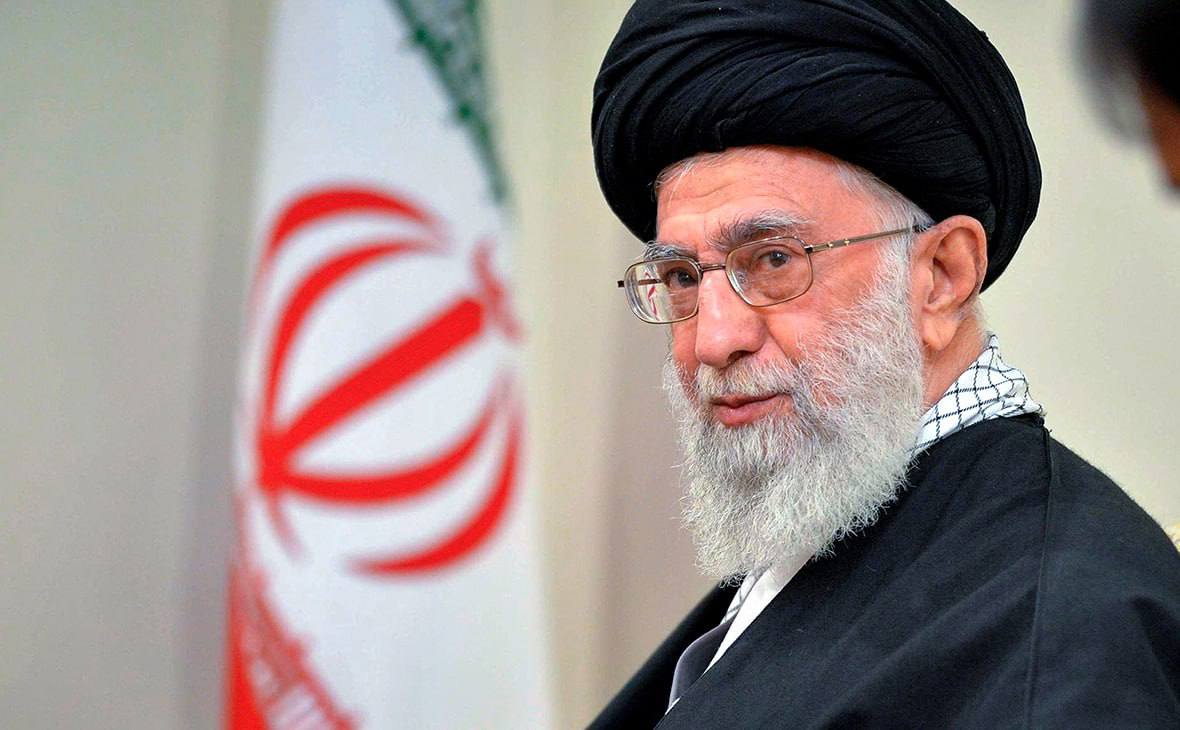
Tehran has had enough of Kenya’s foot-dragging.
More than two years after a brazen Sh2.6 billion tea fraud torched Kenya’s most lucrative tea market in the Middle East, Iran’s Ambassador to Kenya Ali Gholampour is demanding that Nairobi arrest and prosecute Cup of Joe director Joseph Kamau Kiminda — the man at the centre of a scandal that has robbed over 750,000 Kenyan tea farmers of their single most important buyer.
“In Iran, those involved in the fraudulent scheme have already been tried and punished by the courts, with senior officials and the mastermind receiving lengthy prison sentences and orders to repay billions of dollars to the State,” Ambassador Gholampour told journalists in Nairobi this week, his patience audibly fraying. “Accountability must come first.”
The envoy’s remarks carry a sting that Nairobi cannot afford to ignore: Tehran has already prosecuted its own ministers, CEOs, and private businesspeople. Kenya has prosecuted nobody.
THE FRAUD THAT CHOKED A BILLION-SHILLING MARKET
In 2023, Cup of Joe Limited — a Mombasa-based tea export company whose director Kamau Kiminda had built his reputation as Kenya’s champion of the Iranian tea market — sealed a $20 million deal with Iranian company Debsh Tea Co for premium Kenyan tea.
What arrived in Tehran was anything but premium.
Iranian prosecutors uncovered that Cup of Joe had sourced low-grade tea, blended it inside Kenya, and shipped it to Iran mislabelled as high-quality Kenyan produce.
In a scheme of breathtaking audacity described in Tehran court records as involving “systematic deception, currency manipulation, and smuggling,” Debsh Tea had drawn $3.37 billion from Iran’s government foreign exchange reserves at subsidised rates — ostensibly to import premium tea and machinery. Instead, it pocketed billions, bought the cheapest Kenyan tea it could find, and imported no machinery at all.
The scheme collapsed spectacularly when Iranian customs officials inspected the consignment. Tehran was furious. Kenya’s most valuable tea relationship — Iran had imported 13 million kilogrammes worth Sh4.26 billion in 2024 alone — was shut down overnight.
Kenya has not exported a single kilogramme of tea to Iran since 2023.
IRAN ALREADY JAILED ITS PEOPLE. KENYA JAILED NOBODY.
The contrast between Tehran’s decisive action and Nairobi’s paralysis is devastating and deserves to be stated plainly.
In Iran, former Agriculture Minister Javad Sadatinejad was sentenced to two years in prison. Former Trade Minister Reza Fatemi-Amin received one year.
Debsh Tea CEO Akbar Rahimi-Darabad was slammed with a 66-year sentence — effectively 25 years under concurrent sentencing rules — and ordered to repay $2.38 billion (Sh307 billion) to the Iranian state. Dozens more received sentences ranging from six months to 25 years. By late 2025, Iranian authorities had reissued arrest warrants for those still at large and imposed travel bans and financial restrictions on convicted parties.
In Kenya, Kamau Kiminda has been summoned for questioning. Once.
He was called to the Directorate of Criminal Investigations’ Economic Crimes Unit in September 2025, after the Foreign Affairs ministry finally wrote to the DCI on the 25th of that month — a referral that came two years after the scandal broke. The DCI completed its probe by late 2025. Its findings have never been made public.
No charges have been filed. No arrest has been made. Kiminda walks free.
Meanwhile, 750,000 smallholder farmers in 19 counties — people who pick tea at dawn and live on the margins of survival — are absorbing the full financial punishment for a fraud they had no part in and cannot understand.
THE MAN AT THE CENTRE
Kamau Kiminda is not an innocent bystander stumbled into a crisis. He is the director who personally travelled to Iran, built relationships with Iranian buyers, boasted in 2016 that Iran had become Cup of Joe’s single biggest market, and then presided over a transaction that Iranian prosecutors say was soaked in fraud.
When cornered by journalists, Kiminda’s defence has been as thin as the low-grade tea his company allegedly shipped.
“We were contracted by Debsh to source tea, which we did in line with our clients’ instructions,” he told the Daily Nation. “What Debsh did with the consignment after delivery could not be attributed to Cup of Joe.”
This is the defence of a man who wants credit for the deal but no accountability for its contents. Iranian court documents tell a different story. They describe Cup of Joe as “the crucial intermediary” in the fraud — the Kenyan company that sourced tea through Dubai operations, facilitated payments in both US dollars and UAE dirhams, and used warehouses operated through Chai Trading, a KTDA subsidiary, as storage points for the fraudulent consignments.
A company found 100 percent compliant during a routine Tea Board inspection — and which later ran to the High Court to challenge the revocation of its licence — does not behave like a company that stumbled into fraud by accident.
CUP OF JOE WENT TO COURT TO GET ITS LICENCE BACK
A crucial detail that has received insufficient attention: Cup of Joe did not accept the revocation of its trading licence quietly. The company filed Judicial Review Application No. E363 of 2025 at the High Court in Nairobi in November 2025, seeking orders to quash the government’s revocation of its registration certificate and compel the Tea Board of Kenya to issue it with a fresh licence.
The application was sworn by Kiminda himself on November 18, 2025.
In it, Cup of Joe argued that the government had acted unlawfully and violated its constitutional rights in cancelling its licence. The company sought orders of prohibition, certiorari, and mandamus — the full armoury of judicial review relief — to get back into the tea trade.
Justice R.E. Aburili struck out the application on December 31, 2025 — not on the merits, but because the company had gone to the wrong division of the High Court, having failed to first exhaust the statutory appeal mechanisms under the Tea Act. The judge was explicit: “The main dispute between the parties is still outstanding.”
In plain language: the case is alive, Kiminda is still fighting to clear his name in court, and the government has yet to prove its case in any formal legal proceeding. Yet Iran is watching and growing angrier by the day.
POLITICAL PROTECTION?
The scandal has a political dimension that Kenya’s authorities appear deeply reluctant to confront.
Cup of Joe’s owner and director has been consistently described by industry insiders and investigative sources as a close business associate of impeached former Deputy President Rigathi Gachagua.
Beyond tea exports, sources indicate that Kiminda has operated in multiple sectors involving Iranian business connections, including the supply of bitumen from Iran to the South African market — connections built years before the tea fraud emerged.
Gachagua had championed higher tea prices as a signature political promise to his central Kenya base.
The Mombasa tea auction was allegedly manipulated through artificially high reserve prices that eliminated competition and created an environment in which Cup of Joe flourished as the exclusive conduit for Iranian purchases, even while paying in multiple currencies that should have alarmed every regulator with eyes open.
Gachagua has since been impeached and removed from office. But the beneficiaries of the political machinery he built appear to be navigating their legal exposure with considerable ease.
DEADLINES BLOWN, PROMISES BROKEN
The Kenyan government’s response to this crisis has been a masterclass in the appearance of action.
In August 2025, Prime Cabinet Secretary Musalia Mudavadi and Agriculture Cabinet Secretary Mutahi Kagwe announced a “breakthrough” at the 7th Session of the Kenya-Iran Joint Commission for Cooperation. A bilateral committee was formed. Tea exports to Iran would resume within 60 days, they declared.
That deadline expired in mid-October 2025. Not a single kilogramme of Kenyan tea has moved to Iran since.
Iran then escalated. Tehran began pushing for Interpol involvement, signalling that it no longer trusted Kenya to police its own export fraudsters. The Kenyan government, in response, continued scheduling meetings.
Trade Cabinet Secretary Lee Kinyanjui declared in January 2026 that Kenya was “at the tail end” of resolving the dispute. Ambassador Gholampour’s statement this week suggests Tehran does not share that confidence.
Agriculture CS Kagwe, when contacted by journalists for comment on the stalled prosecution, acknowledged receipt of queries via WhatsApp but had not responded by the time of publication.
The numbers demand to be confronted directly.
Iran was importing Kenyan tea worth Sh4.26 billion a year. Tea exports to Iran grew from 3.2 million kilogrammes in 2020 to a record 13 million kilogrammes in 2024. The abrupt loss of that market, combined with the simultaneous loss of Sudan as a major buyer, is costing Kenya’s tea sector more than Sh6 billion a year in lost revenues. The East African Tea Trade Association estimated losses at over $80 million in 2025 alone.
These losses are not falling on Kamau Kiminda. They are not falling on the KTDA officials allegedly involved in auction manipulation. They are falling on the woman in Nyeri plucking tea leaves at 6am, on the farmer in Kericho waiting for a bonus that has been slashed because volumes have cratered, on the 6.5 million people — roughly 13 percent of Kenya’s entire population — whose livelihoods depend on the tea industry.
For those people, every day that Kiminda remains uncharged is another day justice has been denied.
WHAT IRAN IS ASKING FOR — AND WHY KENYA MUST DELIVER
Ambassador Gholampour has been diplomatic in his phrasing but unmistakable in his message: Kenya must charge and prosecute those responsible. Without that accountability, the Iranian market will not reopen. Iran cannot tell its citizens and its own courts that it is buying tea from a country that punished the fraudsters with a cancelled business licence and a WhatsApp message left unread.
Tehran is also exploring permanent market alternatives. India and Sri Lanka are waiting to fill the gap. Every month of Kenya’s inaction makes the permanent loss of the Iranian market more likely.
The DCI has completed its investigation. The findings are gathering dust somewhere in a government office. The Director of Public Prosecutions has been conspicuously silent. The courts are waiting for a case that has not been filed.
There is one man who has answers to give and charges to face. His name is Kamau Kiminda. He is not hiding — he went to the High Court less than three months ago.
The DCI knows where he is. The DPP knows what the investigation found. The question is whether the Ruto administration has the political will to arrest a man with powerful friends, charge him in open court, and tell the world — and the 750,000 farmers waiting for their lost market back — that Kenya does not protect economic saboteurs.
That question must be answered. Not in 60 days. Now.
Kenya Insights allows guest blogging, if you want to be published on Kenya’s most authoritative and accurate blog, have an expose, news TIPS, story angles, human interest stories, drop us an email on [email protected] or via Telegram


How Adil Popat Saved His Empire On The Eve Of Imperial Bank Collapse and Why Kenya’s Mainstream Media Buried The Story

South Sudan: Adut Salva Kiir’s Shadow Treasury Exposed

Wajir North MP Ibrahim Abdi Dissatisfied With2026/27 Budget, Claims It Totally Excludes North Eastern Region

The Eldoret Tax Fortress: How David Langat Turned an Industrial Park Dream Into Kenya’s Most Sophisticated Domestic Tax Haven

Why John Ngumi Is Running From the EACC and Why the Sh415 Million Payday May Be the Least of His Worries

Shiquo Hii Style Store Was Not Raided, Anti-Counterfeit Authority Confirms; Says Influencer Used Empty Shelves for Content as She Relocates

Treasury CS Mbadi Unveils Sh4.8 Trillion Budget Estimates

Fraud, Misrepresentation and A Decade Of Evasion: How Indo Africa Finance Pocketed Sh150 Million Youth Funds and Fought To Keep Every Cent

Kenya Picks Chinese Firm For Sh375 Billion JKIA Upgrade Project After Adani Fallout

The President’s Daughter and The Missing Witness: How Adut Salva Kiir’s Shadow Treasury Silenced Its Most Dangerous Critic

Cement, Cash and Courts: How the Hashu Dynasty Crushed the Ramji Brothers for Fourteen Years and Why the Walls Are Now Closing In

Inside The Urban Planning Cartel That Owns Nairobi

Standard Chartered Ghosts Haunt Joshua Oigara At Stanbic As Whistleblower Spills Beans

Inside NCBA’s Decline: How a Banking Giant Lost Its Strategic Edge

Why Ruto’s Favourite Candidate Adan Mohammed Could Be Locked Out of the KRA Top Job

LifeCare on the Brink: SHA Fraud, Stolen Wages, and the Rotten Empire Jayesh Saini Built

Betika Faces DCI Probe, Directors Arrest and License Revocation Over Massive 29.5 Million Safaricom Customers’ Data Breach

Este Medical Kenya Fights American’s Explosive Complaints

Fresh Move Launched to Remove Kenya Railways MD Mainga From Office After Awarding Sh817 Million Consultancy Contract

The Rot Inside Absa: How Bank Insiders Are Looting Nairobi’s Customers
-
 Investigations1 week ago
Cement, Cash and Courts: How the Hashu Dynasty Crushed the Ramji Brothers for Fourteen Years and Why the Walls Are Now Closing In
-
 Investigations7 days ago
Inside The Urban Planning Cartel That Owns Nairobi
-
 Business2 days ago
Standard Chartered Ghosts Haunt Joshua Oigara At Stanbic As Whistleblower Spills Beans
-
 Business3 days ago
Inside NCBA’s Decline: How a Banking Giant Lost Its Strategic Edge
-
 Investigations2 weeks ago
Betika Faces DCI Probe, Directors Arrest and License Revocation Over Massive 29.5 Million Safaricom Customers’ Data Breach
-
 Investigations1 week ago
Fresh Move Launched to Remove Kenya Railways MD Mainga From Office After Awarding Sh817 Million Consultancy Contract
-

 Business1 week ago
TRUST BETRAYED: How Senior DTB Bank Insiders Allegedly Looted Sh149 Million From a Customer’s Account Over Five Years
-
 News2 weeks ago
How Uhuru’s Deal With Obama In 2015 Paved Way For America’s Ebola Plan In Kenya