
Business
KPC IPO Set To Flop Ahead Of Deadline, Here’s The Experts’ Take
East Africa’s largest-ever local-currency equity offering closes Thursday at 5pm. With subscriptions marooned at roughly 10 per cent of the target after four weeks of marketing, the numbers demand an honest reckoning. The government is betting on a last-minute miracle. The market is not convinced.

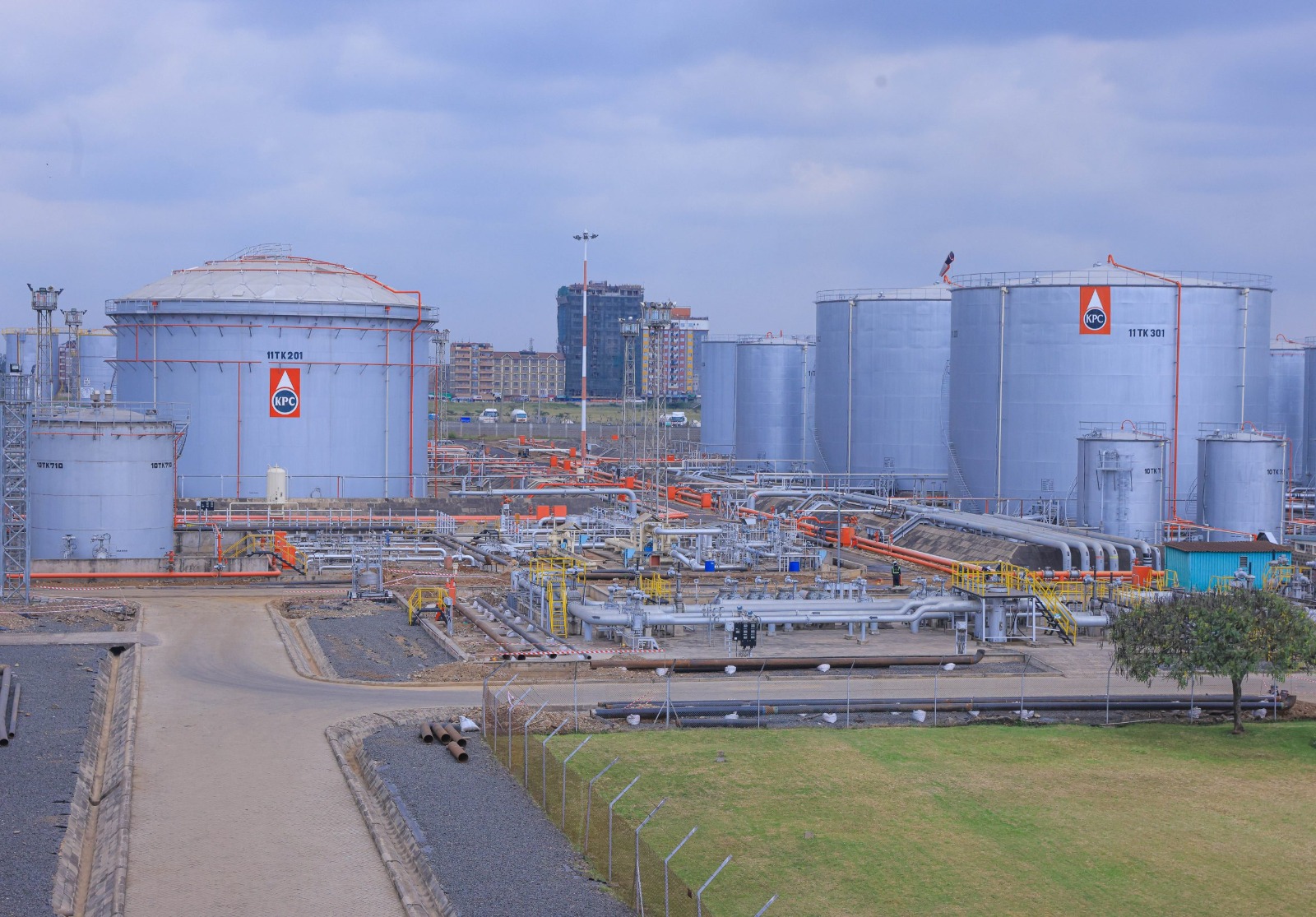
NAIROBI. The Kenya Pipeline Company initial public offering was meant to be a triumph: a flagship privatisation that would flood Treasury coffers with Ksh106.3 billion, mint up to two million new shareholders, and announce to the world that the Nairobi Securities Exchange had come of age.
With barely 48 hours left before the subscription window closes on the evening of February 19, 2026, none of that appears likely to materialise without an extraordinary and largely unprecedented surge of last-minute demand.
As of close of business last Thursday, four independent brokers, all speaking on condition of anonymity citing fear of State reprisals, placed total subscriptions at approximately 10 per cent of the offer, equivalent to roughly Ksh11 billion of the Ksh106.3 billion target.
For the transaction to proceed at all, regulations require valid applications representing at least 50 per cent of the shares on offer, or Ksh53.1 billion. That means the government must attract nearly five times the volume of orders it has collected across four weeks, within the span of two days. The arithmetic alone makes the case.
“You know how Kenyans behave, even when the IEBC is registering voters, they all come at the last minute. Let us wait for the final week, I am sure we will have enough investors.” Treasury Cabinet Secretary John Mbadi
Treasury Cabinet Secretary John Mbadi has offered what is fast becoming the official line of comfort: Kenyans, he says, behave like procrastinating voters, and the last-minute rush will save the day. It is a colourful analogy.
It is also, on the available evidence, the fiscal equivalent of wishful thinking.
Kenya’s most comparable precedent, the Safaricom IPO of March 2008, generated enormous popular enthusiasm from its very opening day, driven by brand recognition, accessible pricing, and a company whose services millions used daily.
KPC has none of those tailwinds, and its pricing structure has generated precisely the opposite of enthusiasm among professional investors.
The Valuation Chasm That Doomed Retail Confidence
The central wound in this offering is not demand, it is price. The government, advised by Faida Investment Bank and Dyer and Blair, set the offer at Ksh9 per share, implying a total company valuation of Ksh163.56 billion. Independent analysts, almost without exception, have arrived at a figure considerably lower. The divergence is not marginal. It is a chasm.
Old Mutual Investment Group Uganda, in a January 2026 initiation note, values KPC at Ksh4.61 per share, implying a discount of 49 per cent to the offer price and an equity value of Ksh77.4 billion.
Its methodology is rigorous: a discounted cash flow model using a 16.04 per cent weighted average cost of capital and a 3.0 per cent terminal growth rate produces Ksh4.26 per share; a relative valuation exercise benchmarking KPC against regional utilities including KenGen and Kenya Power, alongside midstream oil operators such as Seplat and Aradel, yields Ksh5.27.
The blended result is Ksh4.61, with an accumulation band of roughly one shilling either side. The fund manager recommends waiting for a post-listing price correction before entering.
NCBA Investment Bank has placed fair value at approximately Ksh6.35, arguing the IPO implies a premium earnings multiple for what is, structurally, a mature, regulated utility. Standard Investment Bank valued KPC’s equity at around Ksh102 billion on the post-IPO share base, implying roughly Ksh5.61 per share.
Its senior research associate Wesley Manambo has offered a buy recommendation, but only for investors with a time horizon of at least seven years.
For anyone seeking short-term capital appreciation, or even a competitive dividend yield, his language is striking in its candour: the opportunity cost is higher relative to other propositions in the market.
Wider independent market analysis has produced fair-value ranges as low as Ksh3.28, citing stretched valuation multiples and a dividend yield that cannot compete with double-digit, tax-free government infrastructure bonds currently on offer in the Kenyan fixed-income market. That last point deserves emphasis.
An investor who allocates capital to KPC at Ksh9 and receives a 50 per cent dividend payout on projected earnings must calculate their yield against instruments that currently offer 14 to 16 per cent, risk-free and tax-exempt. The comparison is brutal.
|
Source |
Valuation (KSh/share) |
Stance |
|
Faida Investment Bank (Lead Advisor) |
9.00 |
Buy / Offer price |
|
Dyer & Blair (Sponsoring Broker) |
9.00 |
Buy / Offer price |
|
NCBA Investment Bank |
6.35 |
Below offer / Cautious |
|
Standard Investment Bank (SIB) |
~5.61 |
Strategic long-term buy |
|
Old Mutual Investment Group Uganda |
4.61 |
Avoid / Post-listing entry |
|
Independent range (multiple analysts) |
3.28 to 5.41 |
Overvalued at offer price |
Table: Independent valuations of KPC versus the government’s offer price of Ksh9.00 per share. Sources: Faida Investment Bank, NCBA Investment Bank, Standard Investment Bank, Old Mutual Investment Group Uganda, independent market analyses.
The Dividend Cut That No One Is Pretending Is Irrelevant
KPC is, on its balance sheet, a genuinely impressive asset. The company holds infrastructure worth Ksh163 billion across Kenya’s fuel supply network. It operates 1,342 kilometres of pipeline connecting the Port of Mombasa to Nairobi and landlocked markets including Uganda, Rwanda, South Sudan and northern Tanzania, where it commands a 91 per cent market share.
Its EBITDA margins average roughly 45 per cent. It carries zero debt. It posted a profit of Ksh7.49 billion in its most recent financial year and paid Ksh10.5 billion in dividends to the Treasury.
That last figure contains its own problem. KPC has historically paid out 94.5 per cent of profits as dividends, a ratio that makes it unusual even by the standards of regulated infrastructure companies globally.
The offer memorandum proposes reducing that payout ratio to 50 per cent, which would fund a major capital expenditure programme including laying a new pipeline between Mombasa and Nairobi. For income-oriented investors, who represent the natural constituency of a utility IPO, this is not a footnote. It is the entire investment case, and it points in the wrong direction.
The company is transitioning from a mature cash distributor to an infrastructure builder, right as it is asking the public to value it at a peak multiple.
At the offer price, an investor is buying a toll road that has just announced it will reinvest most of the tolls, at a valuation that assumes those tolls will grow at rates the market has not corroborated.
The government will retain a 35 per cent stake. Of the 65 per cent on offer, 20 per cent is reserved for individual Kenyans, 20 per cent for Kenyan institutional investors, five per cent for KPC employees, 15 per cent for oil marketing companies, 20 per cent for East African Community investors, and 20 per cent for foreign and international investors.
Institutional and international tranches have moved faster than retail, according to multiple brokers, with some segments having oversubscribed early. But the retail portion, which the government had hoped would attract two million first-time equity investors, has been the most conspicuously sluggish.
The Policy Context: Privatisation as Fiscal Necessity
The KPC IPO does not exist in isolation. Kenya’s fiscal position is among the most constrained in its history. Annual debt repayments now consume 40 per cent of government revenues.
The State has simultaneously announced the sale of a 15 per cent stake in Safaricom to South Africa’s Vodacom for Ksh204 billion. Both transactions are part of a broader Treasury strategy to mobilise capital through divestiture, in lieu of tax increases that have already triggered popular protests and a borrowing ceiling that international creditors are watching with diminishing patience.
The government has also indicated that proceeds from the KPC sale will be channelled through a new National Infrastructure Fund intended to attract further private capital, and that Kenya aims to expand power generation from three million to ten million megawatts. These are ambitious targets. Their credibility depends, at least in part, on whether the KPC IPO is seen by markets as a success or a warning.
Former Chief Justice David Maraga, among others, has publicly questioned the wisdom of privatising strategic national assets, warning of rising inequality and the risk that productive state enterprises are sold below fair value to benefit narrow interests.
His concerns are not universally shared, but they reflect a real tension in Kenyan public life between developmental statism and the fiscal pragmatism that constrained governments must practise.
The Regional Dimension: Uganda’s Stake in the Outcome
Uganda’s relationship with the KPC offer is more than financial. The country accounts for over 30 per cent of KPC’s throughput and revenue, with more than 90 per cent of Uganda’s fuel imports transiting through Kenya’s pipeline infrastructure.
President Ruto, at a regional event in late 2025, stated that Uganda would be invited to acquire a stake in KPC as part of a deeper East African integration agenda. The offer memorandum reserves up to 20 per cent of the divested stake for EAC governments.
Cabinet Secretary Mbadi has noted that Ugandan investors are, by his account, clamouring for more shares and irritated that only 20 per cent of the offer falls within the East African pool.
It is a notable data point, though it raises an obvious question: if regional institutional demand is as strong as officials suggest, why is the aggregate subscription figure sitting at 10 per cent with 48 hours to go? Either the institutional commitments remain verbal rather than converted into paid applications, or the total picture is considerably more complicated than official statements imply.
Technology Access: The M-Pesa Bet
One genuine innovation in this offering is distribution. The government launched Ziidi Trader on February 10, a Safaricom-backed platform allowing M-Pesa users to purchase KPC shares directly from their mobile phones without engaging a broker.
The offer has also been open for a full month, longer than most Kenyan IPOs, reflecting deliberate efforts to widen access. President Ruto personally promoted mobile participation. The NSE has been on a sharp upward trajectory, posting its largest single-week gain on record in the weeks preceding the offer’s close.
None of it has been enough to drive meaningful retail volume. Heavy marketing through roadshows, advertising campaigns, and influencer-driven social media activity preceded the launch. Yet the mass-market participation the government was banking on has not materialised at the scale required.
This is not simply a story about access or awareness. It is a story about price. Kenyans, particularly those with limited disposable income, are unlikely to buy a financial instrument that sophisticated professional analysts value at roughly half its asking price, regardless of how conveniently it is packaged.
What Happens If The Numbers Do Not Come In
Under the terms of the offer, the IPO must receive valid applications from no fewer than 250 applicants representing at least 50 per cent of the shares on offer. If that threshold is not met, the transaction cannot proceed on its current terms.
Regulations permit share reallocation across categories in cases of undersubscription, beginning with local retail investors.
But reallocation addresses imbalances between categories, not a wholesale shortfall in aggregate demand. If total subscriptions remain near Ksh11 billion by Thursday evening, reallocation provisions offer no remedy.
The most likely outcomes in a failure scenario are extension of the subscription period, renegotiation of terms, or withdrawal of the offer pending restructuring. Each carries reputational costs. An extension would signal to regional and international capital markets that Kenya’s privatisation programme is in difficulty. A price reduction would be damaging for a government that has staked political capital on the Ksh9 valuation. Withdrawal would be the worst outcome of all: a direct blow to the credibility of the NSE as a venue for major primary issuances, and an implicit validation of every sceptical analyst report that has circulated since the offer opened.
If subscriptions do not surge in the next 48 hours, the government faces a choice between three bad options. There is no fourth door.
Faida Investment Bank, the lead transaction advisor, has expressed continued optimism, citing momentum in e-IPO platform enhancements and describing institutional interest as strong.
Francis Drummond, co-sponsoring broker, said it expected institutions to act on their decisions within the closing days.
These are not implausible scenarios. Institutional investors do routinely wait until the final hours of a book-build before converting expressions of interest into hard orders. The question is whether the institutions’ eventual commitments will be sufficient to bridge a gap that, as of last week, represented 90 per cent of the total offer.
Verdict: Structurally Sound Company, Structurally Flawed Offer
The tragedy of this IPO, if it fails, will not be that KPC is a bad company. It is not. It is a regulated national infrastructure monopoly with dominant market share, healthy margins, a debt-free balance sheet, and strategic importance to an entire region’s energy supply. In different circumstances, it would be an unambiguously attractive listing.
The problem is price, and more precisely, the gap between what the government believes the company is worth and what the market is prepared to pay. That gap did not emerge after launch. It was visible from the moment independent analysts began publishing their valuations.
When four distinct research houses, applying different methodologies, converge on a range of Ksh3.28 to Ksh6.35 against an offer price of Ksh9, the message is not ambiguous. Markets work by aggregating information. The information available on KPC says the offer is expensive.
Treasury CS Mbadi’s voter-registration analogy may yet prove prescient. Stranger things have happened in capital markets. But a miracle requires both faith and mechanics, and right now the mechanics are worrying.
The government needs applications representing five times current volume in less than two business days. The brokers need their institutional clients to convert intent into cash. The retail investors need a reason to believe they are not paying a 50 to 95 per cent premium above fair value on day one.
None of those conditions are comfortably in place. What is in place is a deadline, a shortfall, and a government that has tied its fiscal credibility to an outcome the market has been reluctant to underwrite. By Friday morning, Kenya will know which side was rightEast Africa’s largest-ever local-currency equity offering closes Thursday at 5pm. With subscriptions marooned at roughly 10 per cent of the target after four weeks of marketing, the numbers demand an honest reckoning. The government is betting on a last-minute miracle. The market is not convinced..
Key Facts: KPC IPO closes February 19, 2026 at 5pm. 11.81 billion shares at Ksh9 each. 65% stake sale. Target: Ksh106.3 billion. Minimum threshold: Ksh53.1 billion (50% subscription). Trading start (if successful): March 9, 2026, Nairobi Securities Exchange. Allocation results: March 4, 2026.
Kenya Insights allows guest blogging, if you want to be published on Kenya’s most authoritative and accurate blog, have an expose, news TIPS, story angles, human interest stories, drop us an email on [email protected] or via Telegram



Former Catholic Priest Arrested Over Alleged Treasonous Social Media Posts

Hundreds Protest Against Planned US Ebola Quarantine Facility in Kenya

President Ruto Defends Laikipia Ebola Quarantine Centre, Tells Critics to ‘Relax’

“Raila Died Walking, He Didn’t Collapse,” Maurice Ogeta Breaks Silence On His Boss’ Final Moments

Bolt Denies Viral Exit Claims, Says Kenya Operations Remain Fully Active

Secret Trident Meetings, Claims of Millions Exchanged: Fresh Questions Raised Over PCF Boss Mohammed Sahal’s Role in Insurance Battle

The Kamukunji Cash Pit: Ghost School, Phantom Audit Trails and NG-CDF Manager Who Refuses to Leave

Lawyer in Sh65 Million Fake Gold Scandal Dragged to Court as Investigators Uncover Web of Suspicious Deals

THE GREAT HOLLOWING: How James Mworia Extracted KES 750 Million While 33,000 Centum Shareholders Lost Everything

Port Tycoon Samuel Kairu Dragged Into Sh500 Million Mombasa Port Tax Scam

Why Ruto’s Favourite Candidate Adan Mohammed Could Be Locked Out of the KRA Top Job

Este Medical Kenya Fights American’s Explosive Complaints

Safaricom’s Sh1.4 Billion Reckoning: How Kenya’s Most Profitable Company Stole a Man’s Idea and Got Caught

LifeCare on the Brink: SHA Fraud, Stolen Wages, and the Rotten Empire Jayesh Saini Built

The Rot Inside Absa: How Bank Insiders Are Looting Nairobi’s Customers

The $24 Million Heist at the End of the World

Denial Under Duress: The Untold Collapse Threatening David Lagat’s DL Group’s Empire

THE INSURER THAT TOOK YOUR PREMIUM AND FORGOT YOUR NAME: How ICEA Lion Left a Client Begging for Sh7.8 Million Across Four Months

Court Confirms Safaricom Customers Data Was Sold To Betting Companies In Seven-Year Cover-Up

Eight Students Arrested In Kenya After Suspected Deadly School Arson Attack
-
 News1 week ago
Este Medical Kenya Fights American’s Explosive Complaints
-
 Investigations1 week ago
LifeCare on the Brink: SHA Fraud, Stolen Wages, and the Rotten Empire Jayesh Saini Built
-
 News4 days ago
Eight Students Arrested In Kenya After Suspected Deadly School Arson Attack
-
 Americas1 week ago
Inside FAFSA Fraud: How Kenyan Cybercriminals Siphoned Millions from America’s Sh12 Billion Student Loan System
-

 Business2 weeks ago
Blocked: How Mombasa Tycoon Ashok Doshi Has Stopped Imperial Bank Depositors From Getting Their Money
-

 Investigations1 week ago
LSK On The Spot For Renewing Rogue Lawyer Dennis Onyango’s Licence Despite Mounting Evidence He Held Foreign Investors’ Millions Hostage
-
 News2 days ago
How Uhuru’s Deal With Obama In 2015 Paved Way For America’s Ebola Plan In Kenya
-

 Investigations1 week ago
Your Medical Records Were Wide Open: How Three Digital Lenders Hacked the Heart of Kenya’s Health System and the DHA Chief Who Looked Away