
Investigations
Kenya Freezes Bank Accounts Holding Hundreds of Millions in Suspected Terror Finance Operation
Nairobi moves to choke off Islamic State and al-Shabaab funding networks as authorities trace cash flows from US through Turkey and South Africa

Kenyan authorities have frozen 31 bank accounts containing hundreds of millions of shillings linked to 13 individuals suspected of financing terrorist operations across East Africa, marking one of the most aggressive counter-terrorism financing crackdowns in the region’s recent history.
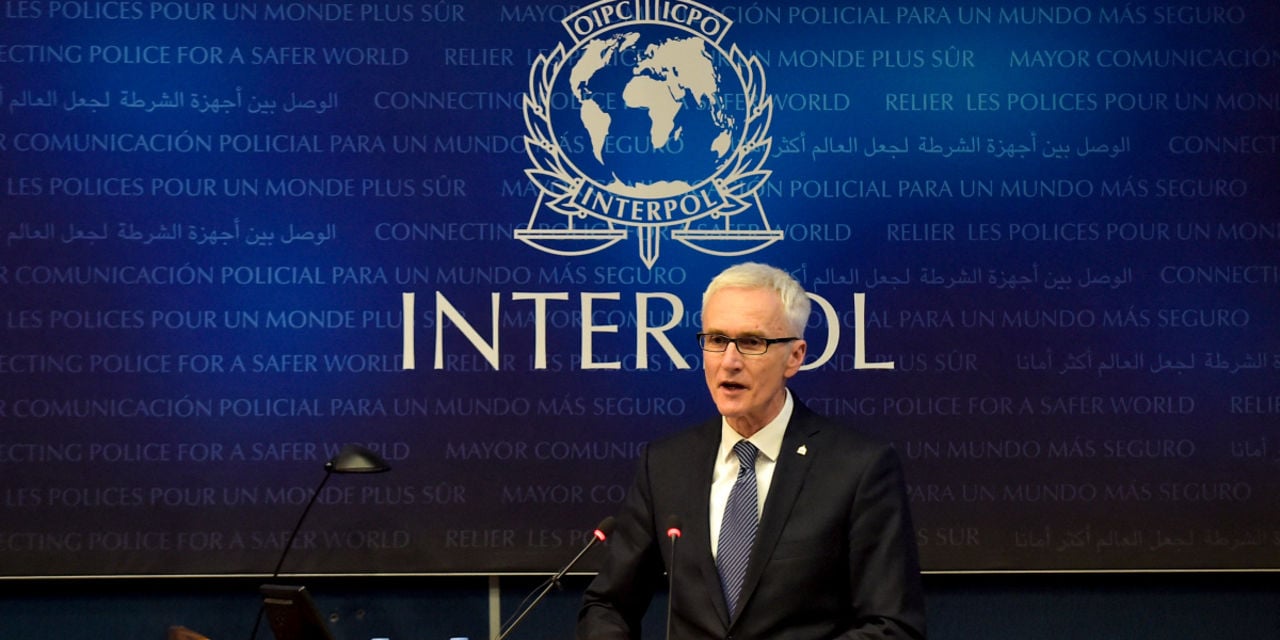
The Financial Reporting Centre (FRC) issued an immediate asset freeze order on February 4 targeting 10 Kenyan nationals and three citizens from neighbouring Tanzania and Uganda, after months of intelligence work conducted jointly with Interpol and US financial crime enforcement agencies revealed what investigators describe as a sophisticated cross-border money laundering network supporting both al-Shabaab and Islamic State affiliates.
According to multiple sources familiar with the investigation, some of the flagged wire transfers originated from US bank accounts and were routed through Turkey and South Africa before arriving in Nairobi as recently as November last year.
The circuitous routing, investigators say, was designed to obscure the money’s origins and ultimate beneficiaries.
Among those designated is Violet Kemunto Omwoyo, whom authorities linked to the 2019 Dusit D2 hotel attack that killed 21 people including one American citizen. Court documents describe her as part of a cross-border facilitation network supporting al-Shabaab operations in Somalia.
Another individual, Juma Ambare, allegedly facilitated the procurement of military-grade equipment, communication devices, drone components and digital watches for the Somalia-based militant group.
The designations represent a strategic pivot in Kenya’s counter-terrorism approach. While previous efforts focused primarily on military operations and border surveillance, officials now acknowledge that disrupting financial flows may prove more effective than kinetic action alone.
“This is preventive security. You intervene before money becomes logistics, and logistics becomes violence,” one senior investigator told the Saturday Nation, speaking on condition of anonymity.
The sanctions regime, implemented under the Prevention of Terrorism Act and United Nations Security Council Resolution 1373, requires financial institutions to freeze assets within 24 hours without prior notice to account holders. The restrictions extend beyond directly held accounts to include jointly owned funds, indirectly controlled resources, businesses under their influence and third parties acting on their behalf.
FRC Director-General Saitoti Maika warned that any institution found facilitating sanctioned individuals through masking ownership, holding assets or providing commercial cover could face severe penalties including asset seizure. Banks that fail to comply face fines of up to Sh20 million, while individual bank officials could receive prison sentences of up to 20 years.
The investigation into the 13 designated individuals uncovered patterns that initially appeared unremarkable but collectively raised red flags. Two of those sanctioned operate one of Nairobi’s largest mobile money transfer agencies and are business partners. Neither are prominent public figures, which officials say was precisely the strategy employed by terror financing networks.
“They are facilitators. Their accounts, transaction patterns and associations are what raised red flags,” the FRC said in a statement. “Notably, the targets are not prominent public figures. Security officials say that is precisely the point.”
The enforcement action comes as Kenya races to exit the Financial Action Task Force grey list, a designation the country received in February 2024 after FATF found that Nairobi could not demonstrate successful investigations or prosecutions of money laundering despite its high-risk profile. Being grey-listed signals elevated risk to investors and correspondent banks, undermining Kenya’s credibility as a regional financial hub.
Among those designated are individuals described as facilitating Islamic State operations through cryptocurrency transactions. Mohamed Siyat Ali is identified as an IS facilitator who transfers funds through cryptocurrency from several crypto wallets, including those linked to associates of Bilal Al Sudani, the deceased Deputy Commander of ISIS’s Al-Karrar office responsible for financing Islamic State affiliates across Africa.
The Al-Karrar office, intelligence sources indicate, has emerged as a critical coordination node for Islamic State’s African operations, channelling resources and tactical support to affiliates in the Democratic Republic of Congo and Mozambique through networks operating in Somalia, Kenya, Uganda, Tanzania and South Africa.
The scale of terrorist financing in the region defies conventional assumptions. Al-Shabaab alone generates over $100 million annually through extortion, taxation of local businesses, charcoal smuggling and support from affiliated businesspeople, according to assessments by US and Somali government agencies. The group’s revenues are disbursed not only to sustain its own operations but also to support al-Qaeda-linked groups worldwide.
The Dusit D2 attack, which investigators have studied extensively, illustrates the transnational nature of modern terror financing. President William Ruto revealed in June 2025 that the attack was financed through banks in South Africa, Somalia and Kenya. Court documents show that one facilitator transferred Sh836,900 through mobile money to an al-Shabaab member who helped coordinate the assault. Two men convicted for facilitating that attack received 30-year prison sentences in June 2025.
Kenya’s property sector has emerged as a particular concern for regulators. Cash purchases, shell companies and limited transparency around beneficial ownership have made real estate a preferred destination for laundered capital. Authorities have warned developers, brokers and lawyers that transactions linked to sanctioned individuals could trigger criminal liability.
“The property sector is now a frontline. If we do not close loopholes there, we undermine everything else,” a senior FRC official said.
The Counter-Financing of Terrorism Inter-Ministerial Committee, which brings together the Ministry of Interior, National Intelligence Service, Central Bank of Kenya, National Counter Terrorism Centre and FRC, approved the designations after reviewing financial intelligence analyses conducted over several months.
Listed individuals may petition the committee for delisting if they can demonstrate beyond reasonable doubt that they have ceased the conduct that led to their designation, though officials say this provision is designed more to preserve procedural fairness than to offer easy exit routes.
The enforcement action extends beyond traditional banking channels. Mobile money operators, insurance companies, savings and cooperative organisations, real estate firms and law practitioners have all been warned that they face potential criminal liability if found facilitating sanctioned persons.
Kenya’s challenges reflect broader regional vulnerabilities. The country’s proximity to Somalia makes it an attractive location for laundering piracy proceeds and serving as a financial facilitation hub for al-Shabaab. Trade goods are often used to provide counter-valuation in regional hawala networks, the informal money transfer systems that operate outside conventional banking oversight.
The rise of cryptocurrency has added another layer of complexity. While some terrorist groups have struggled to adopt digital currencies effectively due to the limited vendor networks willing to accept them for physical goods like food, fuel and ammunition, Islamic State affiliates have shown increasing sophistication in moving funds through Bitcoin, Tether and other cryptocurrencies.
Intelligence agencies across Africa have detected cryptocurrency flows potentially linked to terrorism financing totalling approximately $260 million during Operation Catalyst, a two-month enforcement action conducted across six African countries including Kenya between July and September 2025.
Financial institutions holding money linked to the 13 designated individuals are expected to provide a full catalogue of their property and cash holdings within days. The curbs applied with immediate effect, triggering asset freezes and broad prohibitions intended to deny the individuals access to the formal financial system.
The move represents what officials describe as a law enforcement breakthrough, reflecting months of financial intelligence analyses and inter-agency coordination not just within Kenya but across international borders.
Yet challenges remain formidable. Cryptocurrency mixing services, peer-to-peer exchanges and the use of enhanced anonymity features allow criminals and terrorists to exploit regulatory gaps. Virtual asset service providers remain largely unregulated in Kenya, creating vulnerabilities that terror financiers have been quick to exploit.
Kenya’s new Anti-Money Laundering and Combating of Terrorism Financing Act, passed in June 2025, introduces stricter know-your-customer requirements, enhanced due diligence on high-risk customers and politically exposed persons, more frequent reporting of suspicious transactions, and increased criminal liability for non-compliance.
Whether these measures prove sufficient to reverse Kenya’s grey-listing while simultaneously choking off terror financing networks will test the capacity and political will of institutions from the Financial Reporting Centre to the Ethics and Anti-Corruption Commission.
For now, Kenya’s message to terror financiers is unambiguous. As one investigator put it: “The fight is being waged in boardrooms and bank vaults. Financial disruption is now a frontline defence.”
The 13 designated individuals are: Zakariya Kamal Sufi Abasheikh, Jamal Abdi Mohamed, Hadija Issack Ali, Abdiweli Dubat Dege, Ramadhan Hamisi Kufungwa, Robert Karani Nyokae, Zuena Nakhumicha Machabe, Mohamed Siyat Ali, Violet Kemunto Omwoyo, Juma Ambare (all Kenyan); Abubaker Swalleh (Ugandan); and Salehe Burhani Minja and Jerumami Usama Koja (both Tanzanian).
Kenya Insights allows guest blogging, if you want to be published on Kenya’s most authoritative and accurate blog, have an expose, news TIPS, story angles, human interest stories, drop us an email on [email protected] or via Telegram










Yet Another Blow for Bia Tosha as Court Rejects Bid to Halt Diageo–Asahi Transaction

US to Slash Number of African Embassies Processing Visas from 50 to 20, Kenya Remains a Key Hub

Trump Picks Veteran Crisis Diplomat Henry Wooster as New U.S. Ambassador to Kenya

Former Catholic Priest Arrested Over Alleged Treasonous Social Media Posts

Hundreds Protest Against Planned US Ebola Quarantine Facility in Kenya

President Ruto Defends Laikipia Ebola Quarantine Centre, Tells Critics to ‘Relax’

“Raila Died Walking, He Didn’t Collapse,” Maurice Ogeta Breaks Silence On His Boss’ Final Moments

Bolt Denies Viral Exit Claims, Says Kenya Operations Remain Fully Active

Secret Trident Meetings, Claims of Millions Exchanged: Fresh Questions Raised Over PCF Boss Mohammed Sahal’s Role in Insurance Battle

The Kamukunji Cash Pit: Ghost School, Phantom Audit Trails and NG-CDF Manager Who Refuses to Leave

Why Ruto’s Favourite Candidate Adan Mohammed Could Be Locked Out of the KRA Top Job

Este Medical Kenya Fights American’s Explosive Complaints

Safaricom’s Sh1.4 Billion Reckoning: How Kenya’s Most Profitable Company Stole a Man’s Idea and Got Caught

LifeCare on the Brink: SHA Fraud, Stolen Wages, and the Rotten Empire Jayesh Saini Built

The Rot Inside Absa: How Bank Insiders Are Looting Nairobi’s Customers

The $24 Million Heist at the End of the World

Denial Under Duress: The Untold Collapse Threatening David Lagat’s DL Group’s Empire

THE INSURER THAT TOOK YOUR PREMIUM AND FORGOT YOUR NAME: How ICEA Lion Left a Client Begging for Sh7.8 Million Across Four Months

Court Confirms Safaricom Customers Data Was Sold To Betting Companies In Seven-Year Cover-Up

Eight Students Arrested In Kenya After Suspected Deadly School Arson Attack
-
 News1 week ago
Este Medical Kenya Fights American’s Explosive Complaints
-
 Investigations1 week ago
LifeCare on the Brink: SHA Fraud, Stolen Wages, and the Rotten Empire Jayesh Saini Built
-
 News4 days ago
Eight Students Arrested In Kenya After Suspected Deadly School Arson Attack
-
 Americas1 week ago
Inside FAFSA Fraud: How Kenyan Cybercriminals Siphoned Millions from America’s Sh12 Billion Student Loan System
-

 Investigations1 week ago
LSK On The Spot For Renewing Rogue Lawyer Dennis Onyango’s Licence Despite Mounting Evidence He Held Foreign Investors’ Millions Hostage
-

 Investigations2 days ago
Betika Faces DCI Probe, Directors Arrest and License Revocation Over Massive 29.5 Million Safaricom Customers’ Data Breach
-
 News3 days ago
How Uhuru’s Deal With Obama In 2015 Paved Way For America’s Ebola Plan In Kenya
-

 Investigations3 days ago
29.5 Million Safaricom Customers’ Data Breach Lands Odibets Boss Andrew Aligula In Police Custody, Firm Now Operating On A Thin Line Of Court Order