
Business
SHOCKING LOAN SCANDAL: Mwananchi Credit Slammed for Turning Sh7 Million Loan Into Sh22 Million Debt Trap
The Mwananchi Credit case exposes the dark side of an industry that promises financial inclusion but too often delivers financial ruin.

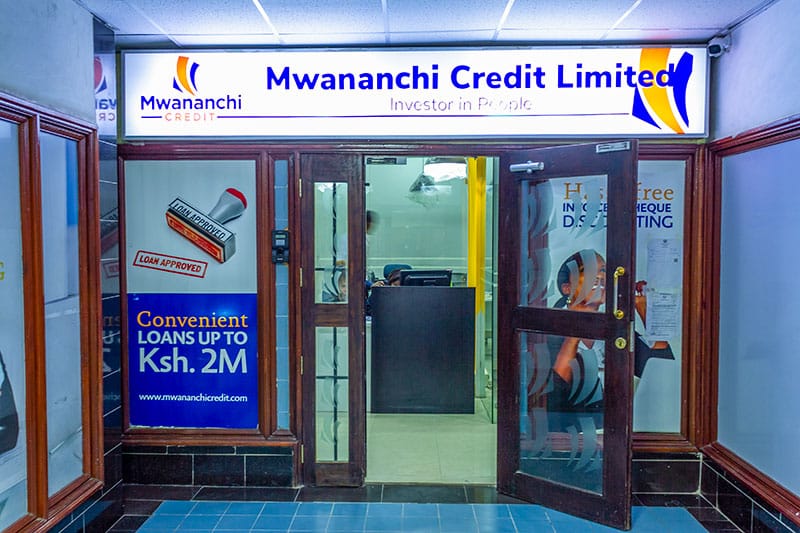
A Kenyan microfinance company has been caught red-handed in a brazen case of predatory lending that saw a borrower’s debt balloon from Sh7 million to a staggering Sh22 million, sparking outrage and raising serious questions about the unregulated lending practices that continue to fleece unsuspecting Kenyans.
In the landmark case Jelangant and Another v Mwananchi Credit Ltd, the High Court delivered a crushing blow to the lender, quashing the astronomical Sh15 million interest claim and declaring the excessive charges unconscionable and unenforceable.
The court’s decision has sent shockwaves through Kenya’s microfinance sector, exposing the dark underbelly of an industry that has long operated in the shadows.
The shocking details of the case paint a picture of financial exploitation that would make even the most hardened shylocks blush.
The plaintiff had diligently repaid the entire Sh7 million principal amount borrowed from Mwananchi Credit Limited.
But instead of celebrating the repayment, the microfinance company turned around and demanded an additional Sh15 million in interest and penalties, transforming what should have been a closed file into a never-ending nightmare of debt.
Justice George M. Khaniri, delivering the judgment in July 2023, made it clear that the in duplum rule, which protects borrowers from runaway interest charges, applies not just to banks but to all lenders, including microfinance institutions.
The rule, embedded in Kenya’s Banking Act, states that interest on a debt should never exceed the principal amount of the loan, a protection designed to prevent exactly the kind of exploitation Mwananchi Credit attempted.
The court heard how Mwananchi Credit, a non-deposit-taking microfinance company, had tried to wriggle out of accountability by arguing it wasn’t bound by the same rules as banks.
The lender claimed it operated under general contract law principles and that the 10 percent monthly interest rate was a term voluntarily agreed to by the borrower.
But the judge wasn’t buying it.
The court found that being a lender who earns interest, Mwananchi Credit was subject to the in duplum rule, citing precedent from other cases where microfinance institutions were held to the same standard.
The ruling represents a watershed moment for consumer protection in Kenya, where borrowers have long been at the mercy of lenders who hide behind legal loopholes to justify exorbitant charges.
The case exposes a systematic problem in Kenya’s microfinance sector.
Courts in Kenya have been grappling with whether the in duplum rule applies beyond banks to microfinance institutions and other non-banking entities, with some judges extending protection to all borrowers while others maintain the rule applies only to institutions specifically regulated by the Banking Act.
This legal ambiguity has created a wild west environment where unscrupulous lenders prey on vulnerable Kenyans.
Legal experts say the Jelangant case should serve as a wake-up call.
The in duplum rule is widely regarded as a consumer protection mechanism that mitigates exploitative lending practices and encourages lenders to take proactive steps to recover loans in a timely manner.
Yet many microfinance companies have brazenly ignored these protections, leaving borrowers drowning in debt.
Mwananchi Credit is no stranger to controversy.
Court records reveal a pattern of aggressive lending practices that have landed the company in legal hot water multiple times.
In another case, High Court Judge Kizito Magare blocked the microlender from selling two seized lorries, noting that traders who borrowed Sh2.5 million and repaid Sh3 million were still being pursued for more money, with the judge questioning how the debt had mysteriously ballooned to over Sh9 million .
Judge Magare was particularly scathing in his assessment, stating he was unable to fathom the mathematical permutations that caused such dramatic debt inflation, and warned against allowing microfinance companies to operate like shylocks .
The company has also faced accusations of gangster-like repossession tactics and questionable debt calculations that leave borrowers confused and helpless.
Despite claiming to offer some of the lowest interest rates in the market and positioning itself as a customer-friendly alternative to traditional banks, the mounting court cases tell a different story.
Kenya’s financial sector has seen a surge in predatory practices, with the Competition Authority of Kenya reporting a 28 percent increase in consumer complaints against lenders in 2025 compared to 2024.
The problem is particularly acute in the digital and microfinance lending space, where lack of proper regulation has allowed companies to impose hidden charges, harass borrowers, and inflate debts beyond recognition.
Recent reforms, including the Business Laws Amendment Bill of 2025, have sought to ban harassment by microfinance and digital lenders and strengthen Central Bank of Kenya oversight . But critics argue enforcement remains weak, and borrowers continue to suffer.
For the plaintiffs in the Jelangant case, the court victory represents justice finally served after years of fighting an uphill battle against a system that seemed stacked against them.
The court’s decision to limit Mwananchi Credit’s recovery to only the Sh7 million principal amount sends a powerful message: predatory lending will not be tolerated, no matter how cleverly lenders try to disguise their exploitation.
The ruling also establishes important precedent for thousands of other Kenyans trapped in similar situations.
The court’s finding that contracts which are unconscionable, unfair, or oppressive can be refused enforcement provides a critical tool for borrowers to challenge exploitative lending terms .
As Kenya’s microfinance sector continues to grow, providing crucial access to credit for millions locked out of traditional banking, the need for stronger regulation and enforcement has never been more urgent.
The Mwananchi Credit case exposes the dark side of an industry that promises financial inclusion but too often delivers financial ruin.
Consumer advocates are calling for comprehensive reforms that would extend in duplum protections explicitly to all forms of lending, close legal loopholes that allow predatory practices, and impose harsh penalties on lenders who violate consumer protection laws.
Until such reforms are enacted and enforced, the question remains: how many more Kenyans will see their debts mysteriously triple before the government steps in to stop the bleeding?
For now, the Jelangant ruling stands as a beacon of hope that the courts will protect borrowers from exploitation, even when the law remains murky and enforcement weak.
But one court victory cannot fix a broken system.
The battle against predatory lending in Kenya has only just begun.
Kenya Insights allows guest blogging, if you want to be published on Kenya’s most authoritative and accurate blog, have an expose, news TIPS, story angles, human interest stories, drop us an email on [email protected] or via Telegram








KETRACO CEO Advert Marred By Controversies As Fears Grow That Kipkemoi Kibias Is A Predetermined Candidate

I Will Bribe Every Judge in Town- MP Jack Wamboka

KNH ON THE BRINK: How Corruption, Revenue Plunder and State Neglect Are Destroying Kenya’s Flagship Hospital

Receivers In TransCentury Sh6B KRA Tax Arrears Are Biased And Must Be Removed, COFEK Claims

The Man Behind the Badge: How Prof. Erastus Kanga Turned Kenya’s Premier Wildlife Agency into a Theatre of Corruption, Fear and Impunity

City Lawyer Conrad Maloba Arrested Over Fake Ambulance Fraud

THE FIXER IN THE FILE ROOM: How Parliamentary Health Committee Clerk Adan Gindicha Cleared Mediheal Hospital of Organ Harvesting Claims Despite Mounting Evidence

Nairobi Freezes Binance Accounts in Sweeping Anti-Fraud Crackdown as Global Scandal Record Haunts World’s Largest Crypto Exchange

EXCLUSIVE: Odibets Bought Stolen Data From Millions Of Kenyans

Taiwan President Cancels Trip After African Countries Close Airspace

Forged Legacy: How Kaplan and Stratton’s Peter Gachuhi Is Accused of Faking a Top AG’s Will as State Claims Damning Evidence

Inside Details Of Sh78 Billion Fraud in KPC’s Mombasa-Nairobi Line 5 Pipeline Project That Has Continued To Bleed The Country

The Lawyer at the Centre of Kenya’s State Machine: Eric Gumbo, the AG’s Bypassed Office, and the Half-Billion-Shilling Question

Sold And Abandoned: How Diageo and Asahi Are Locking Kenya’s EABL Minority Shareholders Out Of East Africa’s Biggest Corporate Heist

Poison at the Pump: How Kenya’s Fuel Marking System May Be Exposing Millions to Cancer-Causing Chemicals

How Firm Linked To Mombasa Tycoon Jaffer Was Allowed To Import Fuel At Bloated Price And Set To Make Billions In Profits From Iranian War Crisis In Kenya

THE ZAKHEM-ECOBANK MACHINE: How Kenya’s Courts Were Weaponised to Drain a State Corporation of Over KES 78 Billion

The Teflon Company: How Gulf Energy’s Insiders Built Billions on Kenya’s Fuel, and Walked Away Clean

Kenyan Motorists Stare At Possible Engine Damage And Heavy Losses As Report Confirms Substandard Fuel In Circulation

Mombasa Lawyer Exposed In Sh600 Million Alleged Double-Dealing Diani Property Transaction
-
 Business2 weeks ago
Kenyan Motorists Stare At Possible Engine Damage And Heavy Losses As Report Confirms Substandard Fuel In Circulation
-

 Business2 weeks ago
THE FUEL CABAL: How Mohamed Jaffer, a KPC Insider, and a Ministry Official Are Alleged to Have Manufactured Kenya’s Worst Petroleum Crisis in Three Years, While Kenyans Burned
-

 Business2 weeks ago
Getting Away With It: How Kenya’s Most Politically Connected Fuel Company Gulf Energy Is Pocketing Billions While Rival Firms Face Public Wrath
-
 Business6 days ago
Nairobi Freezes Binance Accounts in Sweeping Anti-Fraud Crackdown as Global Scandal Record Haunts World’s Largest Crypto Exchange
-
 Investigations6 days ago
EXCLUSIVE: Odibets Bought Stolen Data From Millions Of Kenyans
-

 Business2 weeks ago
Sugar Empire in the Dock: How Kibos’s Mombasa Refinery Landed 1,481 Phantom Tonnes at the Port — and Why Nine Government Agencies Are Now Watching Its Every Move
-

 Investigations7 days ago
THE BRAZEN RETURN: Triton Thief Yagnesh Devani, Who Pillaged Kenya of Sh7.6 Billion and Fled, Now Asks the Same Courts He Escaped to Restore His Stolen Wealth
-
 Investigations5 days ago
THE FIXER IN THE FILE ROOM: How Parliamentary Health Committee Clerk Adan Gindicha Cleared Mediheal Hospital of Organ Harvesting Claims Despite Mounting Evidence