
Business
Trump Warns Kenya On Bribery and Extortion
The USTR report describes an intricate syndicate manipulating records at Kenya’s land registry to produce fake titles used in fraudulent transactions, including securing bank loans.


The United States has raised serious concerns about corruption in Kenya’s tender procurement processes, pointing to a lack of transparency and fairness that undermines the business environment for American investors.
Reports indicate that Kenyan government officials frequently demand bribes to secure tenders, a practice that threatens foreign investment.
According to the 2025 National Trade Estimate Report (NTE) from the Office of the U.S. Trade Representative (USTR)—a key adviser to President Donald Trump on trade matters—public tenders in Kenya are often marred by graft, sidelining U.S. firms from government contracts.
“Corruption frequently influences the outcome of public tenders, with many challenged in court,” the report states.
“Tenders are rarely announced in a timely or transparent manner, and foreign firms—some lacking proven track records—often win contracts when partnered with well-connected Kenyan entities.”
The report also flags vulnerabilities in Kenya’s Integrated Financial Management Information System (IFMIS), citing security gaps that enable manipulation and hacking.
Additionally, the “Buy Kenya Build Kenya” policy is criticized as a barrier to foreign firms, prioritizing local assembly plants over international competitors. The U.S. has called on Kenya to enhance procurement transparency to bolster its appeal to global investors.
Fake title deeds
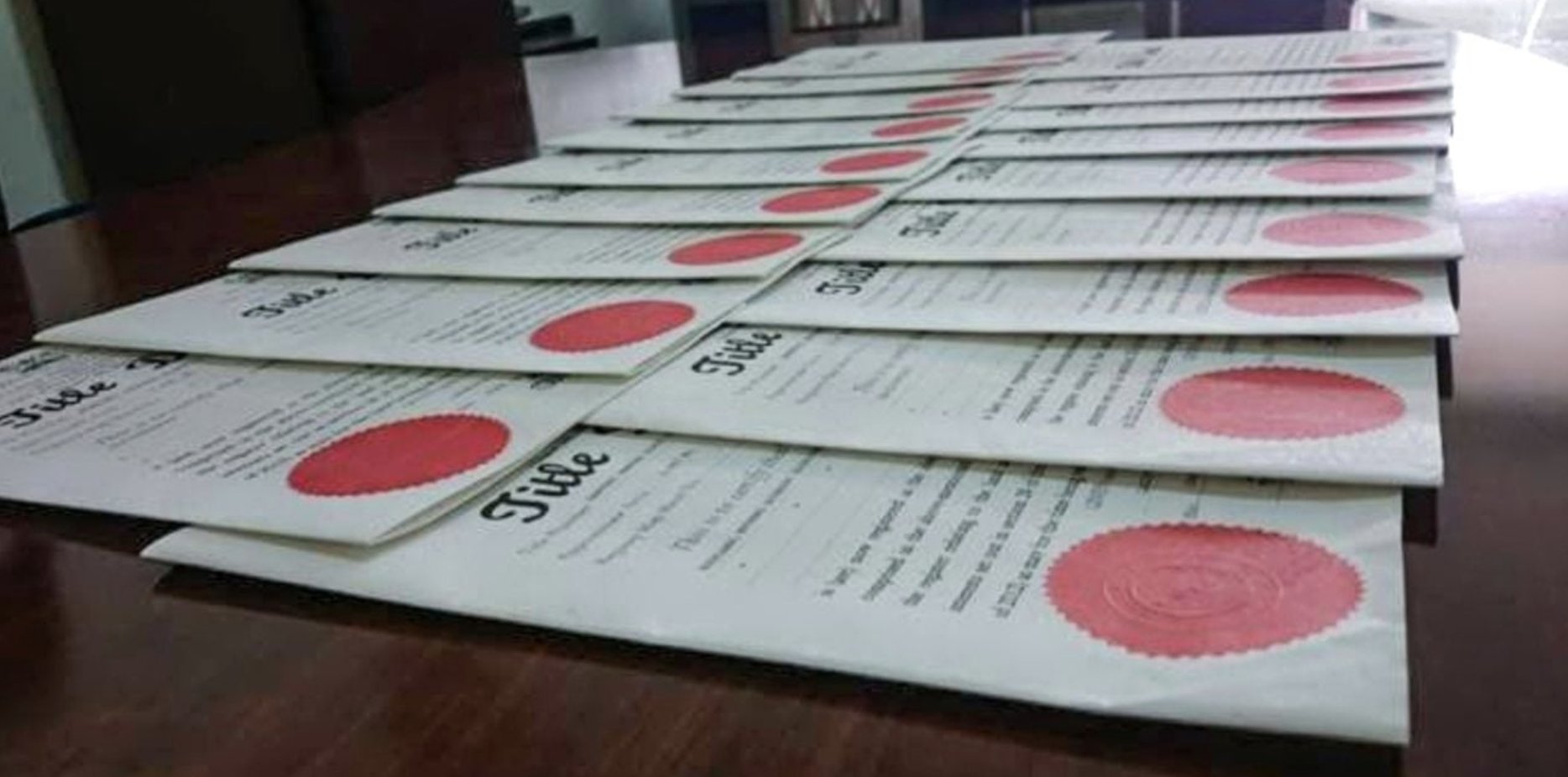
In a parallel warning, the U.S. has spotlighted a surge in fake title deeds as a growing obstacle to foreign direct investment (FDI) in Kenya. For the first time, the NTE identifies fraudulent land ownership documents as a significant barrier, signaling that the issue will feature prominently in upcoming trade and investment talks between Nairobi and Washington.
Rogue brokers, often in collusion with government officials, are selling nonexistent land or issuing duplicate title deeds, fueling a wave of court disputes—some deadly—and costing banks, workers, and companies billions of shillings.
The USTR report describes an intricate syndicate manipulating records at Kenya’s land registry to produce fake titles used in fraudulent transactions, including securing bank loans.
“The process for leasing developed land is clear, but obtaining leasehold titles for undeveloped land is opaque and unreliable,” the report notes. “Investors risk receiving fake deeds or leasing plots with multiple titles and unauthorized sales.”
Kenya’s Ministry of Lands is pushing reforms to address the crisis, including digitizing decades-old records to enable online registration and verification of titles.
The government contends that this will close loopholes exploited to create duplicate titles and transfer land without owners’ consent.
However, opposition from some lawyers and cartels has slowed implementation.
In November 2024, Lands Cabinet Secretary Alice Wahome announced enhanced security features for title deeds to thwart counterfeits, though details were sparse.
The urgency of these measures was underscored months earlier when the government printer reported the theft of 367 sheets of paper used for printing title deeds, exposing the sophistication of the fraud network.
Land remains a prized and emotive asset in Kenya, where the farming sector—contributing 25% of GDP—drives demand alongside a booming real estate market fueled by urbanization and homeownership aspirations.
This land rush has spawned a network of savvy cartels preying on desperate buyers, with officials in the archives department often at the center of the schemes.
The department houses the “green card”—a land parcel’s “birth certificate”—detailing ownership history, transactions, and encumbrances.
Essential for due diligence, this document is exploited by fraudsters who forge title deeds, IDs, and signatures, then alter registry records to match.
Unsuspecting buyers, armed with these falsified documents, conduct searches that falsely validate the paperwork, deepening the deception.
Kenya Insights allows guest blogging, if you want to be published on Kenya’s most authoritative and accurate blog, have an expose, news TIPS, story angles, human interest stories, drop us an email on [email protected] or via Telegram


Nyali MP Moha Jicho Pevu Caught Up In Alleged Sh44 Million KPA Debt Scam

Somalia Deputy PM Held at JKIA, Deported Over Questionable Acquisition of Kenyan Passport

The White-Coat Heist: How MP Shah Hospital Ran a Decade-Long Double-Extraction Racket While Hiding Behind Charity Status

The Patriarch, His Children, and a Buried Sh3.9 Billion Fraud: The Story of Titus Muya That Kenya Was Never Meant to Read

The Founder’s Ransom: How Titus Muya Had to Be Paid Sh231 Million to Let Go of Family Bank and Why That Bill Is Now Yours

Kenya’s gambling industry pushes back against a licensing bill

Kenya Airways Sinks Into Deeper Turbulence As American Supplier Sues In New York Court Over Sh129 Million Unpaid Debts

Kenyan player wins a Ksh3.2 million jackpot

IEBC Sets August 10 Date For 2027 General Election

Furious Ruto Lashes Out at Gideon Moi Over Repeated ‘Blackmail, Extortionist’ Headlines on The Standard and KTN

Businessman Philip Waithaka Kinuthia’s Minor Son Allegedly Drove Drunk, Killed Two Peponi Students in Ngong Road Horror Crash as Claims of Cover-Up Intensify

Inside NCBA’s Decline: How a Banking Giant Lost Its Strategic Edge

South Sudan: Adut Salva Kiir’s Shadow Treasury Exposed

Cement, Cash and Courts: How the Hashu Dynasty Crushed the Ramji Brothers for Fourteen Years and Why the Walls Are Now Closing In

Standard Chartered Ghosts Haunt Joshua Oigara At Stanbic As Whistleblower Spills Beans

Inside The Urban Planning Cartel That Owns Nairobi

THE VULTURE AND THE SCHEME How Nairobi West Hospital Became the Most Dangerous Institution in Kenya’s SHA Ecosystem and Why the Books Must Be Audited Now

The President’s Daughter and The Missing Witness: How Adut Salva Kiir’s Shadow Treasury Silenced Its Most Dangerous Critic

How Adil Popat Saved His Empire On The Eve Of Imperial Bank Collapse and Why Kenya’s Mainstream Media Buried The Story

Why John Ngumi Is Running From the EACC and Why the Sh415 Million Payday May Be the Least of His Worries
-
 News2 weeks ago
Businessman Philip Waithaka Kinuthia’s Minor Son Allegedly Drove Drunk, Killed Two Peponi Students in Ngong Road Horror Crash as Claims of Cover-Up Intensify
-
 Investigations1 week ago
THE VULTURE AND THE SCHEME How Nairobi West Hospital Became the Most Dangerous Institution in Kenya’s SHA Ecosystem and Why the Books Must Be Audited Now
-

 Business4 days ago
BURRIED TWICE: The Victoria Bank CEO Yogesh Pattni Files
-
 Business1 week ago
Inside the Billion-Shilling Betrayal: How Senior Treasury Officials Plundered a UN Poverty Fund and Built a Real Estate Empire on the Backs of Kenya’s Rural Poor
-

 Business1 week ago
The Listing That Doesn’t Lie: What the Market Isn’t Saying About Family Bank’s NSE Debut
-

 Business1 week ago
The Banker Who Walked Away: How Yogesh Pattni Survived a Financial Crime Scandal That Shook Kenya
-

 News6 days ago
My Life Is In Danger: Investor Drops Bombshell Expose On Thomas Ogutu CEO VeGrid Ltd And Fugitive Nairobi CEC Charles Kerich – DCI Inaction And Corruption Network Exposed
-

 Business1 week ago
The Enemy Within: How Old Mutual’s Own Staff and Rotten Systems Are Draining Kenya’s Insurance Giant