
News
Why Truphena Muthoni Can’t Celebrate Her 72-Hours Tree Hugging World Record

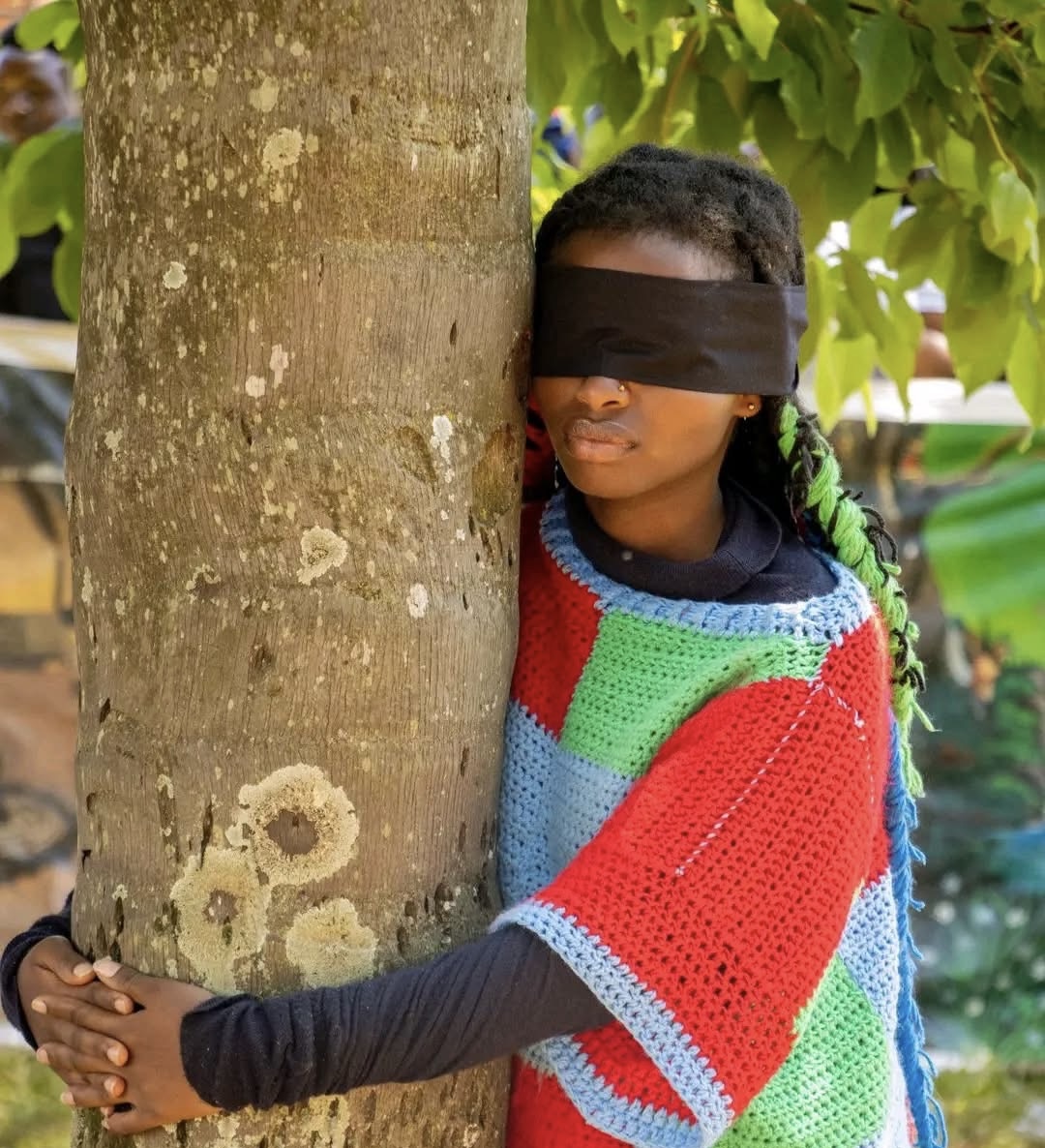
When Truphena Muthoni finally released her embrace from a tree outside the Nyeri Governor’s office at exactly 12:27 pm on December 11, the crowd erupted.
For 72 hours straight, the 22-year-old environmental activist had stood, arms wrapped around an indigenous tree, enduring cold nights, heavy rain, exhaustion and hunger.
Villagers ululated, social media exploded with congratulatory messages, and Kenyans celebrated what many believed was a new world record.
Politicians sent messages of support, businesses pledged gifts worth millions of shillings, and the nation basked in what seemed like another Kenyan triumph on the global stage.
But as the dust settled and the celebrations continued, a sobering reality began to emerge. While Muthoni’s achievement was undoubtedly extraordinary, a display of physical endurance, mental fortitude and unwavering commitment to environmental advocacy, it cannot yet be officially recognised by Guinness World Records. The journey from completing a feat to having it certified as a world record is far longer and more complex than most Kenyans realise.
Shortly after videos of Muthoni’s final moments went viral, excited Kenyans trooped to the official Guinness World Records Facebook page, eager to alert the London-based organisation of what they believed was Kenya’s newest record holder. Comments poured in by the hundreds, with users tagging the organisation and demanding immediate recognition.
“We have a world record holder in Kenya! Truphena Muthoni sets a new world record for hugging a tree for 72 hours,” wrote Fredrick Timotheo, echoing the sentiment of thousands of Kenyans who believed the record was already in the bag.
Another user, identified as Mungai Nation, wrote an impassioned plea. “Dear Guinness World Records, Kenya respectfully asks you to fast-track the verification of Truphena Muthoni’s 72-hour tree-hugging record. This was not a casual attempt; it was discipline, resilience, and the true spirit of a Kenyan heart on full display. We understand your procedures take time, but so does hugging a tree for three days straight. Surely, both efforts deserve efficiency.”
The response from Guinness World Records was measured, procedural and pointed to a reality many did not know. “We look forward to receiving the evidence,” the organisation stated simply.
Those seven words encapsulated the bureaucratic mountain that now stands between Muthoni and official recognition. Guinness World Records does not automatically recognise any achievement simply because it happened or because videos of it went viral. The organisation must first receive, review, verify and approve detailed evidence through a rigorous process that can take weeks or even months. Until that process is completed, a record remains unofficial, no matter how impressive the feat or how many people witnessed it.
The current official record for the longest time hugging a tree stands at 24 hours, 21 minutes and 4 seconds, held by Abdul Hakim Awal of Ghana, who achieved the feat between May 22 and 23, 2024. To the public, Muthoni’s 72-hour embrace seems to obviously shatter this record by nearly three times. But Guinness World Records operates under strict, internationally recognised protocols designed to ensure every record is legitimate, replicable and fairly judged.
Understanding what stands between Muthoni and official recognition requires a deep dive into how Guinness World Records actually works. The organisation has built its reputation over decades on credibility, and that credibility depends on verification processes that are, by design, exhaustive and unforgiving of shortcuts.
The first critical step in any Guinness World Record attempt is the application and approval process. Before attempting any record, participants must apply on the Guinness World Records website and receive approval of the category, specific guidelines and detailed rules. If Muthoni did not submit a pre-attempt application or receive formal guidelines beforehand, she may now be required to submit a post-attempt application, which takes significantly longer and faces stricter scrutiny.
According to George Achoka, who attempted a Guinness World Record for giving 15,000 hugs in Nairobi on Valentine’s Day this year, the application process is free for existing record categories, though a small fee is required if proposing an entirely new category. “For all Guinness World Records attempts, the challenger must first identify the specific record they want to pursue. They then create an account on the Guinness World Records website, search for the record, and apply. Part of the application process includes providing a justification for why the individual wants to set or break that particular record,” Achoka explained.
Guinness categories often have precise definitions that might seem pedantic but are essential to maintaining consistency across attempts. For tree hugging, these include what constitutes continuous hugging, whether rest breaks are allowed and how they must be documented, what happens if the participant moves around the tree, whether hands must remain visible at all times, and how timing must be measured. Any deviation from these rules, no matter how minor, can invalidate an attempt.
The evidence requirements are perhaps the most daunting aspect of the process. Guinness requires what can only be described as a mountain of documentation before it considers ratifying any record. For time-bound endurance feats like tree hugging, several types of evidence are typically mandatory.
First and foremost is continuous video recording. The entire attempt must be captured on uninterrupted video, without any cuts or gaps. The footage must clearly show the participant, the tree, the attempt area and time-stamped proof of duration. Any breaks, if permitted under the rules, must be fully visible. For a 72-hour attempt, this means having cameras rolling non-stop for three full days and nights, capturing every single moment. Battery changes and tape switches must be carefully managed, often requiring multiple cameras to ensure there are no gaps in coverage.
Muthoni herself acknowledged these stringent requirements during her attempt. “An HD camera must film me continuously for all 72 hours, and my hands must remain visible at all times. I cannot sit down, and if I move around the tree, my hands must remain visible to show I am still hugging it. Many organisations are watching, including my evaluators from Guinness World Records,” she said.
Independent witness statements form another crucial pillar of evidence. Guinness requires at least two independent witnesses per shift throughout the entire duration of the attempt. These individuals must not be friends, relatives or organisers involved in the attempt. Each witness must maintain detailed logs and sign sworn statements that will later be submitted to Guinness. The witnesses work in shifts, ensuring that at least two qualified individuals are present and documenting every moment from start to finish.
“The witnesses don’t know each other. I am the only one who knows them because I submitted their names during my application. Each must submit an individual statement to Guinness as part of the evidence,” Muthoni explained, showing she understood the requirements.
Achoka emphasised the importance of having the right kind of witnesses. “Witnesses must be professionals relevant to the nature of the attempt. In my case, which involved counting a statistical total of 15,000 hugs, the appropriate professionals were pollsters or enumerators. These people are supposed to act as GWR representatives, so I had to get a professional firm that deals with numbers, people who can prepare an accurate report without the errors that come with counting,” he said.
Timekeeper logs are equally critical. Evidence must include official timing records maintained by a certified timekeeper or established timing system. The clock must run continuously from hour zero to the final hour, with any stops or anomalies fully documented and explained. For marathon records, Guinness typically requires a visible, continuously running clock in the video footage itself.
Because endurance records carry inherent risks to physical health, Guinness typically requires both pre-attempt and post-attempt medical assessments. A qualified medical professional must certify that the participant was healthy enough to attempt the record before it began, and must provide a post-attempt medical report confirming the participant’s well-being and documenting any medical interventions that may have occurred during the attempt.
High-resolution photographic evidence showing the start, middle, end, surroundings and participant’s position relative to the tree must also be submitted. These photos serve as additional verification of conditions and compliance with rules.
Designated stewards must keep detailed minute-by-minute logs noting activity, any rest breaks if permitted, rule compliance, weather conditions, and any notable events throughout the attempt. These logs must be signed and dated at regular intervals.
Without these comprehensive documentation packages, an attempt is considered unverifiable, no matter how many people witnessed it in person or how widely videos circulated on social media. Viral success does not equal world record status.
Once all evidence is compiled, submitted through the Guinness portal and received by the organisation, the real waiting begins. Guinness World Records’ review team conducts what can only be described as a forensic evaluation of every piece of submitted material. This process commonly takes 12 weeks or longer, depending on the complexity of the record and the volume of evidence to review.
During this phase, reviewers may request additional footage, ask for clarifications, reject portions of the evidence as insufficient, request witness credentials for verification, or seek further proof of rule compliance. Attempts fail at this stage more often than many realise, not because they are fraudulent, but because documentation is incomplete, doesn’t follow guidelines to the letter, or contains gaps that make verification impossible.
Muthoni’s previous 48-hour attempt in February 2025 highlights these challenges. Despite completing the feat at Nairobi’s Michuki Memorial Park, that record has not yet been officially published by Guinness. “There were hitches, forcing me to restart the submission in September after 16 weeks,” Muthoni explained, noting that her 48-hour marathon is still working its way through the verification process due to technical issues encountered while submitting the evidence.
This reality check doesn’t diminish the remarkable nature of what Muthoni accomplished. For 72 consecutive hours, she maintained contact with a tree without eating, drinking water, sleeping or taking bathroom breaks. She endured torrential rain that required supporters to hold umbrellas over her, cold nights that necessitated portable heaters and jackets, and the kind of physical and mental exhaustion that would break most people within hours.
Her preparation for the attempt was methodical and intense. She walked 42 kilometres non-stop as part of her training, practiced fasting by eating only one meal per day at intervals, conducted preparatory tree hugs of 35 hours and 60 hours, and underwent medical evaluations to ensure she could safely attempt such an extreme endurance feat.
During the attempt, she drew massive support. Nyeri Governor Mutahi Kahiga flagged off the event and remained a vocal supporter throughout. Former Deputy President Rigathi Gachagua sent messages of encouragement. Pan-Africanist PLO Lumumba travelled to Nyeri to support her. National and local media provided extensive coverage. Hundreds of Kenyans camped at the site, providing emotional support and witnessing her determination firsthand.
The rewards pledged and delivered have been substantial. Betting firm OdiBets promised one million shillings upon completion. Adequate Safaris and Bonfire Adventures each offered fully paid three-day holidays on the Kenyan coast. Damaris of Dama Spares Original pledged a Samsung Galaxy Fold 7. Philanthropist Solomon Maina committed 100,000 shillings specifically to support the processing of Guinness World Record documentation, acknowledging the financial burden of the verification process. Fashion brand Sir Bonnie promised to dress her for three months with custom-made suits of her choice.
Muthoni revealed that a good Samaritan has pledged to cover the 83,000 shillings, approximately 650 US dollars, required for expedited evaluation. Without this fast-track payment, which is optional but significantly speeds up the process, verification of longer marathons can take six months to a year.
The fact that Guinness charges for expedited review has drawn some criticism, but the organisation maintains that the standard free process is available to all, and the expedited option merely provides faster turnaround for those who can afford it. Achoka confirmed this, noting that while the application itself is free, “if you want the record to be ratified immediately, you can facilitate the travel and accommodation of the Guinness World Records representative from the UK to witness the attempt, since there are no GWR representatives in Kenya. Guinness World Records does not fund attempts; challengers must cover all costs themselves.”
The stringent verification process exists for good reason. Guinness World Records represents more than individual achievement; it stands for global credibility. Records are celebrated worldwide precisely because they are verified with scientific and procedural thoroughness. Without such verification, cheating could go undetected, inconsistent rules could skew fairness between different attempts, and public trust would erode. The organisation’s reputation depends entirely on the integrity of its verification process.
For Muthoni, the wait now begins. According to her timeline, she expects Guinness World Records to publish a decision by January 9, 2026, assuming the expedited processing fee is paid and all evidence is submitted properly. Her team is now compiling all required documentation, including the continuous 72 hours of video footage, witness statements, timekeeper logs, medical reports, photographic evidence and steward reports.
Only after Guinness’s verification team completes its exhaustive review and is fully satisfied with the evidence will they issue official confirmation. Until then, no certificate will be issued, no media announcement will be made by Guinness, and the attempt technically remains unofficial, existing in a state of limbo between completed feat and recognised record.
What Kenyans witnessed was undoubtedly extraordinary. Videos of the challenge show supporters cheering through rain and cold, medics standing by, police maintaining security and Muthoni herself leaning against the tree with unshakeable resolve, her arms never breaking contact, her face showing both exhaustion and determination. The emotional and physical toll was visible, but so was her commitment to her cause.
Muthoni framed her marathon not merely as a record attempt but as a silent protest against deforestation, a call for protection of indigenous trees and communities, and a way to highlight the therapeutic connection between humans and nature. “I am a defender of forests and a world-record holder for the longest tree hug. I also defend the rights of indigenous trees, people, and animals. This is a peaceful form of protest meant to urge our leaders to respond to pertinent environmental issues,” she said.
At the 48-hour mark, she tied a blindfold around her eyes and hugged the tree for nearly three hours, highlighting the vulnerabilities faced by persons living with disabilities and the often-overlooked climate injustices they experience. Her message resonated widely, sparking conversations about conservation, mental health, inclusivity and the role of peaceful protest in environmental advocacy.
Whether Guinness World Records ultimately ratifies her 72-hour attempt remains to be seen. The evidence is being compiled, the fees are being arranged, and the submission process will soon begin. The review team in London will then spend weeks meticulously examining every frame of video, every witness statement, every timestamp and every detail to determine whether the attempt met all requirements.
For now, Truphena Muthoni must wait. The celebrations that erupted when she released her embrace, the national pride, the pledged rewards and the viral social media moment all happened. But the blue and gold certificate from Guinness World Records, the official recognition that would make her achievement part of recorded history and the entry into the famous record book must wait for the bureaucratic machinery to grind through its necessary, if frustratingly slow, verification process.
In the meantime, she has become a national symbol of dedication and environmental activism, inspired thousands of Kenyans to think differently about conservation and proven that one person’s commitment can capture a nation’s attention. Whether that ultimately translates to an official world record is now in the hands of reviewers thousands of kilometres away, examining evidence frame by frame, statement by statement, determined to ensure that if the record is granted, it will stand on the most solid foundation of documented proof.
The lesson for Kenyans celebrating future record attempts is clear. Achievement and recognition are separate things. Completing a remarkable feat is one thing, but proving to the satisfaction of Guinness World Records that you completed it according to their exacting standards is quite another. Until that proof is submitted, reviewed and approved, celebrations remain premature. The record, for now, lives in that uncertain space between completed and confirmed, between witnessed and verified, between Kenyan pride and global recognition.
Kenya Insights allows guest blogging, if you want to be published on Kenya’s most authoritative and accurate blog, have an expose, news TIPS, story angles, human interest stories, drop us an email on [email protected] or via Telegram





Official: Guinness World Records Certifies Truphena Muthoni’s 48-Hour Tree-Hugging Marathon

Why Truphena Muthoni Can’t Celebrate Her 72-Hours Tree Hugging World Record

Ghanaian Influencer Charged Over $8m Scam Targeting Elderly Americans

Talanta Stadium To Be Renamed Raila Odinga International Stadium, Ruto Announces

Kenya Police Officers Returning From Haiti Recount Horror Experiences of Fighting The Deadly Criminal Gangs

Govt Plans To Hand Over NTSA Driving License Management to A Private Investor

Hass Petroleum Empire Faces Collapse as Court Greenlights KSh 1.2 Billion Property Auction

Crypto Mogul Do Kwon Sentenced To 15 years over $40 Billion Fraud

2,000 Killed in Tanzania Election Crackdown

Grade 9 Learners Are No Longer Allowed To Repeat, KNEC Says

Kakuzi Investors Face Massive Loss as Land Commission Drops Bombshell Order to Surrender Quarter of Productive Estate

Kenyan Driver Hospitalized After Dubai Assault for Rejecting Gay Advances, Passport Seized as Authorities Remain Silent

Money Bior, Lawyer Stephen Ndeda Among 18 Accused Of Running An International Fraud Ring Involved With Scamming American Investor Sh500 Million

Nestlé Accused of Risking Babies’ Health in Africa with ‘Toxic’ Cerelac Product Sold Highest in Kenya

Construction Of Stalled Yaya Center Block Resumes After More Than 3 Decades and The Concrete Story Behind It

INSIDER LEAK REVEALS ROT AT KWS TOP EXECUTIVES

How Somali Money From Minnesota Fraud Ended In Funding Nairobi Real Estate Boom, Al Shabaab Attracting Trump’s Wrath

CNN Reveals Massive Killings, Secret Graves In Tanzania and Coverup By the Govt

BANKS BETRAYAL: How Equity Bank Allegedly Helped Thieves Loot Sh10 Million From Family’s Savings in Lightning Fast Court Scam

How Land Grabbing Cartels Have Captured Ardhi House
-
 Investigations2 weeks ago
Money Bior, Lawyer Stephen Ndeda Among 18 Accused Of Running An International Fraud Ring Involved With Scamming American Investor Sh500 Million
-
 Investigations2 weeks ago
Nestlé Accused of Risking Babies’ Health in Africa with ‘Toxic’ Cerelac Product Sold Highest in Kenya
-
 Investigations1 week ago
How Land Grabbing Cartels Have Captured Ardhi House
-

 News2 weeks ago
48-Year-Old Woman Who Pushed 25-Year-Old Boyfriend To Death From 14th Floor Kilimani Apartment Arrested
-

 Investigations2 weeks ago
KDC Rocked With Fresh Sh500 Million Tender Scam
-

 Grapevine2 weeks ago
MP Anthony Kibagendi Assault and Injures Kisii Man He Accuses Of Sleeping With One Of His Girlfriends
-

 News2 weeks ago
Kenyan Man Fighting For Russia Killed On The Frontline Of Ukraine
-

 Business2 weeks ago
How Dinesh Construction Engaged In Tax Fraud Using ‘Missing Trader’ Scheme