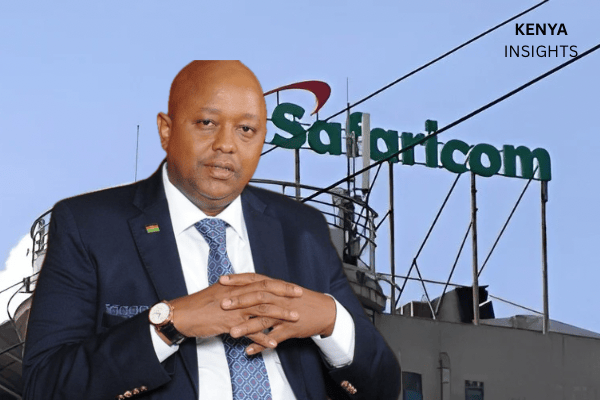
KEY FACTS AT A GLANCE
Shares being sold: 6,009,814,200 (15% of Safaricom)
Sale price: KSh 34 per share (vs. alleged intrinsic value: KSh 70–80)
Government proceeds: KSh 244.5 billion (including KSh 40.2B dividend prepay)
Alleged undervaluation loss to Kenya: Over KSh 250 billion
Post-deal control: Vodacom 55%, GoK 20%, Public 25%
M-Pesa daily transactions: 100 million+; Active users: 38 million
Parliamentary deadline: ~March 26, 2026
Active court petitions: At least 3 before the High Court
Interim injunctions granted: Zero (as at Feb 25, 2026)
It has all the hallmarks of the deals Kenya’s legal fraternity has come to dread: a rushed timeline, a locked-out public, a handpicked buyer, and a price that critics say would make a seasoned auditor weep. The government’s planned sale of a 15 percent stake in Safaricom PLC to South Africa’s Vodacom Group — valued at a staggering KSh 244.5 billion when prepaid dividends are included — has ignited a constitutional firestorm that now rages simultaneously in at least three High Court courtrooms, across social media battlegrounds, and in the heated chambers of a Parliament that may yet hold the power to kill the deal entirely.
At the centre of the legal storm stands Tony Gachoka — veteran journalist, KANU party spokesman, aspiring Nairobi gubernatorial candidate, and one of Kenya’s most unapologetic gadflies. In a social media post on February 24, 2026, Gachoka did not mince words: “VODACOM ENGLISH COMPANY BEING USED BY WILLIAM RUTO TO STEAL BILLIONS OF SHILLINGS FROM KENYANS, IN A SECRET DEAL WORTH 200 BILLION HAS PANICKED.” That, in a single capitalised declaration, is the Gachoka doctrine: a South African-registered, London-parentage corporate vehicle is being weaponised to siphon the birthright of ordinary Kenyans — and President William Ruto is holding the door open.
Gachoka has since filed a constitutional petition at the Milimani High Court alongside economics professor Fredrick Onyango Ogola, naming as respondents the Cabinet Secretaries for the National Treasury and for ICT, the Communications Authority, the Competition Authority, the Attorney General, Safaricom PLC itself, and Vodacom Group. The petition is a grenade rolled into the gilded machinery of Kenya’s biggest privatisation in a generation.
THE DEAL: WHAT THE GOVERNMENT SAYS — AND WHAT IT ISN’T SAYING
On December 4, 2025, Finance Cabinet Secretary John Mbadi announced that the state had agreed to sell 6,009,814,200 Safaricom shares — 15 percent of the company — to Vodacom at KSh 34 per share. The total headline figure: KSh 204.3 billion. Add an upfront dividend prepayment of KSh 40.2 billion on the government’s residual 20 percent stake, and the total cash inflow balloons to KSh 244.5 billion.
The proceeds, the government says, are earmarked as seed capital for a National Infrastructure Fund and a new Sovereign Wealth Fund — a financial vehicle to bankroll roads, irrigation schemes, energy projects, and airport upgrades. For a government where debt servicing now swallows more than 40 percent of revenue, and where Kenya’s public debt stands at a vertigo-inducing KSh 12 trillion, Mbadi frames the sale as economic triage: convert a passive shareholding into productive capital.
Post-transaction, the ownership map changes seismically. The government’s 35 percent stake shrinks to 20 percent. Vodacom’s effective holding surges from 35 percent to 55 percent — outright controlling majority. The public float stays at 25 percent. In one stroke, a South African conglomerate backed by British telecom giant Vodafone Group would assume operational dominion over East Africa’s most powerful private enterprise.
The conditions the government has extracted — Kenyan CEO and chairman, no layoffs outside the ordinary course, no supplier changes for three years, majority Kenyan independent directors — are, critics say, window dressing on a structural capitulation. Notably absent from the public record: any disclosed valuation methodology, any named transaction adviser, any evidence of competitive bidding, and any published due diligence report.
When pressed on why the shares were not offered to ordinary Kenyans, CS Mbadi offered a frank economic sermon: “Selling Safaricom shares directly to Kenyans would not have given us value for money because we would have sold at a discount.” The statement, however, raised an immediate retort from critics: if the prevailing market price of KSh 29.50 is too low to sell to Kenyans, why is KSh 34 — still well below the alleged intrinsic value of KSh 70–80 — good enough for Vodacom?
THE PETITION: ALLEGATIONS THAT COULD BLOW UP THE DEAL
The Gachoka-Ogola petition, filed at the Constitutional and Human Rights Division of the High Court in January 2026, reads less like a legal pleading and more like an indictment. Its central allegations are as follows:
Gross undervaluation: The petitioners contend that the KSh 34 price is a gross misrepresentation of Safaricom’s worth. Independent economic analysis places the shares’ intrinsic value at between KSh 70 and KSh 80 per share — a differential that, extrapolated across the 6 billion shares being sold, translates into a potential loss to the Kenyan public of over KSh 250 billion. The petition argues this price was “poorly and selectively negotiated by the respondents to the grave detriment of the Kenyan public.”
Opaque, non-competitive process: The sale was structured as a negotiated block trade with a single buyer — Vodacom — with no public tender, no competitive bids solicited, no disclosure of who advised the government, and no evidence that alternative buyers or structures were considered. The petition describes the process as “rushed, opaque, non-competitive and procedurally dubious.”
Constitutional violations: The petition invokes Articles 1, 10, and 227 of the Constitution — the pillars of public participation, national values, and transparency in the disposal of public property. The petitioners argue the Public Procurement and Asset Disposal Act, 2015 was bypassed, that the Privatisation Act, 2025 was not properly observed, and that Parliament’s role was reduced to a statutory rubber stamp — a 28-day window within which lawmakers must act or the deal proceeds automatically by March 26, 2026.
National security and sovereignty: Perhaps the most explosive allegation involves what Safaricom actually is — not merely a telecom company but a data sovereign, a financial artery, and a national security infrastructure. M-Pesa alone processes over 100 million transactions daily, services 38 million Kenyan customers, and forms the backbone of Kenya’s digital financial inclusion story. The petition argues that handing Vodacom 55 percent control would “irreversibly undermine Kenya’s strategic leverage over critical data infrastructure, mobile money systems and national security interests.”
VODACOM’S PANIC MOVE: APPLICATION TO BE STRUCK OUT
On February 24, 2026 — the same day Gachoka published his explosive social media broadside — The Standard reported that Vodacom Group had filed a formal application before High Court Judge Lawrence Mugambi, asking to be struck out entirely as a respondent. The company’s argument: it is not a party to the government’s shareholding decision and exercises no control over it.
Safaricom PLC has taken a similar position, telling the court it is not the proper respondent as shareholding decisions rest with the government. Both companies, in effect, are pointing the finger at State House and the National Treasury — and asking the court to let them watch from the sidelines.
For Gachoka, this is precisely the tell. In his social media post, he claimed Vodacom was “trying to pull out“ and attributed this to fears of being linked to the kind of corruption scandals that have followed UK-connected corporate deals in Kenya’s recent past. Whether or not the legal manoeuvre amounts to a retreat under fire — or merely a legitimate procedural point — it has given Gachoka fresh ammunition to fire across every social media platform available to him.
THE COURT’S CAUTION: NO FREEZE ORDERS YET — BUT THE BATTLE IS FAR FROM OVER
The High Court has twice declined to issue interim conservatory orders halting the transaction — a blow to the petitioners’ strategy of urgency. The court’s reluctance reflects a preference for structured, full-ventilation hearings rather than ex parte injunctions in complex commercial-constitutional matters. On February 4, 2026, directions were expected. A further mention date of February 23, 2026 was set for additional directions.
At least two additional petitions from separate litigants are running in parallel courts — a legal constellation of challenges that creates simultaneous risk vectors for the deal’s progress. The transaction still requires approvals from Cabinet, Parliament, the Capital Markets Authority, the Communications Authority, the Central Bank of Kenya, COMESA, and the East African Community Competition Authority. Parliament’s 28-day window — ticking since December 2025 — expires on or around March 26, 2026, meaning the clock is loud.
A Parliamentary committee has issued directions supporting the sale, following public participation forums conducted across 30 counties. But scrutiny within Parliament has not been uniform. Several MPs have raised pointed concerns about sovereignty, data protection, and the structural exclusion of Kenyan retail investors from a deal involving a company that millions of ordinary citizens use daily.
THE DEEPER QUESTION: WHO REALLY LOSES IF THIS DEAL CLOSES?
Safaricom is not a routine state-owned enterprise available for portfolio trimming. It is, by virtually any serious analysis, the most consequential single private entity operating in Kenya’s economy. Its M-Pesa platform processes the daily financial lives of tens of millions of Kenyans — market hawkers, smallholder farmers, domestic workers, corporate treasuries. Its network is woven into Kenya’s e-commerce, its data infrastructure underpins the digital economy, and its communications systems intersect with national security considerations that Kenya’s security establishment has never fully disclosed publicly.
The Kenya Bankers Association, hardly a body of radicals, has proposed that at least 300 million shares — a 0.75 percent stake — be offered to ordinary Kenyan citizens rather than sold entirely to Vodacom. The Technology Service Providers Association has called for golden share provisions and foreign ownership limits. The Safaricom Dealer Association has warned that Vodacom’s more centralised operational model in other African markets risks dismantling the shared-prosperity dealer network that has given Safaricom its formidable national footprint.
Wiper leader Kalonzo Musyoka has weighed in, questioning both the transparency of the process and the extent to which citizens have been meaningfully included. In a political environment already raw from the Gen-Z uprising of 2024 and the unresolved aftermath of Kenya’s finance bill battles, the optics of a secretive, billion-dollar sellout to a foreign corporation — conducted without competitive bidding and with alleged underpricing — are politically toxic.
GACHOKA THE FIREBRAND: POLITICAL THEATRE OR GENUINE PUBLIC INTEREST CRUSADE?
It would be naive to divorce Tony Gachoka’s legal activism from his political ambitions. As a KANU spokesman with an eye on the 2027 Nairobi gubernatorial race and a lifelong instinct for the inflammatory headline, Gachoka occupies a complex position: part genuine public interest litigant, part performance politician who understands that nothing generates profile faster than suing a sitting president over a Sh200 billion deal.
But the substance of the petition — whatever one thinks of its author — is not frivolous. The constitutional grounds are real. The valuation gap between KSh 34 and the KSh 70–80 intrinsic value estimate is real and has been cited not only by Gachoka but by financial analysts, MPs, and civil society. The absence of disclosed transaction advisers and methodology is real. The question of whether foreign majority control of a mobile money system used by 38 million people constitutes a national security risk is real and unresolved.
Gachoka’s petition joins a pattern of legal challenges to Ruto-era privatisation and infrastructure transactions — a pattern that includes the controversially abandoned Adani Group concession at JKIA, a deal that similarly collapsed under the weight of legal challenge, public outrage, and international scrutiny. Whether the Vodacom-Safaricom deal proves more durable — or more defensible — remains entirely to be seen.
THE VERDICT THE COUNTRY IS WAITING FOR
As of February 25, 2026, no injunction has frozen the deal. Parliament’s window has not yet closed. The regulatory approvals queue is long. And in the corridors of Milimani’s Constitutional Division, three separate petitions are circling what may be Kenya’s most consequential privatisation decision since independence.
The government says the sale is lawful, prudent, and structured to preserve Kenya’s interests. The petitioners say it is a constitutional crime dressed in infrastructure rhetoric. Vodacom says it is merely a buyer negotiating at arm’s length with a willing sovereign seller. And somewhere in the middle of all this sits Safaricom itself — silent, listing on the NSE, processing 100 million M-Pesa transactions a day — indifferent, for now, to who owns it.
The question before the High Court, before Parliament, and ultimately before the Kenyan public is deceptively simple: is this a strategic sale in the national interest — or is it, as Tony Gachoka insists in his most unguarded moments, a theft carried out in broad daylight with a parliamentary clock as its alibi?


Comments