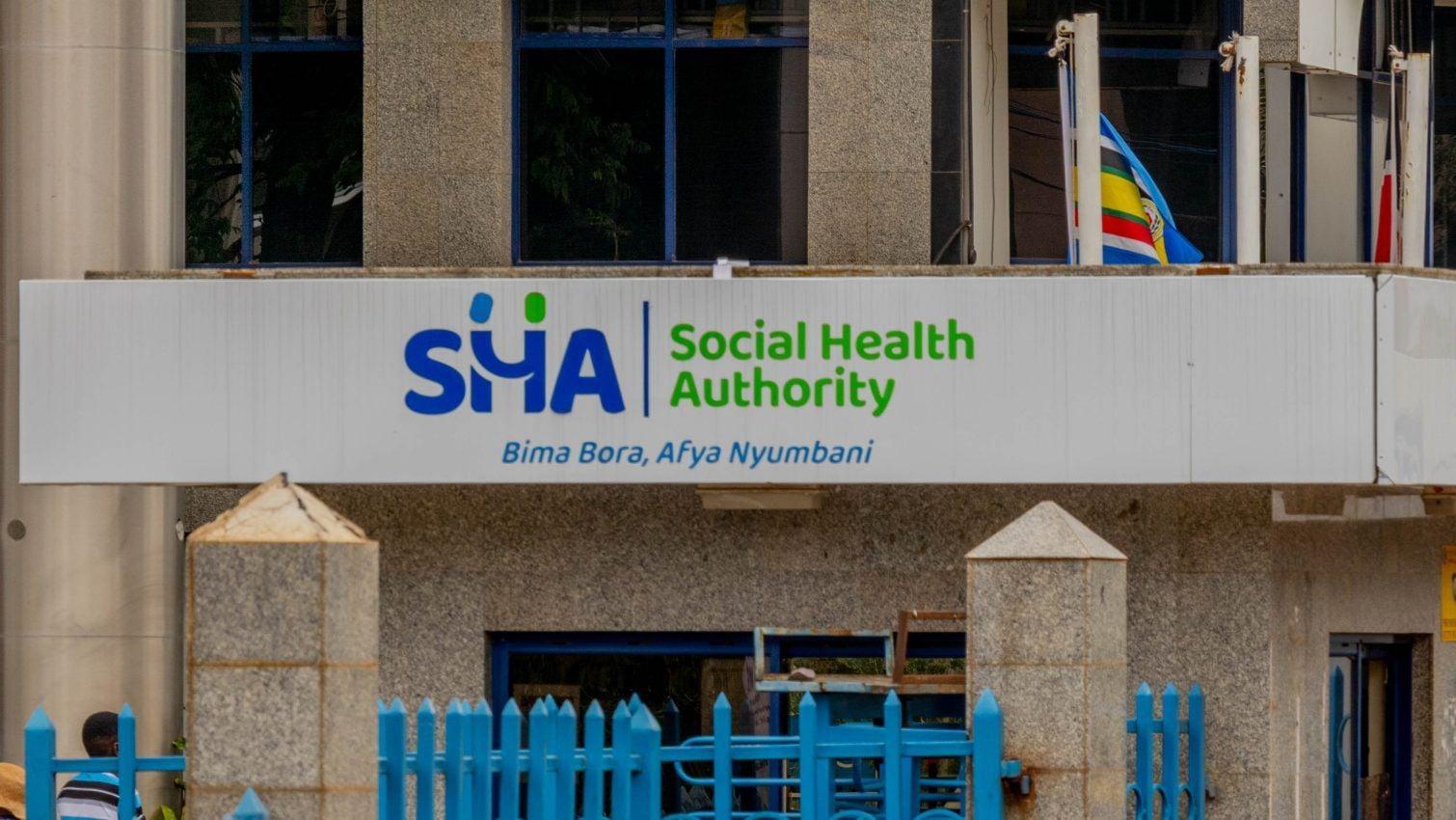
TWIN SCANDALS, ONE PLAYBOOK
When Health Cabinet Secretary Aden Duale stood before a gathering of Muslim medics at an Iftar dinner in Nairobi on Sunday evening and declared that 55 per cent of the 1,120 health facilities shut down for defrauding the Social Health Authority are Muslim-owned, he was not merely making a religious observation.
He was, knowingly or not, echoing a scandal that has brought an American state to its knees and sent shockwaves across Washington D.C., Mogadishu, and Nairobi.
More than 9,500 kilometres away, in the Twin Cities of Minneapolis and St Paul, Minnesota, federal prosecutors have spent the better part of four years unravelling what the United States Department of Justice has described as the largest Covid-era fraud in American history.
The scheme, centred on a charity called Feeding Our Future, saw tens of millions of dollars meant to feed hungry children during the pandemic siphoned off by fraudsters, the overwhelming majority of whom are of Somali descent.
Out of 98 defendants charged in Minnesota fraud-related cases to date, 85 are of Somali origin. In Kenya, the eight facilities recommended for criminal prosecution by the Office of the Director of Public Prosecutions are all from Mandera County, registered between January and February 2025, within months of SHA beginning to integrate hospitals into its payment system. Every single one carries a name that leaves no ambiguity about the community running it.
The parallels are not coincidental. They are instructive. And in at least one documented instance, the two scandals are directly linked by money, property, and family ties rooted in Nairobi.
GHOST CHILDREN, GHOST PATIENTS
The mechanics of the Minnesota fraud were almost embarrassing in their simplicity. Feeding Our Future, a nonprofit, began claiming federal reimbursements for meals it said were being provided to thousands of needy children during the pandemic.
The US Department of Agriculture, eager to ensure no child went hungry as schools closed, had loosened oversight requirements and allowed nonprofits to claim reimbursements with minimal documentation.
What investigators eventually discovered was that the meals were never delivered. The sites either did not exist, were entirely unstaffed, or were shell operations registered solely to harvest federal payments.
The playbook was replicated so aggressively that US First Assistant Attorney Joe Thompson, standing before journalists in Minneapolis in December 2025, declared the situation was not a case of a handful of bad actors but rather an industrial-scale fraud swamping the state.
Half or more of the roughly Ksh1.5 trillion in federal funds supporting 14 Minnesota-run Medicaid programmes since 2018 may have been stolen, Thompson said. The figure is so staggering it has reshaped American politics, triggered congressional hearings, and prompted President Donald Trump to end temporary deportation protections for Somali immigrants in the state.
In Kenya, the SHA fraud bears a signature that investigators and analysts find disturbingly familiar. Forensic audits by SHA’s digital health system have uncovered upcoding, where facilities claim for expensive procedures never performed; falsification of medical records to inflate claims; conversion of outpatient visits into inpatient billing; and ghost patients, individuals billed for services they never received.
In Mandera alone, officials uncovered 312 false claims submitted on the same dates for the same patients across different facilities. Four facilities in the county were found to have colluded to submit duplicate claims for the same patient, in a level of coordination that investigators say goes far beyond opportunistic theft into organised criminal enterprise.
The eight Mandera facilities recommended for prosecution by the ODPP, including Danaba Care Hospital, Kamishawa Medical Centre, Kaafi Nursing Home, Mama Nerbeel Nursing Home, Alati Nursing Home, Julun Nursing Home, Adfaal Kids Care Medical Centre and Dimtu Nursing Home Limited, were registered between January and February 2025.
SHA itself only began integrating private hospitals into its payment system in late 2024. In the space of a few months, these facilities had apparently established themselves, enrolled patients, and begun submitting claims.
Just as in Minnesota, where providers were created specifically to exploit a new programme before oversight mechanisms could catch up, the Mandera facilities appear to have been registered with a singular purpose.
THE NAIROBI CONNECTION
The link between Minnesota’s Somali fraud network and Kenya is not merely thematic. It is documented in court filings, wire transfers, and text messages retrieved by the FBI.
Abdiaziz Shafii Farah, the Kenyan national who emerged as the central figure of the Feeding Our Future scheme, was sentenced to 28 years in federal prison in August 2025. Court documents detail how he sent millions of dollars in stolen federal funds to Kenya, where his younger brother Ahmednaji Maalim Aftin Sheikh, a resident of Nairobi, was awaiting the deliveries.
The indictment against Sheikh, filed in September 2025, alleges that he and his co-conspirators laundered more than Ksh5.2 billion in federal funds. The money was used to purchase a 20 per cent stake in a Kenyan real estate company, an apartment building in the South C neighbourhood of Nairobi adjacent to Nairobi National Park, and land in Mandera Town.
Court exhibits include photographs of stacked cash. On August 29, 2021, Sheikh sent his brother a photograph of Ksh17.8 million in cash.
On December 9, 2021, he sent a photograph of banker boxes stuffed with Ksh34.8 million. A message from December 16, 2021 documents a Ksh38.7 million wire transfer from Minneapolis to Nairobi, with the stated purpose listed as family support and the income source listed as salary. The defendant’s salary was, in reality, stolen American food-programme money.
The US Attorney’s office confirmed that a significant amount of Minnesota fraud proceeds were directed specifically to Nairobi’s real estate market, capitalising on the city’s large Somali diaspora and the relative ease of purchasing property. One defendant forfeited an apartment in Nairobi and an oceanfront resort in Kenya as part of his plea agreement.
Another wired Ksh193.5 million to China and Kenya. A third sent a text message boasting that he had invested Ksh774 million in Kenya over three years. In December 2025, White House Press Secretary Karoline Leavitt specifically named Kenya as one of the countries benefiting from the Minnesota schemes.
The Capital View Properties case, reported by the Daily Nation, exposed how one of the registered Nairobi real estate firms, incorporated in February 2021, became a vehicle for laundering Minnesota fraud proceeds. Within months of its registration, millions of dollars were flowing from Minneapolis bank accounts into the company’s operations.
LITTLE MOGADISHU AND THE HEALTHCARE ECONOMY
To understand why Kenya became the preferred destination for laundered Minnesota fraud money, and why Kenya’s own health system appears to have been targeted through the same community networks, one must understand the extraordinary economic and demographic footprint of Kenya’s Somali population.
According to the 2019 Kenya census, approximately 2.78 million ethnic Somalis live in Kenya, making them the sixth largest ethnic group in the country. They are overwhelmingly Muslim. The counties of Mandera, Wajir, Garissa, and Tana River in the North Eastern region, which border Somalia, are their historic heartland.
In Nairobi, the suburb of Eastleigh, colloquially known as Little Mogadishu, has become one of the most economically productive neighbourhoods in the city, contributing nearly a third of Nairobi’s tax revenue and hosting an estimated 200,000 to 500,000 residents, predominantly Somali.
The Somali community in Kenya is entrepreneurial almost by definition. Somali refugees who were healthcare professionals in Somalia opened their own clinics and practices in Eastleigh, serving a community that is both densely populated and underserved by public hospitals.
This gave rise to a sprawling private healthcare economy in Eastleigh and across the northeastern counties, one that predates SHA and operated profitably under the now-defunct National Hospital Insurance Fund.
It is precisely this existing infrastructure of privately owned, community-run health facilities that appears to have been weaponised in the SHA fraud.
The Kenya Association of Muslim Medical Professionals, in its statement condemning the fraud, acknowledged that a significant proportion of the facilities implicated in the first and second waves of SHA closures appear to be Muslim-owned and are concentrated in counties with large Muslim populations.
KAMMP’s secretary-general Dr Abdallah Bajaber described the situation as a matter of profound concern, moral urgency, and deep national responsibility, noting that some individuals had attempted to rationalise defrauding public funds by arguing that stealing from the government was somehow less immoral than stealing from individuals.
This rationalisation, KAMMP stated clearly, is false, dangerous, sinful and completely contrary to Islam.
Duale, himself a Muslim and a son of the North Eastern region, put it more bluntly at the Iftar gathering. You must make sure you feed your children with halal money, he told the assembled medics.

THE ARCHITECTURE OF FRAUD
What makes the SHA scheme particularly alarming is its structural resemblance to the Minnesota model, not just in its perpetrators but in the specific mechanisms deployed to exploit a new, rapidly scaled public health fund.
In Minnesota, investigators noted that fraudsters moved with extraordinary speed when new welfare programmes were launched, registering as providers before oversight systems could be put in place.
The Integrated Community Supports programme, established in 2021 to help disabled adults live independently, paid out Ksh21.9 billion in 2024 compared to Ksh593 million in 2021 as fraudulent providers flooded the system. CBS News described the pattern as an explosion of fly-by-night operators.
SHA’s trajectory has been almost identical. Launched with the ambition of delivering universal health coverage to millions of Kenyans who had been locked out of NHIF, the scheme began integrating private hospitals into its digital payment platform in late 2024.
By March 2025, SHA had disbursed Ksh11.4 billion to hospitals in a single month. Civil society groups and doctors warned almost immediately that small private facilities were receiving disproportionately large sums and that some of these hospitals simply did not exist. A Ministry of Health audit later confirmed that SHA had lost Ksh11 billion to fraud between October 2024 and April 2025.
The ghost hospital phenomenon was brazen. Investigators from a multi-agency team that included the DCI found facilities in Mandera sharing the same physical building while claiming to operate as separate hospitals in different constituencies.
One Nairobi facility was found to have been officially established in the master health facility register five months before its parent company was even incorporated. It nonetheless received Ksh12.2 million in SHA payments within its first month of billing.
In Minnesota, the fraud was sustained partly because state officials were reluctant to challenge providers for fear of being accused of racial discrimination. Feeding Our Future, which served primarily Somali-owned distribution sites, had in 2020 sued the Minnesota Department of Education for racial discrimination after officials slowed their approvals.
The state auditor’s office later found that the threat of legal consequences and negative media attention had materially affected the state’s decision-making about regulatory action against the organisation. The pattern of regulatory paralysis in the face of fraud by a racially identifiable minority group is one that Kenya’s own institutions will need to guard against as the SHA crackdown deepens.
PUBLIC FUNDS, PRIVATE FORTUNES
The lifestyle financed by the Minnesota fraud was spectacular by any measure. A CBS News review of court filings documented defendants spending stolen federal funds on a private villa in the Maldives for a honeymoon, a suite at a Minnesota Timberwolves basketball game, a Porsche valued at over Ksh12 million, a GMC truck worth Ksh11.4 million, a Mercedes at over Ksh12.9 million, lakefront properties in Minnesota, and luxury real estate in Ohio, Kentucky, Turkey, and Kenya. One defendant purchased an aircraft in Nairobi. Another bought an oceanfront resort on the Kenyan coast.
In Kenya, while the SHA scheme has not yet produced the same level of documented personal enrichment in court filings, the scale of the fraud points to significant sums being extracted.
Duale confirmed that 30 per cent of SHA’s insurance payouts have been linked to fraudulent claims. The first audit covered only the October 2024 to April 2025 period and found Ksh11 billion in losses. More facilities are under investigation.
There is an additional dimension to the Minnesota scandal that Kenyan investigators and policymakers should note carefully.
The US Treasury Department has been investigating whether any Minnesota fraud proceeds made their way to al-Shabaab, the al-Qaeda affiliate that controls significant territory in southern Somalia and taxes businesses operating in areas under its control.
Multiple federal investigators told CBS News there is no evidence taxpayer dollars were directly funnelled to the terror group, with former US Attorney Andrew Luger stating that the vast majority of the money went on personal luxury spending.
Nevertheless, the FBI’s director Kash Patel has called the prosecutions to date only the tip of a very large iceberg.
Given that al-Shabaab has repeatedly demonstrated its capacity to operate across the Kenya-Somalia border, including through the 2013 Westgate Mall attack and the 2015 Garissa University massacre, the question of whether any SHA fraud proceeds could flow toward terrorist financing in the region is one that Kenya’s security architecture cannot afford to dismiss.
In Minnesota, the political and institutional reckoning has been severe. Governor Tim Walz faced congressional hearings in January 2026 at which Republican lawmakers accused him and his administration of lying about their knowledge of the fraud and silencing whistleblowers.
The DOJ has charged 98 defendants, conducted over 130 search warrants, and issued over 1,750 subpoenas. Federal agencies have frozen child care funding, paused Medicaid programme payments, and launched sector-wide audits.
President Trump has made the Minnesota fraud a centrepiece of his anti-immigration messaging, ending temporary deportation protections for Somali immigrants and calling for mass deportations.
In Kenya, the response has been more measured but is accelerating. Duale confirmed on Sunday that more facilities will be shut down this week and that 60 per cent of those on the upcoming closure list are also Muslim-owned.
Eight Mandera facilities have been referred to the ODPP for criminal prosecution. The DCI is on the ground in Mandera. SHA has frozen payments, launched surcharge recovery proceedings, and referred dozens of healthcare professionals for disciplinary action.
The Kenya Association of Muslim Medical Professionals has gone further than its equivalent organisations in Minnesota ever did, issuing a statement grounded in Quranic verse that condemns the fraud in unambiguous theological and legal terms.
It has called on members of the public to refuse to allow their SHA membership details to be used to generate false claims and warned that assisting fraud, benefiting from fraud, or remaining silent in the face of fraud is morally and legally unacceptable.
The warning is necessary. Evidence in Minnesota showed that some fraudulent schemes depended entirely on members of the public allowing their government programme membership details to be used to generate false claims.
In one case, parents were paid cash kickbacks to enrol their children in fictitious autism therapy programmes. The same dynamic, KAMMP has confirmed, appears to be operating in Kenya’s SHA fraud.
Former Chief Justice David Maraga has called for a forensic audit of all SHA operations. Former Rigathi Gachagua, in a striking intervention, has called on Trump to arrest beneficiaries of the Minnesota fraud in Kenya in the same manner the US president has pursued immigration enforcement elsewhere. The political temperature around the SHA fraud is rising rapidly.
What is clear from Minnesota’s experience is that industrial-scale healthcare fraud of this nature, once embedded in community networks and facilitated by weak oversight of a fast-scaling public programme, does not resolve itself quietly.
It expands. It metastasises into new programmes. It corrupts healthcare professionals, erodes public trust in the health system, and diverts critical funds from the sick and vulnerable who needed them most. Minnesota is still counting its losses. Kenya is just beginning to count its own.


Comments