On the morning of March 21, 2026, the Lewa Wildlife Conservancy published a short announcement on its website: Rob Macaire, former British High Commissioner to Kenya, had been appointed its new Chief Executive Officer, effective June 1. The statement was signed by board chairman Michael Joseph, who described it as the beginning of a new era. Within hours, Kenya’s social media had made it into something else entirely.
The backlash was immediate and ferocious. On X, formerly Twitter, the replies to the KBC Channel 1 post carrying the announcement spiralled into thousands. ‘Colonialism changed its name to conservation,’ wrote one user. ‘All our rare earth minerals in Lewa will be mined in our lifetime,’ warned another. A third was blunter still: ‘Why do whites hoard vast ranches in Laikipia while our people suffer deadly landlessness?’ By nightfall, the appointment had become more than a conservation story. It had become a sovereignty question.
It was not the first time a decision in Laikipia had ignited such fury. But the details of Macaire’s background — a career that moved seamlessly from the British Foreign Office, to the global gas company BG Group, to the mining giant Rio Tinto, and now to the helm of Kenya’s most famous conservancy — gave the outrage a sharper edge than usual. And it arrived at a moment when Kenyan sensitivity about foreign land and resource interests was already inflamed, following weeks of national uproar over an Israeli investor’s 520-acre agricultural development in Solai, Nakuru County. The question that Kenyans were asking was not merely about one appointment. It was about a pattern.
The Man at the Centre
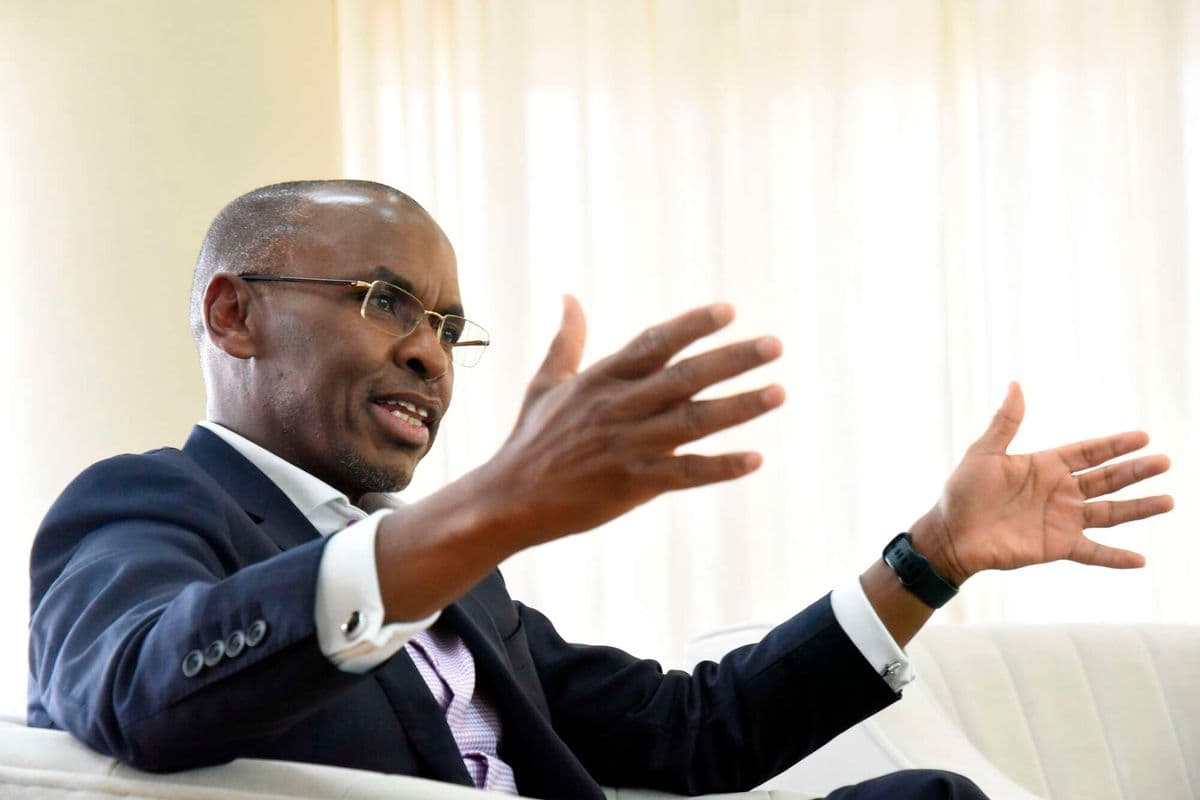
Robert Nigel Paul Macaire CMG is, by any conventional measure, a distinguished British public servant. Born in 1966 and educated at Cranleigh School and St Edmund Hall, Oxford, where he read Modern History, he joined the Ministry of Defence in 1987 before transferring to the Foreign and Commonwealth Office in 1990. His diplomatic postings read like a tour of the world’s strategic pressure points: Bucharest, Washington, New Delhi, Nairobi, and finally Tehran, where he served as Ambassador to Iran between 2018 and 2021. In January 2022, after returning from Tehran, he joined Rio Tinto as Chief Adviser for UK and International Affairs, focusing on political risk and government relations.
It is that Rio Tinto chapter that has done more to fuel Kenyan suspicion than any other fact in Macaire’s biography. Rio Tinto is one of the largest mining corporations in the world, with active operations in iron ore, copper, aluminium, lithium, and a suite of minerals central to the global clean energy transition. The company does not currently hold publicly disclosed exploration licenses in the Laikipia or Meru zones where Lewa sits. But Rio Tinto’s brand is inseparable, in the public imagination, from large-scale extraction of African resources — and Macaire’s jump from its corridors to a 62,000-acre Kenyan conservancy has struck many observers as, at the very least, an unusual career detour.
Before Rio Tinto, Macaire spent five years as Director of Political Risk for BG Group plc, a major global natural gas company later absorbed by Shell. A 2021 investigation by Declassified UK noted that Macaire left his Nairobi posting to join BG Group, making him one of dozens of senior British diplomats who moved through a revolving door between the Foreign Office and the energy and extractive sectors. For Kenyan critics, that revolving door turns in one direction: toward Africa’s resources.
Lewa’s board, chaired by Michael Joseph — himself the former chief executive of Safaricom — offered a different reading. ‘We are entering a new era of conservation that requires a leader who can engage the global boardroom and the local community,’ Joseph said in a statement. ‘Rob’s diplomatic experience and commitment to Kenyan heritage give him the vision and grit to lead Lewa’s next chapter.’ The conservancy outlined three strategic priorities under Macaire: securing a long-term financial endowment, deepening community agency in conservation decisions, and strengthening its position as a global conservation leader.
Supporters have also pointed to Macaire’s personal connection to Kenya. His wife Alice, during their Nairobi posting between 2008 and 2011, founded and chaired the initiative that led to the restoration of Karura Forest, a landmark urban conservation project in Nairobi. But in a country where the wounds of land dispossession remain raw, personal affection for Kenya and professional association with some of the world’s largest resource extraction corporations are not seen as mutually exclusive propositions.
The Land Beneath the Sanctuary

The land that is now Lewa Wildlife Conservancy was allocated to the Craig-Douglas family by the British colonial government in 1922. For more than fifty years, it was managed as a cattle ranch known as Lewa Downs. The family’s patriarch, Alexander Douglas, and his wife Elizabeth Cross, moved onto the land and ran it as an agricultural enterprise for decades. Their daughter Delia Craig, born in Kenya in 1924 and raised on the ranch, would become the conservancy’s matriarch, surviving the Mau Mau rebellion and choosing naturalised Kenyan citizenship at independence. It was Delia who first reserved a portion of the land for conservation, and it was her son Ian Craig who would transform the ranch into one of Africa’s most celebrated wildlife sanctuaries.
In 1983, Ian Craig partnered with Anna Merz, a conservationist who provided funding, to establish the fenced Ngare Sergoi Rhino Sanctuary on the western edge of Lewa Downs. Kenya’s black rhino population had collapsed catastrophically: from an estimated 20,000 animals in the mid-1970s to fewer than 300 by the mid-1980s, decimated by poaching and the insatiable global demand for horn. The sanctuary gathered the remnants of northern Kenya’s rhino population and placed them under armed guard. White rhinos from South Africa were later added. By 1993, the sanctuary had expanded to encompass the entire ranch. In 1995, the Lewa Wildlife Conservancy was formally constituted as a non-profit organisation. In 2013, UNESCO inscribed it as an extension of the Mount Kenya World Heritage Site. In 2014, the fence between Lewa and the adjacent Borana Conservancy was removed, creating the Lewa-Borana Landscape, a contiguous 93,000-acre ecosystem that now hosts one of the largest rhino populations in East Africa.
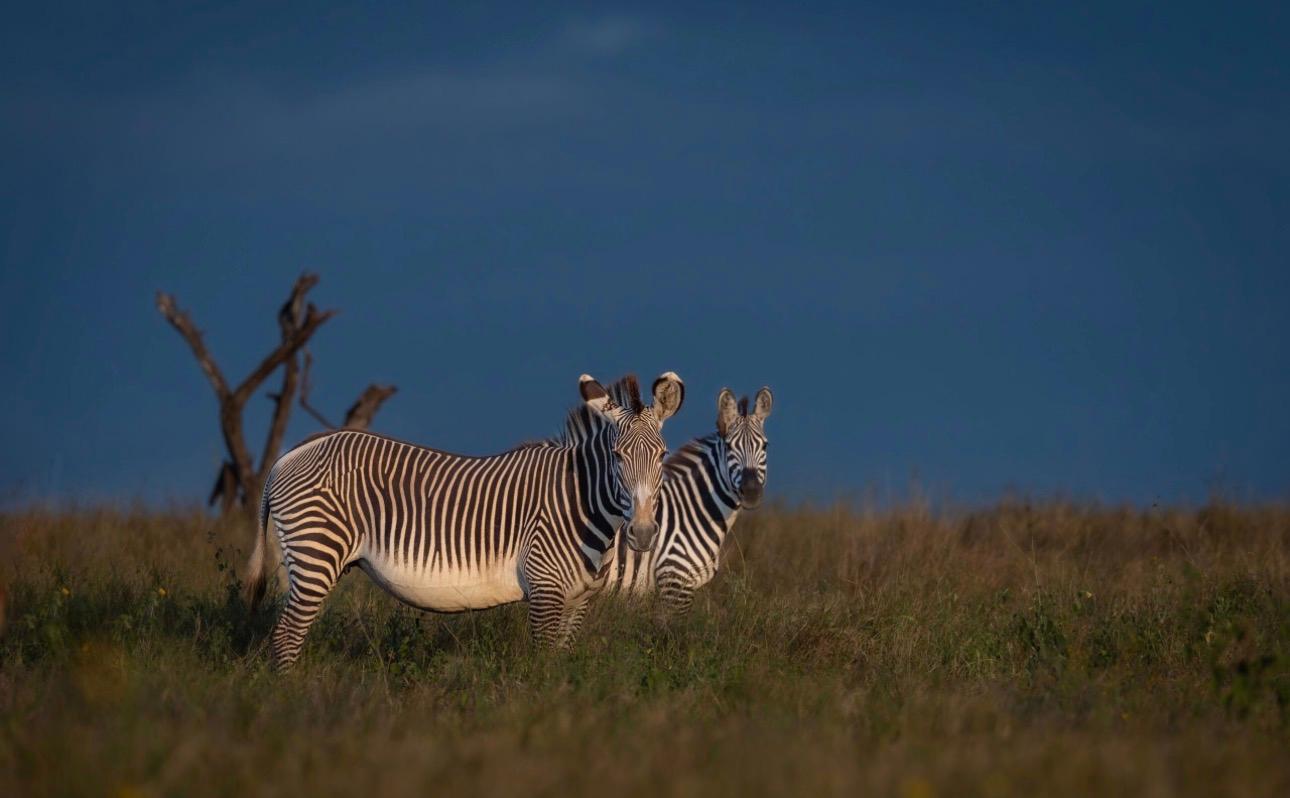
Today, Lewa holds over 12 per cent of Kenya’s eastern black rhinoceros population and the world’s largest single population of Grevy’s zebras. Its anti-poaching record has been among the best on the continent. The conservancy supports over 200,000 people through health clinics, schools, water projects, and microenterprise programmes in the surrounding communities of Meru, Laikipia and Isiolo counties. Outgoing CEO Mike Watson, a former helicopter pilot who took the helm fifteen years ago, is widely credited with transforming a successful private sanctuary into a global conservation benchmark. His retirement on August 1, 2026 closes a chapter that even Lewa’s fiercest critics acknowledge has been consequential.
What lies beneath the earth, however, is a separate and far less settled question. In February 2020, the Laikipia County Government released a mineral exploration report commissioned from the national Ministry of Mining. The findings were striking. The county’s basement rocks, particularly in Laikipia North, were found to contain iron ore, titanium-rich sands, rare earth elements, bauxite, kaolin, garnet, sillimanite, bentonite, and aluminium-rich laterites. Sand rich with titanium and rare earth elements was specifically identified at Ilpolei in Mkogodo West. Iron and aluminium laterites were found at Suguta Ranch, Lonyiek, Kirimon and Suiyan. Governor Ndiritu Muriithi acknowledged at the launch: ‘Our people have always known there are some valuable materials underfoot. This information has been known for a century at the very least.’
That report described only the surface of what the county’s geology may contain. It was, as the lead geologist himself admitted, ‘just the first baby step.’ Crucially, he noted that his team ‘did not have access to some areas.’ The conservancies, with their perimeter fences, armed rangers, restricted entry, and private land status, are among the most comprehensively inaccessible tracts in the county. No independent geological survey of the land beneath Lewa’s core sanctuary has been made publicly available. The Kenyan government has not disclosed whether any exploration licenses have been applied for or granted in the Lewa-Borana Landscape. That silence has become, for a certain class of Kenyan critic, deafening.
The broader context of Kenya’s mineral wealth makes the question harder to dismiss. Mrima Hill in Kwale County has been assessed as one of the world’s top five rare earth deposits, with an in-ground mineral value estimated at over Ksh 5.4 trillion. Kenya’s Kwale coast hosts titanium sands now being actively mined. Turkana holds proven oil deposits. The northern rangelands sit atop basement geology that has barely been scratched. A country that for decades was not considered a significant mining nation has quietly become one of Africa’s most actively prospected frontiers.
The Conservancy Question
The concerns about Lewa do not exist in isolation. They are part of a much wider, much older, and increasingly documented debate about the nature and purpose of Kenya’s conservancy model — and about who, ultimately, holds power in what has become one of the most heavily conservancy-fenced countries on the continent.
Today, Kenya’s conservancies, private ranches, and protected areas together cover more than 20 per cent of the country’s land. The Laikipia plateau alone, covering 9,532 square kilometres, has 48 large-scale ranches sitting on 40.3 per cent of its total land area. Some of the largest are still owned by descendants of British colonial settlers. Three ranches dominate the landscape: the Laikipia Nature Conservancy at 107,000 acres, Ol Pejeta at 88,923 acres, and Loisaba at 62,092 acres. Lewa, at 62,000 acres, is a close fourth.
The Northern Rangelands Trust, founded in 2004 by Ian Craig — Lewa’s co-founder — has since established 43 community conservancies across 42,000 square kilometres of northern and coastal Kenya, covering nearly 8 per cent of the country’s total land area. The NRT’s model has attracted enormous praise from international conservation organisations and Western donors, including USAID, the European Union, and The Nature Conservancy, the wealthiest conservation NGO in the United States. It has also attracted fierce criticism from the communities it claims to serve.
In January 2025, Kenya’s Environment and Land Court delivered a landmark ruling that the NRT had established two conservancies in Cherab and Chari wards in Isiolo County unconstitutionally, without proper community consent, and on unregistered trust lands. The court found that the NRT’s armed rangers operated illegally, and directed the Kenya Wildlife Service to revoke all relevant licences. The ruling was described as one of the most significant legal checks on the conservancy model in Kenyan history. It followed years of community protests, with the Turkana County Government having expelled the NRT entirely in 2016. The Samburu Council of Elders had written to international donors in 2021 requesting a funding audit. In Isiolo, community members reported systematic harassment, land access restrictions, and in some cases extrajudicial killings.
A July 2025 joint report by Avocats Sans Frontieres and the International Federation for Human Rights went further. It documented how NRT’s operations in Isiolo had created a situation in which communities experienced the conservancy not as a partner in development, but as a dominating force replacing state authority and controlling their land and lives. The conservancies, the report found, served as tourist parks and carbon removal projects in which companies including Netflix and Meta purchased offset credits — while the communities whose ancestral lands underpinned those credits had no formal legal basis for ownership and no meaningful access to the revenue streams their land was generating.
A careful comparison of mining concession maps and conservancy boundaries, carried out by analysts writing for The Elephant, found that at least nine NRT-affiliated conservancies had mining concessions inside or adjacent to their boundaries. These included Kalepo, Meibae, Nannapa, Narupa, Naapu, Naibunga Lower, Naibunga Central, Sera, and Biliqo Bulesa — collectively affecting Samburu, Turkana, Maasai, and Borana communities. The NRT also signed a US$12 million, five-year agreement in 2015 with British oil company Tullow Oil and Canadian Africa Oil Corp to establish and operate six community conservancies in Turkana and West Pokot Counties — areas then under active oil exploration. Critics argued that the conservancy model, in those instances, was functioning as a social licence mechanism for resource extraction: placing communities in structured relationships with conservation NGOs before the extraction companies arrived.
The British Army Training Unit Kenya adds a further, rarely discussed dimension to the British footprint in Laikipia. Under a Defence Cooperation Agreement signed at independence, up to six British infantry battalions, representing approximately 10,000 soldiers per year, conduct eight-week exercises on Kenyan land in Laikipia County and at Archer’s Post. BATUK’s main installation, the recently expanded Nyati Barracks, is located adjacent to Laikipia Air Base in Nanyuki. The county government’s own records confirm that by 2009, BATUK had expanded its training grounds to 11 privately owned ranches, including Sosian, Ol Maisor, and the Laikipia Nature Conservancy. In March 2021, a fire started during BATUK training at the Lolldaiga Conservancy destroyed over 10,000 acres and generated litigation that continues to this day. The British military presence, the private ranch network, the conservation NGO ecosystem, and the diplomatic class all operate within the same Laikipia geography. For many Kenyans, that convergence is not coincidental.
The Israeli Parallel
It is impossible to understand the intensity of the Lewa reaction without understanding what had just happened in Solai. In mid-February 2026, Kenyan journalist Alex Chamwada broadcast a promotional segment featuring Erez Rivkin, an Israeli investor who has spent fifteen years building a 520-acre agricultural and residential development in Solai, Nakuru County. Rivkin described the site as ‘a dreamland’ where Israelis and Kenyans would integrate, live together, and raise their children side by side. He spoke of creating a community.
The response was national and visceral. Hundreds of thousands of Kenyans on social media described the project as a kibbutz-style settlement, evoking the 1903 Uganda Scheme — in reality a proposal for Jewish settlement in what is now Kenya’s Uasin Gishu plateau — in which Colonial Secretary Joseph Chamberlain offered land to Zionist leader Theodor Herzl as a refuge from European pogroms. The Zionist Congress rejected the offer in 1905. For many Kenyans watching Rivkin’s segment, the century-old episode felt disturbingly current. Commentators also invoked the 2018 Solai dam tragedy, in which nearly fifty people died when an unlicensed earth dam burst, flooding communities in the same area where Rivkin’s development now stands.
The legal and factual picture is more nuanced. Kenya’s 2010 Constitution and Land Act prohibit foreign nationals from owning freehold land; they may hold land on leasehold for a maximum of 99 years. Rivkin’s operation appears to be structured through a registered Kenyan entity. No evidence has emerged of any Israeli state connection to the Solai project, and the Kenyan government had issued no statement on the matter as of mid-February. Defenders of the project, including some Kenyan commentators, argued that the outrage was overheated and that the development creates local employment in a region that needs it.
But the legal position and the political reality are different things. In a Kenya where unresolved land grievances go back to the colonial period, where the land question has triggered election violence, and where a significant portion of the best agricultural and conserved land remains under foreign-linked control, the symbolism of a British diplomat turned Rio Tinto executive taking the helm of a 62,000-acre UNESCO World Heritage Site arriving within weeks of the Solai controversy was politically toxic. The two stories fused in public discourse, creating a single narrative about foreign powers and their local allies quietly securing Kenya’s most strategic assets — whether through the language of conservation, investment, or development.
A Century of Accumulation
The land Lewa sits on was granted to a British colonial family in 1922, while Kenya was under Crown administration and Kenyans had no political standing to contest such allocations. The Craig family, to their credit, chose to remain after independence, took Kenyan citizenship, and committed substantial personal resources and decades of their lives to a genuine conservation mission. The rhino population recovery at Lewa is real. The community programmes are real. The UNESCO designation is a recognition of real conservation achievement. None of that is fabricated.
But it also cannot be separated from the fact that the land’s foundational title derives from a colonial allocation, that the family that holds it has always been British-linked, that its founding director Ian Craig went on to create the NRT, an organisation now found by Kenyan courts to have overstepped its authority on community land, and that its new chief executive arrives from the world’s most powerful resource extraction company. Each individual fact has an innocent explanation. Together, they form a pattern that Kenyans are under no obligation to find reassuring.
The Laikipia plateau, which contains Lewa and the country’s densest concentration of large privately held conservancies, sits on basement geology confirmed to contain titanium, rare earth elements, iron ore, and associated minerals. The global strategic importance of rare earths, driven by the clean energy transition, has accelerated enormously in the past decade. China controls over 60 per cent of global rare earth production and a comparable share of processing capacity. The United States, the European Union, and the United Kingdom are all pursuing aggressive diversification strategies. Kenya, with confirmed deposits at Mrima Hill in Kwale, probable deposits in Laikipia, and a government still struggling to exercise regulatory authority over its northern rangelands, is a target of active interest from Western mineral strategists.
In that context, the appointment of a former British intelligence-aligned diplomat who spent his post-Kenya career at a gas company and then at Rio Tinto to run one of Kenya’s most strategically located and geologically under-surveyed conservancies is, at minimum, a question that deserves a serious answer. It may have an entirely innocent one. But the Kenyan public is not obligated to assume innocence in the absence of transparency.
The Unanswered Questions
There are questions that Lewa Wildlife Conservancy has not yet publicly addressed, and that the Kenyan government has not required it to answer. Has any geological survey been conducted of the mineral subsoil beneath the Lewa-Borana Landscape, and if so, by whom, and with what results? Have any exploration license applications been filed by any party covering the core conservancy land or its immediate surrounds? Does the conservancy’s land title, held by a non-profit entity, carry any sub-surface mineral rights, and if so, who controls them? Did Rob Macaire, during his time at Rio Tinto, advise on any projects related to East Africa or Kenya specifically? What was the nature of Lewa’s search for a new CEO, and were African candidates considered? What is the conservancy’s position on the conduct of the NRT, which Ian Craig founded on the Lewa model, and with which Lewa has maintained close institutional ties?
None of these questions is answered by the appointment announcement. Lewa has said nothing publicly about the online furore. Its official communications continue to focus on rhino protection statistics, community health clinic numbers, and Grevy’s zebra census data. Those are real achievements. But the silence on the structural questions is itself a data point.
The conservancy operates on land that falls under the legislative framework of Kenya’s 2010 Constitution, the Land Act, the Community Land Act of 2016, the Wildlife Conservation and Management Act, and the Mining Act. The Kenya Wildlife Service issues its operational licences. The National Land Commission has oversight authority over historical land allocation grievances. The Ministry of Mining oversees exploration licensing. None of these institutions has publicly weighed in on the Macaire appointment or on the related questions about mineral subsoil rights and access. Parliament has not held hearings. The National Land Commission has not commented.
The accountability gap is significant. It is not unique to Lewa. It runs through the entire architecture of Kenya’s conservancy sector, which has grown from a handful of private ranches in the 1990s to a network covering nearly a fifth of the country’s land, funded primarily by foreign donors, governed largely by private boards, and operating with a degree of opacity that would not be permitted in the formal public sector. The NRT’s court losses in 2025 demonstrated that that opacity has legal limits. What those limits are in practice, and who enforces them, remains unresolved.
The Sovereignty Question
Kenya gained formal independence in 1963. Sixty-three years later, the country’s most celebrated wildlife conservancy is led by a succession of expatriate executives — outgoing CEO Mike Watson, a former helicopter pilot, was himself a non-Kenyan — on land allocated to a British colonial family in 1922, managed through an institutional network with deep ties to British diplomatic and corporate circles, situated on ground that independent geological surveys confirm contains strategic minerals, and funded substantially by Western donors whose strategic interests in African resources are not hidden.
It is possible that all of this is entirely benign: that Lewa is what it says it is, that Macaire’s mining background is professional coincidence, that the mineral speculation is community anxiety projecting onto institutional opacity, and that the conservancy model, for all its documented problems in the NRT context, represents at Lewa a genuine and enduring partnership between a British-linked institution and the Kenyan communities it serves. That reading is defensible.
It is also possible that the conservancy model, at its most sophisticated expression, functions as something more complex: a mechanism by which large tracts of geologically significant Kenyan land are held in a form of institutional custody by entities whose ultimate accountability is to international boards, foreign donors, and a network of diplomatic and corporate interests that does not answer to the Kenyan taxpayer, does not appear before the National Assembly, and does not register its mineral subsoil arrangements with the Ministry of Mining. That reading is also defensible.
What is not defensible is the current level of opacity. If Lewa’s land contains no minerals of commercial significance, it should be able to say so on the basis of a publicly disclosed, independently conducted geological survey. If no exploration licenses have ever been filed over the Lewa-Borana Landscape, the Mining Registry should be able to confirm this. If Rob Macaire’s Rio Tinto role had no connection to East Africa, he should be able to say so directly and publicly. The absence of these clarifications is not a proof of wrongdoing. It is an invitation to precisely the kind of speculation that Lewa is now drowning in.
Kenyans are not asking Lewa to stop protecting rhinos. They are asking it to be a Kenyan institution in a way that matters: transparent about what lies beneath its land, accountable to the communities around it, and honest about who its new chief executive is and what he brings from the corridors of global resource extraction. That is not neo-colonialism in reverse. That is what sovereignty looks like.
A Pattern Across the Plateau
Lewa is not alone in attracting such scrutiny. Ol Pejeta Conservancy, at 90,000 acres the largest in Laikipia, was purchased in 2004 by the UK-based charity Fauna and Flora International with funding from the Arcus Foundation, a private American philanthropic vehicle. Borana Conservancy, at 32,000 acres, operates immediately adjacent to Lewa and has merged its wildlife ecosystem with it. Lolldaiga Conservancy, where BATUK conducts annual military training exercises and where a British Army fire destroyed over 10,000 acres in 2021, is a 49,000-acre private ranch. Loisaba Conservancy, at 62,000 acres, sits on the northern edge of the plateau. The Laikipia Nature Conservancy, at 107,000 acres the largest single private holding in the county, sits on land whose sub-surface has been even less publicly surveyed than Lewa’s.
Across these conservancies, the pattern is consistent: colonial land allocations, converted from ranching to conservation after independence, now operating as private non-profit institutions with international boards, Western donor dependency, restricted community access, and varying degrees of accountability to the Kenyan state. The individual conservation achievements are genuine. The structural accountability questions are unresolved. The mineral subsoil remains a closed book.
The Laikipia County Government’s own 2020 mining report acknowledged that its geological survey teams did not have access to some areas of the county. Those areas are, in significant measure, the conservancies. The county allocated Ksh 10 million in its 2020-2021 budget to initiate artisanal mining operations in areas where access exists. The areas where it does not exist are governed by private fences, private security, and private boards — some of whose members sit in London, Washington and New York.
Rob Macaire takes the helm of Lewa Wildlife Conservancy on June 1, 2026. He will inherit a conservancy with a genuine conservation record, a board that includes respected Kenyan figures alongside its international members, and a community programme infrastructure that reaches hundreds of thousands of people. He will also inherit a political environment that has fundamentally changed since his predecessor took the job fifteen years ago.
Kenya in 2026 is not Kenya in 2011. The youth who drove the Gen Z protests of 2024 and who have elevated land sovereignty to a primary political concern are not going to accept opacity from an institution as prominent as Lewa without sustained pressure. The courts that ruled against the NRT in January 2025 have demonstrated that the legal frameworks for community land rights and conservancy governance have teeth. The National Land Commission, embattled as it is, has a constitutional mandate to investigate historical land injustices that extends to colonial-era allocations. Parliament has the authority to summon the Mining Registrar and ask, on the record, whether any party holds or has applied for exploration licenses beneath the Lewa-Borana Landscape.
Whether any of those mechanisms will be deployed remains to be seen. Kenya’s political class has historically been comfortable with the conservancy ecosystem, which provides high-end tourism, philanthropic networks, and social capital that flows upward from Nanyuki to Nairobi. The same leading political families that have stakes in Laikipia real estate are not natural advocates for aggressive mineral transparency in the plateau.
What is clear is that the Macaire appointment has cracked open a conversation that was always going to happen, and that was always going to be this uncomfortable. The question of who controls Kenya’s land, who benefits from what lies beneath it, and whether the conservation model as practiced across Laikipia represents genuine partnership or sophisticated continuation of colonial resource holding is not a question that social media fury invented. It is a question that has been building for decades in academic journals, land courts, community meetings, and the oral histories of Samburu elders who remember when the fences went up and where they walked before.
Rob Macaire may be exactly what Lewa’s board says he is: a diplomat of genuine personal commitment to Kenya, a financier of conservation endowments, a bridge-builder between the conservancy world and the global institutions that fund it. Or he may be something more layered. What Kenyans are entitled to demand is that they do not have to choose between those possibilities on the basis of a press release and an institutional silence.
The rhinos at Lewa are not the story. The story is what lies beneath them, who knows, and who decides.




Comments