
Investigations
Spying: Landlords To Give Your Phone Numbers To NIS

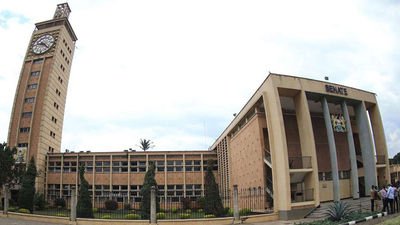
Landlords and property owners will be required to keep a registry of tenants under a proposed law that is likely to raise further concerns about surveillance by State security agencies.
The tenants’ registry, which can be made available to the State, will contain personal details such as names, postal addresses, phone numbers and e-mails.
The National Intelligence Service (NIS) lobbied the National Assembly’s Administration and National Security committee to include the requirement of the registry in the Narcotics, Drugs and Psychotropic Substances (Control) Amendment Bill.
Landlords will also be expected to conduct due diligence or background checks on their tenants to include their employment station and home country to allow easy tracking.
The Bill is headed for second reading in the National Assembly.
Although the tenants’ registry is fronted as a weapon against drug lords, it will provide the NIS and the police with background details of the nearly five million Kenyans that lease home and office space.
Property owners in breach of keeping the records and conducting background checks on their tenants face a fine of Sh1 million or two years in jail in the legal changes that will raise privacy concerns.
“Every owner, occupier or persons concerned with management of any premises, shall keep a register in his premises and shall enter the name and address of every tenant and occupier who occupies the premise,” said the committee in amendments to the Bill.
“The rational of the new section is to provide for landlords and owners of buildings to conduct due diligence on their tenants and occupiers of their premises.”
According to the 2019 Population and Housing Census, 4.66 million households reported living in rented dwellings.
The push for a tenants’ registry comes at a time when the State is seeking to boost its surveillance of communications that it believes could breach national security.
A separate Bill before Parliament is amending the Official Secrets Act of 1968 to make it compulsory for anyone who owns a mobile phone or a communication gadget to provide information on persons and data that the State is pursuing for national security breaches.
Kenyans face a fine of Sh1 million for refusing to disclose SMSs, emails and WhatsApp messages that the government believes breach national security if Parliament adopts the proposed law.
Besides introducing the Sh1 million fine, the Bill seeks to clarify terms used in the current law that was passed over 50 years ago to reflect the changes that match trends in the telecommunications industry.
For example, the proposed law introduces ‘telecommunications apparatus’ that will replace ‘telegrams apparatus’— a term that was used before the widespread use of text messages, WhatsApp and emails.
Intelligence operatives are increasingly using secret surveillance programmes to spy on emails and social media activity, and collect data on telephone calls.
Crimes that are considered a threat to national security include smuggling of drugs and weapons like guns that are shipped in from neighbouring countries entangled in civil wars.
Lawmakers have also backed a number of a new sections to be inserted in the Narcotics, Drugs and Psychotropic Substances (Control) Amendment Bill to enhance penalties of the offences of trafficking narcotic drugs.
The MPs agreed with majority of NIS recommendations that will heavily punish property owners who allow their premises to be used as stations for manufacture and trading in drugs.
Tenants, landlords and property managers face a fine not less than Sh20 million or a term of imprisonment of not less than 10 years or both if their premises are used for drugs manufacture and trading.
The committee chaired by Kiambaa MP Paul Koinange wants the Bill amended to have a law enforcement officer or a public officer who works at various exit and entry points face a Sh20 million fine or 20 years in prison for aiding trafficking of narcotics.
The committee has backed the imposition of hefty fines of up to Sh50 million or three times the value of the narcotics and 50 years in jail where one is found trafficking more than 100 grams of narcotics.
Those found peddling less than 100 grams will part with Sh30 million and serve 30 years in prison.
Individuals found with bhang or cannabis intended solely for own consumption have had a reduction of jail terms from 10 years to not more than five but will face a Sh100,000 fine.
Lawmakers have also endorsed an amendment that will see convicted drug traffickers and narcotic peddlers barred from seeking elective or appointive public office for 30 years after imprisonment.
Kenya is grappling with a rise in crimes committed through mobile phones and communication gadgets that have been blamed on weak laws.
Last year, the US flagged Kenya as a global hotspot for money laundering and a conduit of money used to fund terrorism due to insufficient legal controls.
Kenya Insights allows guest blogging, if you want to be published on Kenya’s most authoritative and accurate blog, have an expose, news TIPS, story angles, human interest stories, drop us an email on [email protected] or via Telegram


DCI Probe Reveals How Conrad Law Advocates Was Used To Funnel Stolen Millions In Fake Ambulance Deal

Allan Chesang Caught on Another Con Game? After Laptop Scamming, Now Fake Ambulance Fraud Hits

DARFUR SULTAN CAUGHT ON TAPE: War-Linked Figure Runs Red Lights in Nairobi With Impunity

How EADB Threw Tuju Under The Bus

Dubai-Bound Ships Storm Kenya’s Ports as Iran Locks Down the Persian Gulf

World Bank Bans 3 PwC African Subsidiaries

THE RUTO HAND IN TUJU’S FALL: How a President-Linked Petroleum Baron Walked Away With Sh3.5 Billion Karen Land for Sh450 Million

Ali Larijani, Believed To Be Running Iran Since The Beginning Of The War, Is Killed In A Strike

Seven Suspects Charged over Ksh60M Harambee house scandal.

‘They Will Eat You Alive’: Retired Teacher Warns Against Bashy African Credit as Sh500,000 Loan Spirals Into Sh1.5 Million Fight

Kenya Strips Dutch Climate Body of Diplomatic Immunity Amid Donor Fraud Scandal and Allegations of Executive Capture

How Little-Known Pesa Print, Linked to State House Tycoons, Won NTSA Tender Worth Sh42 Billion in Traffic Fines

Ex-Inchcape Kenya CEO Sanjiv Shah Charged With Bank Fraud

A UN Director Based in Nairobi Was Deep in an Intimate Friendship With Epstein — He Even Sent Her a Sex Toy

Waweru’s Bank Pockets Sh1.16 Billion from KPC IPO While Ordinary Kenyans Fled the Sale

Tuju Forcefully Removed From His Karen Property With Masked Officers In Unmarked Vehicles In Early Morning Raid

Named: Havi Says Mutava Confessed He Was Collecting The Bribe For Lady Justice Josephine Mongare, So Why Is JSC Still Silence?

The Man With The Golden Pen: How NLC’s Joel Ombati Is Accused Of Masterminding Kenya’s Biggest Infrastructure Land Heist

Talanta Stadium Construction Cost Inflated By Sh11 Billion, Audit Reveals

The New Master of the Nation: How a Tanzanian Billionaire With a President in His Pocket Just Bought Kenya’s Most Powerful Press
-
 Investigations2 weeks ago
How Little-Known Pesa Print, Linked to State House Tycoons, Won NTSA Tender Worth Sh42 Billion in Traffic Fines
-
 Business2 weeks ago
Waweru’s Bank Pockets Sh1.16 Billion from KPC IPO While Ordinary Kenyans Fled the Sale
-
 News1 week ago
Tuju Forcefully Removed From His Karen Property With Masked Officers In Unmarked Vehicles In Early Morning Raid
-
 News1 week ago
Named: Havi Says Mutava Confessed He Was Collecting The Bribe For Lady Justice Josephine Mongare, So Why Is JSC Still Silence?
-
 Investigations2 weeks ago
The Man With The Golden Pen: How NLC’s Joel Ombati Is Accused Of Masterminding Kenya’s Biggest Infrastructure Land Heist
-
 Business2 weeks ago
The New Master of the Nation: How a Tanzanian Billionaire With a President in His Pocket Just Bought Kenya’s Most Powerful Press
-

 Investigations2 weeks ago
SOLD TO THE BULLET: How the Bodyguard Handed MP Ong’ondo Were to His Killers
-

 Development2 weeks ago
KPA To Be Dissolved, Replaced By A Liability Firm As Govt Sets To Privatise Lamu Port And Two Mombasa Berths