
Investigations
Investigations Reveal How Social Media Apps Are Used To Buy Domestic Workers

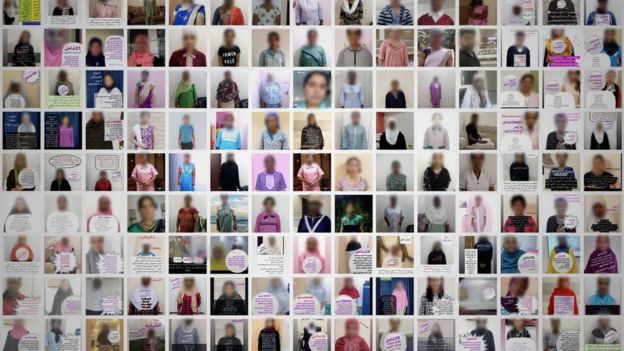
A BBC Africa Eye report has revealed how maids are being sold in a booming black market through some apps on the Google and Apple stores. The Silicon Valley’s Online Slave Market alleges that Google and Apple have been approving and providing apps used to promote human trafficking and modern slavery.
“What they are doing is promoting an online slave market,” Urmila Bhoola, the UN special rapporteur on contemporary forms of slavery stated. “If Google, Apple, Facebook or any other companies are hosting apps like these, they have to be held accountable.”
Some of the trade is being carried out on Facebook-owned Instagram, where posts have been promoted via algorithm-boosted hashtags, and sales negotiated via private Direct Messages. The hashtags used to popularize the slave apps include ‘#maidsfortransfer‘
Through the undercover investigation, the team found that children as young as 16 years old were being offered for sale in Kuwait on a popular commodity app called 4Sale. The cost of buying the girl was about Ksh.392,502; according to the BBC, she was being sold alongside things like second hand cars, lawnmowers and TVs. The BBC undercover team spoke to upto 57 app users and visited more than a dozen people who were trying to sell them their domestic worker via the app.
The sellers almost all advised the undercover agents to confiscate the women’s passports, confine them to the house, deny them any time off and give them little or no access to a phone. “The team spoke to 57 app users and were invited to meet women being offered for sale by more than 15 Kuwaitis on apps available on Google Play and the Apple App Store, and through adverts posted via Instagram, and they were encouraged by sellers to keep wages low, confiscate the workers’ passports, deny them the right to a day off or holiday, and restrict the movement and communication of the domestic worker outside the household,” BBC reports.
The 4Sale app allowed you to filter by race, with different price brackets clearly on offer, according to category. “African worker, clean and smiley,” said one listing. The BBC team learned how domestic workers were used as a commodity. “You will find someone buying a maid for 600 KD (Sh200,000), and selling her on for 1,000 KD (Sh330,000),” a seller told them.
The report further alludes that the online slave market is not just happening in Kuwait. “In Saudi Arabia, the investigation found hundreds of women being sold on Haraj, another popular commodity app. There were hundreds more on Instagram, which is owned by Facebook.”
After being alerted to the issue, Facebook said it had banned one of the hashtags involved. Google and Apple said they were working with app developers to prevent illegal activity. Google told the BBC that they are deeply troubled by the allegations, as this type of activity had no place on Google Play while Apple said that they strictly prohibit the solicitation or promotion of illegal behavior, including human trafficking and child exploitation in the App Store and across every part of their business.“We take any accusations or claims around this behavior very seriously,” they stated.
Kuwaiti authorities say they have officially summoned the owners of several social media accounts used to sell domestic workers as slaves.
A spot check by Kenya Insights shows an app going by the same name based in Kuwait is still up in the Google and Apple stores.
Watch the full investigation here.
Kenya Insights allows guest blogging, if you want to be published on Kenya’s most authoritative and accurate blog, have an expose, news TIPS, story angles, human interest stories, drop us an email on [email protected] or via Telegram


Fraud, Misrepresentation and A Decade Of Evasion: How Indo Africa Finance Pocketed Sh150 Million Youth Funds and Fought To Keep Every Cent

Kenya Picks Chinese Firm For Sh375 Billion JKIA Upgrade Project After Adani Fallout

The President’s Daughter and The Missing Witness: How Adut Salva Kiir’s Shadow Treasury Silenced Its Most Dangerous Critic

Kisii Under Siege: Governor Arati’s Wife Accused of Hijacking IFMIS and Running a Parallel Government

Al-Shabaab Issues Statement Defending Omar Artan, Accuses U.S. of Discrimination After Referee’s Deportation

Netanyahu To Run For Re-Election, His Party Says, After Trump Raises Doubts

US Cracks Down on Birth Tourism Schemes

Microsoft Limits Employee Use Of Anthropic’s Claude Fable 5 Over Data Retention Concerns, The Verge Reports

Standard Chartered Ghosts Haunt Joshua Oigara At Stanbic As Whistleblower Spills Beans

Caleb Amisi Says Linda Mwananchi Has Lost Direction, Announces Plans To Form A New Movement

Cement, Cash and Courts: How the Hashu Dynasty Crushed the Ramji Brothers for Fourteen Years and Why the Walls Are Now Closing In

Inside The Urban Planning Cartel That Owns Nairobi

Why Ruto’s Favourite Candidate Adan Mohammed Could Be Locked Out of the KRA Top Job

LifeCare on the Brink: SHA Fraud, Stolen Wages, and the Rotten Empire Jayesh Saini Built

Betika Faces DCI Probe, Directors Arrest and License Revocation Over Massive 29.5 Million Safaricom Customers’ Data Breach

Este Medical Kenya Fights American’s Explosive Complaints

Fresh Move Launched to Remove Kenya Railways MD Mainga From Office After Awarding Sh817 Million Consultancy Contract

The Rot Inside Absa: How Bank Insiders Are Looting Nairobi’s Customers

Inside FAFSA Fraud: How Kenyan Cybercriminals Siphoned Millions from America’s Sh12 Billion Student Loan System

Court Confirms Safaricom Customers Data Was Sold To Betting Companies In Seven-Year Cover-Up
-
 Investigations7 days ago
Cement, Cash and Courts: How the Hashu Dynasty Crushed the Ramji Brothers for Fourteen Years and Why the Walls Are Now Closing In
-
 Investigations5 days ago
Inside The Urban Planning Cartel That Owns Nairobi
-
 Investigations1 week ago
Betika Faces DCI Probe, Directors Arrest and License Revocation Over Massive 29.5 Million Safaricom Customers’ Data Breach
-
 Investigations7 days ago
Fresh Move Launched to Remove Kenya Railways MD Mainga From Office After Awarding Sh817 Million Consultancy Contract
-

 News2 weeks ago
Eight Students Arrested In Kenya After Suspected Deadly School Arson Attack
-

 News2 weeks ago
How Uhuru’s Deal With Obama In 2015 Paved Way For America’s Ebola Plan In Kenya
-

 Business1 week ago
TRUST BETRAYED: How Senior DTB Bank Insiders Allegedly Looted Sh149 Million From a Customer’s Account Over Five Years
-

 Business1 day ago
Inside NCBA’s Decline: How a Banking Giant Lost Its Strategic Edge