NAIROBI, February 19, 2026 — On the morning of February 3, 2026, a single wire transfer sliced through the financial architecture of what investigators now believe is one of Nairobi’s most brazen gold fraud operations.
In less time than it takes to negotiate a handshake deal at a Westlands coffee shop, USD 217,900 — the life savings of an American businessman and the fruit of a meticulously orchestrated con — left the account of a Nairobi law firm, passed through the hands of a Somali-Kenyan mobile phone trader, and vanished into the vaults of a Chinese telecommunications giant in Hong Kong.
The speed was surgical. The trail, investigators say, was designed to look like a legitimate business transaction.
But scratch beneath the surface, and what emerges is a story that implicates a regional electronics distributor, a rogue lawyer already wanted in two previous fraud cases, a shadowy forex bureau tucked along Standard Street, and a Chinese handset brand that has, separately, been the subject of a damning tax evasion scandal in Kenya.
This is the story of how Sh28 million in stolen investor funds allegedly moved through the supply chain of Tecno Mobile Limited to disappear from Kenyan shores.
The Bait: Gold That Never Existed
The scheme began, as these operations so often do, with a promise of gold. John Sodipo, an American businessman, and his Russian associate, Gershonov Oleg, were drawn into an elaborate agreement for the purchase and chartered export of 495 kilograms of gold destined for Dubai.
The arrangement was presented with the trappings of legitimacy: legal representatives, escrow accounts, logistics companies, and the kind of paperwork that is designed to reassure rather than to inform.
Oleg had first visited Kenya in September 2025 on a separate gold transaction that also came to nothing.
During that visit, he made contact with Willis Onyango Wasonga, a Nairobi dealer known in shadier circles by the street name Marcus, who would later emerge as the central player in the con that followed.
When Wasonga and Sodipo eventually struck what appeared to be a deal, Sodipo deposited the agreed chartering fees into a purported escrow account managed by advocate Michael Otieno Owano of MOAC Advocates, a Nairobi law firm. Oleg flew back to Kenya specifically to oversee the shipment. No gold arrived. No gold existed.
Wasonga was arrested and arraigned before the Milimani Law Courts on February 16, 2026, facing charges of conspiracy to defraud, obtaining money by false pretences, and three separate counts under the Proceeds of Crime and Anti-Money Laundering Act.
He pleaded not guilty and was released on a Ksh 1 million bond, a figure critics describe as a bargain price for a man accused of masterminding a multi-million shilling international con. His case returns for mention on March 3, 2026.
The Conduit: A Phone Trader and a Hong Kong Account
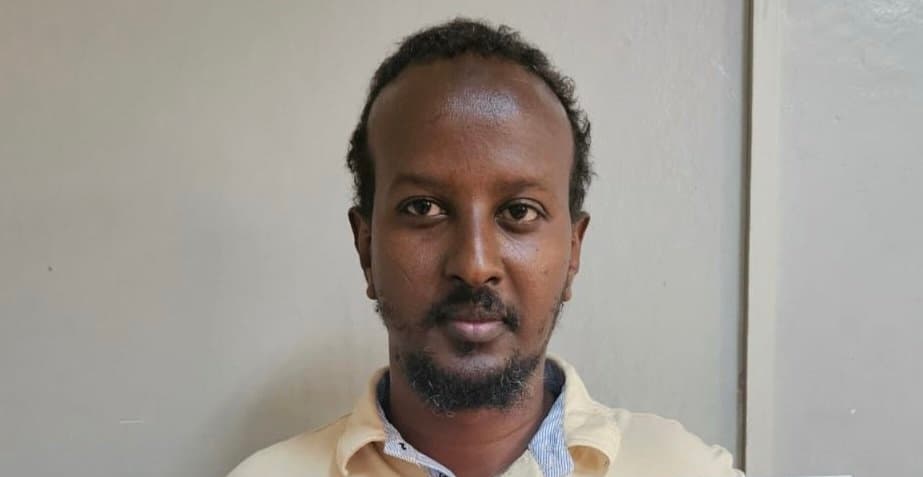
What gives this case its particular complexity is the second arrest, made days after Wasonga’s arraignment, of Mohammed Noor Muhyadhin Mohammed, a Somali-Kenyan businessman and the sole proprietor of Mohazcom Trading, a registered Kenyan enterprise dealing in mobile handsets.

Mohammed sources his phones primarily from Tecno Mobile Limited, one of the most recognisable handset brands in East and Central Africa, manufactured by the Chinese conglomerate Transsion Holdings.
On February 3, 2026, USD 217,900 was transferred in a swift transaction from MOAC Advocates’ account at the National Bank of Kenya directly into Mohammed’s company account at the same institution.
The money had barely settled before it was on the move again. Within the same banking day, Mohammed wired the entire amount overseas, to accounts held by Tecno Mobile Limited at Citibank in Hong Kong, purportedly to finance a fresh consignment of mobile phones. That consignment has not arrived. Investigators say they have found no evidence it was ever ordered.
Mohammed was picked up by detectives from the Operations Support Unit and is currently in custody awaiting arraignment.
The Directorate of Criminal Investigations says his case is a textbook example of trade-based money laundering, in which the proceeds of crime are disguised as legitimate commercial payments for goods and services. In this instance, investigators allege, the goods were a fiction.
The Paper Shield: Fabricated Debt Agreements and a Forex Bureau
Those orchestrating the scheme anticipated scrutiny. MOAC Advocates produced a debt settlement agreement allegedly signed by Mohammed and a second suspect who remains at large, a document designed to make the transfer of funds look like the resolution of a pre-existing commercial obligation.
Investigators have dismissed the agreement as what they describe as a smokescreen, a paper shield crafted to sanitise what was, in their view, a straightforward act of money laundering.
Deeper investigation has also drawn attention to a forex bureau operating along Standard Street in the heart of Nairobi’s central business district. Mohammed, detectives say, has maintained a decade-long business relationship with this bureau and its proprietor, who is believed to have routinely facilitated substantial cross-border transfers, including the transaction now at the centre of the case.
The bureau, investigators allege, played a central role in the layering and concealment of criminal proceeds, the classic second stage of organised money laundering in which the origin of illicit funds is obscured through a sequence of complex financial movements.
The Rogue Lawyer: Three Cases, Three Sets of Victims, One Man Still Free
Over everything in this case looms the figure of Michael Otieno Owano, an advocate of the High Court of Kenya and the man behind MOAC Advocates. The Law Society of Kenya binds its members to a code of professional ethics that occupies the furthest possible distance from the allegations now swirling around Owano.

Yet investigators describe him not as a professional servant of the law but as the alleged operational linchpin of a criminal enterprise that has systematically targeted foreign investors.
This is not Owano’s first encounter with the law as a suspect.
In November 2024, he was arrested in connection with a Ksh 182 million fake tender scheme that targeted Underground Pipeline Rehabilitation Company, an American firm.
The syndicate behind that operation presented the company with fictitious government tenders bearing the names of the Kenya Civil Aviation Authority and the Kenya Meteorological Department.
Owano’s firm received USD 90,000 in purported legal fees while the victim was manoeuvred into paying over USD 1.6 million for contracts that did not exist. He was released on bail while the Director of Public Prosecutions reviewed the case. That review, as of press time, has yet to produce a concluded prosecution.
August 2025 brought a second arrest. This time, Owano was implicated in a Sh79.9 million fake gold scheme targeting a Canadian investor, in which a proforma invoice for USD 318,400 was issued by a company called EAI Logistics, with the funds wired directly into his firm’s account.
The victim was separately pressured into sending USDT 300,000 in cryptocurrency. No gold was delivered. In that case, Owano was connected to Francis Talla Ouafo, a Cameroonian national identified as the alleged mastermind. He was released again.
Now Owano is wanted in connection with this third case. He has not been apprehended as of press time.
Three fraud investigations, three sets of foreign victims, a fugitive status, and a licence to practise law that, as of last check, has not been suspended. The DCI says its detectives are closing in on him by the hour. Sources indicate three additional suspects remain at large.
Tecno in the Dock: A Brand Shadowed by Its Own Scandals
The involvement of Tecno Mobile in this case, even as a passive recipient of funds at its Hong Kong banking accounts, arrives at a particularly sensitive moment for the Chinese-owned brand.
Manufactured by Transsion Holdings, Tecno has built its regional empire on the promise of affordable smartphones for the African mass market.
Its handsets are among the most widely distributed in Kenya, sold through a network of distributors, retailers, and kiosks stretching to every corner of the country.
It is precisely that ubiquity and the veneer of mainstream commercial respectability that, investigators suggest, made the Tecno supply chain an attractive vehicle through which to move criminal proceeds.
Tecno’s own conduct in Kenya has not been without controversy.
In May 2024, the Kenya Revenue Authority conducted a dramatic raid on Tecno Transsion Electronics’ Nairobi offices at Cardinal Otunga Plaza, seizing documents and cash in multiple foreign currencies.
Whistleblowers inside the company had raised alarms about non-remittance of Pay As You Earn tax deductions, undisclosed salary payments, unreported supplier transactions, and what they characterised as a pattern of deliberate financial mismanagement. Employees reported that their salaries were regularly deducted for taxes that never reached the government.
The investigation that followed the raid stalled in circumstances that generated their own controversy.
In January 2025, credible sources alleged that KRA Commissioner General Humphrey Wattanga received a bribe of Ksh 100 million from Tecno officials to suppress a damning investigative report and halt further probes. The sources alleged that the total amount of taxes Tecno had evaded in Kenya stood at more than Ksh 400 billion, a figure that, if accurate, would dwarf the value of the company’s visible operations in the country.
KRA and Tecno denied the allegations. No official charges have been filed. The KRA probe, critics say, has effectively been buried.
Tecno has not been charged with any offence in connection with the gold scam. Investigators have not alleged that the company’s head office in Hong Kong had knowledge that the funds deposited into its Citibank account represented the proceeds of fraud.
The Directorate of Criminal Investigations has framed its case around Mohammed and his alleged role in routing the money, not around any culpability on the part of the handset manufacturer.
Nevertheless, the reputational association is damaging: a brand already under a cloud of tax evasion allegations in Kenya now finds its name attached, however tangentially, to an international money laundering investigation.
The Gold Economy: A Shadow Country Within a Country
To understand the scale of the environment in which these crimes flourish, one need only consider a single number. Nairobi’s gold underworld is estimated to be worth USD 28 billion annually, a figure that exceeds Kenya’s entire national budget.

The United Nations and international investigative agencies have documented massive discrepancies between what Kenya officially declares as gold exports and what the United Arab Emirates alone reports importing from Kenya, a gap that points to a shadow economy of staggering proportions running beneath the surface of the country’s legitimate commercial life.
The DCI Director-General has himself described the gold fraud problem as the work of a huge cartel involving Kenyans, Congolese, Liberians, Nigerians, and Ghanaians, operating with considerable sophistication.
The upmarket Kilimani residential area of Nairobi has been specifically identified as a hub from which these syndicates operate.
Foreign investors who fly into Nairobi expecting to conclude gold deals, often referred by intermediaries who seem credible and well-connected, find themselves processed through an assembly line of fake legal arrangements, fraudulent logistics companies, and crooked advocates before the telephone lines go silent and the money is gone.
What distinguishes the current investigation is the degree of institutional infrastructure allegedly assembled to conceal the crime.
A licensed advocate. A registered trading company with genuine supplier relationships. A long-established forex bureau. A banking relationship at one of Kenya’s largest state-owned financial institutions. And, at the end of the pipeline, the Hong Kong accounts of a brand that millions of Kenyans carry in their pockets every day.
If investigators are correct, the machinery of financial crime in this case was so thoroughly embedded in legitimate commercial structures that it was, until it was not, effectively invisible.
The Reckoning
John Sodipo did not travel to Kenya to be robbed. He came because he was made to believe, convincingly, by people who presented the full apparatus of legal and commercial credibility, that he was entering a sound business arrangement.
The money he lost, USD 217,900, was transferred into what he had every reason to believe was a legitimately managed escrow account overseen by a qualified Kenyan advocate. The advocate is now a fugitive.
The damage extends beyond a single investor’s loss. Every transaction of this kind sends a signal to boardrooms in New York, Toronto, Moscow, and beyond that Kenya’s licensed professionals, its registered companies, and its regulated financial institutions can be instruments of calculated theft.
Foreign direct investment, which Kenya urgently needs to fund its development agenda, is not attracted by assurances; it is attracted by demonstrated reliability of the institutions that are supposed to underpin commercial trust.
Mohammed Noor Muhyadhin Mohammed now awaits arraignment in a Nairobi magistrate’s court.
Willis Onyango Wasonga returns to court on March 3. Michael Otieno Owano is being hunted. Three additional suspects remain at large. And somewhere in this city, the syndicate that investigators describe as far larger than the two men so far arraigned continues to exist.
The gold was never real.
The mechanisms used to steal for it were very real indeed. Whether the institutions responsible for Kenya’s legal, financial, and regulatory integrity can move fast enough to match the sophistication of those who exploit them remains the question that this case, and too many cases like it, forces Kenya to answer.




Comments