
News
EACC Lists Most Corrupt Ministries, Agencies And Counties In Kenya
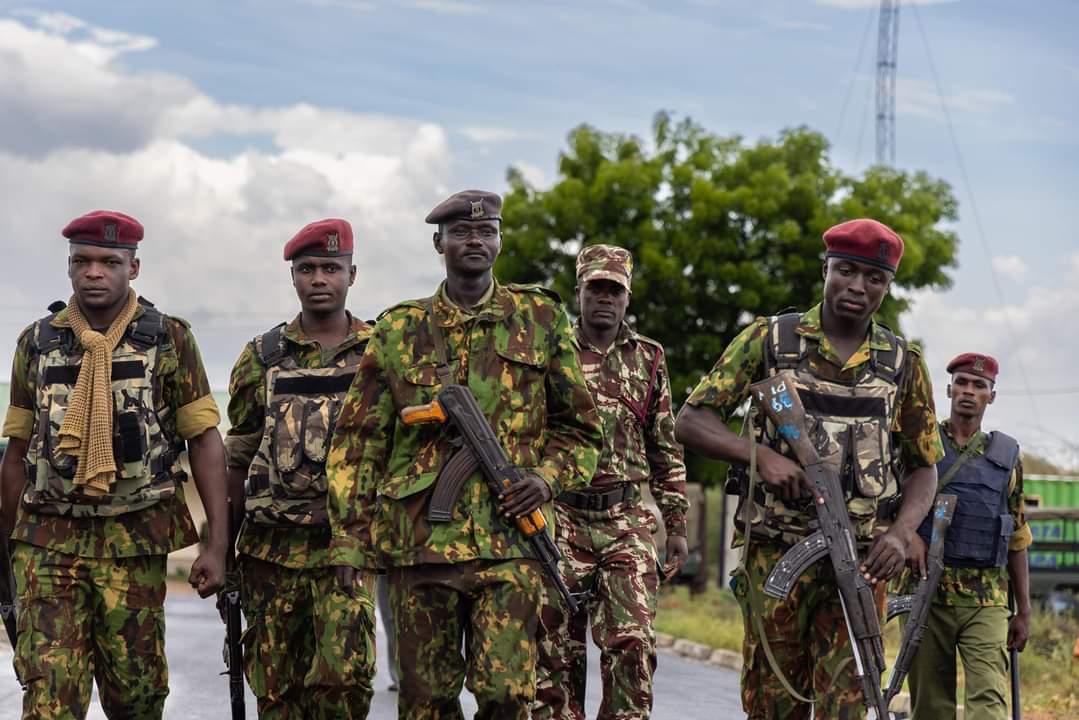
EACC report ranks Kenya Police Service as among the most corrupt State agencies.

Jobseekers are forced to pay as much as Sh163,260 in bribes to secure employment, a report released by the anti-corruption agency has revealed.
Those seeking passports give out up to Sh74,428 while those requiring a police abstract are forced to part with as much as Sh20,300, reveals the new report, compiled by the Ethics and anti-Corruption Commission (EACC).
The report, detailing how deep rooted the vice is, reveals that the average bribe paid by ordinary Kenyans for services whether at government ministries, county governments or other State agencies has gone up, from Sh6,865 in 2022 to Sh11,625 last year.
The report conducted by the anti-graft agency in 5,100 households in 47 counties showed that other services that Kenyans paid for include obtaining a tender at Sh17,000, solving land conflict Sh12,673, for power connection at Sh12,006, while bailing out arrested people at Sh11,056.
Releasing the report yesterday, EACC chairperson David Oginde said the Commission conducts the National Ethics and Corruption Survey annually to provide corruption indicators, offering insights into trends, patterns, root causes and changing nature of corruption.
“The high percentage of Kenyans willing to participate in corruption tells us we are ‘sick’,” Oginde said at EACC headquarters.
On average, the report shows, service seekers paid the largest amount of bribe at the National Transport and Safety Authority (NTSA) amounting to Sh81,801 then the Judiciary at Sh49,611 and Kenya Bureau of Standards (KEBS) at Sh40,000.
Most prone
In counties, on average, respondents paid the largest amount of bribe in West Pokot amounting to Sh56,695, Nairobi at Sh37,768 followed by Murang’a with Sh8,378, then Kisii with Sh6,810 and Uasin Gishu with Sh11,136 counties.
One is most likely to encounter graft and unethical practices in the Ministry of Interior and Coordination of National Government (47.1 per cent), followed by the Ministry of Health (13.2 per cent), Transport, Infrastructure, Housing, Urban Development and Public Works at 5.8 per cent then Education at 5.5 per cent.
Government Departments and Agencies perceived to be most prone to corruption were police at 55.4 per cent, Immigration Department (4.4 per cent) and Registrar of Persons (4 per cent).
County Health Services at 39.1 per cent, County Transport at 11.9 per cent and Trade Development and Regulation 10 per cent were perceived to be the most corrupt county government departments.
The report also shows that the largest share of national bribe was paid for passport application at 35.8 per cent, followed by seeking employment at 22.1 per cent, seeking a police abstract at 11.5 per cent and bailing of arrested individuals at 10.3 per cent.
The institutions that received the largest share of national bribes were NTSA at 33.6 per cent and police at 20.7 per cent.
Quick services
Nairobi was the county with the largest share of national bribes paid at 54.4 per cent, West Pokot at 13.87 per cent and Uasin Gishu with 3.7 per cent.
Majority of respondents at 57.3 per cent, perceived the corruption level to be high in the country.
The main reason given by 24.7 per cent of the respondents is the high cost of living followed by corruption being rampant in many public offices at 16.7 per cent, more corruption incidences being reported in many public offices at 16.5 per cent while 8.1 per cent said bad governance.
Most of the respondents (44.7 per cent) said the prevalence of corruption was increasing though 37.9 per cent were optimistic that the level will decrease in the next one year compared to 29 per cent who thought it will increase.
The respondents also said greed at 42.8 per cent, desire for quick services at 5.4 per cent, poverty 4.9 per cent and culture 3.4 per cent were the major causes of graft in public service.
Creation of employment opportunities at 49 per cent, eradication of poverty (47.2 per cent) and public education and awareness (44.4 per cent) were rated as the most effective measures in fighting graft.
The government was rated good in managing education services (29.9 per cent ), agricultural services (25.5 per cent) and implementation of national government policies on natural resources and environmental conservation (25 per cent).
Police services
The EACC report has also shown that about 74 per cent of respondents said they were aware about what constitutes unethical practices, while 28.3 per cent had witnessed unethical practices by a public officer in the past one year.
“The most prevalent forms of unethical practices witnessed were bribery (44 per cent), delay in service provision (16.2 per cent) and abuse of office (6.6 per cent),” the report states.
It also showed that there is a likelihood that each time one seeks police services, a service seeker is likely to be asked for a bribe 1.41 times. To bail an arrested person, one is likely to be asked to pay a bribe 1.28 times and to report a crime or write a statement, a service seeker is likely to be asked for a bribe 1.1 times.
“There is a likelihood that each time a service is sought in the traffic police one is likely to be asked for a bribe 1.45 times, County Health Department 1.05 times and in the Police 1.02 times,” the EACC report states.
Each time a service is sought in Busia, one is likely to be asked for a bribe 2.02 times followed by Baringo (1.34 times), Nairobi (1.12 times), Nakuru (1.11 times) and Machakos (1.09 times).
“Each time a service seeker sought for registration of business, Teachers Service Commission (TSC) number, relief food or water, a tender, registration or transfer of vehicle, building or construction certificate, educational services, driving license, CDF funds, agricultural extension services and transfer of a pupil from one school to another, a bribe was paid,” the report states.
County Health department, NTSA, County Commissioner’s Office, Public Service Commission (PSC) and County public service boards are the public institutions where bribery is most prevalent, with all respondents who sought services in these institutions paying a bribe.
Nyamira, Baringo, Siaya, Bungoma and Turkana were the counties where bribery is most prevalent with all respondents who sought services in these counties paying a bribe.
“Each time a service seeker paid a bribe while applying for TSC number, seeking relief food or water, registering or transferring a vehicle and collecting a construction certificate, they were more likely to receive the service than if they did not pay,” the report states.
Oginde said the Commission will launch a rapid response initiative to help agencies to mitigate corruption practices.
“Let us change the narrative by focusing on the good, refusing to be bribed and also ask professional bodies to rise up and deal with their members,” he said.
Data collection was conducted from October 13 to November 4 last year.
Kenya Insights allows guest blogging, if you want to be published on Kenya’s most authoritative and accurate blog, have an expose, news TIPS, story angles, human interest stories, drop us an email on [email protected] or via Telegram


THE HANDSHAKE THAT BECAME A NOOSE: How Tuju’s Alleged Intimate Access to EADB’s Yeda Apopo Produced a Sh294 Million Deal With No Written Contract, and Why That Trust Destroyed an Empire

Israel’s Military At Risk Of Collapse, Chief Warns

Trump Signature To Appear On US Currency, Ending 165-Year Tradition

Peter Maina Karimi Officially Appointed Head Of Kenya’s Gambling Regulator

Education Insurance Policies Are the Biggest Regulated Scam in Kenya

American Couple Busted in Multimillion Tax Evasion as KRA Crackdown Exposes Smuggling Syndicate Involving Senior Officials

Uganda ‘On The Side Of Israel’ Amid Iran War, Defense Chief Says

How A Fake Power Broker Scammed Ex-KRA Manager Sh63M For KURA Chair Job

Kenya Considers Military Escorts For Cargo Ships To Middle East

I’m A Life Member Of KNUT, Sossion Warns Oyuu To Be Ready For A Showdown As Seeks To Reclaim SG Post

Kenya Strips Dutch Climate Body of Diplomatic Immunity Amid Donor Fraud Scandal and Allegations of Executive Capture

How Little-Known Pesa Print, Linked to State House Tycoons, Won NTSA Tender Worth Sh42 Billion in Traffic Fines

Tuju Forcefully Removed From His Karen Property With Masked Officers In Unmarked Vehicles In Early Morning Raid

Ex-Inchcape Kenya CEO Sanjiv Shah Charged With Bank Fraud

Nowhere To Hide: Govt Begins Tracing Hustler Fund Defaulters Using National IDs To Recover Unpaid Sh12 Billion

Named: Havi Says Mutava Confessed He Was Collecting The Bribe For Lady Justice Josephine Mongare, So Why Is JSC Still Silence?

The Man With The Golden Pen: How NLC’s Joel Ombati Is Accused Of Masterminding Kenya’s Biggest Infrastructure Land Heist

Waweru’s Bank Pockets Sh1.16 Billion from KPC IPO While Ordinary Kenyans Fled the Sale

‘They Will Eat You Alive’: Retired Teacher Warns Against Bashy African Credit as Sh500,000 Loan Spirals Into Sh1.5 Million Fight

The New Master of the Nation: How a Tanzanian Billionaire With a President in His Pocket Just Bought Kenya’s Most Powerful Press
-
 News2 weeks ago
Tuju Forcefully Removed From His Karen Property With Masked Officers In Unmarked Vehicles In Early Morning Raid
-
 Business2 weeks ago
‘They Will Eat You Alive’: Retired Teacher Warns Against Bashy African Credit as Sh500,000 Loan Spirals Into Sh1.5 Million Fight
-
 Investigations1 week ago
THE RUTO HAND IN TUJU’S FALL: How a President-Linked Petroleum Baron Walked Away With Sh3.5 Billion Karen Land for Sh450 Million
-
 Business2 weeks ago
Centum Special Report: Is Mworia Overseeing Shareholder Value Destruction?
-
 Investigations2 weeks ago
Investigations Reveal The Depth Of Rot In City Hall’s Garbage Collection Tender To Corrupt Ghanaian Firm
-

 Business5 days ago
Big Shame: EY and PwC Found Guilty of Fraud and Corruption in Kenya as World Bank Bans Lay Bare Scandal Inside the Global Audit Elite
-
 Investigations2 weeks ago
Revealed: How Kibaki and His Men Stole Raila’s Victory in the 2007 Election
-
 Business2 weeks ago
Cyber Attack: Inside the USD4 Million Equity Bank Heist in Rwanda