
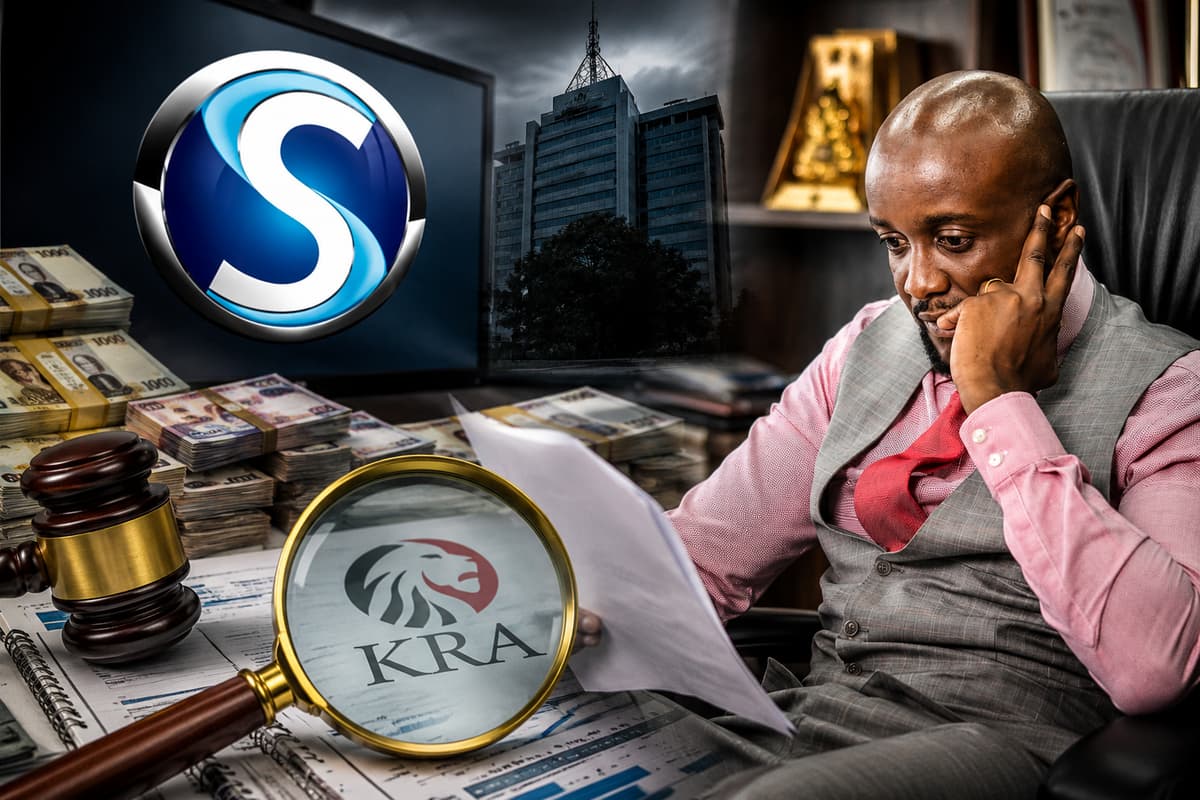
The Consumers Federation of Kenya has instructed its lawyers to seek court intervention over Philip Mainga’s continued stay as Kenya Railways Managing Director, having served beyond two three-year terms, acted in the same role for nearly two years, and remained in office past the mandatory retirement age of 60.
This comes as the Auditor-General flags that Kenya Railways owes nearly Sh1 trillion to Exim Bank over Standard Gauge Railway loans, with mounting evidence suggesting systemic corruption and mismanagement may have facilitated what critics describe as one of the most brazen examples of institutional capture in recent Kenyan history.
Mainga’s tenure officially expired on January 3, 2026.
Yet Kenya Railways Corporation has maintained a calculated silence, issuing no public notice indicating any intention to replace him, renew his contract, or initiate competitive recruitment for a new managing director.
Legal provisions require the board to formally resolve whether to renew, extend, or appoint a new chief executive once a tenure lapses. The board has done none of these things.
Sources within the parastatal speaking to Kenya Insights, indicate the board is leaning heavily on a recent High Court ruling that struck out a petition seeking Mainga’s removal over allegations of corruption, irregular procurement, and fraudulent land compensation payments.
The court ruled it lacked jurisdiction to interfere in matters that fall within the mandate of statutory bodies, reaffirming the separation of powers doctrine.
The decision, while not an endorsement of Mainga’s conduct, appears to have emboldened the board to maintain the status quo.
But COFEK, which has emerged as one of the most vocal consumer advocacy organizations in Kenya, argues that the court ruling was procedural, not substantive, and does not absolve Mainga of the mounting evidence of malfeasance during his tenure.
A Trail of Corruption Allegations
Investigations reveal that Mainga, now 59, has only one year remaining before reaching the mandatory public service retirement age of 60.
This reality significantly complicates any prospect of him being awarded a fresh three-year term, as provided for under standard state corporation contracts.
Yet he remains in office, with his continued stay raising questions about whether powerful political forces are shielding him from accountability.
Mainga’s career at Kenya Railways has been marked by persistent allegations of corruption, irregular procurement, and financial mismanagement.
In March 2025, the Directorate of Criminal Investigations launched a probe into accusations that an 88.2 million shilling deal was allegedly awarded to First Choice General Supplies, a business controlled by his long-term fiancée, Peninah Patricks.
A legislative oversight committee questioned the contentious tender, with allegations suggesting that required paperwork was backdated and payments processed hastily in contravention of the Public Procurement and Asset Disposal Act of 2015.
Multiple irregularities were flagged in the tender, including restricted bidding and a deliberate circumvention of the 30 million shilling threshold established under the Public Procurement and Disposal Regulations of 2020.
The corruption allegations extend far beyond nepotistic procurement.
In February 2025, senators demanded that the Ethics and Anti-Corruption Commission arrest Mainga over alleged illegal property deals. Reports indicate that under his leadership, Kenya Railways has been embroiled in a series of questionable transactions involving prime parcels of land.
In Mombasa’s Shimanzi area, three prime parcels reserved for the corporation’s expansion were allegedly grabbed and sold to private developers.
Investigations revealed that these properties, valued at over 100 million shillings, were fraudulently transferred through forged documents and misrepresentation, suggesting that Kenya Railways had surrendered the land to the government.
One parcel was reportedly sold for 58.2 million shillings and earmarked for a grain handling terminal.
Further allegations suggest that Mainga unilaterally leased container yards and buildings at Makongeni, Nairobi, for a decade without proper internal procedures or board approval.
This decision reportedly resulted in Kenya Railways losing over 400 million shillings in storage and container transport charges.
A whistleblower report seen by Kenya Insights detailed extensive abuses during Mainga’s tenure.
On March 21, 2019, he allegedly unilaterally leased Kenya Railways facilities at Makongeni Nairobi for ten years without any internal procedures or reporting to the board for approval.
The report indicates that Mainga did this while fully aware that Kenya Ports Authority had already taken over the property in October 2018 without formal handover and that the property was being used by Kenya Railways to earn 23 million shillings monthly.
As a result of his actions, Kenya Ports Authority allegedly uplifted the railway lines without authority and resorted to road transport, which was allegedly a corruption scheme designed to benefit specific road transporters.
The report further documents numerous instances where Mainga subdivided and leased Kenya Railways land without demonstrating transparent identification of beneficiaries.
Siwani Estate in Nakuru was subdivided into 22 plots and presented to the board for approval without any demonstration of how lessees were transparently identified.
Similar patterns were observed at Sleeper Press land in Nairobi, which was subdivided into eight plots, and at Nairobi South Hub, where land recently acquired for SGR was leased to a few known companies without any demonstration that the exercise was undertaken transparently and fairly.
Court Battles and Contempt Citations
Mainga’s legal troubles extend beyond corruption allegations. In separate proceedings, he has been cited for contempt of court over disobedience of interim orders.
In March 2024, Milimani Commercial Court Chief Magistrate Wendy Micheni ordered his arrest for disobeying a court order over the eviction of Dr. Cyrus Njiru from a property at Mzima Springs in Lavington.
Despite being served with a court order on October 31, 2022, restraining Kenya Railways from evicting Dr. Njiru from the premises, police officers manning the gate said they had been instructed by Mainga not to let him in.
Justice Heston Nyaga ruled that Mainga was aware of the terms of the court order and that, notwithstanding such knowledge, proceeded and evicted Dr. Njiru in contravention of the terms of the order.
The magistrate dismissed an application by Mainga for an adjournment, saying the case had been pending for over a year and that medical records presented were being treated with suspicion because of his past conduct.
The court issued a warrant of arrest to be executed by the Inspector General of Police.
In another case, Nakuru High Court Judge Anthony Ombwayo found Mainga in contempt for failing to pay Monica Macharia 45.5 million shillings following the illegal demolition of her business property in 2020.
Mainga was ordered to appear in court to show cause why he should not be jailed for disobeying a court order.
The Managing Director eventually agreed to pay in installments, with the first payment due on April 30, 2025, and the last installment scheduled for July 30, 2026.
The consent document stated that in default of any one installment, the balance of the entire amount would accrue and the summons requiring the managing director to show cause why he should not be committed to civil jail would be reinstated.
The SGR Debt Crisis
Perhaps the most damaging revelation during Mainga’s tenure is the catastrophic financial performance of the Standard Gauge Railway project, which has left Kenya Railways drowning in debt.
Auditor-General Nancy Gathungu revealed in her report for the year ended June 2024 that failure to meet loan obligations when due has attracted avoidable expenditure of 34.1 billion shillings in the form of penalties amounting to 5.3 billion shillings and interest of 28.85 billion shillings, which could have otherwise been avoided.
Kenya Railways Corporation owes 737.5 billion shillings to China Exim Bank, up from the 539 billion shillings originally borrowed for construction of the Mombasa-Naivasha SGR line. This means the debt has grown by 36.8 percent as unpaid interest and principal installments accrue.
The National Treasury’s debt management update reveals that arrears on the SGR loan, covering overdue principal and accumulated interest, have grown to 413.36 billion shillings as of the end of June 2025.
That makes up 80.82 percent of the total 511.44 billion shillings arrears which state corporations owed Treasury in the form of on-lent and direct loans in the review period.
Kenya’s biggest external debt holder is China Exim Bank, to which it owes 741 million dollars in principal, 222 million dollars in interest, and 41 million dollars in penalties for the 2025-2026 fiscal year. On average, Kenya spends more than one billion dollars per year to service its SGR debt to China.
The Auditor-General noted that under a rigid escrow arrangement, all SGR revenues are deposited into an account which Kenya Railways Corporation jointly manages with Exim Bank, requiring that a minimum balance of 25 billion shillings be maintained before any surplus can be applied to loan servicing.
Since the account has never reached this threshold, no repayments have flowed through from SGR revenues, resulting in loan arrears accumulating even as the SGR project continues to earn income.
The SGR has generated approximately 112.08 billion shillings in revenue since the launch of commercial operations eight years ago, yet the corporation remains unable to service the debt.
Competition from road transport has made it difficult for the corporation to service the loans from SGR operations alone. Over the five years to 2023, SGR generated 73.4 billion shillings from both cargo and passenger operations.
Critics argue that the Managing Director executed a flawed deal with Africa Star Railways, the Chinese operator for the SGR line, which ran largely unchecked and resulted in Kenya Railways losing up to 1.4 million shillings daily. The contract was signed during Atanas Maina’s tenure and was initiated by Mainga himself while serving as acting Managing Director.
Political Protection and Succession Manipulation
Governance experts argue that the current uncertainty exposes gaps in succession planning at Kenya Railways and raises broader concerns about accountability within state-owned enterprises. They warn that prolonged indecision risks undermining institutional stability, staff morale, and public confidence.
Mainga, an ardent supporter of the Azimio la Umoja coalition, was reportedly lobbied for the managing director position by Kalonzo Musyoka and former Prime Minister Raila Odinga. Sources indicate he has been fighting an underground war with some senior officials who dislike his leadership style and political orientation.
The Public Service Commission initiated an investigation into the undisclosed extension of Mainga’s tenure during the final days of the Jubilee Party Administration.
This clandestine arrangement is reported to have hindered the government’s efforts to institute reforms within the organization.
Mainga assumed the position permanently in January 2020, having previously served as acting boss following the suspension of Atanas Maina in August 2018 due to corruption allegations.
Although his contract was set to expire in January 2023, he continued to hold office due to a behind-the-scenes deal struck just prior to the August 2022 general election.
The board of Kenya Railways Corporation extended his term by three more years, allowing him to serve until January 2026.
Multiple sources within Kenya Railways allege that Mainga has used his wealth to retain his position, reportedly bribing members of the new board, journalists, and politicians who have dared to raise concerns.
In September 2024, allegations surfaced that Mainga appointed Benedict Kiema Kavua to a plum position after taking a bribe in a sham recruitment exercise. City insiders claim that the besieged manager has been on the radar of investigative agencies including the Directorate of Criminal Investigations and the Ethics and Anti-Corruption Commission.
At the point of shortlisting, Kiema allegedly did not have the required license to practice.
Despite this information being in public knowledge, the board turned a blind eye and chose to appoint Kiema.
This happened as two internal managers who had previously served in the position were considered unsuitable despite being experienced, competent, and in good standing.
Sources suggest this was a well-orchestrated plan by Mainga to eliminate those with organizational memory as he prepares for his eventual exit.
The process was designed to eliminate staff members who were considered a threat to his otherwise corrupt rule.
Pension Fund Scandal
Adding to the litany of allegations, the Ethics and Anti-Corruption Commission initiated an investigation into senior officials of Kenya Railways Corporation concerning the alleged mismanagement of eight billion shillings designated for retirees.
The probe centers on the Kenya Railways Staff Retirement Benefits Scheme and its involvement in the questionable sale of 139 acres of land in Makongeni, Nairobi.
Five years ago, the Directorate of Criminal Investigations launched an investigation into the sale of prime properties worth billions, focusing on allegations that Kenya Railways Corporation sold these assets at significantly reduced prices to the lowest bidders, who subsequently resold them at a profit.
A parliamentary oversight committee summoned Mainga to explain why Kenya Railways has failed to pay 270 retirees 21.9 million shillings for the last 19 years.
The National Assembly’s Public Accounts Committee directed Transport Principal Secretary Mohamed Daghar to appear alongside Mainga to explain the measures taken to ensure the retirees have been paid.
The lawmakers who scrutinized the Auditor-General’s report for the financial year 2022-2023 said it is unacceptable that retirees are yet to be paid their monies despite working for Kenya Railways Corporation for many years.
They regretted that such delay is the main reason why some of the retirees are sinking into depression and others dying poor as they have no resources to take care of themselves.
Over 8,500 former Kenya Railways employees moved to court in May 2025 over the retirement fund property sale, seeking orders restraining the corporation’s Chief Executive Officer and the Board of Trustees members from opening tender bids for the sale of Ngara Railways Estate.
The former employees argue that the Ngara Railways Estate property remains the only meaningful source of pension for the retirees and must not be sold without due consultation.
COFEK’s Legal Challenge
The Consumers Federation of Kenya’s decision to move to court represents a significant escalation in the campaign to hold Mainga accountable. According to the social media post by COFEK, the consumer advocacy organization has instructed its lawyers to seek court intervention over Mainga’s continued stay as Kenya Railways Managing Director.
COFEK argues that Mainga has served beyond two three-year terms, acted in the same role for nearly two years before being confirmed substantively, and has now remained in office past the mandatory retirement age of 60.
The organization contends that this flagrant disregard for tenure limits and retirement age requirements constitutes a violation of public service regulations and undermines good governance at one of Kenya’s most strategic public institutions.
The timing of COFEK’s intervention is significant, coming just weeks after the Auditor-General flagged that Kenya Railways owes nearly one trillion shillings to Exim Bank over Standard Gauge Railway loans.
The consumer advocacy group argues that Mainga’s continued presence at the helm of the parastatal poses a direct threat to taxpayers who ultimately bear the burden of the corporation’s mounting debts and financial mismanagement.
Legal experts consulted by investigators suggest that COFEK’s case may succeed where previous petitions failed because it focuses on statutory violations related to tenure limits and retirement age, rather than seeking the court to make determinations on corruption allegations that fall within the mandate of specialized agencies like the Ethics and Anti-Corruption Commission.
The case is expected to test the limits of judicial intervention in matters of public appointments, particularly where statutory bodies appear unwilling or unable to enforce their own regulations. It may also force the court to address whether the separation of powers doctrine can be invoked to shield public officials who remain in office in flagrant violation of age and tenure limits.
Institutional Failure and Accountability Crisis
The Kenya Railways saga under Philip Mainga’s leadership represents a catastrophic failure of institutional oversight and accountability. Multiple state agencies, including the Ethics and Anti-Corruption Commission, the Directorate of Criminal Investigations, the Public Service Commission, and the Auditor-General, have documented extensive evidence of corruption, mismanagement, and regulatory violations.
Yet Mainga remains in office, protected by a board that appears either complicit or captured, and shielded by political patrons who benefit from the status quo. The High Court’s decision to strike out the petition seeking his removal, while legally sound on jurisdictional grounds, has been weaponized to create a veneer of legitimacy for his continued tenure.
The silence from the board of Kenya Railways Corporation is particularly troubling. Despite clear legal provisions requiring formal resolution on whether to renew, extend, or appoint a new chief executive once a tenure lapses, the board has taken no action.
This suggests either gross incompetence or deliberate complicity in facilitating Mainga’s unlawful continuation in office beyond his statutory retirement age.
The ramifications extend far beyond Kenya Railways Corporation.
With the parastatal owing nearly one trillion shillings to China Exim Bank and accumulating billions in avoidable penalties and interest, Kenyan taxpayers are being forced to shoulder the burden of what critics describe as one of the most expensive infrastructure projects in the country’s history.
The Standard Gauge Railway, once heralded as a symbol of Kenya’s emergence as a regional powerhouse, has become an embarrassing monument to a debt crisis that threatens to engulf an economy already struggling under the weight of unsustainable borrowing.
As COFEK prepares to file its petition, the outcome will have profound implications for corporate governance at state-owned enterprises.
A ruling in favor of the consumer advocacy organization would send a strong signal that no public official, regardless of political connections, is above the law when it comes to statutory retirement age and tenure limits.
Conversely, if the court declines to intervene, it would effectively validate a system where powerful individuals can ignore regulations with impunity, secure in the knowledge that institutional oversight mechanisms are either too weak or too compromised to hold them accountable.
For the thousands of Kenya Railways retirees who have waited 19 years for their pension payments, for the taxpayers burdened with servicing nearly one trillion shillings in SGR debt, and for the broader public interest in good governance, the stakes could not be higher.
Mainga’s continued presence at Kenya Railways Corporation, despite serving beyond his tenure and past the mandatory retirement age, represents a test case for whether Kenya’s institutions can enforce their own rules or whether the country has descended into a state of regulatory capture where the powerful make and break rules at will.
What is certain is that the coming months will be critical in determining not only Mainga’s future but also the credibility of corporate governance at one of Kenya’s most strategic public institutions. The question is whether Kenya’s judicial system will rise to the occasion or whether it will become yet another institution that failed to hold power accountable.
For now, Philip Mainga remains in office, his reign seemingly set to continue beyond the formal end of his tenure and past his statutory retirement age, while COFEK and Kenyan taxpayers prepare for what promises to be a landmark legal battle over the limits of institutional capture and the enforcement of public service regulations.






Comments