
Investigations
Steel, Graft & Impunity: Inside the Kenya Railways Scandal Driving Away Investors and Bleeding Billions
The EACC must open a full forensic investigation into the Railway City tender process, examining not merely the procurement outcome but the entire chain from tender design through technical evaluation to final award and the subsequent deportation of competing bidders.

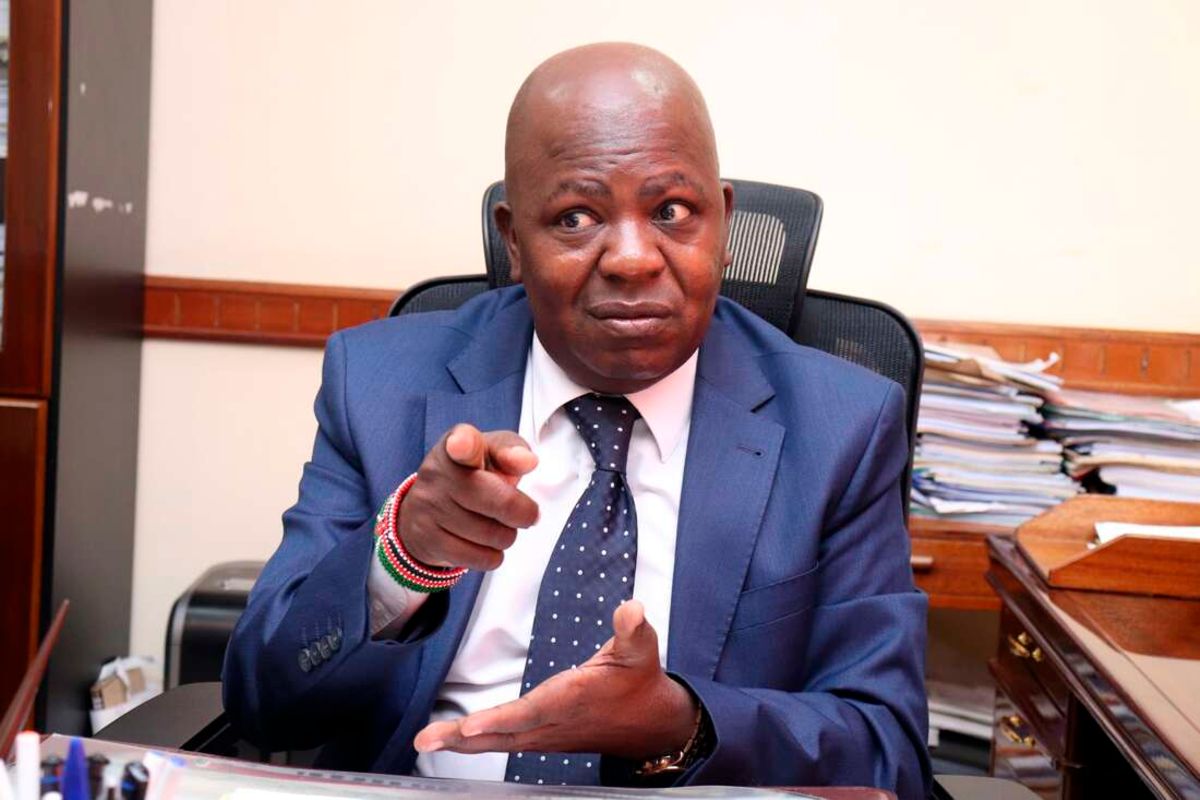
For nearly a decade, Managing Director Philip Mainga has presided over a corporation in open institutional free fall. Court orders have been flouted within hours of service. Tenders worth tens of billions have been awarded to higher bidders in defiance of procurement review rulings. Public land worth hundreds of millions has been grabbed, sold and transferred under forged documents. A Sh88.2 million tender was directed to a company controlled by the MD’s own fiancée. And through it all, the board has maintained a studied silence while investigators have repeatedly been stopped in their tracks. This is the true state of Kenya Railways Corporation.
A CORPORATION BUILT ON IMPUNITY
Kenya Railways Corporation occupies a peculiar and deeply troubling position in the landscape of Kenyan state institutions. It controls some of the most valuable real estate in the country, manages the single largest infrastructure debt obligation in the nation’s history, and is tasked with delivering a multi-trillion-shilling pipeline of transport projects. Yet from the moment Philip Mainga took substantive control of the organisation in January 2020, the record is one of systematic procurement manipulation, predatory land dealings, judicial defiance, and the calculated suppression of internal dissent.
The accumulated evidence, drawn from court records, parliamentary proceedings, audit reports and investigative disclosures, does not tell the story of a poorly-run institution. It tells the story of a deliberately captured one, where the machinery of procurement, recruitment and land management has been redirected to serve private interests at the expense of the public.
Mainga’s tenure officially expired on January 3, 2026. Yet the Kenya Railways Corporation board, relying on a High Court ruling that declined jurisdiction to intervene in the matter, has maintained complete silence. No public notice of competitive recruitment has been issued. No announcement of a planned succession has been made. Insiders confirm that the board has been content to leave the expired MD in place, shielding him from accountability and allowing the corporation’s affairs to continue under a leadership whose mandate has lapsed.
THE TENDER ENGINEERED FOR CRBC
The single most brazen episode in Kenya Railways’ recent history concerns the Sh29.5 billion tender for the construction of the Nairobi Railway City Central Station. The project, which will anchor the 425-acre Railway City redevelopment partly funded by the United Kingdom government, drew bids from three Chinese firms. China Civil Engineering Construction Corporation submitted the lowest bid at Sh22.9 billion. China Road and Bridge Corporation submitted a bid of Sh29.5 billion. A consortium of China Overseas Engineering Group Company Limited and China Railway Group Limited submitted the highest quote at Sh32.5 billion.
The rules governing the evaluation of such tenders exist for a reason. Technical and financial proposals are required to be submitted separately, precisely to ensure that evaluators assess technical merit without being influenced by price information. CRBC, according to proceedings before the Public Procurement Administrative Review Board, placed both its technical and financial proposals on flash disks inside a single envelope. The board, in a ruling issued on January 26, 2026, found this to be not a minor irregularity but a fundamental breach that rendered the CRBC bid non-responsive from the outset.
The PPARB ruling was unequivocal. It held that Kenya Railways’ evaluation committee had acted erroneously and in a manner guided by misdirected reasoning in proceeding to score CRBC’s financial proposal despite the submission defect. The board nullified the award and directed Kenya Railways to re-evaluate the remaining compliant bids within 21 days.
“No serious investor commits billions to a project where the rules change depending on who is receiving the kickbacks.”
Kenya Railways ignored the directive. On February 16, 2026, the corporation again declared CRBC the best bidder, triggering a second appeal. When CCECC and the consortium mounted that second challenge, CRBC filed a High Court application to block the PPARB from hearing it. On March 11, the High Court suspended the PPARB proceedings, effectively freezing the review mechanism that exists to protect procurement integrity.
Then came the deportations. Two days after the High Court suspended the PPARB proceedings, security operatives fanned out across Nairobi and Kisumu in coordinated night-time operations. Zhang Hongze, CCECC’s representative along Riverside Drive in Lavington, was taken by officers who did not identify themselves. Zhang Fangyi, based at CCECC’s camp along the Kisian-Usenge road in Kisumu where the firm is constructing the Sh2 billion Dhogoye bridge, was physically removed from his worksite by men who identified themselves as police.
Both men were transported to Jomo Kenyatta International Airport and placed on Kenya Airways flight KQ886 to Guangzhou. The Kisumu High Court subsequently issued an injunction restraining the deportation of further CCECC personnel, with CCECC arguing in court papers that the harassment was orchestrated by business rivals who had conspired with government respondents to intimidate the firm into abandoning its procurement challenge. The potential cost to the taxpayer of the government’s inexplicable preference for the higher bidder stands at Sh7 billion, representing the differential between CCECC’s Sh22.9 billion offer and CRBC’s Sh29.5 billion award.
MAINGA’S PRIVATE PROCUREMENT CHANNEL
The Railway City tender is not an anomaly. It is the most recent manifestation of a procurement culture that has operated throughout Mainga’s tenure. In March 2025, the Directorate of Criminal Investigations launched a probe into a Sh88.2 million tender, reference number KR/SCM/FRC/003/2019-2020, awarded to First Choice General Supplies, a business controlled by Peninah Patricks, Mainga’s long-term fiancée.
The irregularities documented in the tender are specific and serious. The required procurement paperwork was allegedly backdated. Payments were processed hastily in a manner that investigators found inconsistent with normal disbursement procedures. The process used restricted bidding, keeping the field of competition deliberately narrow. Most significantly, the tender value was engineered to circumvent the Sh30 million threshold established under the Public Procurement and Disposal Regulations of 2020, a threshold that triggers additional oversight and approvals. By structuring the award at Sh88.2 million but through restricted bidding, the management avoided the scrutiny that a properly competitive process would have attracted.
The matter was placed before a legislative oversight committee, which directed further inquiry. Activist group Bunge la Mwananchi subsequently petitioned the High Court seeking, among other remedies, a forensic audit of Kenya Railways and a lifestyle audit of Mainga personally. The petition called on the Ethics and Anti-Corruption Commission to investigate and recommend charges to the Director of Public Prosecutions if the evidence supported prosecution.
Mainga’s response to the accumulation of allegations against him has been characteristic. In April 2024, having learned that dismissed employees were cooperating with media organisations to expose internal malpractices, he issued stern warnings invoking CAP 187, threatening legal action against any person who disclosed official documents without authorisation. Legal experts were quick to note that the provisions he cited had been declared unconstitutional, making the threat legally hollow. But the intent was transparent: the Managing Director of a public institution was deploying state apparatus to silence those who would expose his conduct.
LAND: THE ORIGINAL SIN
No aspect of Mainga’s record is more extensively documented than the systematic looting of Kenya Railways land under his watch. The scale is staggering. An audit report for the year ended June 30, 2020, identified 529 parcels of railway land that had been illegally allocated to third parties without the corporation’s consent, stretching from Nairobi to Mombasa, encompassing industrial plots in Limuru, parcels at Kikuyu and Mombasa stations, and significant acreage in Nakuru.
In Mombasa’s Shimanzi area, three prime parcels reserved for the corporation’s expansion were grabbed and transferred to private developers through forged documents and misrepresentation. One parcel was reportedly sold for Sh58.2 million and earmarked for a grain handling terminal by its new, illegitimate owners. The properties were collectively valued at over Sh100 million.
The most audacious scheme involved the Dupoto and Dafur Settlement Scheme in Embakasi, a 90-acre parcel sitting between the flight path, the Standard Gauge Railway corridor and Nairobi National Park. Under the scheme as reported, title deeds were issued to proxies for land fraudulently allocated within the settlement. The government was then induced to compensate these proxies to vacate, transferring billions of shillings in public funds into accounts that were subsequently drained by the scheme’s architects. Over 544 parcels of public land were, under Mainga’s tenure, illegally allocated to private individuals.
A DCI investigation was opened into these dealings. It was abruptly halted following, according to investigative sources, a call from State House. The EACC, which separately attempted to investigate the Dupoto scheme, was similarly stopped before it could proceed to any meaningful conclusion. Meanwhile, Mainga himself was summoned to DCI headquarters in May 2019, where he recorded a statement for hours over dubious land compensation payments connected to SGR Phase 2. He was called back for further questioning the following day.
On the Makongeni container yards and buildings, Mainga is alleged to have unilaterally leased the facilities for ten years without board approval, without following internal procedures, and with full knowledge that the Kenya Ports Authority had taken possession of the property without a formal handover. The consequence was the loss of Sh23 million per month in storage and container transport charges. Across the duration of that unauthorised arrangement, Kenya Railways haemorrhaged over Sh400 million. Not a single internal disciplinary process was initiated.
THE SGR DEBT TRAP AND THE AUDITOR-GENERAL’S VERDICT
Beneath the catalogue of procurement fraud and land theft lies a more fundamental financial catastrophe, one that now threatens the corporation’s very solvency. The Standard Gauge Railway, financed by the China Export-Import Bank at a total cost exceeding Sh500 billion across its two phases, was projected to move 22 million tonnes of freight annually. It moves roughly a quarter of that. In the year ended June 2025, Kenya Railways posted a net loss of Sh28.17 billion and sits on negative equity of Sh121 billion.
Auditor-General Nancy Gathungu was blunt in her assessment. Her report for the year ended June 2024 found that Kenya Railways’ failure to meet loan obligations when due had attracted avoidable expenditure of Sh34.1 billion, comprising Sh5.3 billion in penalties and Sh28.85 billion in interest. The Auditor-General was explicit: this expenditure was not a proper charge to public funds. By June 2025, arrears on the SGR loan had accumulated to Sh413.36 billion, representing 80.82 percent of the total Sh511 billion owed to the Treasury by all state corporations combined.
The SGR escrow account has never reached its required minimum balance of Sh25 billion, a structural failure that has locked out all revenue-based loan repayments since commercial operations began. The National Treasury has had to service the loans directly while attempting to recover reimbursement from a corporation that cannot generate sufficient cash flow.
An Africa Star Railways operating deal, executed during a predecessor’s tenure but initiated by Mainga himself, saw Kenya Railways lose up to Sh1.4 million daily through a lopsided arrangement that ran essentially unchecked. Two activists petitioned the court in 2023 alleging that irregular extensions and dealings connected to the SGR establishment had led to a loss of Sh700 billion of taxpayer funds.
Kenya Railways sits on negative equity of Sh121 billion. Arrears on the SGR loan have reached Sh413.36 billion. The board’s response has been silence.
Busia Senator Okiya Omtatah has told courts that Kenya Railways is, for all practical purposes, technically insolvent. The Executive and Parliament have nonetheless approved a railway project portfolio for the corporation valued at approximately Sh2.824 trillion. The juxtaposition is grotesque: a corporation drowning in debt and governance failures is being handed an even larger mandate, with no credible mechanism for accountability in place.
CONTEMPT AS INSTITUTIONAL POLICY
The corporation’s attitude to judicial oversight has been consistent and deeply revealing. In January 2026, the High Court, before Justice Bahati Mwamuye, issued interim conservatory orders halting construction of the Sh11 billion Riruta-Lenana-Ngong metre gauge commuter railway project pending hearing of a constitutional petition filed by Senator Omtatah together with activists Bernard Muchiri and Naomi Misati. The orders were comprehensive: no further construction, no further financing, no disbursement of Railway Development Levy funds without parliamentary approval. The orders were served electronically and physically on January 20 and 21, with all parties acknowledging receipt.
Construction resumed on January 22, 2026, one day after service. It continued on January 24 and January 25. Misati’s lawyers issued a cease-and-desist letter on January 23 warning of the breach. It was ignored. The contempt application filed on January 28 named Philip Mainga alongside Treasury Principal Secretary Chris Kiptoo, Cabinet Secretary Mercy Wanjau, Transport Principal Secretary Mohamed Daghar, Attorney General Dorcas Oduor and CRBC General Manager Xiaodong Yu, among others.
Kenya Railways’ response before the court was that activity on the site had been limited to securing the perimeter, a characterisation the petitioners contested as a euphemism for continued construction activity. The court varied its orders to permit works necessary for site safety, a concession the corporation appeared to receive with some relief. By March 2026, the court had ordered the disclosure of feasibility studies, procurement records, parliamentary approvals and environmental impact assessments, finding that the petitioners had established a valid constitutional basis for access to the information.
The contempt proceedings were not the first time Mainga had been named for judicial disobedience. The pattern is structural, not incidental. When courts act, Kenya Railways management finds ways to circumvent, delay or procedurally outmanoeuvre the order rather than comply with its spirit.
THE RECRUITMENT MARKET: POSITIONS FOR SALE
The corruption at Kenya Railways is not confined to procurement. Internal sources have documented a pattern in which senior positions are awarded not on merit but for payment. The appointment in 2024 of Benedict Kiema Kavua, a procurement manager from Nairobi Water and Sewage Company, to the role of General Manager Procurement at Kenya Railways attracted immediate internal fury.
Kavua is alleged to have lacked the requisite professional licence at the point of shortlisting. Two internal managers who had previously served in that position and whose experience and performance records were well-documented were passed over. Sources characterised the appointment as a direct result of a bribe paid to Mainga, and the broader wave of appointments made at the same time as a systematic purge of institutional memory ahead of the MD’s anticipated exit.
The appointment of Stanley Cheruiyot as General Manager Business and Commercial generated similar consternation. Cheruiyot was a principal business development officer with no senior management experience. Two senior managers with demonstrated track records in that capacity were overlooked. Sources described the pattern as deliberate: Mainga was installing loyalists without institutional knowledge so that the documentation of his deals and the networks he had built would be impossible to reconstruct once he departed.
A PENSION FUND IN TATTERS
The victims of the Kenya Railways governance catastrophe are not abstract. They include thousands of former employees whose pension savings have been mismanaged with impunity. The EACC initiated an investigation into senior KRC officials over the alleged mismanagement of Sh8 billion designated for retirees through the Kenya Railways Staff Retirement Benefits Scheme, focusing on the scheme’s involvement in the questionable sale of 139 acres of Makongeni land.
Five years before the EACC investigation, the DCI had already probed allegations that Kenya Railways sold prime properties belonging to the scheme at significantly reduced prices to preferred bidders, who immediately resold them at profit. Neither investigation resulted in prosecution. A parliamentary committee in 2025 directed Kenya Railways to pay outstanding pension to a former station manager who served for 17 years and had still not received his due. The committee found that administrative failures, deliberate or otherwise, had left pensioners destitute while management built personal fortunes.
INVESTORS EXIT, QATAR FILES LEGAL NOTICE
The cumulative effect of this governance environment on investor confidence is measurable and severe. A legal notice from a senior official of the Qatar Chamber of Commerce emerged in court proceedings, documenting unfulfilled real estate commitments made to Qatari investors in connection with the Railway City and SGR station land development programme. The accusation was that Kenya Railways had enticed foreign investors with land development promises and subsequently reneged, generating an international legal dispute that further damaged the corporation’s reputation in Gulf capital markets.
Multiple credible local and international firms have either declined to engage with Kenya Railways procurement processes or withdrawn from negotiations after discovering the nature of the environment they would be operating in. When the lowest bidder can be disqualified not on technical grounds but through a procedural sleight of hand, then intimidated out of challenging the decision through deportation of its personnel, no rational investor with governance standards can remain at the table.
The UK government’s involvement in financing the Railway City project amplifies the reputational stakes. British taxpayer funds are committed to a project whose procurement is now the subject of multiple court challenges and a PPARB ruling that Kenya Railways has twice refused to comply with. The Bunge la Mwananchi petition specifically sought to halt the disbursement of UK funding until a forensic audit had been conducted and governance standards established.
WHAT THE INSTITUTIONS MUST DO
The Ethics and Anti-Corruption Commission and the Directorate of Criminal Investigations are not institutions without resources. They have the legal mandates, investigative powers, and prosecutorial pathways to act. What has been lacking, consistently, is the institutional courage to follow the evidence to its conclusion regardless of who the evidence implicates.
The EACC must open a full forensic investigation into the Railway City tender process, examining not merely the procurement outcome but the entire chain from tender design through technical evaluation to final award and the subsequent deportation of competing bidders. It must interrogate the relationships between Kenya Railways management and both CRBC and the political intermediaries reportedly brokering contractor access. It must examine every land transaction under Mainga’s tenure, tracing money flows from fraudulent compensation schemes through the bank accounts identified in the Dupoto case to their ultimate beneficiaries.
The DCI’s probe into the Sh88.2 million First Choice General Supplies tender must be concluded and its findings referred to the Director of Public Prosecutions without further delay. Peninah Patricks must be compelled to provide documentation of her company’s legitimate business activities preceding the award. Parliamentary committees must demand that Kenya Railways produce the full procurement file for that tender, including the backdated documentation flagged by investigators.
The Attorney General, who is herself named as a respondent in the Riruta-Ngong contempt proceedings for failing to enforce the court’s orders, must answer for the decision to allow construction to resume within 24 hours of service. The Treasury Principal Secretary must account for the disbursement of Railway Development Fund monies for a project that a court had expressly barred from receiving such funds without parliamentary appropriation.
The Kenya Railways board, having allowed a managing director with an expired mandate to continue exercising executive authority, must be held to account for this failure of corporate governance. The State Corporations Advisory Committee must compel an immediate competitive recruitment process for the position of Managing Director. Transport Cabinet Secretary Davis Chirchir, reportedly brought in to clean up the ministry’s affairs, must demonstrate that his mandate extends to Kenya Railways and that it is not merely rhetorical.
The SGR debt restructuring secured in late 2025, which converted the dollar-denominated China Exim Bank loans to yuan and extended the maturity to 2040, was a necessary but insufficient measure. The Sh413.36 billion in accumulated arrears must be subject to a comprehensive public reckoning that explains, in granular detail, how penalties of Sh5.3 billion and avoidable interest of Sh28.85 billion were allowed to accrue when the Auditor-General had been flagging the problem for years.
CONCLUSION: THE BILL ALWAYS COMES DUE
Kenya Railways Corporation is not merely underperforming. It is actively being looted by its own leadership, and the mechanisms designed to prevent such looting have been captured, ignored or intimidated into ineffectiveness. The corporation carries the aspirations of millions of Kenyans who were promised that a modern railway network would transform the nation’s logistics, reduce congestion, lower the cost of doing business and connect communities from Mombasa to Malaba.
Those aspirations have been subordinated to a culture of kickbacks so brazen that a tender is awarded to a higher bidder, the procurement review board is defied twice, the losing bidder’s personnel are forcibly deported, and the managing director remains in office past his contract’s expiry, protected by a board that knows exactly what it is protecting.
The bill for this impunity is not paid by Philip Mainga or the directors who authorise the deals. It is paid by the pensioner who spent 17 years on the railway and cannot access his retirement benefits. It is paid by the communities displaced without compensation along SGR corridors. It is paid by the taxpayer servicing Sh34 billion in avoidable loan penalties. It is paid by the investor who commits capital to a procurement process, wins on merit, and watches the contract handed to a rival who paid the right people.
Kenya cannot build a competitive economy on railways built on sand. The institutions of accountability exist. The evidence is on the record. The question that history will judge is whether those institutions chose to act when the rot was still containable, or whether they too became part of the machinery of plunder.
Kenya Insights allows guest blogging, if you want to be published on Kenya’s most authoritative and accurate blog, have an expose, news TIPS, story angles, human interest stories, drop us an email on [email protected] or via Telegram


The Invisible Hand in Your M-Pesa: How Safaricom Has Been Taking Money Kenyans Say They Never Owed

US Military Building ‘Massive Complex’ Beneath White House Ballroom Project: Trump

Steel, Graft & Impunity: Inside the Kenya Railways Scandal Driving Away Investors and Bleeding Billions

PROFITING FROM THE MISSILES: The Kenyan Tycoons Cashing In on the War Against Iran

MONEY BAGS: How ODM Spent Sh40 Million on 3,000 Delegates in Nairobi’s NDC

The Debt They Would Not Pay: How Standard Group Ducked Sh50 Million In Regulatory Fee For Years, Then Called It A Witch-Hunt

Millions Angry With Trump Expected To Fill American Streets

City Lawyer Kimani Wachira Caught Up In Bribery Web Fights Claims

Men Linked to Akasha Drug Dynasty Charged With Death Threats and Assault at Nairobi Nightclub

You Will Pay: KRA To Monitor M-Pesa Transactions Of ‘Nil-Returns’ Filers

Kenya Strips Dutch Climate Body of Diplomatic Immunity Amid Donor Fraud Scandal and Allegations of Executive Capture

Tuju Forcefully Removed From His Karen Property With Masked Officers In Unmarked Vehicles In Early Morning Raid

How Little-Known Pesa Print, Linked to State House Tycoons, Won NTSA Tender Worth Sh42 Billion in Traffic Fines

Ex-Inchcape Kenya CEO Sanjiv Shah Charged With Bank Fraud

Nowhere To Hide: Govt Begins Tracing Hustler Fund Defaulters Using National IDs To Recover Unpaid Sh12 Billion

Named: Havi Says Mutava Confessed He Was Collecting The Bribe For Lady Justice Josephine Mongare, So Why Is JSC Still Silence?

The Man With The Golden Pen: How NLC’s Joel Ombati Is Accused Of Masterminding Kenya’s Biggest Infrastructure Land Heist

Waweru’s Bank Pockets Sh1.16 Billion from KPC IPO While Ordinary Kenyans Fled the Sale

‘They Will Eat You Alive’: Retired Teacher Warns Against Bashy African Credit as Sh500,000 Loan Spirals Into Sh1.5 Million Fight

THE HANDSHAKE THAT BECAME A NOOSE: How Tuju’s Alleged Intimate Access to EADB’s Yeda Apopo Produced a Sh294 Million Deal With No Written Contract, and Why That Trust Destroyed an Empire
-
 Business2 weeks ago
‘They Will Eat You Alive’: Retired Teacher Warns Against Bashy African Credit as Sh500,000 Loan Spirals Into Sh1.5 Million Fight
-
 Business3 days ago
THE HANDSHAKE THAT BECAME A NOOSE: How Tuju’s Alleged Intimate Access to EADB’s Yeda Apopo Produced a Sh294 Million Deal With No Written Contract, and Why That Trust Destroyed an Empire
-
 Investigations2 weeks ago
THE RUTO HAND IN TUJU’S FALL: How a President-Linked Petroleum Baron Walked Away With Sh3.5 Billion Karen Land for Sh450 Million
-
 News2 days ago
Men Linked to Akasha Drug Dynasty Charged With Death Threats and Assault at Nairobi Nightclub
-

 Business1 week ago
Big Shame: EY and PwC Found Guilty of Fraud and Corruption in Kenya as World Bank Bans Lay Bare Scandal Inside the Global Audit Elite
-
 Investigations2 weeks ago
Investigations Reveal The Depth Of Rot In City Hall’s Garbage Collection Tender To Corrupt Ghanaian Firm
-
 Investigations2 weeks ago
Revealed: How Kibaki and His Men Stole Raila’s Victory in the 2007 Election
-
 News2 days ago
City Lawyer Kimani Wachira Caught Up In Bribery Web Fights Claims