
Investigations
JUSTICE FOR HIRE: Inside the KMPDC Bribery Racket That Lets Killer Doctors Walk Free
A damning audio recording, grief-stricken victims, and a doctors’ union threatening a nationwide strike have blown the lid off a corruption scandal inside Kenya’s foremost medical regulatory body. An investigation by Nation Media Group, further reported by The Standard, reveals how the Kenya Medical Practitioners and Dentists Council’s disciplinary arm has been turned into a pay-to-escape marketplace where the guilty go free and the innocent are bled dry.

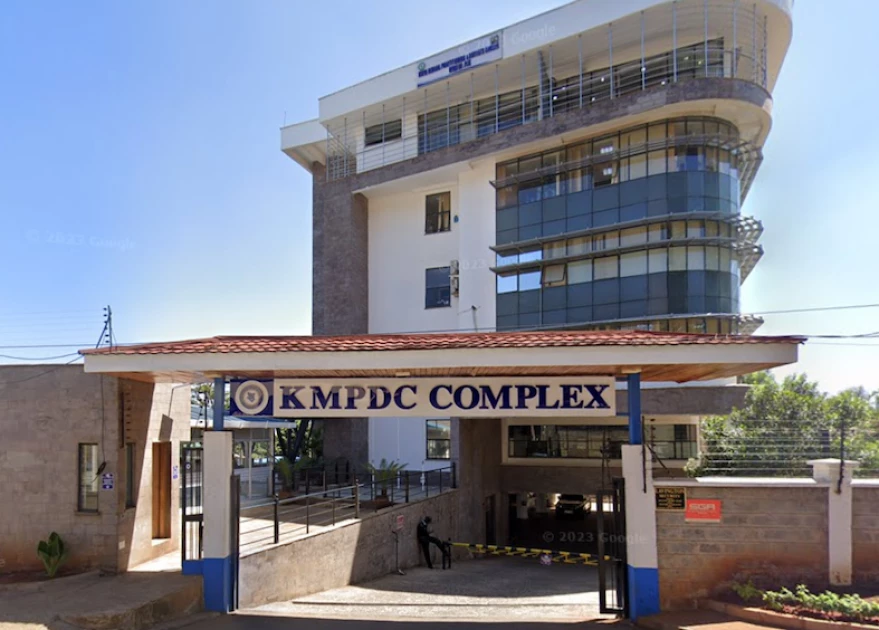
There is a recording. Eleven minutes long. Passed in hushed circles through WhatsApp groups where Kenya’s doctors are the members. In it, an official of the Kenya Medical Practitioners and Dentists Council, the very body charged with protecting Kenyans from incompetent and dangerous doctors, can be heard negotiating the price of impunity.
The recording has been in existence for close to three years. It was shared with the KMPDC’s own leadership. The police were never called. No charges were filed. The man on the tape kept his job.
That single audio clip has now detonated a scandal that is threatening to bring down the entire KMPDC board, trigger a nationwide doctors’ strike, and expose a regulatory body that critics say has long since stopped regulating anything except the flow of bribes.
“The KMPDC has ceased to be a regulatory body and has become a criminal enterprise.” — KMPDU Secretary-General Dr Davji Atellah
In the recording, a KMPDC official is heard demanding Sh500,000 in exchange for a drastically reduced punishment against a doctor who had already been found guilty of negligence. The Disciplinary and Ethics Committee had recommended a one-year suspension and a Sh1 million fine. After the conversation on tape, the suspension vanished from the judgment entirely. The doctor paid half the fine. The official, according to sources familiar with the matter, pocketed the difference.
The official reportedly told the doctor that he had authored the judgment himself, and that the payment had to be settled by the following morning or the harsher ruling would stand. The two men shook hands and went their separate ways.
The recording was handed to KMPDC’s top brass. They did not report it to any investigative agency. KMPDC Chief Executive Officer Dr David Kariuki confirmed in an interview with Nation that the council does not itself investigate its board members, pointing instead to the appointing authority: the Cabinet Secretary for Health.
Asked whether Health CS Aden Duale had been informed about either the recording or the wider pattern of bribery allegations, Dr Kariuki had not responded to queries by press time.
A Marketplace in Plain Sight
Nation Media Group’s three-week investigation, which Kenya Insights has independently reviewed, surfaced a pattern of systematic extortion that goes far beyond a single audio recording.
Multiple doctors interviewed described a disciplinary process that had been transformed from a judicial mechanism into something closer to a street auction.
One doctor, whose name has been withheld for his safety and referred to here as Dr Alex, described the moment corruption became personal. After appearing before the committee to answer a complaint, colleagues on the panel informally told him what his punishment would be. He left the hearing feeling that while the process was uncomfortable, the outcome was fair.
Then the calls started. A year after his hearing concluded, someone purportedly acting on behalf of the Council rang him with what amounted to a threat.
A far more severe verdict was in the pipeline, the caller said. But for a fee of over Sh1 million, to be divided among committee members, the original milder ruling could be restored.
“They gave me a completely different version, a much more severe punishment,” Dr Alex recounted. “I called my friend from the committee who had spoken to me earlier and asked what was happening. He told me the original verdict had not changed.”
The racket was elegant in its construction. Without an insider, a doctor facing discipline had no way of knowing what the real verdict was. The threat of a harsher judgment, which may or may not even exist, was the lever. Fear and uncertainty were the mechanisms. Cash was the resolution.
Dr Alex reported the attempted extortion to the KMPDC board. Nothing was done. He eventually received the original, lesser verdict without paying a cent. But his silence was not guaranteed, and the system that failed him continues to operate.
“Council members solicit bribes from doctors facing disciplinary action, with the severity of punishment depending not on the offence but on the ability to pay.” — KMPDU
A second doctor, referred to as Dr Bernard, had a grimmer experience. When his case was resolved, the committee levied an official fine of Sh500,000 payable to the KMPDC. He paid it. Then individual board members came to him separately, demanding additional money to ensure the verdict was “taken care of.” He paid that too.
“Later, I realised they did not help me at all,” Dr Bernard said. “I paid the Sh500,000 official fine and the bribes. This is what normally happens. I have friends in this space who have been scammed and blackmailed by the Council to give bribes in exchange for favourable verdicts.”
The Widower Who Was Told to Stay Silent
While doctors describe a system that extorts them, patients describe something arguably worse: a system that ignores them entirely.
Brian Odhiambo’s voice breaks when he recalls the night of October 31, 2023. His wife Wendy Amondi arrived at Juja Road Maternity Hospital eight centimetres dilated. She had a normal pregnancy. There was every reason to expect that by morning, she and Brian would be parents.
What followed was, by Mr Odhiambo’s account, a cascading series of medical failures and institutional concealment. Labour was induced. The baby came out shoulder-first, rupturing Wendy’s cervix. She was rushed to theatre. Her uterus ruptured and was removed. She kept bleeding. Her blood pressure collapsed. A doctor summoned Mr Odhiambo to his office.
“He looked down, flipped through the documents, and said: We tried everything we could, but she is gone.”
The hospital’s paperwork showed Wendy died at 11:45pm. Mr Odhiambo was not told until 1pm the following day, nearly fourteen hours later. His bill of Sh150,000 was written off. The hospital offered to pay for the burial.
“They really wanted me out of that hospital. I could read the guilt on their faces,” he said.
Days after Wendy was buried, the attending doctor called Mr Odhiambo and advised him to settle the matter quietly. The hospital offered Sh280,000 through a non-disclosure agreement. Grieving, broke, and now a single father, Mr Odhiambo signed it. He was not given a copy.
He later filed a complaint with the KMPDC. More than two years on, the case remains unresolved. When he followed up, officials told him the case was under review. Some, he says, suggested he accept the earlier payout and move on because the case “would drag on.”
“I felt cheated twice,” Mr Odhiambo said. “First, I lost my rib, my partner, my love. Then the system that was supposed to give me answers betrayed me.”
Courts Had to Force the Council’s Hand
Mr Odhiambo’s experience is not exceptional. In at least two other documented cases, families had to drag the KMPDC to the High Court simply to obtain a judgment in proceedings that had already been heard and argued.
Irene Muthoni Wanjau filed a complaint against Dr Bernard Ndung’u of Nairobi South Hospital on January 28, 2021. She alleged negligence during a surgery that claimed her mother’s life. The matter was heard in November 2021. Both sides filed their written submissions by December. The law requires the KMPDC to deliver judgment within 60 days of the conclusion of hearing.
Two years later, there was no verdict. The KMPDC repeatedly promised delivery in the coming month. In March 2024, it promised again. Ms Wanjau went to the High Court in August 2025 to compel a ruling. The council did not respond to the court case but called her in November 2025 promising yet again to deliver by month end. It did not.
On December 15, 2025, the High Court ordered the KMPDC to deliver the judgment within 14 days. It was eventually issued on January 6, 2026, more than four years after the hearing concluded.
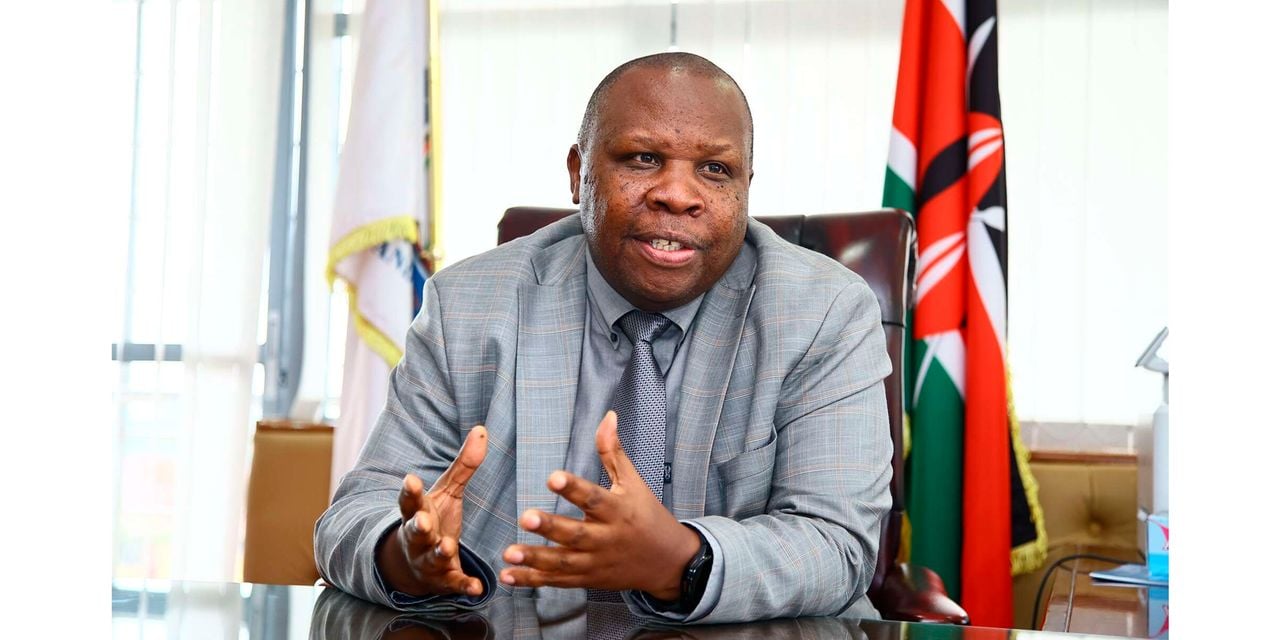
Kenya Medical Practitioners and Dentists Council (KMPDC) Chief Executive Officer, Dr David Kariuki
Dr Kariuki maintained in his interview that the delays were caused by “exogenous challenges” and were not the result of deliberate disregard of court orders. He cited case backlog and the need for “thorough, well-reasoned” decisions. He did not address why no judgment was delivered in the years before the court became involved.
Fake Doctors, Real Victims: The Enforcement Gap
The corruption allegations at the KMPDC’s disciplinary arm arrive against the backdrop of a wider failure of medical regulation in Kenya. In January 2026, the KMPDC was forced to shut down four illegal clinics in Nairobi’s Kawangware neighbourhood after media reports of a patient, Amos Isoka, left critically ill following a botched tooth extraction at a facility that had never been licensed.
The Council’s CEO acknowledged that the clinic had been operating illegally for more than three years without the knowledge of either Nairobi County or the KMPDC itself. The unlicensed practitioner fled before authorities arrived and had not been apprehended at the time of reporting. Isoka subsequently died from complications of the procedure.
KMPDC data shows that of 17,749 registered medical and dental practitioners in Kenya, only 11,751 are active. The Council has received a total of 1,239 complaints since its first case in 1997, of which about 1,060 have been concluded. Complaints have risen sharply in recent years, from 80 in 2021 to 132 in 2024, suggesting growing awareness among patients of their right to complain but raising questions about capacity to respond.
Critics note that a disciplinary body drowning in corruption is ill-placed to serve as a credible backstop against medical malpractice, legal or illegal. If registered doctors can buy their way to lenient sentences, the signal sent to unlicensed practitioners operating in Kawangware and beyond is one of near-total impunity.
Doctors Give Duale 14 Days
The Kenya Medical Practitioners, Pharmacists and Dentists Union has reached the end of its patience. On February 17, 2026, the union wrote to CS Duale demanding the dissolution of the KMPDC board within 14 days, failing which all doctors in Kenya would go on strike.
The letter, signed by KMPDU Secretary-General Dr Davji Atellah, described the KMPDC as a body that has “ceased to be a regulatory authority” and has instead become, in the union’s words, a criminal enterprise. The union accused the Council of extorting doctors, ignoring patients’ complaints, and delivering verdicts calibrated not by the gravity of the offence but by a doctor’s willingness to pay.
“Council members solicit bribes from doctors facing disciplinary action, with the severity of punishment depending not on the offence, but on the ability to pay,” Dr Atellah wrote. “Those who cannot pay face career-ending punishments, regardless of the merits of their case.”
The union has demanded an independent investigation into the bribery claims, a full vetting process for any replacement board, and structural reforms to restore public confidence in medical regulation. The ultimatum sits on CS Duale’s desk. The 14-day clock has begun ticking.
This latest confrontation comes as the KMPDC is already under scrutiny from a separate front. In September 2025, Health CS Duale oversaw the handover of 1,188 files from the KMPDC and the Social Health Authority to the Directorate of Criminal Investigations, in what officials described as a broader crackdown on fraud in the health sector.
Under the Ethics and Anti-Corruption Commission Act, the EACC has the authority to investigate public offices and officers accused of corruption. Whether the audio recording and the wider pattern of bribery allegations will find their way to the commission, or whether they will be managed internally as they have been for nearly three years, remains to be seen.
What the Law Says
Kenya’s Anti-Corruption and Economic Crimes Act 2003 defines bribery, breach of trust, abuse of office, and extortion as criminal offences punishable by imprisonment. The Anti-Bribery Act 2016 requires all public entities to put in place procedures to prevent corruption. The Ethics and Anti-Corruption Commission is empowered to investigate and prosecute.
What the law does not do is enforce itself. That task belongs to institutions, and in this case the institution responsible for self-policing is the one alleged to be selling verdicts by the half million shilling.
For Mr Odhiambo, who has been trying since 2023 to find out what killed his wife, the legal architecture is irrelevant. He has tried every official channel available to him. None has delivered an answer.
“Was I signing documents for a woman who was already dead?” he asked, remembering the morning he sat in a hospital waiting room putting his name to consent forms for a surgery that, the paperwork would later show, had been concluded hours before he was called.
Nobody from the KMPDC has told him.
Have information on KMPDC or medical regulation in Kenya? Contact Kenya Insights investigations desk in confidence.
Kenya Insights allows guest blogging, if you want to be published on Kenya’s most authoritative and accurate blog, have an expose, news TIPS, story angles, human interest stories, drop us an email on [email protected] or via Telegram




Why All Eyes Are On Gambling Authority CEO Peter Karimi As Kenya’s Betting Firms Race To Beat The June Licence Renewal Deadline

The Deal Behind Nairobi Animal Orphanage: Is This Really About Animals Or Billions In Prime Park Land

The Great Mogo Extraction: How a Latvian Fintech Built a Debt Trap for Kenya’s Most Vulnerable Borrowers and Got Away With It

Iran Launches Missiles At Israel For First Time Since Mideast Truce

MozzartBet Faces Licence Cancellation For Operations in Kenya Amid Tax Evasion, Money Laundering Scandals As Rumours Swirl Of Sh100M Bribery To Evade Trap

Rogue Developers, Engineers, Architects and City Hall Officials Charged Over Deadly Manzil Towers Collapse

Kalonzo Unveils His 2027 Presidential Campaign Platform

Artur Margaryan of Kenya’s Infamous Artur Brothers Seeks Prime Minister’s Office in Armenia

Sonko Re-Elected Head of Party

US Denied Visas to Team Officials for World Cup – Iran

Cement, Cash and Courts: How the Hashu Dynasty Crushed the Ramji Brothers for Fourteen Years and Why the Walls Are Now Closing In

Why Ruto’s Favourite Candidate Adan Mohammed Could Be Locked Out of the KRA Top Job

Inside The Urban Planning Cartel That Owns Nairobi

LifeCare on the Brink: SHA Fraud, Stolen Wages, and the Rotten Empire Jayesh Saini Built

Este Medical Kenya Fights American’s Explosive Complaints

Safaricom’s Sh1.4 Billion Reckoning: How Kenya’s Most Profitable Company Stole a Man’s Idea and Got Caught

The Rot Inside Absa: How Bank Insiders Are Looting Nairobi’s Customers

Inside FAFSA Fraud: How Kenyan Cybercriminals Siphoned Millions from America’s Sh12 Billion Student Loan System

THE INSURER THAT TOOK YOUR PREMIUM AND FORGOT YOUR NAME: How ICEA Lion Left a Client Begging for Sh7.8 Million Across Four Months

Denial Under Duress: The Untold Collapse Threatening David Lagat’s DL Group’s Empire
-
 Investigations3 days ago
Cement, Cash and Courts: How the Hashu Dynasty Crushed the Ramji Brothers for Fourteen Years and Why the Walls Are Now Closing In
-
 Investigations2 days ago
Inside The Urban Planning Cartel That Owns Nairobi
-
 Investigations2 weeks ago
LifeCare on the Brink: SHA Fraud, Stolen Wages, and the Rotten Empire Jayesh Saini Built
-
 News2 weeks ago
Este Medical Kenya Fights American’s Explosive Complaints
-
 Americas2 weeks ago
Inside FAFSA Fraud: How Kenyan Cybercriminals Siphoned Millions from America’s Sh12 Billion Student Loan System
-

 Investigations7 days ago
Betika Faces DCI Probe, Directors Arrest and License Revocation Over Massive 29.5 Million Safaricom Customers’ Data Breach
-

 News1 week ago
Eight Students Arrested In Kenya After Suspected Deadly School Arson Attack
-
 Investigations3 days ago
Fresh Move Launched to Remove Kenya Railways MD Mainga From Office After Awarding Sh817 Million Consultancy Contract