
Investigations
How Slapping Wajir Governor Landed Alleged Pedophile Turkish Tycoon in Hot Soup As Epstein List Links Kenya’s Coastal Underage Sex Scandal With Foreigners
In January 2019, the billionaire was arrested at his fortified Kikambala residence by a joint operation involving Interpol, the Directorate of Criminal Investigations, and the General Service Unit. He faced ten counts of child defilement and child prostitution.


When Turkish billionaire Osman Erdinc Elsek allegedly delivered two sharp slaps to the cheeks of Wajir Governor Ahmed Abdullahi on a humid Kilifi evening last month, he likely did not anticipate the cascade of consequences that would follow.
What began as a road rage confrontation along the Mombasa-Malindi highway has metamorphosed into a legal quagmire that has resurrected long-buried allegations of child defilement, exposed disturbing patterns of judicial interference, and thrust Kenya’s coastal region into the global spotlight following explosive revelations in the Jeffrey Epstein files.
The January 12 incident at Kanamai, Kilifi South, was dramatic by any measure. According to police reports and sworn affidavits, Elsek’s Toyota Land Cruiser V8 aggressively forced its way into a convoy of Orange Democratic Movement leaders returning from a Central Committee meeting at Vipingo.
The vehicle struck the governor’s car from behind.
When Governor Abdullahi’s driver alighted to assess the damage, Elsek allegedly drew a Glock pistol loaded with 15 rounds of ammunition and slapped the driver. The governor, who serves as chairperson of the Council of Governors, then stepped out himself, only to be punched by the armed foreign national.
Witnesses, including senior Members of Parliament and another governor traveling in the convoy, watched in stunned silence as the 62-year-old Turkish refugee turned investor assaulted one of Kenya’s most senior county officials in broad daylight. The tense standoff lasted several minutes before police intervened.
Within hours, Elsek and his associate Gokmen Sandikci were arrested at Mtwapa. But what followed their detention revealed a story far more sinister than simple road rage.
From Traffic Accident to Terrorism Charges
On January 14, Elsek appeared before Senior Resident Magistrate David Odhiambo at the Mombasa Law Courts, not on assault charges as might be expected, but facing accusations of membership in the Al-Shabaab terrorist group, collecting information for terrorism, possession of articles connected to terrorism, and illegal possession of a firearm.
The prosecution, led by Hassan Sugal of the Anti-Terrorism Police Unit, told the court that Elsek was being investigated for terrorism financing contrary to Section 5 of the Prevention of Terrorism Act, 2012. Investigators claimed they had received credible intelligence linking the businessman to Harakat Al-Shabaab Mujahideen, a proscribed terrorist organization.
According to the charge sheet, Elsek allegedly possessed a Samsung Flip 7 mobile phone containing video recordings collected for use in planning or executing terrorist activities. The device was purportedly discovered on January 14 at 5:23 pm while Elsek was at the ATPU offices in Mombasa, conveniently after his arrest.
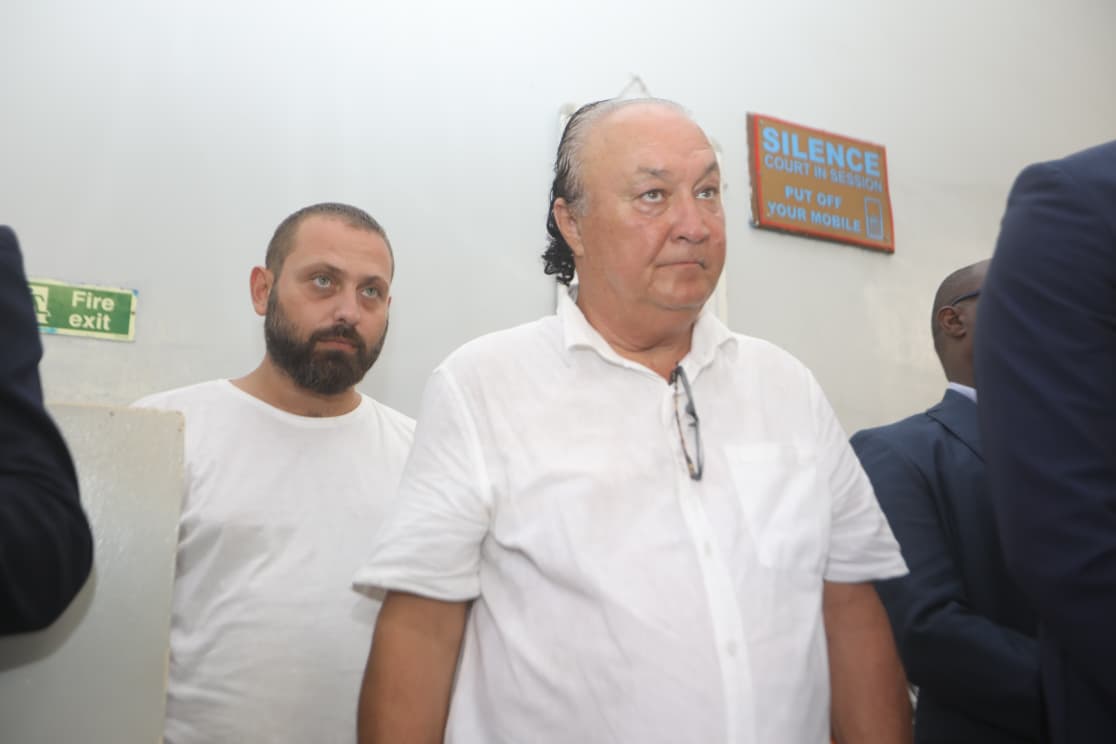
Elsek’s legal team, led by veteran criminal defense attorney Cliff Ombeta and constitutional lawyer John Khaminwa, immediately cried foul. In a sworn affidavit, Elsek insisted the terrorism allegations were manufactured, politically instigated, and aimed at justifying unlawful detention following what was essentially a traffic dispute.
“The matter is not about terrorism but a traffic accident involving two governors and two Members of Parliament, whose names the prosecution does not want to disclose out of embarrassment,” Ombeta argued in court.
The magistrate granted Elsek a bond of one million shillings with similar surety, while Sandikci received a 500,000 shilling bond. For terrorism charges that typically attract stringent bail conditions or outright denial, these were remarkably lenient terms. The pretrial hearing was scheduled for February 19, 2026.
The Ghost of 2019: Child Defilement Charges That Vanished
The current terrorism investigation has revived uncomfortable questions about Elsek’s history with Kenya’s criminal justice system.
In January 2019, the billionaire was arrested at his fortified Kikambala residence by a joint operation involving Interpol, the Directorate of Criminal Investigations, and the General Service Unit. He faced ten counts of child defilement and child prostitution.
The allegations were horrifying in their specificity. Between February and October 2018, Elsek allegedly defiled a 15-year-old girl and forced three other minors, aged 14 to 17, to massage his private parts using olive oil at his palatial home.
The charge sheet stated he lured the four minors to his bedroom on numerous occasions, touched their breasts, and used his influence to procure them for indecent acts.
Police affidavits painted a picture of calculated predation.
Investigators said Elsek took advantage of the girls’ poor backgrounds, promising to pay for their education and meet their social needs in exchange for sexual favors. The victims told police that Elsek threatened them with dire consequences, including causing them to disappear without a trace.
These were not idle threats from an ordinary man. Elsek had by then spent more than a decade in Kenya, amassing an estimated six billion shillings in investments through his 18-company empire, the Elsek Group Conglomerate.
His business interests spanned construction, real estate, hospitality, quarrying, transport, and mortgage banking. His crown jewel, Kilifi Pearl Beach Resort, had become a luxury destination for local and international guests.
Then came the first indication of Elsek’s unusual relationship with Kenya’s judicial system. The case, initially filed at Shanzu court, had to be transferred to Malindi after it emerged that the accused was a personal friend of the court and the state prosecutor.
Senior Resident Magistrate David Odhiambo, the same magistrate who would later preside over Elsek’s terrorism case, admitted in court: “The accused is well known to the court and is a friend to a prosecutor.” Elsek was also a member of the Court Users Committee at Shanzu court and had undertaken several construction projects at the station, including the very courthouse where he was being tried.
How does a foreign national, let alone one facing child defilement charges, become so embedded in the judicial system that the case must be transferred to avoid the appearance of bias?
Despite this damning conflict of interest, Elsek was released on a mere 700,000 shillings cash bail. The case eventually transferred to Malindi, where it began to disintegrate.
Key witnesses recanted their statements and turned hostile. Significant gaps emerged in the investigation. Elsek’s lawyers successfully argued that the case had no Occurrence Book number, meaning the alleged offenses were never formally reported at any police station. There was no identifiable complainant.
The High Court in Malindi ordered the case to start afresh, citing procedural irregularities, illegalities, and indications of malice. But the fresh trial was plagued by repeated adjournments. Eventually, the state failed to prove its case, and Elsek walked free.
In a surreal twist, three of the alleged victims later appeared outside the Malindi court demanding to be reunited with Elsek. The girls, aged between 14 and 17, claimed they were being held against their will in a witness protection program and that detectives had not allowed them to give their side of the story.
Four young girls, allegedly defiled and exploited, got no justice. Their alleged abuser returned to his businesses, his resort, his billions. The message was unmistakable: money and connections trump justice in Kenya.
The Pattern of Impunity
The child defilement case was not Elsek’s first brush with Kenyan law.
In 2016, he was charged with defrauding a Somalia-based construction company of 7.6 million shillings and threatening complainants with a firearm when they demanded a refund. That case was withdrawn after the parties allegedly settled.
In another case still pending at Mombasa court, prosecutors charged Elsek and his manager with conspiring to defeat justice by interfering with witnesses in the child defilement case.
The state alleged they dissuaded key witnesses from testifying. Elsek told the court that internal investigations uncovered evidence that police officers coerced minors into signing false statements against him.
A pattern emerges across these cases: serious charges filed, cases transferred or delayed, witnesses turning hostile, procedural irregularities discovered, eventual collapse of prosecution. Throughout it all, Elsek has maintained his innocence, claiming powerful individuals are targeting him because they are unhappy with his investments.
The Epstein Files: Kenya’s Coastal Shame Exposed
The timing of Elsek’s latest arrest could not be more significant. Just weeks before the January 12 road rage incident, the United States Department of Justice released over 3.5 million pages of documents related to convicted sex trafficker Jeffrey Epstein. Among the most disturbing revelations: Kenya’s coastal region, particularly Malindi, has been a hunting ground for international pedophiles.
The files, released under the Epstein Files Transparency Act approved by US lawmakers in 2025, explicitly name Malindi as a haven for pedophiles. They describe how Epstein and his network used NGOs, safari tours, and modeling agencies as fronts for trafficking children from Ethiopia, South Sudan, Sudan, and Somalia through Mombasa.
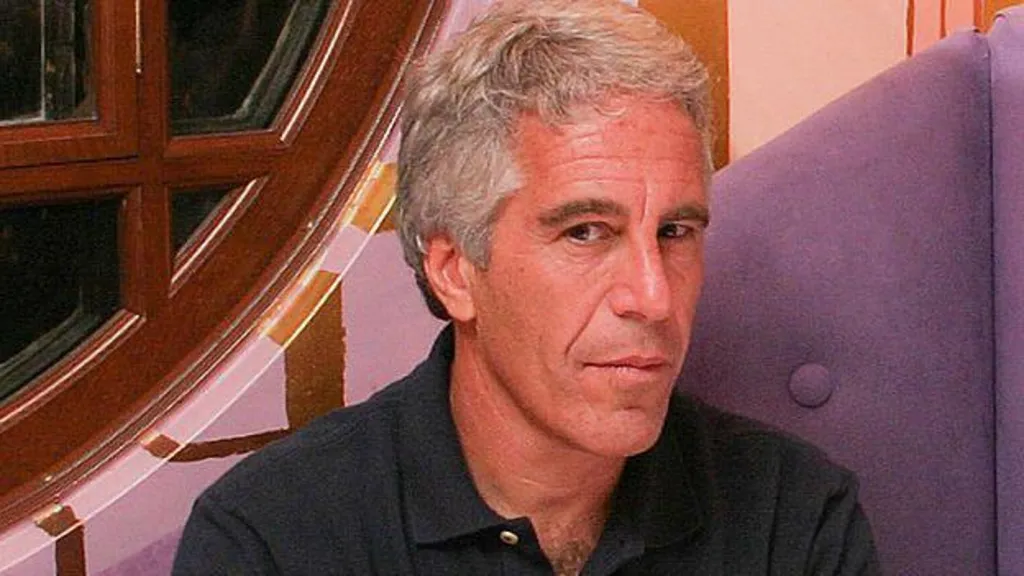
Jeffrey Epstein
In chilling email exchanges from 2009, Epstein joked about bringing back a little baby or two, boys or girls, from Kenya. Another message referred to girls finally turning legal. The correspondence revealed detailed planning for trips involving young women, with Epstein pledging 13,000 dollars per girl for what he termed safari and internship.
Epstein’s publicist Peggy Siegal joked about their 2009 Kenya trip: “If the Maasai warriors don’t eat us, the pirates from Somalia will.” The language is typical of trafficking networks that exploit vulnerable Maasai and Somali children under the guise of humanitarian work.
The files also revealed that Epstein’s estate was opening a film studio in Somaliland, possibly to lure young actors into the millionaire sex ring. He wanted to establish a commercial bank in Somalia. Tanzania’s luxury Mnemba Island, a private archipelago in the Indian Ocean, was visited by members of Epstein’s circle with trafficked children.
Between April and June 2009, emails show Epstein and Siegal discussed transporting two girls to Kenya. On May 28, Epstein pledged 13,000 dollars per girl for a safari and internship. He referenced his knowledge of accommodations, writing: “I am very familiar with the flexibility of some of the accommodation venues you have chosen.”
The planning continued into 2011.
A May email noted that a girl, whose name was redacted by authorities, is finally turning legal. Earlier that month, Siegal told Epstein the girls were enthusiastic: “The girls not only showed up for the conference call but are now totally excited about going. We are all kissing the ground you walk on and the African plains the girls are about to ride on.”
Circulating photographs allegedly depict Epstein at a foreign tycoon’s Malindi coastal property, though the timing remains unclear and no files confirm specific dates or activities. The identity of the tycoon has not been officially disclosed, and individuals pictured deny knowledge of any crimes.
The Epstein files paint a picture of systematic exploitation, with Malindi and Mombasa serving as operational bases for international predators who exploited weak law enforcement, poverty, and corruption to prey on the most vulnerable children.
The Refugee Billionaire
One of the most perplexing aspects of Elsek’s story is his official status in Kenya. Despite controlling an 18-company business empire worth over six billion shillings and living in palatial residences along the coast, Elsek is officially a refugee.
Court documents confirm that Elsek holds a Kenyan refugee alien certificate, a status granted under the 1951 Refugee Convention. His lawyers told the court that Elsek arrived in Kenya in December 2008 as a foreign investor fleeing political persecution in Turkey after falling out with the then Turkish president.
The irony is staggering. A man who owns luxury resorts, construction companies, real estate developments, and quarrying operations across Kenya’s coastal region claims refugee protection meant for people fleeing persecution and lacking the means to sustain themselves.
Dr. John Khaminwa told the court that Elsek had adopted Kenya as his home and faced danger if returned to Turkey. He argued that his client had made significant investments in Kenya and posed no flight risk. The lawyer urged the court to consider the importance of foreign investment to Kenya’s economy and avoid terms that could discourage investors.
But questions remain. How does a refugee accumulate billions in assets? Why would Kenya grant refugee status to someone with the financial means to invest in multiple companies? What danger does Elsek face in Turkey that justifies this status, and has that danger been independently verified?
More importantly, does refugee status protect Elsek from accountability for alleged crimes committed on Kenyan soil?
The Questions That Demand Answers
The convergence of the Epstein files, Elsek’s resurrected legal troubles, and the shocking assault on a sitting governor has thrust Kenya’s coastal region into an uncomfortable spotlight. Several questions demand answers.
First, how did a foreign national charged with child defilement become friends with court officials and state prosecutors? The admission by Magistrate Odhiambo that Elsek was well known to the court and a friend to a prosecutor should have triggered a comprehensive investigation into judicial impropriety. Instead, the case was quietly transferred, and eventually collapsed.
Second, why do witnesses in cases against wealthy foreigners repeatedly turn hostile? In Elsek’s child defilement case, key witnesses recanted their statements. In other cases involving foreign nationals accused of exploiting minors along the coast, similar patterns have emerged. Are witnesses being intimidated, bribed, or both? Who is facilitating these witness turnarounds?
Third, what really happened in the police investigation where evidence mysteriously vanished and Occurrence Book numbers could not be produced? The High Court cited procedural irregularities, illegalities, and indications of malice when ordering the case to start afresh. But no police officers were held accountable for these failures. No investigation was launched into how a case of alleged child defilement could lack basic documentation.
Fourth, how can someone facing terrorism charges receive bail so easily? Elsek was granted one million shillings bond for allegations of Al-Shabaab membership and terrorism financing. Kenyan courts typically impose stringent conditions on terrorism suspects or deny bail altogether. What made Elsek’s case different?
Fifth, are the terrorism charges legitimate, or are they a smokescreen? Many observers suspect the terrorism allegations are a way to justify Elsek’s arrest without addressing the real issue: a foreign billionaire with a history of alleged child abuse had just physically assaulted a governor and brandished a firearm at public officials. Rather than face straightforward assault and weapons charges, he is now embroiled in terrorism allegations that may prove difficult to substantiate.
Most importantly, who is protecting Osman Erdinc Elsek, and why?
The Bigger Picture: Coast as Predator Paradise
Elsek’s story does not exist in isolation. It is part of a much larger, darker narrative about Kenya’s coast as a destination for child sex tourism. The Epstein files merely confirmed what local activists and international watchdogs have been saying for years.
Malindi and Mombasa have become infamous for child prostitution and sex tourism. Poor families, desperate for income, sometimes allow their children to be exploited by wealthy foreigners who arrive under the guise of tourism, business, or humanitarian work. NGOs and modeling agencies, according to the Epstein files, have facilitated these crimes.
The victims are Maasai children, Somali refugees, Ethiopian migrants, and local Kenyan girls from impoverished backgrounds. The perpetrators are international businessmen, tourists, and investors who exploit weak law enforcement, poverty, and corruption.
When billionaire pedophile Jeffrey Epstein could joke about bringing back babies from Kenya, when his network could openly discuss trafficking routes through Mombasa, when his estate could plan film studios in Somaliland to lure child actors, it reveals a level of impunity that should horrify every Kenyan.
The Epstein files reference Malindi as a haven for pedophiles and allege that Epstein had close links with prominent Kenyan figures, including a former president, though no evidence of criminal involvement has been presented. The files describe how children from Ethiopia, South Sudan, Sudan, Somalia, and other parts of Eastern Africa were trafficked through Mombasa.
Several email exchanges with dignitaries from the Cape, referring to wealthy white South Africans, appear in the files. Qatari royals are mentioned 297 times in the Epstein documents. The files reveal that some NGOs and modeling agencies in Africa facilitated, participated in, and assisted Epstein in what can only be described as human trafficking.
Epstein served as a go-to contact for African politicians to negotiate contracts or establish connections. The files mention trips to East African countries, safaris in Kenya, Maasai villages in Tanzania, and even Somalia.
This is the ecosystem within which Elsek has operated for nearly two decades. Whether or not he is directly connected to the networks described in the Epstein files, his alleged pattern of behavior and the repeated failure of Kenya’s justice system to hold him accountable fits squarely within the broader problem the files expose.
A System That Protects Predators
The collapse of Elsek’s child defilement case reveals systemic failures that enable exploitation.
When a magistrate admits the accused is a friend of the court and a prosecutor, when key witnesses turn hostile, when Occurrence Book numbers mysteriously do not exist, when cases collapse due to procedural irregularities without any accountability for the officers responsible, it signals a justice system that can be manipulated by those with money and connections.
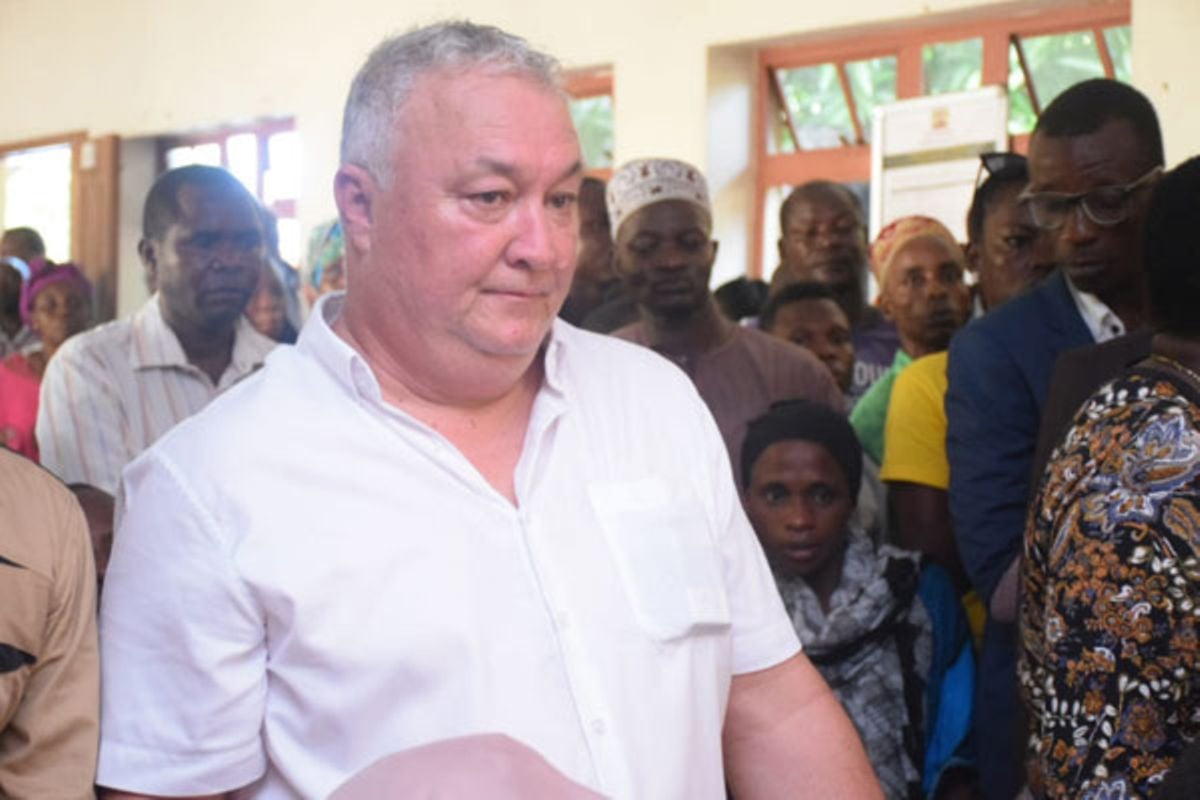
Elsek in court when he was arraigned over child defilement charges.
The victims in Elsek’s case were girls from poor backgrounds. They lacked the resources to hire lawyers, the connections to influence prosecutors, the money to ensure their case received proper attention. Their alleged abuser, by contrast, had all three.
This is not just about one Turkish tycoon. It is about a broken justice system that fails the most vulnerable. It is about how money and connections can buy immunity from even the most heinous allegations. It is about how Kenya’s coast has become a paradise for predators and hell for their victims.
Local activists working to combat child sex tourism along the coast have long complained about the challenges they face. Police corruption, they say, is rampant. Officers are paid to look the other way or to bungle investigations. Witnesses are intimidated or bribed. Prosecutors are influenced. Magistrates have conflicts of interest.
The result is a culture of impunity where foreign nationals with money can operate freely, knowing that even if they are arrested and charged, the case will likely collapse before reaching a verdict.
**The Governor Assault: When Impunity Met Politics**
The January 12 assault on Governor Ahmed Abdullahi represents a rare moment when Elsek’s apparent impunity collided with political power. Abdullahi is not just any county official. He is the governor of Wajir, a two-term leader who previously served as Vice Chairperson of the Council of Governors before being elected Chairperson in October 2024. He holds the highest rank in accounting as a Fellowship Certified Public Accountant and has received the Elder of the Order of the Golden Heart of Kenya for his public service.
When Elsek allegedly punched Governor Abdullahi and slapped his driver in the presence of multiple witnesses, including senior MPs and another governor, he crossed a line that even his money and connections might not be able to erase.
The Council of Governors issued a furious statement demanding to know who authorized a foreigner to carry a gun and terrorize Kenyans. Interior Cabinet Secretary Kithure Kindiki ordered a swift probe. The incident highlighted growing friction on Kenyan roads involving VIP convoys and the public, but the assault on a governor crossed a red line.
Yet even here, the response has been curious. Rather than facing straightforward assault and illegal weapons charges, Elsek was hit with terrorism allegations that his lawyers claim are fabricated. The terrorism investigation has effectively overshadowed the assault charges, shifting focus from a clear-cut case of a foreign national physically attacking a sitting governor to complex allegations about Al-Shabaab membership that will be difficult to prove.
The February 19 Reckoning
As Elsek’s pretrial hearing approaches on February 19, 2026, Kenya faces a test of its commitment to justice. Will the terrorism charges lead to a credible prosecution based on solid evidence, or will they collapse like the child defilement case before them? Will the assault charges against Governor Abdullahi receive proper attention, or will they be buried under the weight of more sensational terrorism allegations?
Beyond Elsek’s individual case, the Epstein files have issued Kenya an uncomfortable challenge. The world now knows that Malindi has been described as a haven for pedophiles, that Mombasa has served as a trafficking route for vulnerable children, that international networks have operated with apparent ease along Kenya’s coast.
Kenya must confront this reality. It must dismantle the systems that enable impunity. Investigators and prosecutors must face consequences for botched cases. Courts must refuse to bend for the wealthy and connected. Witness protection must be strengthened so that intimidation and bribery cannot derail cases. Police corruption must be rooted out.
Until these systemic changes occur, more children will be victimized, more predators will walk free, and more luxury resorts will operate while hiding dark secrets behind their pristine beaches and five-star amenities.
The four young girls allegedly abused by Elsek in 2018 deserve answers. Governor Abdullahi deserves justice. The Kenyan public deserves to know why a man with such serious allegations against him continues to operate freely in their country.
As the Epstein files send shockwaves across the world, exposing how Kenya’s coast has been a hunting ground for international pedophiles, the case of Osman Erdinc Elsek becomes a litmus test for Kenya’s commitment to the rule of law.
The story of Osman Erdinc Elsek is not just about one Turkish tycoon’s alleged crimes. It is about a justice system that can be bought. It is about children whose lives matter less than investor confidence. It is about a coastal region that has become synonymous with exploitation. It is about the uncomfortable truth that in Kenya, as in many places around the world, money talks and justice walks.
The world is watching. Kenya’s children are waiting. Justice, long delayed, demands to be served.
Note: This investigation is based on court documents, police reports, media coverage, and the recently released Epstein files. Osman Erdinc Elsek has denied all allegations against him and maintains that the charges are politically motivated and fabricated. He is presumed innocent until proven guilty in a court of law. The pretrial hearing in his terrorism case is scheduled for February 19, 2026.
Kenya Insights allows guest blogging, if you want to be published on Kenya’s most authoritative and accurate blog, have an expose, news TIPS, story angles, human interest stories, drop us an email on [email protected] or via Telegram







Yet Another Blow for Bia Tosha as Court Rejects Bid to Halt Diageo–Asahi Transaction

US to Slash Number of African Embassies Processing Visas from 50 to 20, Kenya Remains a Key Hub

Trump Picks Veteran Crisis Diplomat Henry Wooster as New U.S. Ambassador to Kenya

Former Catholic Priest Arrested Over Alleged Treasonous Social Media Posts

Hundreds Protest Against Planned US Ebola Quarantine Facility in Kenya

President Ruto Defends Laikipia Ebola Quarantine Centre, Tells Critics to ‘Relax’

“Raila Died Walking, He Didn’t Collapse,” Maurice Ogeta Breaks Silence On His Boss’ Final Moments

Bolt Denies Viral Exit Claims, Says Kenya Operations Remain Fully Active

Secret Trident Meetings, Claims of Millions Exchanged: Fresh Questions Raised Over PCF Boss Mohammed Sahal’s Role in Insurance Battle

The Kamukunji Cash Pit: Ghost School, Phantom Audit Trails and NG-CDF Manager Who Refuses to Leave

Why Ruto’s Favourite Candidate Adan Mohammed Could Be Locked Out of the KRA Top Job

Este Medical Kenya Fights American’s Explosive Complaints

Safaricom’s Sh1.4 Billion Reckoning: How Kenya’s Most Profitable Company Stole a Man’s Idea and Got Caught

LifeCare on the Brink: SHA Fraud, Stolen Wages, and the Rotten Empire Jayesh Saini Built

The Rot Inside Absa: How Bank Insiders Are Looting Nairobi’s Customers

The $24 Million Heist at the End of the World

Denial Under Duress: The Untold Collapse Threatening David Lagat’s DL Group’s Empire

THE INSURER THAT TOOK YOUR PREMIUM AND FORGOT YOUR NAME: How ICEA Lion Left a Client Begging for Sh7.8 Million Across Four Months

Court Confirms Safaricom Customers Data Was Sold To Betting Companies In Seven-Year Cover-Up

Eight Students Arrested In Kenya After Suspected Deadly School Arson Attack
-
 News1 week ago
Este Medical Kenya Fights American’s Explosive Complaints
-
 Investigations1 week ago
LifeCare on the Brink: SHA Fraud, Stolen Wages, and the Rotten Empire Jayesh Saini Built
-
 News4 days ago
Eight Students Arrested In Kenya After Suspected Deadly School Arson Attack
-

 Americas1 week ago
Inside FAFSA Fraud: How Kenyan Cybercriminals Siphoned Millions from America’s Sh12 Billion Student Loan System
-
 Investigations1 week ago
LSK On The Spot For Renewing Rogue Lawyer Dennis Onyango’s Licence Despite Mounting Evidence He Held Foreign Investors’ Millions Hostage
-

 Investigations2 days ago
Betika Faces DCI Probe, Directors Arrest and License Revocation Over Massive 29.5 Million Safaricom Customers’ Data Breach
-
 News3 days ago
How Uhuru’s Deal With Obama In 2015 Paved Way For America’s Ebola Plan In Kenya
-
 Investigations3 days ago
29.5 Million Safaricom Customers’ Data Breach Lands Odibets Boss Andrew Aligula In Police Custody, Firm Now Operating On A Thin Line Of Court Order