
News
Inside NSSF’s Sh30 Billion 35-Floors Twin Towers in Nairobi
The 60-storey tower is set to become the tallest building in Nairobi upon completion.

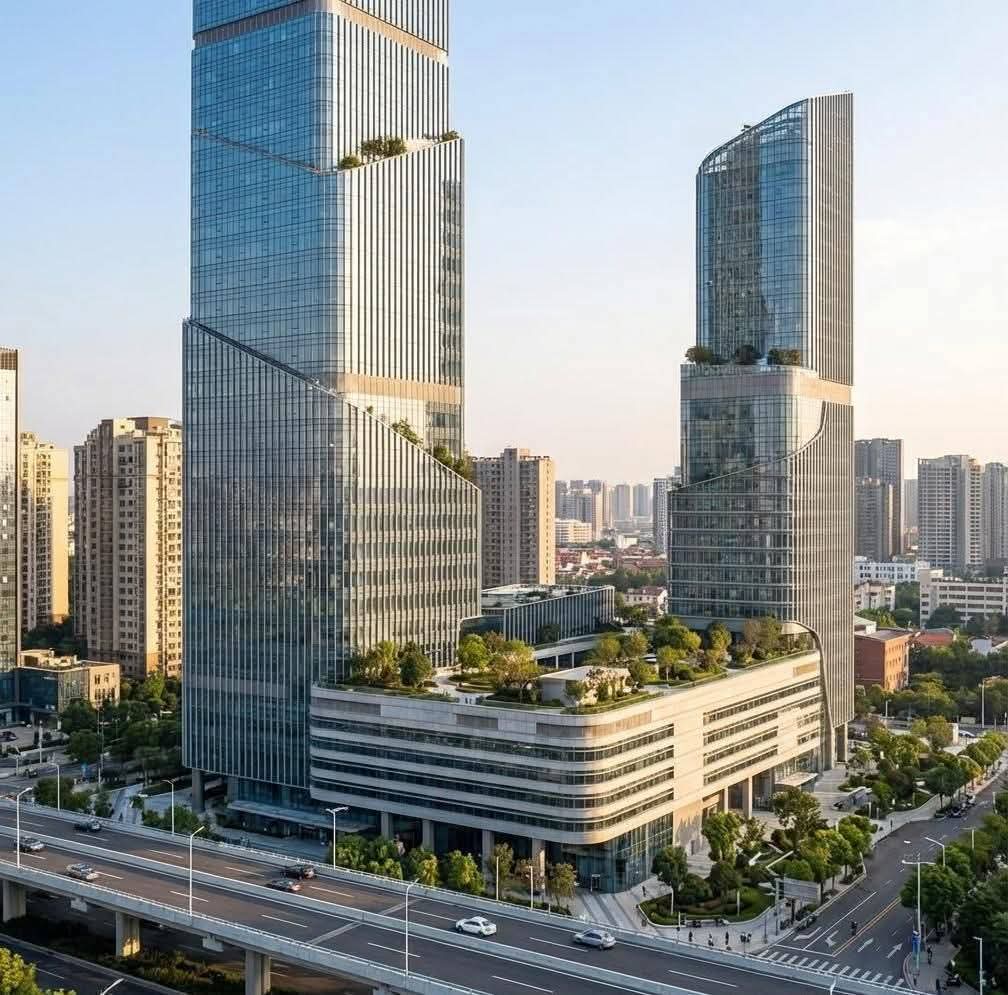
The National Social Security Fund has unveiled an ambitious Sh30 billion plan to construct twin towers in Nairobi’s central business district, marking its return to mega real estate projects after years of diversifying into other asset classes.
The mixed-use development, comprising towers of 35 and 60 floors, will feature luxury apartments, office blocks, a business hotel, conference and retail facilities, and an observation deck offering panoramic views of the capital city. The 60-storey tower is set to become the tallest building in Nairobi upon completion.
According to NSSF Managing Trustee and Chief Executive Officer David Koross, the project will be fully funded by the pension fund over the next four years. The development will rise on the Fund’s 3.85-acre prime land at the junction of Kenyatta Avenue and Uhuru Highway, a parcel valued at Sh4 billion that has remained idle for decades.
“We are also considering the idea of regenerating life in the city centre, and that’s why in that design we are doing apartments, to bring people to live in the CBD. In other places in the world, people are living within city centres,” Koross told a local business publication on Thursday.
The Sh30 billion outlay represents a third of the Sh100 billion that NSSF expects to collect from members this year, riding on significantly higher contributions that came into effect in February. Workers now pay up to Sh6,480 per month, up from Sh200 in 2022, following implementation of the NSSF Act 2013.
Breaking New Ground in CBD Living
The project marks a significant departure from conventional real estate development in Nairobi’s CBD, which has traditionally been dominated by office blocks, retail outlets and government facilities. By incorporating residential apartments into the design, NSSF is adopting a global trend of city centre living that has gained traction in major cities worldwide.
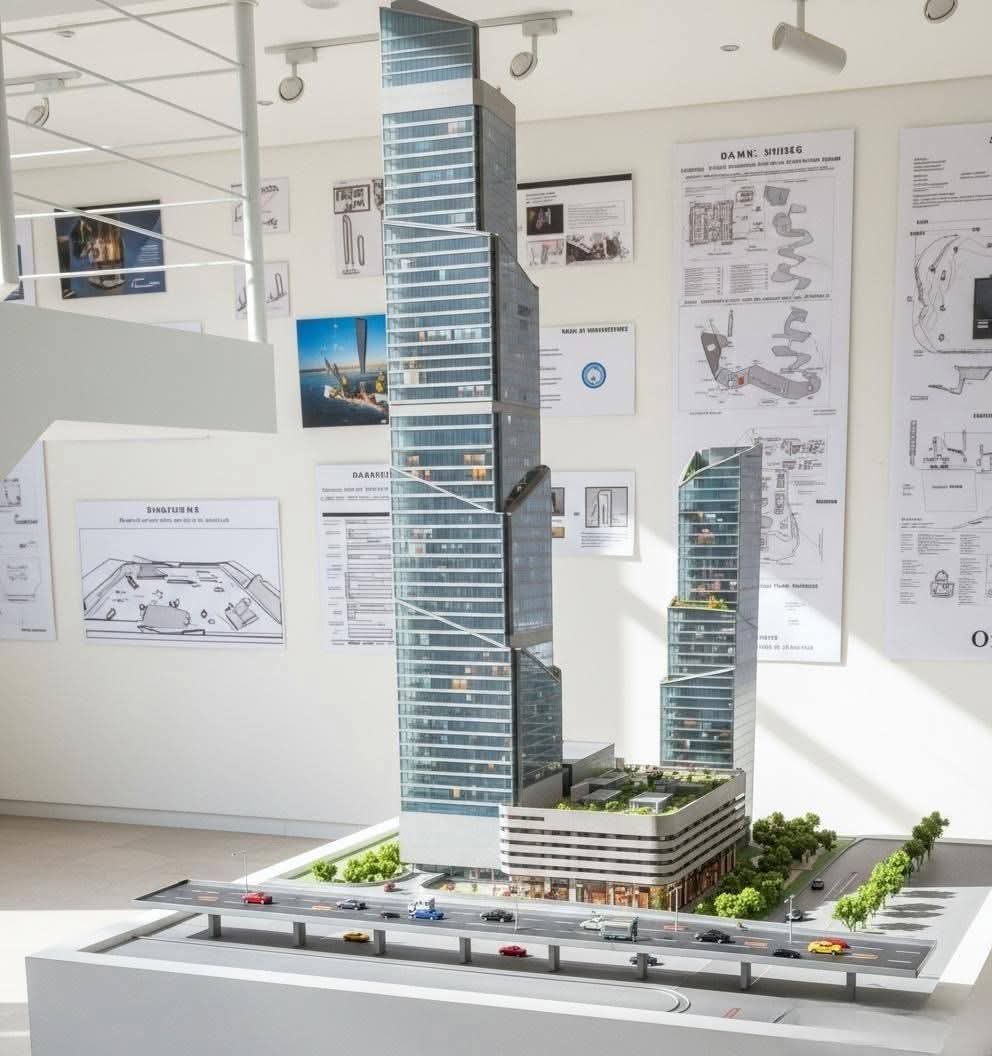
Artistic model of the proposed NSSF Twin Towers.
In metropolises such as Addis Ababa, Luanda, Tokyo, Manila and Shanghai, a sizeable portion of the population lives and works within city centres under mixed-use zoning systems. Urban planners globally have been shifting towards hybrid developments that combine residential, co-working and entertainment facilities, catering to young professionals under what is known as a “15-minute-city concept” that reduces commute times and carbon footprints.
Nairobi’s other commercial hubs such as Westlands and Upper Hill already boast modern apartment complexes, which have helped attract corporates that prioritize convenience for staff when selecting office locations. However, the CBD itself has lacked such residential offerings, partly due to limited availability of sizeable land holdings.
A Troubled History Finally Resolved
The NSSF plot has a colourful and contentious history spanning several decades. In the late 2000s, Indian billionaire businessman Mukesh Ambani had planned to purchase the land for Sh1.3 billion to build a 21-storey hotel. He later pulled out after discovering the land was smaller than indicated on the title deed, eventually constructing Delta House in Westlands instead.
Over the years, the prime parcel attracted numerous investment proposals and became the subject of ownership intrigues during the Jomo Kenyatta and Daniel Arap Moi administrations. Several parties, including Kenya Tourist Development Corporation, hospitality chain Holiday Inn, and Japanese firms Chori and the Ataka Group, were fronted as potential developers.
The much-coveted plot, one of the largest undeveloped parcels in the CBD, has been used as a makeshift car park in recent years. NSSF’s decision to finally develop the land will draw a line under decades of speculation and behind-the-scenes manoeuvring.
Strategic Return to Real Estate
The twin towers project represents a strategic return to large-scale property investments that once dominated NSSF’s asset portfolio. In recent years, the Fund has diversified significantly into other asset classes, opening headroom to make fresh property bets without breaching Retirement Benefits Authority regulations that cap real estate exposure at 30 percent of total assets.
As of June 2025, NSSF held immovable property worth Sh35.45 billion, accounting for just 6.35 percent of its total investment assets of Sh558.05 billion. Five years earlier, the Fund’s property holdings worth Sh43.3 billion represented 18 percent of total investment assets.
Currently, bonds and listed stocks account for the largest shares of NSSF investment assets at 69.83 percent or Sh389.67 billion and 15.26 percent or Sh85.13 billion respectively, with property a distant third. Other significant asset classes include fixed cash deposits at Sh13.35 billion and private equity investments at Sh7.29 billion.
In terms of annual asset value growth, property has lagged behind bonds and equities. Between June 2024 and June 2025, the value of NSSF’s property holdings rose marginally from Sh35.39 billion to Sh35.45 billion, reflecting the impact of idle holdings such as the Kenyatta Avenue land. By contrast, bonds appreciated to Sh389.68 billion from Sh260.98 billion, while equities grew to Sh85.14 billion from Sh61.19 billion.
Regenerating the CBD
The NSSF project comes at a time when Nairobi’s CBD has suffered an exodus of major businesses to other commercial nodes in recent years. The development aims to contribute to ongoing efforts to regenerate and revitalize the city centre.
Environmental Impact Assessment reports submitted for approval indicate that the project will generate significant economic benefits, including direct and indirect job opportunities during both construction and operational phases. NSSF argues that the development will help ease Nairobi’s housing shortage while expanding commercial space in the city centre.
“The proposed development will provide employment opportunities to a significant number of people, thereby reducing unemployment and improving livelihoods,” the Fund states in its EIA report.
Beyond job creation, the project is expected to make optimal use of land that has remained undeveloped for years despite its prime location. The towers will provide parking for more than 1,100 vehicles, easing pressure on limited CBD parking facilities.
A Growing War Chest
NSSF’s ability to fund the entire Sh30 billion project underscores its growing financial muscle. The Fund’s collections have surged following the full implementation of the NSSF Act 2013, which mandated higher contributions from both employers and employees.
The new contribution rates, which took effect in February after four annual reviews, have workers paying up to Sh6,480 per month compared to Sh200 in 2022. This dramatic increase has positioned NSSF to collect approximately Sh100 billion this year, providing a substantial war chest for investments.
The growth of serviced apartments and short-stay platforms such as Airbnb has also supported city centre residential property development globally, targeting tourists, conference attendees and transit passengers. This trend is expected to bolster demand for NSSF’s planned residential units.
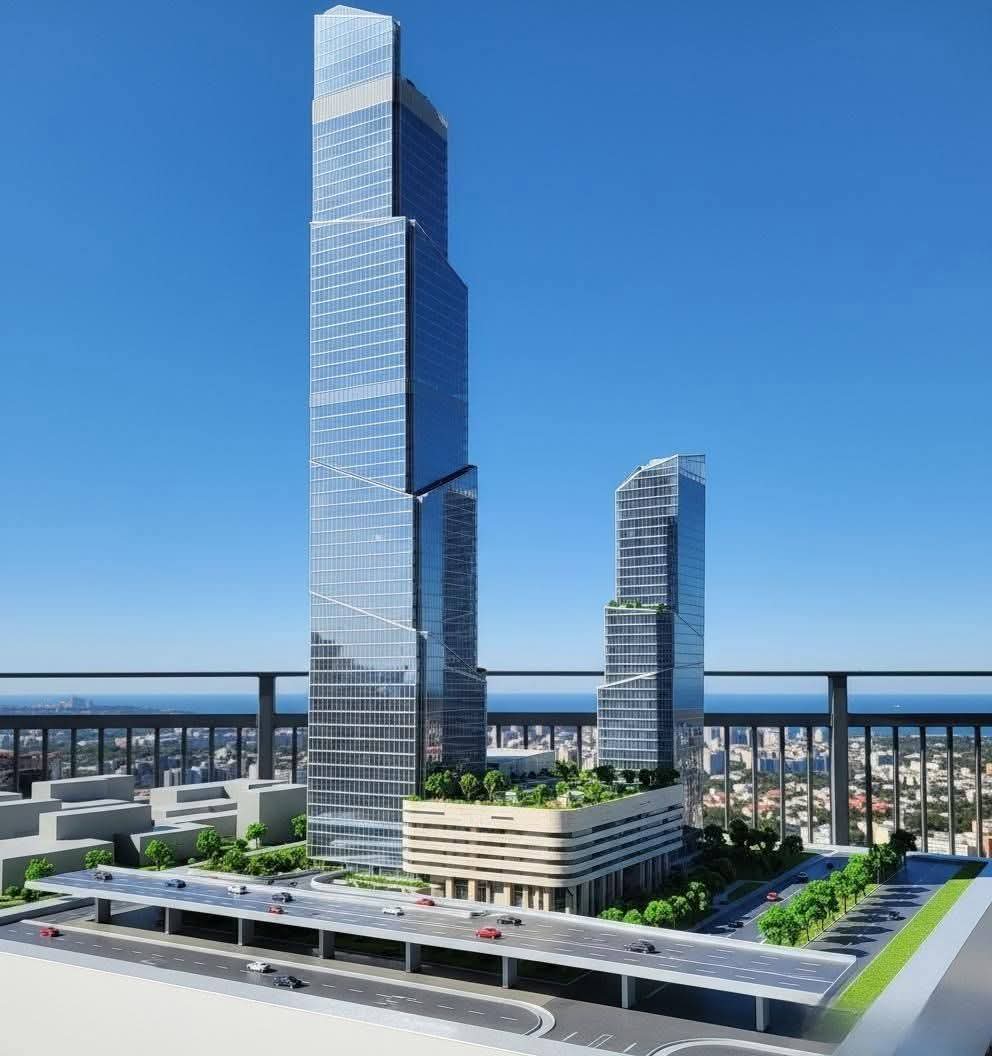
Artistic model of the proposed NSSF Twin Towers.
Environmental and Social Impact
According to the EIA report, NSSF has outlined comprehensive environmental and social safeguards for the project. During construction, traffic disruption in the CBD will be minimized through proper scheduling of material deliveries, deployment of formal flagmen and installation of clear signage.
Noise pollution will be managed with sound barriers, portable shields for equipment, proper maintenance schedules and protective gear for workers. The development will incorporate occupational safety and health measures including mandatory protective gear, restricted site access, proper handling of hazardous materials and regular staff training.
Water management strategies will include motion-sensing taps, urinals and toilets, as well as rainwater harvesting systems for cleaning, toilet flushing and irrigation. The sewerage system will be built to approved standards, with substandard or hazardous materials to be avoided during construction and maintenance.
The use of locally available construction materials such as cement, concrete, ceramic tiles, timber, sand, ballast and electrical cables is expected to stimulate local industries and create additional employment opportunities along the supply chain.
With the project expected to take four years to complete, construction is likely to commence soon pending approval of the EIA and other regulatory requirements. The development will reshape Nairobi’s skyline and could serve as a catalyst for similar mixed-use projects in the CBD.
The initiative also aligns with broader county government efforts to modernize and revitalize the capital city. Governor Johnson Sakaja’s administration has been implementing various CBD improvement projects, including installation of cabro blocks, new lighting along major streets and upgrades to walkways.
Nairobi County is also reviewing its zoning policy, which has not been updated for nearly two decades. The proposed policy could allow buildings in the CBD and other key commercial areas to rise as high as 75 floors, potentially transforming the city’s skyline further.
For NSSF, the twin towers project represents not just a return to its real estate roots, but a bold bet on the future of urban living in Kenya’s capital. By bringing residential life back to the CBD, the Fund is positioning itself at the forefront of a global trend while potentially unlocking significant value from a long-dormant asset.
Kenya Insights allows guest blogging, if you want to be published on Kenya’s most authoritative and accurate blog, have an expose, news TIPS, story angles, human interest stories, drop us an email on [email protected] or via Telegram


Two MPs Defrauded of Sh93.5 Million in Karen Land Scam

Gachagua Rejects Sh50 Million Court Compensation, Calls It An Insult

Ghost Firm, Ghost Justice: Two Judges Fingered In KETRACO’S Sh10 Billion Scandal

SH2 BILLION HEIST EXPOSED: How Tatu City’s Foreign Masters Used Dirty Offshore Traps, London Arbitration & Mauritius Liquidation to Strip Local Investors of Their Stake

Dimba Accused of Extorting Bank Executives in Escalating Feud

Humiliated, Handed Sh1,000 and Sent Away: Furious Residents Return Nathif Jama’s Money, Accuse Governor of Arrogance and Inhumane Treatment of Sick Woman

ICC’s Karim Khan Suspended Over Sexual Misconduct Claims

The Conquest of Tatu City, A New Zealander Story

VANISHING ACT: How China Jiangxi International Pocketed Billions in Kenyan Public Contracts, Then Walked Away

THE GROUP CHAT THAT BROKE THE CARTEL: How Kenya’s Biggest Mattress Firms Used WhatsApp to Fix Your Prices, Then Used It to Destroy Themselves

Cement, Cash and Courts: How the Hashu Dynasty Crushed the Ramji Brothers for Fourteen Years and Why the Walls Are Now Closing In

Inside The Urban Planning Cartel That Owns Nairobi

Why Ruto’s Favourite Candidate Adan Mohammed Could Be Locked Out of the KRA Top Job

LifeCare on the Brink: SHA Fraud, Stolen Wages, and the Rotten Empire Jayesh Saini Built

Este Medical Kenya Fights American’s Explosive Complaints

Betika Faces DCI Probe, Directors Arrest and License Revocation Over Massive 29.5 Million Safaricom Customers’ Data Breach

The Rot Inside Absa: How Bank Insiders Are Looting Nairobi’s Customers

Inside FAFSA Fraud: How Kenyan Cybercriminals Siphoned Millions from America’s Sh12 Billion Student Loan System

Fresh Move Launched to Remove Kenya Railways MD Mainga From Office After Awarding Sh817 Million Consultancy Contract

Court Confirms Safaricom Customers Data Was Sold To Betting Companies In Seven-Year Cover-Up
-
 Investigations5 days ago
Cement, Cash and Courts: How the Hashu Dynasty Crushed the Ramji Brothers for Fourteen Years and Why the Walls Are Now Closing In
-
 Investigations4 days ago
Inside The Urban Planning Cartel That Owns Nairobi
-
 Investigations1 week ago
Betika Faces DCI Probe, Directors Arrest and License Revocation Over Massive 29.5 Million Safaricom Customers’ Data Breach
-
 Investigations5 days ago
Fresh Move Launched to Remove Kenya Railways MD Mainga From Office After Awarding Sh817 Million Consultancy Contract
-

 News2 weeks ago
Eight Students Arrested In Kenya After Suspected Deadly School Arson Attack
-
 News1 week ago
How Uhuru’s Deal With Obama In 2015 Paved Way For America’s Ebola Plan In Kenya
-

 Investigations2 weeks ago
The Invisible Hand: Al Jazeera Further Exposes How Safaricom Became The Regime’s Most Powerful Spy
-

 Business6 days ago
TRUST BETRAYED: How Senior DTB Bank Insiders Allegedly Looted Sh149 Million From a Customer’s Account Over Five Years