
Investigations
The Mystery of Oketch Salah and The Business He Was Doing With Raila
His social media pages, which only became active in late September 2025 as Raila’s health declined, became a carefully curated showcase of access and influence.

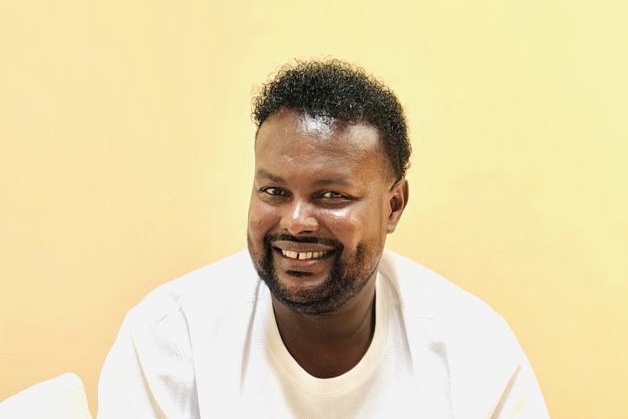
How a Migori Businessman Leveraged Proximity to Kenya’s Political Icon to Build a Gold Mining Empire
Three months after the death of former Prime Minister Raila Odinga, questions continue to swirl around Mohammed Abdi Jama, better known as Oketch Salah, the self-styled adopted son who has emerged from the shadows to position himself at the intersection of Kenya’s most powerful political and business networks.
At the heart of the mystery lies a simple question that has captivated and divided the nation. What business was Salah really conducting with Raila, and how did a relatively unknown figure from Migori transform himself into a man who now arrives at political events by helicopter, dines with presidents, and claims intimate knowledge of Kenya’s most revered politician’s final wishes?
The answer, investigations reveal, lies in the lucrative and politically connected world of gold mining in Nyatike, where fortunes are made not just underground but in the corridors of power.
Salah’s family background offers the first clue to understanding his trajectory. Born to Abdi Salah, a wealthy businessman who owned Migori’s first storey building in the 1970s and ran a successful bakery, young Mohammed grew up in relative privilege. The family, part of the Somali immigrant community that settled in Migori through Mandera, integrated fully into Luo society. Salah became fluent in Dholuo, attended Ombo Primary School and later Kangeso Secondary School, and built the cultural bridges that would later serve his ambitions.
But his path was far from linear. After his father’s death and burial in a Migori cemetery, Salah moved to Mombasa, where he worked as a loader for a transport company in Miritini before being promoted to supervisor. From there, he made his way to Somalia and eventually to the United States under the Temporary Protected Status program, a humanitarian provision that Congress created for nationals from countries facing armed conflict or disasters.
It was during this period abroad that Salah accumulated capital that he would later wire back to Kenya. When President Donald Trump’s administration ended the protected status for Somali immigrants in March this year, Salah had already returned to Kenya with a fortune and a plan.
The gold rush in Nyatike provided the perfect opportunity. The Migori Greenstone Belt, an extension of the gold-rich Tanzanian Craton, has long been one of Kenya’s most productive gold regions. With an estimated production of 34 tonnes per year generating approximately 67 billion shillings, the area attracts investors from around the world. But success in this sector requires more than geological knowledge. It demands political connections and government goodwill.
This is where Raila Odinga entered the picture, and where Salah’s story takes a calculated turn.
Sources familiar with the arrangement say Salah initially befriended former Nyatike MP Onyango Anyanga while the politician was still in Parliament and close to Raila. Through Anyanga, who later fell out with the ODM leader so spectacularly that he vowed to denounce his party membership, Salah gained his crucial introduction to the former Prime Minister.
What followed was a masterclass in leveraging political proximity for business advantage. Salah registered a gold mining company and began telling potential partners and investors across Africa that Raila was not just his mentor but a shareholder in his ventures. His social media pages, which only became active in late September 2025 as Raila’s health declined, became a carefully curated showcase of access and influence.
Photos showed Salah with Raila on flights, enjoying meals, dancing at events, and visiting foreign capitals. Unlike many Muslims, Salah was photographed enjoying hard drinks and shisha with the political elite, a detail that former schoolmates say reflects his pragmatic approach to business and networking. The images served a dual purpose: they cemented his credentials as Raila’s confidant while simultaneously advertising his access to power for business purposes.
The strategy worked spectacularly. Salah secured meetings with African leaders, including Zimbabwe’s President Emmerson Mnangagwa, framing his visits as business missions focused on mining and energy. For a private Kenyan citizen with no formal government position, such access raised obvious questions about the networks and interests at play. Was he genuinely Raila’s adopted son, or was this designation a convenient business card that opened doors across the continent?
Dr. Oburu Oginga, Raila’s elder brother who now leads ODM, has publicly endorsed Salah, calling him “a son of Raila” and highlighting his role during the former Prime Minister’s final days in India. At Salah’s son Abdinoor’s wedding at Serena Hotel on October 25, just ten days after Raila’s death, Oburu told the gathering that Salah “was taking care of Raila until the day he breathed his last.”
But Raila’s own family tells a starkly different story. His daughter Winnie Odinga has been unequivocal in her rejection of Salah’s claims. In a recent television interview, she dismissed him as someone she “would like to believe nobody really knows” and suggested he should be “rushed to Mathare or the DCI” for making false and dangerous statements about her father. Her sister Ruth Odinga, Kisumu Woman Representative and Raila’s sister, was equally devastating in her assessment, admitting she cannot even place who Salah is despite his claims of intimate family ties.
The contradictions extend to Salah’s professional credentials. While he styles himself as “Dr. Oketch Salah” and claimed to be Raila’s personal physician, investigations by multiple media houses have found no trace of his name in the Kenya Medical Practitioners, Dentists and Pharmacists Council registers. The real Raila family doctor was Dr. David Oluoch Olunya, a respected neurosurgeon who attended to the former Prime Minister for over two decades.
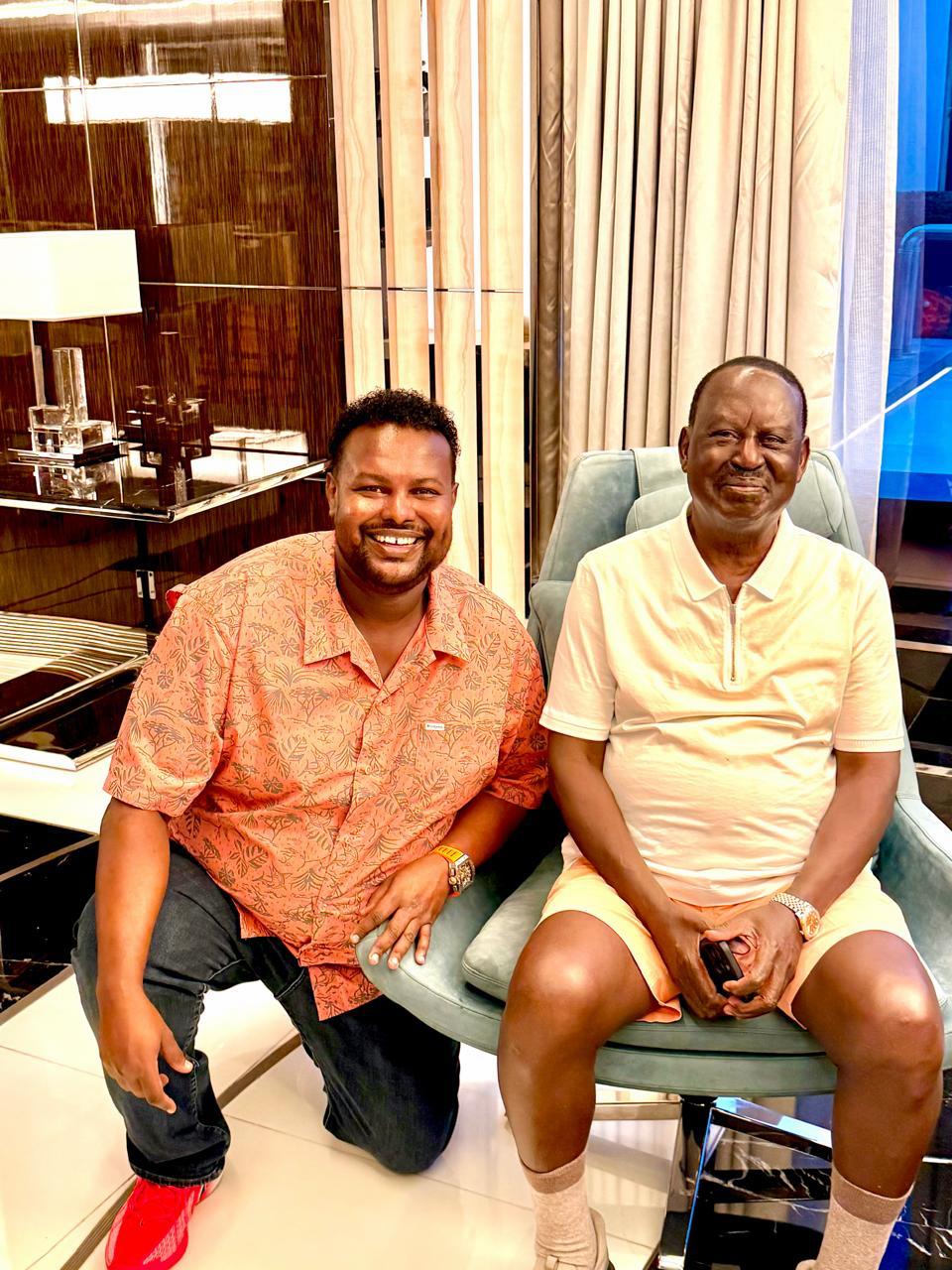
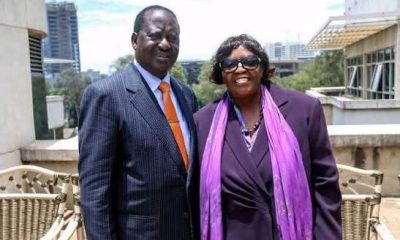
Oketch Salah and Raila Odinga.
Some of Salah’s claims strain credulity entirely. Reports have credited him with performing brain surgeries on hippopotamuses in Muhuru Bay, heart operations on hyenas in Seme, stopping coronavirus spread among animals in the Serengeti and Maasai Mara, and upgrading the Raboral VRG vaccine, all supposedly done “using pure talent, not textbooks.” Medical professionals describe these claims as fantastical.
Yet despite these red flags, Salah has successfully inserted himself into Kenya’s political machinery in ways that suggest either genuine connections or sophisticated manipulation. He attended State House functions alongside President William Ruto and Oburu Oginga during celebrations for broad-based government legislators. He has pledged to financially support ten youths from Jacaranda Bunge la Wananchi with 50,000 shillings each, plus motorcycles for men and hairdressing equipment for women, mirroring Raila’s 2022 campaign promise of a 6,000 shilling monthly stipend.
Most controversially, Salah claimed at an ODM meeting in Bondo that Raila wanted the party to endorse President Ruto in the 2027 presidential race, a statement that has split ODM down the middle and thrust him into the eye of a political storm. Neither Government Spokesperson Isaac Mwaura nor State House Spokesman Hussein Mohamed has commented on who Salah is or whether he holds any official government position.
The silence from State House is particularly telling given Salah’s documented visits and the fact that when Raila died in India, President Ruto stated he had been briefed by both the family and “his friend who was in India.” Multiple sources suggest Salah was providing intelligence from Raila’s inner circle to government operatives, much as critics now accuse Junet Mohamed of having done during the 2022 elections.
Political analyst David Makali draws parallels between Salah’s operations and those of Mohamed Noor, the feared oil tycoon and State House agent during the Moi era who wielded enormous power through his proximity to the presidency. “The pattern is familiar,” Makali says. “Position yourself close to a political figure, claim special knowledge and access, and monetize that proximity. The question is always: who benefits, and what is being traded?”
For Salah, the benefits appear substantial. He now travels by helicopter, maintains multiple business interests including his gold mining operations in Nyatike, and has positioned himself as a kingmaker within ODM factions supporting the broad-based government. His financial backing of pro-government ODM politicians has become an open secret in political circles.
But the arrangement raises troubling questions about the final months of Raila Odinga’s life. Why was Salah, rather than long-time aide Maurice Ogetta, present during critical moments in India? In his own statements, Salah revealed that the security officer present when Raila had a health scare at his Karen home was Francis Ogolla, not Ogetta, contradicting earlier accounts and fueling speculation about who controlled access to the ailing leader.
Activists and Raila supporters have noted Salah’s shifting and contradictory accounts of the former Prime Minister’s final days. Some claim he is traveling across the country distributing money to quell dissent and questions about what really transpired in India. Others point to allegations that Salah was secretly recording Raila using high-tech surveillance equipment, pens, buttons, and other discreet spying gadgets, then forwarding information to unnamed masters.
The broader implications extend beyond one man’s alleged opportunism. Salah’s story illuminates the murky intersection of business and politics in Kenya, where mining licenses, government contracts, and political influence are often traded in ways that benefit a connected few while excluding the communities most affected.
In Nyatike, where artisanal miners dig 400 feet underground in dangerous conditions for a fraction of the profits, the gold sector generates billions while locals struggle. County officials complain that bureaucratic processes and national government involvement mean the county sees little benefit despite hosting such lucrative operations. Artisanal miners capture only 25 percent of the gold value, with 75 percent remaining in waste materials later collected by those with “advanced technology,” a category that likely includes well-connected businessmen like Salah.
The question of what business Salah was really doing with Raila may never be fully answered. The former Prime Minister took many secrets to his grave. But the evidence suggests a transactional relationship in which Salah provided companionship, assistance, and perhaps intelligence during Raila’s declining years, while extracting in return the ultimate business asset: proximity to power.
Whether Salah was genuinely devoted to Raila or skillfully exploiting an aging politician’s need for support may be less important than understanding the system that allowed such arrangements to flourish. In a country where political connections can transform a Migori businessman into a player on the national stage, the Oketch Salah phenomenon is less an aberration than a symptom.
Attempts to reach Salah for comment were unsuccessful. His social media pages continue to post photos from political events and business meetings, each image a testament to a proximity he claims as family ties but which others see as something far more calculated.
As Kenya heads toward the 2027 elections with ODM fractured and Raila’s legacy contested, the shadow of Oketch Salah looms large. His gold mining ventures in Nyatike continue. His political influence appears to be growing. And the questions about what really happened during Raila Odinga’s final days, and who benefited most from that access, remain largely unanswered.
In the end, the mystery of Oketch Salah and the business he was doing with Raila reveals an uncomfortable truth about Kenyan politics. Power, proximity, and profit form a triangle in which the lines between family, friendship, and transaction blur beyond recognition. And in that ambiguity, fortunes are made while the public is left to wonder who was serving whom, and at what cost.
Kenya Insights allows guest blogging, if you want to be published on Kenya’s most authoritative and accurate blog, have an expose, news TIPS, story angles, human interest stories, drop us an email on [email protected] or via Telegram








Couple Charged With Sh13.8 Million Forex Fraud

UK Wins Court Case Over Collapsed Rwanda Asylum Deal

Gachagua Attacks Ruto for Holding Madaraka Day Celebrations at Newly Built Wajir Stadium, Says Residents Have More Pressing Unmet Needs

Bought Popularity? Malindi NG-CDF Officer Nelson Alfayo Faces Fresh Claims of Poll Manipulation Amid Mounting Corruption Allegations

KDF Cordon Off Laikipia Air Base As Hundreds Protest Planned Ebola Facility

Chilling CCTV Footage Shows Moments Suspects Setting Fire In Dormitory Killing 16 Fellow Students

Betika Faces DCI Probe, Directors Arrest and License Revocation Over Massive 29.5 Million Safaricom Customers’ Data Breach

Kanye West Performs To 118,000 In Turkey Despite Bans Elsewhere

How Uhuru’s Deal With Obama In 2015 Paved Way For America’s Ebola Plan In Kenya

Phone Thief’s Fatal Mistake: Online Sale Ad Leads Police to Major Nairobi Bust, 22 Stolen Handsets Recovered

Why Ruto’s Favourite Candidate Adan Mohammed Could Be Locked Out of the KRA Top Job

Este Medical Kenya Fights American’s Explosive Complaints

Safaricom’s Sh1.4 Billion Reckoning: How Kenya’s Most Profitable Company Stole a Man’s Idea and Got Caught

LifeCare on the Brink: SHA Fraud, Stolen Wages, and the Rotten Empire Jayesh Saini Built

The Rot Inside Absa: How Bank Insiders Are Looting Nairobi’s Customers

The $24 Million Heist at the End of the World

Denial Under Duress: The Untold Collapse Threatening David Lagat’s DL Group’s Empire

THE INSURER THAT TOOK YOUR PREMIUM AND FORGOT YOUR NAME: How ICEA Lion Left a Client Begging for Sh7.8 Million Across Four Months

Court Confirms Safaricom Customers Data Was Sold To Betting Companies In Seven-Year Cover-Up

Eight Students Arrested In Kenya After Suspected Deadly School Arson Attack
-
 News1 week ago
Este Medical Kenya Fights American’s Explosive Complaints
-
 Investigations7 days ago
LifeCare on the Brink: SHA Fraud, Stolen Wages, and the Rotten Empire Jayesh Saini Built
-
 News4 days ago
Eight Students Arrested In Kenya After Suspected Deadly School Arson Attack
-
 Americas1 week ago
Inside FAFSA Fraud: How Kenyan Cybercriminals Siphoned Millions from America’s Sh12 Billion Student Loan System
-
 Business2 weeks ago
Blocked: How Mombasa Tycoon Ashok Doshi Has Stopped Imperial Bank Depositors From Getting Their Money
-
 Investigations1 week ago
LSK On The Spot For Renewing Rogue Lawyer Dennis Onyango’s Licence Despite Mounting Evidence He Held Foreign Investors’ Millions Hostage
-
 Investigations1 week ago
Your Medical Records Were Wide Open: How Three Digital Lenders Hacked the Heart of Kenya’s Health System and the DHA Chief Who Looked Away
-

 Investigations6 days ago
The Invisible Hand: Al Jazeera Further Exposes How Safaricom Became The Regime’s Most Powerful Spy