
Investigations
From Daily Bribes to Billions Frozen: The Jambopay Empire Crumbles as CEO Danson Muchemi’s Scandal-Plagued Past Catches Up
Explosive testimony at the Milimani Anti-Corruption Court in July revealed that Muchemi allegedly offered former Nairobi Governor Mike Sonko between Sh4 million and Sh5 million daily to secure a lucrative revenue collection contract.

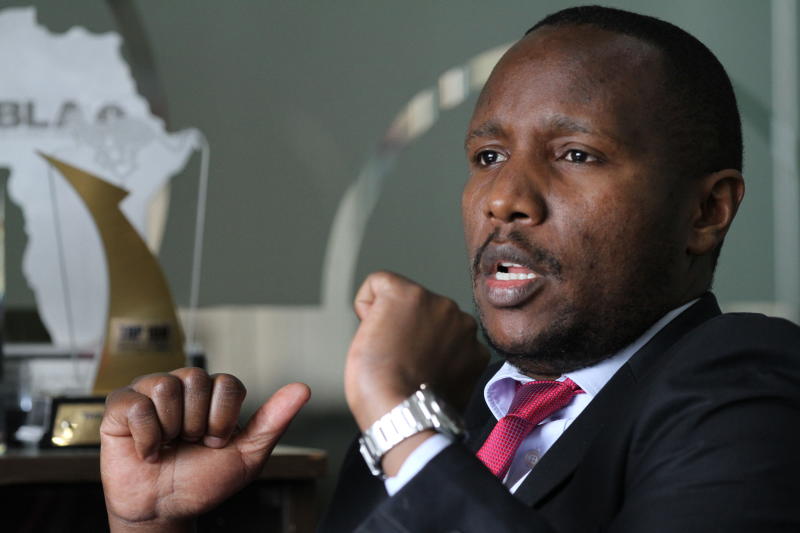
The empire built by Jambopay CEO Danson Muchemi is collapsing under the weight of frozen funds and corruption allegations that stretch back years.
As 680,000 Payless Africa users find themselves unable to access Sh2.1 billion in savings, explosive court testimony and regulatory failures are exposing a payment processor whose lucrative county contracts may have been built on bribes rather than business acumen.
The crisis erupted in September when Jambopay, the payment gateway handling backend operations for Payless Africa, abruptly stopped processing withdrawals.
What began as scattered delays has spiraled into a three-month freeze, with the Jambopay portal now completely offline.
The site displays expired security certificates that mysteriously redirect to an obscure ePayments platform registered under Kajiado County Government, a discovery that has sent cybersecurity experts and anxious customers into overdrive.
“When your payment gateway’s security certificate points to a county government server, that’s not maintenance, that’s a red flag,” said Victor Omondi, a Nairobi-based fintech expert who examined the compromised domain.
While Payless Africa continues to accept deposits and display account balances, customers like Mary Wambui, who runs an online clothing store in Eastlands, can only watch helplessly as Sh680,000 from September sales sits frozen.
“Every week they promise disbursement next Monday, then silence. Now I can’t even access the website properly,” she said, her voice breaking with frustration.
Joseph Kamau, a Westlands electronics dealer owed Sh1.2 million since early September, faces potential business collapse.
Three months without that money means we can’t pay suppliers or staff. This is not just inconvenience, it’s business collapse,” he told reporters.
But the Payless debacle is merely the latest chapter in a story of alleged corruption that reaches the highest levels of county government.
Explosive testimony at the Milimani Anti-Corruption Court in July revealed that Muchemi allegedly offered former Nairobi Governor Mike Sonko between Sh4 million and Sh5 million daily to secure a lucrative revenue collection contract.
Chief Inspector Kiptoo Kisorio testified about a dramatic 2019 sting operation in which police equipped Sonko with a Sony audio recorder to capture a meeting at the governor’s Kanamai home in Kilifi County.
The resulting 57-minute recording allegedly captures Muchemi promising the daily millions while boasting that former Governor Evans Kidero had made a staggering Sh7 billion from a similar revenue collection deal during his tenure.
The revelation suggests a pattern of massive corruption stretching across multiple gubernatorial administrations, with county revenue collection contracts treated as personal ATMs by those with the right connections.
Jambopay, operating under Muchemi’s Webtribe Ltd and launched in 2012, once processed billions annually through partnerships with over 40 banks, handling payments for county governments, schools, parking systems and thousands of small businesses.
Under a 2014 contract with Nairobi County during Kidero’s administration, collections reportedly ballooned to Sh107 million daily by 2017.
However, the company has been struggling since the Central Bank of Kenya tightened Payment Service Provider licensing rules in 2023, introducing stringent capital and reporting requirements that left several smaller players unable to comply.
Industry insiders say Jambopay has been among those caught in the regulatory squeeze.
The web of county contracts now appears increasingly fragile. Trans Nzoia County paid Sh79.11 million for setup and handed over 5.2 percent commissions on every shilling collected. Bomet County signed a fresh digital deployment agreement in August 2024. Embu has been entangled in procurement probes over allegedly fraudulent rollouts. And the mysterious redirect to a Kajiado-registered entity has ignited speculation about undisclosed fund routing through county channels.
“Is JamboPay owned by Kajiado county and why is a county government in the business of providing payment solutions?” users demanded on social media, as questions multiply faster than answers.
Auditor-General reports covering 2014 to 2019 paint Jambopay as a “misappropriation machine,” citing breaches of Public Finance Management Act provisions on delays and alleged collusion with banks.
The Public Accounts Committee pushed for termination in 2018, citing capacity shortfalls.
Yet even as investigations by the Ethics and Anti-Corruption Commission and Directorate of Criminal Investigations sputtered, Muchemi appeared to dodge serious consequences.
Charges against him in the Sonko case were dropped in 2021, prompting fury from the Director of Public Prosecutions.
Sonko, facing 11 graft-related counts involving Sh20 million in alleged misappropriation, insists his administration terminated what he called Jambopay’s “shady” setup, only to be rewarded with criminal charges while Muchemi walked free.
The Nairobi scandal’s blast radius extends far beyond the capital. Counties that banked on Jambopay now face potential audits and terminations.
Trans Nzoia and Bomet could see investigations mirroring Nairobi’s damning reports, which flagged 4.5 percent fees as unchecked revenue black holes.
Nairobi’s own collections plummeted from Sh1.875 billion quarterly to Sh1.539 billion after severing ties with Jambopay, a Sh300 million monthly drop that demonstrates the chaos of hasty divorces from compromised payment processors.
“Nairobi’s scandal raises procurement red flags everywhere,” said a Trans Nzoia government insider. “Commissions that fattened vendors while collections lagged? Expect terminations and clawbacks.”
Consumer protection groups have demanded immediate regulatory intervention.
“When a PSP goes dark and customer money is unaccounted for, CBK must freeze all related accounts and appoint an administrator,” said Stephen Mutoro, secretary-general of the Consumers Federation of Kenya. “Kenyans cannot keep losing millions every time a payment company decides to play hide-and-seek.”
Adding to the alarm, merchant investigations have uncovered claims that recent bank transfers intended for JamboPay accounts allegedly landed in personal accounts linked to former company directors, though these allegations remain unverified.
The Central Bank of Kenya, which oversees payment service providers, has maintained a troubling silence. The regulator has yet to issue a public statement on the matter, deepening concerns that customers may face lengthy legal battles to recover their money, if they can recover it at all.
Attempts to reach JamboPay have proven futile. Listed phone lines return busy tones or automated messages.
The company’s official Twitter account last posted in July 2025, and its Facebook page has been deleted entirely.
The only public statement came via a cached version of their website claiming “system upgrades and migration to a more secure platform” without providing any timeline.
Payless Africa issued a statement on social media insisting that all customer funds are “100 percent safe” and blaming JamboPay for refusing to release escrowed money during a handover to a new payment service provider.
“You will access every coin as soon as our previous PSP releases the funds,” the company promised, though no specific timeline was provided and previous assurances of “imminent restoration” have repeatedly failed to materialize.
The crisis has exposed dangerous vulnerabilities in Kenya’s rapidly growing fintech sector, where aggressive marketing and promises of high returns have often outpaced robust consumer protections.
Payless had positioned itself as a modern alternative to traditional savings methods, with viral campaigns featuring popular influencers promising seamless transactions and attractive interest rates.
By hitching its operations to JamboPay, a company already struggling with regulatory compliance and now revealed to have a history of alleged corruption, Payless gambled with customer funds on unstable infrastructure.
Industry analysts warn this may not be an isolated incident, with other fintech startups potentially facing similar risks if they rely on undercapitalized or non-compliant payment processors.
Merchants who depended on JamboPay are now scrambling for alternatives, switching to competitors like Pesapal, iPay, or direct M-Pesa Paybill numbers.
WhatsApp groups are organizing protests, and hashtags demanding account access are trending across social media platforms as frustration boils over into anger.
For now, thousands of Kenyan entrepreneurs and savers remain locked out of their own money, staring at healthy account balances they cannot touch while a once-trusted payment brand appears to have vanished.
The questions multiply: Where have billions in customer funds gone? How did a company with such a scandal-plagued history continue to win lucrative government contracts? And why has the Central Bank remained silent as Kenya’s digital payments sector threatens to collapse under the weight of its own corruption?
As the crisis enters its third month with no resolution in sight, one thing is clear: the house of cards built by Danson Muchemi is finally falling, and thousands of ordinary Kenyans are paying the price.
Kenya Insights allows guest blogging, if you want to be published on Kenya’s most authoritative and accurate blog, have an expose, news TIPS, story angles, human interest stories, drop us an email on [email protected] or via Telegram





From Daily Bribes to Billions Frozen: The Jambopay Empire Crumbles as CEO Danson Muchemi’s Scandal-Plagued Past Catches Up

Driver Claims Jirongo Swerved Into His Lane to Avoid Traffic, Causing Head-On Collision

Cyrus Jirongo Dies

Oketch Salah, Raila’s Confidant Now Swimming in Power Doesn’t Go Without Controversies

Shanta Gold’s Sh680 Billion Gold Discovery in Kakamega Becomes A Nightmare For Community With Deaths, Investors Scare

Official: Guinness World Records Certifies Truphena Muthoni’s 48-Hour Tree-Hugging Marathon

Why Truphena Muthoni Can’t Celebrate Her 72-Hours Tree Hugging World Record

Ghanaian Influencer Charged Over $8m Scam Targeting Elderly Americans

Talanta Stadium To Be Renamed Raila Odinga International Stadium, Ruto Announces

Kenya Police Officers Returning From Haiti Recount Horror Experiences of Fighting The Deadly Criminal Gangs

Kakuzi Investors Face Massive Loss as Land Commission Drops Bombshell Order to Surrender Quarter of Productive Estate

Kenyan Driver Hospitalized After Dubai Assault for Rejecting Gay Advances, Passport Seized as Authorities Remain Silent

Money Bior, Lawyer Stephen Ndeda Among 18 Accused Of Running An International Fraud Ring Involved With Scamming American Investor Sh500 Million

Nestlé Accused of Risking Babies’ Health in Africa with ‘Toxic’ Cerelac Product Sold Highest in Kenya

Construction Of Stalled Yaya Center Block Resumes After More Than 3 Decades and The Concrete Story Behind It

INSIDER LEAK REVEALS ROT AT KWS TOP EXECUTIVES

How Somali Money From Minnesota Fraud Ended In Funding Nairobi Real Estate Boom, Al Shabaab Attracting Trump’s Wrath

BANKS BETRAYAL: How Equity Bank Allegedly Helped Thieves Loot Sh10 Million From Family’s Savings in Lightning Fast Court Scam

CNN Reveals Massive Killings, Secret Graves In Tanzania and Coverup By the Govt

How Land Grabbing Cartels Have Captured Ardhi House
-
 Investigations2 weeks ago
Money Bior, Lawyer Stephen Ndeda Among 18 Accused Of Running An International Fraud Ring Involved With Scamming American Investor Sh500 Million
-
 Investigations2 weeks ago
Nestlé Accused of Risking Babies’ Health in Africa with ‘Toxic’ Cerelac Product Sold Highest in Kenya
-
 Investigations1 week ago
How Land Grabbing Cartels Have Captured Ardhi House
-

 News2 weeks ago
48-Year-Old Woman Who Pushed 25-Year-Old Boyfriend To Death From 14th Floor Kilimani Apartment Arrested
-

 Investigations2 weeks ago
KDC Rocked With Fresh Sh500 Million Tender Scam
-

 Grapevine2 weeks ago
MP Anthony Kibagendi Assault and Injures Kisii Man He Accuses Of Sleeping With One Of His Girlfriends
-

 Investigations3 days ago
Inside the Deadly CBD Chase That Left Two Suspects Down After Targeting Equity Bank Customer Amid Insider Leak Fears
-

 News2 days ago
Seven KDF Soldiers Accused Of Stealing Meth From Sh192 Million Mombasa Bust Detained For 10 More Days