
Africa
Questions As Kenya Strangely Increases Gold Exports To Dubai Worth Over Sh43 Billion in Just 9 Months
Kenya’s gold exports to Dubai jumped to 42.1 tonnes in 2025 from 13.8 in 2024, sparking concerns that the country is a transit hub for smuggled gold from neighbouring states, enabling illicit financial flows and strengthening criminal networks.


Unregulated mining and cross-border trails put Kenya at centre of gold trade concerns
Kenya has found itself at the heart of a booming but controversial gold trade that has seen exports to the United Arab Emirates surge to unprecedented levels, raising serious questions about the true origins of the precious metal passing through the country’s borders.
In the first nine months of 2025, Kenya shipped a staggering 42.1 tonnes of gold to Dubai, more than triple the 13.8 tonnes recorded during the same period in 2024.
The exports, valued at Sh43 billion, have catapulted the UAE past traditional markets like Uganda and India to become Kenya’s third-largest export destination, trailing only the Netherlands and Pakistan.
The 26 percent growth in trade with the Emirates has been driven almost entirely by gold, which now accounts for nearly 68 percent of all Kenyan exports to the Gulf state.
This represents a dramatic shift from previous years when tea, flowers and agricultural products dominated the export basket.
But behind the glittering statistics lies a murky reality that has attracted the attention of international watchdogs, civil society groups and opposition lawmakers.
The explosive growth in Kenya’s gold exports does not match the country’s known mining capacity, raising uncomfortable questions about whether Kenya has become a massive laundering operation for conflict gold from across East and Central Africa.
The numbers tell a troubling story.
While Kenya officially reported exporting just 672 kilogrammes of gold in 2023, import records from the United Arab Emirates showed 9.65 tonnes of gold declared as having originated from Kenya the same year.
That discrepancy alone represents over 8,000 kilogrammes of gold worth approximately Sh112 billion moving through Kenya illicitly in a single year.
International investigators have documented Kenya’s role as a critical transit hub for blood gold flowing from conflict zones in South Sudan, the Democratic Republic of Congo, Sudan and parts of Ethiopia.
The Swiss development charity SwissAid estimates that illicit gold outflows from Kenya likely exceed two tonnes annually, yet only a fraction appears in official export records.
The routing is well established and operates with stunning efficiency.
Gold from mining sites scattered across Western Kenya in Migori, Kakamega, Siaya, Narok and Vihiga counties makes its way to Eastleigh in Nairobi, where a web of middlemen and shadow refineries operate beyond government oversight.
From there, the gold is smuggled out through Jomo Kenyatta International Airport, sometimes disguised as legitimate cargo, before landing in Dubai’s sprawling refinery system where its origins are scrubbed clean.
Harry Kimtai, Principal Secretary for the State Department for Mining, has attempted to explain the surge with references to sector reforms and soaring global gold prices, which jumped more than 50 percent in the review period.
He points to the formalization of artisanal mining cooperatives and investor liquidation of gold holdings as drivers of the export boom.
But even Kimtai cannot entirely sidestep the elephant in the room.
In a carefully worded acknowledgment, he admits that Kenya is a transit country for gold from neighbouring countries and there may be instances where gold originating from neighbours is declared as originating from Kenya.
The Global Initiative Against Transnational Organized Crime estimated in a 2023 report that between 100 and 200 kilogrammes of Congolese gold enters Kenya every month, translating to about 2.4 tonnes a year valued at 140 million US dollars.
Traders use Nairobi and Mombasa as re-export points to Dubai, creating a pipeline that has operated for years with minimal interference.
The involvement of high-ranking officials is an open secret within the industry.
Experts consulted by SwissAid stressed that smuggling networks shipping gold out of the country enjoy the backing of politicians.
In one particularly audacious incident, a consignment of over 3,000 kilogrammes of gold from the DRC worth about Sh43 billion mysteriously vanished at Jomo Kenyatta International Airport.
Such large volumes of precious metal rarely disappear without the complicity of powerful figures with access to airport security and customs operations.
Kenya’s artisanal mining sector provides the perfect camouflage for these smuggling operations.
The sector employs over 250,000 miners and supports the livelihoods of approximately 800,000 to one million people.
A 2019 baseline survey estimated annual artisanal and small-scale mining production at 6.9 tonnes, dwarfing the roughly 410 kilogrammes produced by Kenya’s two licensed industrial mines.
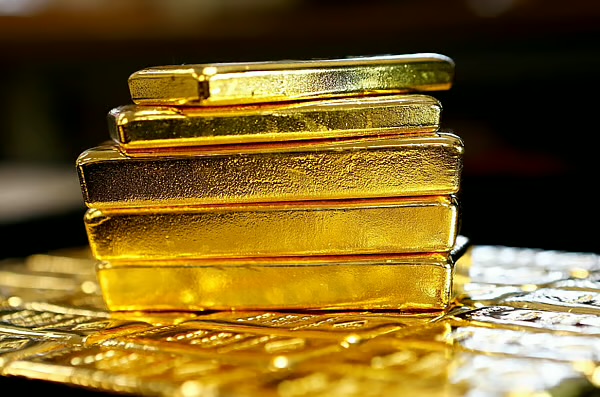
Gold bars.
Yet even that substantial artisanal output cannot account for the volumes showing up in UAE import statistics.
Private gold refineries have proliferated in recent years, further muddying the waters between legitimate and illicit trade.
Companies such as Afrik Gold Testers, Gulf Refinery and Emirates Refinery Ltd have sprung up in Nairobi and Western Kenya, reportedly backed by Dubai-based investors.
These operations process gold with minimal oversight, asking few questions about provenance.
The timing of Kenya’s gold export boom coincides suspiciously with other developments.
In February 2025, Cabinet Secretary for Mining Hassan Joho presided over the opening of the largest gold souk in East and Central Africa at BBS Mall in Eastleigh.
Touted as a game changer for legitimate trade, critics worry the facility could instead become another node in the smuggling network, providing additional cover for illicit gold flows.
The controversy has not gone unnoticed by Kenya’s civic and political leaders.
Senator Okiya Omtatah filed a petition in the High Court last month demanding full disclosure of beneficiation records, arguing that Kenya risks becoming a laundering conduit for conflict gold.
The Law Society of Kenya has echoed these concerns, pointing to weak chain of custody mechanisms in neighbouring countries.
The human cost of this trade extends far beyond Kenya’s borders.
Reports have surfaced of secret gold transactions involving Sudan’s Rapid Support Forces, with Sudanese gold reportedly transported through Nairobi’s Jomo Kenyatta International Airport en route to Dubai.
Revenue from gold smuggling fuels armed groups, finances terrorism and undermines regional stability, creating a direct link between luxury gold markets in Dubai and violence in Africa’s conflict zones.
Government reform efforts have produced more rhetoric than results.
Legislation was introduced in 2023 to formalize small-scale mining and reduce the illegal gold trade, but has not yet become law.
Kenya has announced plans to establish a specialized Mining Police Unit and push for regional certification of gems and minerals.
The Mining Ministry has also promised to roll out blockchain-based traceability software by March 2026 in partnership with Dubai Multi Commodities Centre.
But without addressing the systemic corruption that enables smuggling at the highest levels, such measures risk becoming window dressing rather than meaningful reform.
The discrepancies between Kenya’s official export data and trading partner import records have persisted for over a decade.
The mismatch between 2014 and 2023 added up to over 33.5 tonnes worth about 1.68 billion US dollars, according to SwissAid’s analysis.
As Kenya celebrates record gold export earnings and the Kenya Revenue Authority reports collections of Sh4.7 billion from gold export levies, the uncomfortable truth lurks beneath the surface.
The country has become a crucial cog in a transnational smuggling machine that siphons mineral wealth from Africa’s poorest and most conflict-ridden regions, enriching criminal networks, corrupt officials and Dubai refineries while leaving local communities mired in poverty and violence.
The Sh43 billion in official exports for the first nine months of 2025 may represent only a small fraction of the gold actually moving through Kenya.
Until authorities confront the full scope of the smuggling operations and the powerful interests that protect them, Kenya’s gold boom will remain built on questionable foundations, casting a long shadow over what government officials are celebrating as an economic windfall.

The United Arab Emirates’ President Sheikh Mohamed bin Zayed Al Nahyan arrives in Kazan, Russia, on October 23, 2024, amid concerns that a UAE conflict gold hub relies heavily on African supply chains linked to smuggling and weak oversight. REUTERS/Maxim Shemetov/Pool.
Kenya Insights allows guest blogging, if you want to be published on Kenya’s most authoritative and accurate blog, have an expose, news TIPS, story angles, human interest stories, drop us an email on [email protected] or via Telegram


Italy Bans Kanye West, Travis Scott Concerts Over Security Concerns

OdiBets Faces Investigation After 29.5 Million Safaricom Customers’ Data Breach, Risks Losing License

Omtatah Seeks Removal of Three Appeal Judges Over Kenya-US Health Deal Ruling

Blue Origin Rocket Explodes On Launchpad In A Setback For Bid To Catch Musk’s SpaceX

Two Teachers Knew Of Planned Utumishi Girls Dormitory Fire But Failed To Act

Eight Students Arrested In Kenya After Suspected Deadly School Arson Attack

Kenyan Court Orders Suspension Of US Plan For Ebola Quarantine Facility

Mohan Galot’s Empire Faces Collapse As Court Reinstates Sh3 Billion Demand

From Hunger Cartel To Oil Docket: The Troubling Rehabilitation Of Kello Harsama

Ruto Claims Powerful Oil Cartels Are Fighting to Block Dangote Refinery Entry Into Kenya, Vows to Push Ahead

Why Ruto’s Favourite Candidate Adan Mohammed Could Be Locked Out of the KRA Top Job

Green Gold, Rotten Roots: How Kenya’s Biggest Avocado Firms Hijacked a Sh5.8 Billion Harvest Ban

Safaricom’s Sh1.4 Billion Reckoning: How Kenya’s Most Profitable Company Stole a Man’s Idea and Got Caught

The Rot Inside Absa: How Bank Insiders Are Looting Nairobi’s Customers

The $24 Million Heist at the End of the World

DENTIST IN DISGUISE: How Este Medical Kenya’s Co-Founder Allegedly Prescribed Medicines Outside Her Scope, Lied to Police, and Weaponised the Law Against a Foreign Patient

Denial Under Duress: The Untold Collapse Threatening David Lagat’s DL Group’s Empire

THE INSURER THAT TOOK YOUR PREMIUM AND FORGOT YOUR NAME: How ICEA Lion Left a Client Begging for Sh7.8 Million Across Four Months

LifeCare on the Brink: SHA Fraud, Stolen Wages, and the Rotten Empire Jayesh Saini Built

The President’s Helicopter: How Ruto’s Aviation Empire Lands a Historic Airbus Milestone While His Government Writes the Tax Code
-
 News2 weeks ago
Why Ruto’s Favourite Candidate Adan Mohammed Could Be Locked Out of the KRA Top Job
-
 News5 days ago
DENTIST IN DISGUISE: How Este Medical Kenya’s Co-Founder Allegedly Prescribed Medicines Outside Her Scope, Lied to Police, and Weaponised the Law Against a Foreign Patient
-
 Investigations4 days ago
LifeCare on the Brink: SHA Fraud, Stolen Wages, and the Rotten Empire Jayesh Saini Built
-

 Business2 weeks ago
Court Confirms Safaricom Customers Data Was Sold To Betting Companies In Seven-Year Cover-Up
-
 Americas5 days ago
Inside FAFSA Fraud: How Kenyan Cybercriminals Siphoned Millions from America’s Sh12 Billion Student Loan System
-

 Business2 weeks ago
Blocked: How Mombasa Tycoon Ashok Doshi Has Stopped Imperial Bank Depositors From Getting Their Money
-

 Investigations5 days ago
LSK On The Spot For Renewing Rogue Lawyer Dennis Onyango’s Licence Despite Mounting Evidence He Held Foreign Investors’ Millions Hostage
-
 Investigations1 day ago
Mohan Galot’s Empire Faces Collapse As Court Reinstates Sh3 Billion Demand