
Politics
Inside Kenya’s Sh320 Billion Health Deal With The US
The agreement, signed on Thursday in Washington, represents the first government-to-government health deal under President Donald Trump’s controversial restructuring of US foreign assistance.

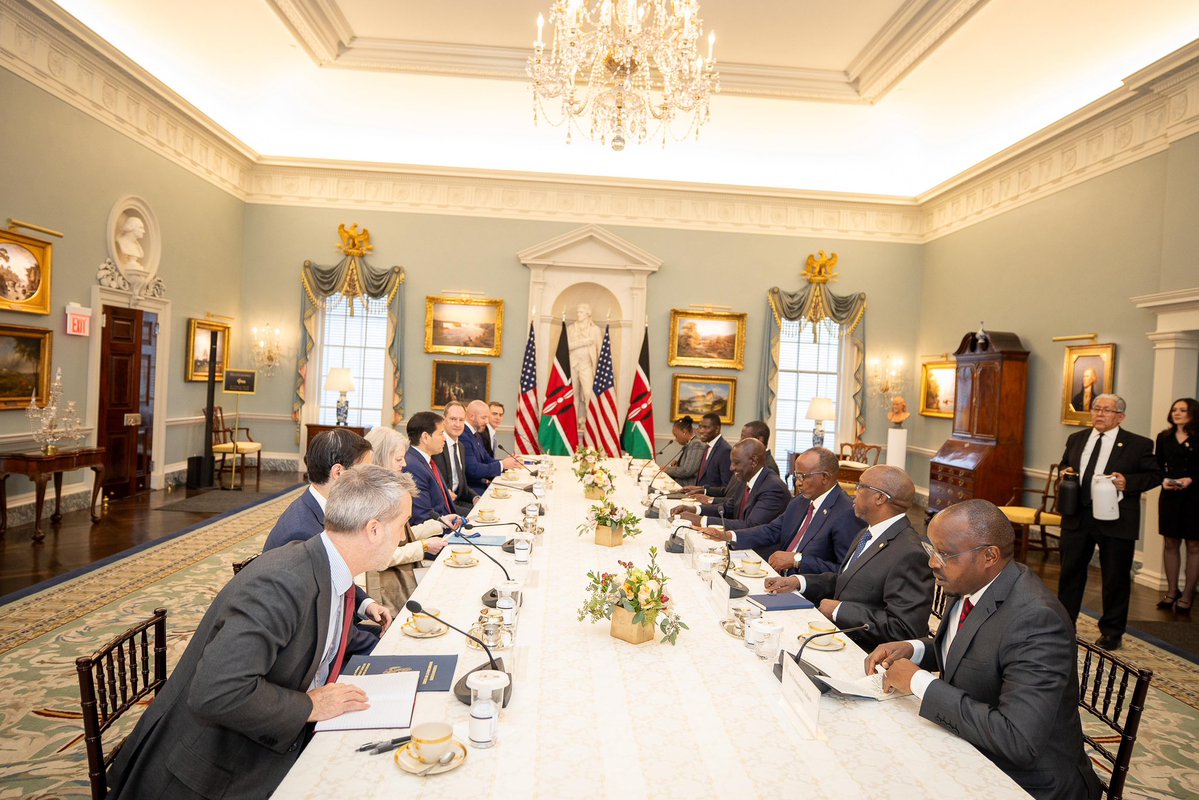
Kenya has secured a landmark health partnership with the United States worth Sh323.8 billion over five years, marking a historic shift in how American foreign aid reaches developing countries.
The agreement, signed on Thursday in Washington, represents the first government-to-government health deal under President Donald Trump’s controversial restructuring of US foreign assistance.
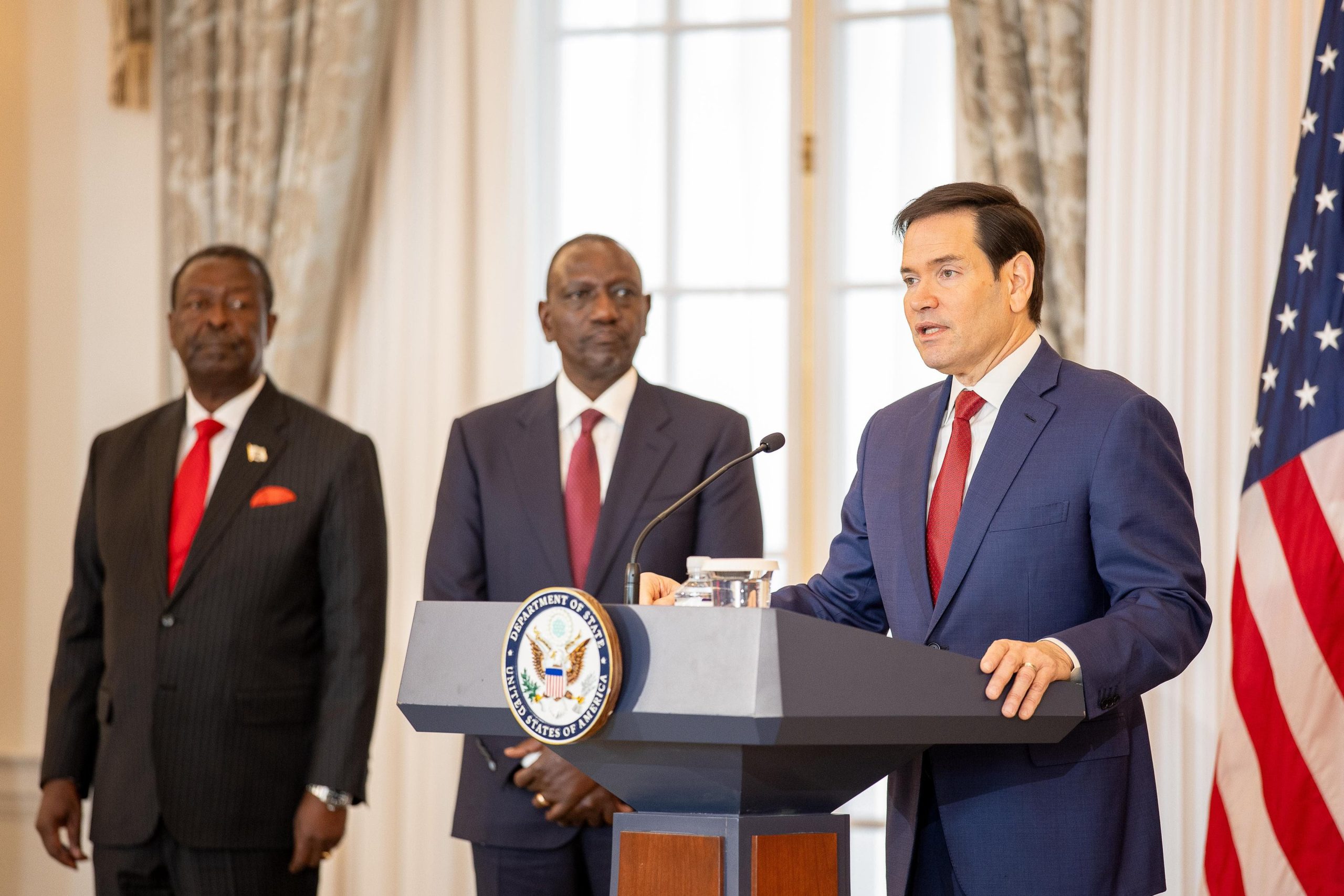
President William Ruto witnessed the signing of the framework by Prime Cabinet Secretary Musalia Mudavadi and US Secretary of State Marco Rubio at the State Department. The deal positions Kenya as the testing ground for what US officials describe as a more sustainable and accountable approach to global health funding, one that bypasses traditional non-governmental organizations.
Under the five-year cooperation framework, the United States will provide Sh207 billion directly to support health programmes including HIV/AIDS treatment, tuberculosis control, malaria prevention, maternal and child health services, polio eradication efforts, disease surveillance systems and infectious disease outbreak preparedness. Kenya will contribute Sh116 billion in domestic health expenditure, with the government expected to gradually increase its financial commitment as American support phases down.
The agreement introduces stringent disease surveillance requirements unprecedented in bilateral health partnerships. Kenya must detect potential disease outbreaks within seven days, notify Washington within 24 hours of detection, and mount a complete early response within another seven days. The framework also stipulates that Kenya will accept US Food and Drug Administration approval or emergency use authorization of medical countermeasures as sufficient basis for deployment during health emergencies.
Secretary Rubio was blunt about the rationale behind the new approach, criticizing what he termed the NGO industrial complex. He explained that previous aid models saw American taxpayer money flowing to organizations based in Northern Virginia and elsewhere, which would then implement health programs in partner countries with limited host government involvement and significant overhead costs.
“We are not going to spend billions of dollars funding the NGO industrial complex while close and important partners like Kenya either have no role to play or have very little influence over how healthcare money is being spent,” Rubio declared during the signing ceremony. “If we’re trying to help countries, help the country. Don’t help the NGO to go in and find a new line of business.”
The Trump administration dismantled the US Agency for International Development earlier this year, consolidating its functions under the State Department as part of the America First Global Health Strategy announced in September. The move sparked international concern after researchers warned that aid cuts could lead to more than 22 million preventable deaths by 2030, many of them children. Last year alone, the US spent Sh40.1 billion on HIV/AIDS programs in Kenya through donor channels.
Rubio defended the overhaul by arguing that traditional aid mechanisms left recipient countries with little control over programs nominally designed to help them. He said NGOs would take percentages for administrative and overhead costs before funds reached patients and health facilities, creating parallel health systems that sometimes conflicted with national priorities.
President Ruto embraced the partnership as aligned with his administration’s universal health coverage agenda, which focuses on equipping hospitals with modern technology, ensuring efficient delivery of health commodities, strengthening the health workforce and expanding insurance coverage. He assured that every shilling and dollar would be spent efficiently and accountably.
“The framework we sign today adds momentum to my administration’s universal health coverage,” Ruto said. “This partnership builds on Kenya’s longstanding health relationship with the United States, backed by more than Sh910 billion over 25 years.”
The cooperation framework contains several innovative provisions designed to transition responsibility to Kenya. Health commodities procurement will gradually shift from US government systems to Kenyan authorities including the Kenya Medical Supplies Authority. Frontline health workers currently funded by American programs will be mapped to Kenyan government cadres and transitioned onto the national payroll by 2031, with the government expected to absorb costs totaling Sh18.3 billion.
Funding will support the expansion of Kenya’s health data systems, including accelerating the national rollout of electronic medical records to track HIV/AIDS, tuberculosis, malaria, polio and disease outbreaks at scale. The framework also develops reimbursement mechanisms for faith-based and private sector providers enrolled in the Social Health Authority.
US Embassy officials in Nairobi moved quickly to address concerns about data sovereignty and privacy that emerged during negotiations. Susan Burns, Chargé d’Affaires at the US Embassy, emphasized that the agreement maintains Kenya’s existing privacy laws and only involves sharing aggregated, non-identifiable data such as the number of people receiving antiretroviral treatment.
“We are simply putting on paper the similar policies that we’ve followed for many, many years in this space,” Burns explained. “Any data shared moving forward will be aggregated data, meaning it will not include any personally identifiable information.”
Brian Rettmann, the PEPFAR Country Coordinator at the US Embassy, clarified that specimen sharing provisions only involve testing support when Kenyan laboratory systems lack certain capabilities, not unauthorized collection or research. He stressed that specimen testing occurs with government agreement and results are transparently shared with Kenyan authorities.
The framework is technically non-binding because both governments approve budgets annually, but it represents a projected five-year financial commitment meant to help Kenya plan for sustainability. A companion data-sharing agreement extends for seven years to allow two additional years of reporting after program implementation concludes.
Kenya was selected as the first country for this approach due to its existing focus on universal health coverage and its level of economic development, making it well-positioned to implement the strategy. US officials indicated that dozens of similar bilateral agreements are expected in coming weeks with other African nations, though recipients will need to demonstrate governance standards and alignment with American foreign policy interests.
The selection of Kenya also reflects broader diplomatic considerations. Rubio praised Kenya’s role in efforts to stabilize Haiti, where Kenyan security forces have been deployed for nearly two years. He described Kenya’s contribution as heroic and suggested the health partnership rewards allies who advance American interests beyond the health sector.
Health Cabinet Secretary Aden Duale, who led Kenyan negotiating teams since talks began in August, said the framework represents a fundamental departure from past arrangements. He confirmed that negotiations prioritized Kenyan interests while ensuring service continuity and alignment with government priorities.
Dr Ouma Oluga, Principal Secretary for Medical Services, welcomed the partnership as mutually beneficial, noting that Kenya is already expanding essential health services through the Social Health Authority and increasing domestic health financing. He said the Kenyan and American commitments are fully aligned.
Critics have questioned whether the agreement is lopsided, particularly regarding data access provisions. Earlier leaked versions of the memorandum of understanding suggested Kenya would share health data for 25 years while receiving funding for only five, raising sovereignty concerns. The final agreement clarifies that the seven-year data arrangement is for reporting purposes only.
Questions also emerged about potential conditionalities. Due to the Helms Amendment, all US government funding for global health programs prohibits funding of abortions or abortion-related services. Officials confirmed the agreement does not change Kenya’s abortion laws but ensures American funds are not used for such activities. Faith-based providers receive explicit emphasis in the framework, though all facilities enrolled in Kenya’s health insurance system remain eligible for funding.
The agreement includes performance incentives exceeding Sh13 billion that Kenya can earn by improving key health outcomes against benchmarks. This represents a shift toward outcome-based funding rather than simply disbursing predetermined amounts regardless of results.
The framework stipulates that Kenya must incrementally raise national and county health budgets from Sh10 billion in the 2026/27 financial year to Sh50 billion by 2029/30, demonstrating commitment to self-reliance. By 2031, Kenya is expected to have fully absorbed health workers and commodity costs currently covered by American funding.
Whether this model succeeds could determine the future of billions in global health spending. If Kenya achieves sustainable improvements while maintaining program effectiveness, other donors may follow the American lead. If implementation falters or services deteriorate, it could vindicate traditional NGO-mediated approaches.
For Kenya, being the first comes with both opportunity and risk. The country gains significant influence in shaping a new aid paradigm and positions itself as a preferred American partner in Africa. Success could unlock additional investment and diplomatic benefits. Failure, however, would be highly visible and could jeopardize future support.
The signing ceremony occurred as Ruto prepared to participate in discussions on peace efforts in the Democratic Republic of Congo and Rwanda, underscoring the interconnection between health cooperation and broader strategic partnerships. Rubio emphasized that American sovereign resources should bolster allies and never benefit groups unfriendly to US interests, signaling that future health agreements will carry explicit political considerations.
As the ink dried on the historic framework, both governments projected confidence that the partnership will strengthen Kenya’s health system, save lives and establish a new standard for development cooperation grounded in sovereignty, sustainability and shared responsibility. The next five years will reveal whether this confidence is justified or whether dismantling established aid mechanisms proves premature.
The agreement represents more than a financing arrangement. It embodies competing visions of how wealthy nations should assist developing countries, what role recipient governments should play in managing aid, and whether traditional humanitarian organizations that have delivered health services for decades can be effectively replaced by national institutions still building capacity. Kenya now stands at the center of this global experiment.
Kenya Insights allows guest blogging, if you want to be published on Kenya’s most authoritative and accurate blog, have an expose, news TIPS, story angles, human interest stories, drop us an email on [email protected] or via Telegram


Kenya’s gambling industry pushes back against a licensing bill

Kenya’s betting tax reform and why it matters

KETRACO CEO Advert Marred By Controversies As Fears Grow That Kipkemoi Kibias Is A Predetermined Candidate

I Will Bribe Every Judge in Town- MP Jack Wamboka

KNH ON THE BRINK: How Corruption, Revenue Plunder and State Neglect Are Destroying Kenya’s Flagship Hospital

Receivers In TransCentury Sh6B KRA Tax Arrears Are Biased And Must Be Removed, COFEK Claims

The Man Behind the Badge: How Prof. Erastus Kanga Turned Kenya’s Premier Wildlife Agency into a Theatre of Corruption, Fear and Impunity

City Lawyer Conrad Maloba Arrested Over Fake Ambulance Fraud

THE FIXER IN THE FILE ROOM: How Parliamentary Health Committee Clerk Adan Gindicha Cleared Mediheal Hospital of Organ Harvesting Claims Despite Mounting Evidence

Nairobi Freezes Binance Accounts in Sweeping Anti-Fraud Crackdown as Global Scandal Record Haunts World’s Largest Crypto Exchange

Forged Legacy: How Kaplan and Stratton’s Peter Gachuhi Is Accused of Faking a Top AG’s Will as State Claims Damning Evidence

The Lawyer at the Centre of Kenya’s State Machine: Eric Gumbo, the AG’s Bypassed Office, and the Half-Billion-Shilling Question

Inside Details Of Sh78 Billion Fraud in KPC’s Mombasa-Nairobi Line 5 Pipeline Project That Has Continued To Bleed The Country

Sold And Abandoned: How Diageo and Asahi Are Locking Kenya’s EABL Minority Shareholders Out Of East Africa’s Biggest Corporate Heist

Poison at the Pump: How Kenya’s Fuel Marking System May Be Exposing Millions to Cancer-Causing Chemicals

How Firm Linked To Mombasa Tycoon Jaffer Was Allowed To Import Fuel At Bloated Price And Set To Make Billions In Profits From Iranian War Crisis In Kenya

THE ZAKHEM-ECOBANK MACHINE: How Kenya’s Courts Were Weaponised to Drain a State Corporation of Over KES 78 Billion

The Teflon Company: How Gulf Energy’s Insiders Built Billions on Kenya’s Fuel, and Walked Away Clean

Kenyan Motorists Stare At Possible Engine Damage And Heavy Losses As Report Confirms Substandard Fuel In Circulation

Mombasa Lawyer Exposed In Sh600 Million Alleged Double-Dealing Diani Property Transaction
-
 Business7 days ago
Nairobi Freezes Binance Accounts in Sweeping Anti-Fraud Crackdown as Global Scandal Record Haunts World’s Largest Crypto Exchange
-

 Business2 weeks ago
THE FUEL CABAL: How Mohamed Jaffer, a KPC Insider, and a Ministry Official Are Alleged to Have Manufactured Kenya’s Worst Petroleum Crisis in Three Years, While Kenyans Burned
-
 Investigations1 week ago
EXCLUSIVE: Odibets Bought Stolen Data From Millions Of Kenyans
-

 Business2 weeks ago
Getting Away With It: How Kenya’s Most Politically Connected Fuel Company Gulf Energy Is Pocketing Billions While Rival Firms Face Public Wrath
-

 Investigations1 week ago
THE BRAZEN RETURN: Triton Thief Yagnesh Devani, Who Pillaged Kenya of Sh7.6 Billion and Fled, Now Asks the Same Courts He Escaped to Restore His Stolen Wealth
-
 Investigations6 days ago
THE FIXER IN THE FILE ROOM: How Parliamentary Health Committee Clerk Adan Gindicha Cleared Mediheal Hospital of Organ Harvesting Claims Despite Mounting Evidence
-

 Business2 weeks ago
Sugar Empire in the Dock: How Kibos’s Mombasa Refinery Landed 1,481 Phantom Tonnes at the Port — and Why Nine Government Agencies Are Now Watching Its Every Move
-
 Investigations5 days ago
The Man Behind the Badge: How Prof. Erastus Kanga Turned Kenya’s Premier Wildlife Agency into a Theatre of Corruption, Fear and Impunity