
Business
Safaricom Now Under Foreign Control As Vodafone Acquires Sh245 Billion Stake to Become Biggest Shareholder
Public investors, who have owned 25 percent since the 2008 initial public offering, will maintain their stake but will find themselves part of a company where the controlling shareholder sits thousands of kilometres away.

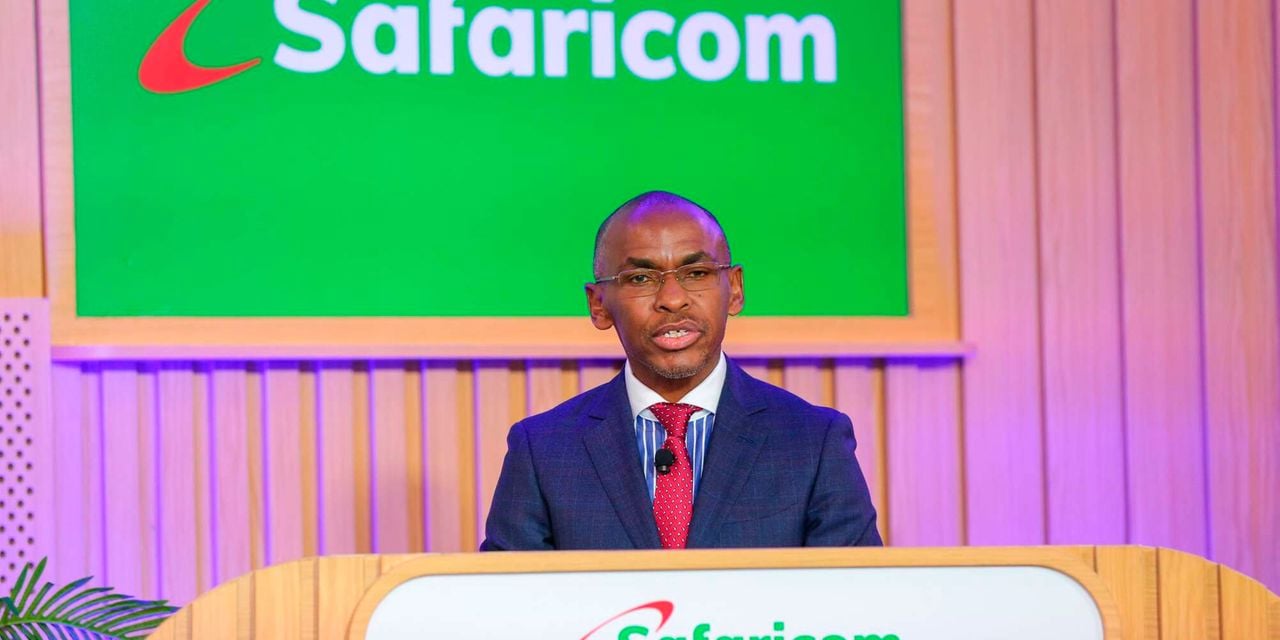
In a seismic shift that redraws Kenya’s corporate landscape, the government has ceded majority control of the nation’s most valuable company to foreign investors in a deal that raises urgent questions about economic sovereignty
Kenya has crossed a threshold few imagined possible. The National Treasury has agreed to sell a 15 percent stake in Safaricom to Vodafone Kenya for Sh245 billion, a transaction that will hand majority ownership of East Africa’s largest telecommunications company to foreign interests for the first time in its history.
The deal, disclosed in a public notice this week, represents more than just a change in shareholding percentages.
It marks the moment when Kenya’s most strategic asset, the company that controls 91 percent of the mobile money market and processes transactions worth trillions of shillings annually, falls under the decisive control of London-based Vodafone Group.
When the transaction closes, pending regulatory approvals, Vodafone Kenya will command a 55 percent stake in Safaricom.
The government’s holding will shrink from 35 percent to 20 percent.
Public investors, who have owned 25 percent since the 2008 initial public offering, will maintain their stake but will find themselves part of a company where the controlling shareholder sits thousands of kilometres away.
The Sh245 billion package comprises Sh204.3 billion for six billion shares priced at Sh34 each, a substantial premium over the Sh28.20 closing price on the Nairobi Securities Exchange, and an upfront payment of Sh40.2 billion for future dividend rights.
This advance dividend amounts to Sh6.69 per share, allowing the Treasury to monetise income streams it would otherwise have received over several years.
For a government grappling with a Sh901 billion budget deficit and revenue collections running Sh90 billion below target in the first quarter of the fiscal year, the windfall arrives as desperately needed relief.
The amount dwarfs the Sh150 billion the Treasury had targeted from privatisation initiatives this year and could substantially reduce the Sh613.5 billion in domestic borrowing planned for the current fiscal year.
Yet the immediate fiscal benefit cannot obscure the magnitude of what Kenya is surrendering. Safaricom is not merely the country’s most profitable listed company, valued at Sh1.13 trillion on the securities exchange.
It is the backbone of Kenya’s digital economy, the engine of financial inclusion through M-Pesa, and a company that has remitted Sh1.57 trillion in taxes, duties and fees since inception.
The Treasury has collected approximately Sh550 billion in dividends from Safaricom since its 2008 listing, making it one of the most lucrative investments the public purse has ever made.
In the financial year ended March 2025 alone, Safaricom paid dividends of Sh1.20 per share, delivering Sh16.8 billion to the exchequer.
The company paid Sh90.51 billion in various government remittances in just the six months to September 2025.
These revenue streams will continue, but the government will now receive them as a minority shareholder rather than as the entity with effective blocking power over major decisions.
When Vodafone’s board in Johannesburg and London deliberates on Safaricom’s expansion into new markets, its investment priorities, or even sensitive matters like data governance and national security cooperation, Kenyan government representatives will have a voice but not a veto.
The timing of the sale adds another layer of complexity. Safaricom recently increased its stake in its Ethiopian operation to 53 percent, a move that positions the company for significant growth in Africa’s second most populous country.
Ethiopia, with its 120 million people and largely untapped telecommunications market, represents the kind of transformational opportunity that comes once in a generation.
Kenya has now sold down its interest just as these investments begin to mature.
The transaction also carries implications for competition and market structure.
Vodafone Kenya is increasing its Vodacom Group ownership to 100 percent as part of the deal, consolidating control within the South African telecommunications giant.
This vertical integration, combined with majority control of Safaricom, creates a formidable regional telecommunications powerhouse centred outside Kenya’s borders.
Regulatory authorities including the Capital Markets Authority, the Competition Authority of Kenya, and the Central Bank will need to scrutinise whether this concentration of ownership serves the public interest. Vodafone Kenya has indicated it will not launch a mandatory takeover offer for remaining shares, despite crossing the 50 percent threshold that typically triggers such requirements, and will instead seek an exemption from the CMA.
The government’s decision follows the October enactment of the Privatisation Act 2025, which streamlines the disposal of state assets.
The Act requires Cabinet approval and National Assembly ratification for such sales, procedures that appear to have been followed.
The National Assembly already approved the sale of a 65 percent stake in Kenya Pipeline Company in October, signalling parliamentary willingness to support large-scale privatisation.
Market analysts note that the Sh34 per share price represents a significant premium over recent trading levels, though it remains well below the Sh44.60 record high Safaricom reached in 2021 after securing its Ethiopian licence.
The premium suggests Vodafone Kenya values long-term control more highly than immediate market pricing, a rational calculation given Safaricom’s consistent profitability and dividend track record.
Safaricom reported a 52.1 percent surge in net profit to Sh42.7 billion for the half year ended September 2025, driven by smaller losses in Ethiopia and double-digit M-Pesa growth.
The company expects to declare an interim dividend in February 2026, continuing its tradition of reliable shareholder returns.
For ordinary Kenyans, the change in ownership structure may seem abstract. M-Pesa will continue to function, mobile services will operate normally, and Safaricom will remain subject to Kenyan laws and regulations.
The company will still be the country’s largest corporate taxpayer and a major employer.
But sovereignty is not always visible in daily transactions.
It reveals itself when critical decisions are made about technological infrastructure, about how citizen data is governed, about where profits are reinvested, and about whose interests take precedence when commercial imperatives conflict with national priorities.
Kenya built Safaricom through decades of patient public investment, protected its growth through favourable regulatory treatment, and benefited enormously from its success.
The government is now converting that strategic asset into immediate cash to plug budget holes created by chronic overspending and underperformance in revenue collection.
Whether future generations will judge this transaction as prudent financial management or a costly surrender of economic sovereignty depends on two questions.
First, will the government deploy the Sh245 billion windfall to create productive assets that generate returns comparable to what Safaricom would have delivered?
Second, will foreign majority ownership of Kenya’s digital payments infrastructure and telecommunications backbone prove compatible with national interests when geopolitical or commercial pressures intensify?
The answers to these questions will unfold over years, not months.
What is certain today is that Kenya has made an irreversible choice. Control of Safaricom, the company that processes more monetary transactions than any bank, that connects two thirds of the country’s mobile subscribers, and that has powered financial inclusion on an unprecedented scale, now rests in foreign hands.
The Sh245 billion may address immediate fiscal pressures, but the price of reacquiring control, should circumstances ever demand it, would be measured not in shillings but in sovereignty itself.
Kenya Insights allows guest blogging, if you want to be published on Kenya’s most authoritative and accurate blog, have an expose, news TIPS, story angles, human interest stories, drop us an email on [email protected] or via Telegram


Powerful Individuals Behind Mwenda Mbijiwe’s Disappearance, Court Told as Judge Summons IG and DCI Boss

Mwananchi Credit Faces Massive Lawsuits After Court Flags Predatory Lending That Left Customers’ Loans Ballooning

Panyako Claims Ruto Offered Him CS Job After Malava Loss, Says He Rejected It Over ‘Inhumanity’

German Researchers Find Highly Effective HIV Antibody

Safaricom Now Under Foreign Control As Vodafone Acquires Sh245 Billion Stake to Become Biggest Shareholder

Kuria Blames ‘Extremely Powerful Offices’ For Botched Alliance With Aladwa

HELB Faces Class Action Suit After Court Rules Interest Cannot Exceed Double the Loan

What Latest Ukraine Talks Reveal About Putin’s State Of Mind

‘You’re Free to Join DCP,’ Gachagua Tells Babu Owino and Edwin Sifuna

Ex-NGO Boss Fazul Mohamed Accused of Holding Fake Egerton University Degree

Kenyan Driver Hospitalized After Dubai Assault for Rejecting Gay Advances, Passport Seized as Authorities Remain Silent

Kakuzi Investors Face Massive Loss as Land Commission Drops Bombshell Order to Surrender Quarter of Productive Estate

Money Bior, Lawyer Stephen Ndeda Among 18 Accused Of Running An International Fraud Ring Involved With Scamming American Investor Sh500 Million

Construction Of Stalled Yaya Center Block Resumes After More Than 3 Decades and The Concrete Story Behind It

INSIDER LEAK REVEALS ROT AT KWS TOP EXECUTIVES

Nestlé Accused of Risking Babies’ Health in Africa with ‘Toxic’ Cerelac Product Sold Highest in Kenya

CNN Reveals Massive Killings, Secret Graves In Tanzania and Coverup By the Govt

How Somali Money From Minnesota Fraud Ended In Funding Nairobi Real Estate Boom, Al Shabaab Attracting Trump’s Wrath

BANKS BETRAYAL: How Equity Bank Allegedly Helped Thieves Loot Sh10 Million From Family’s Savings in Lightning Fast Court Scam

Mistreatment and Gross Misconduct: Thika Cloth Mills Accused of Bribing Labour Ministry Officials to Muzzle Workers’ Revolt
-
 News1 week ago
Kenyan Driver Hospitalized After Dubai Assault for Rejecting Gay Advances, Passport Seized as Authorities Remain Silent
-
 Investigations4 days ago
Money Bior, Lawyer Stephen Ndeda Among 18 Accused Of Running An International Fraud Ring Involved With Scamming American Investor Sh500 Million
-
 Business1 week ago
Construction Of Stalled Yaya Center Block Resumes After More Than 3 Decades and The Concrete Story Behind It
-
 Investigations3 days ago
Nestlé Accused of Risking Babies’ Health in Africa with ‘Toxic’ Cerelac Product Sold Highest in Kenya
-
 Investigations2 weeks ago
CNN Reveals Massive Killings, Secret Graves In Tanzania and Coverup By the Govt
-
 Investigations1 week ago
How Somali Money From Minnesota Fraud Ended In Funding Nairobi Real Estate Boom, Al Shabaab Attracting Trump’s Wrath
-
 News6 days ago
TSC Announces Major Policy Shift To End Transfer Of Promoted Teachers
-

 Politics2 weeks ago
I Had Warned Raila Of Possible Fallout In The Odinga Family After His Death, Oburu Says