
Business
Court: Safaricom Accused of Neglecting Fraud Prevention, Leaving Millions of M-Pesa Users Exposed
Court documents state that Safaricom is fully aware that many M-Pesa users, especially the unbanked, semi-literate and digitally inexperienced, remain extremely vulnerable.

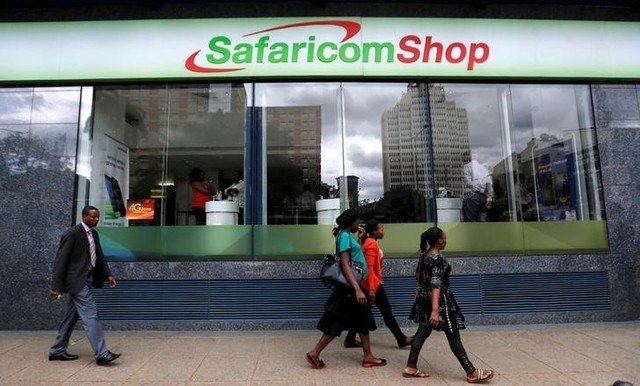
Safaricom PLC and its subsidiary, M-Pesa Holding Company Ltd, are facing a new legal challenge after a Kenyan woman sued the two firms for allegedly failing to protect customers from rising mobile money fraud and leaving victims without proper support.
In a petition filed at the High Court, journalist Paula Rogo accuses Safaricom of negligence, weak data protection systems and failing to invest in effective fraud-prevention measures despite M-Pesa being central to Kenya’s economy.
She is suing on her own behalf and on behalf of other M-Pesa users who have suffered similar losses.
Rogo wants the court to declare that Safaricom violated her constitutional right to access information under Article 35 and the consumer and administrative rights of fraud victims under Articles 46 and 47.
She argues that the company has consistently failed to safeguard customer data, respond to fraud cases in a timely manner or compensate victims, even though it markets M-Pesa as a secure service.
Her case is based on an incident that occurred on January 3, 2024.
Rogo received a call from an unknown number and when she called back she spoke to a man who introduced himself as Michael Kiptoo, claiming to be a Safaricom employee.
To earn her trust, he allegedly sent her messages that appeared to come from Safaricom’s official SMS system and disclosed her M-Pesa balance, recent transactions and most contacted numbers. She believed this information could only be accessed by Safaricom staff.
Convinced that she was speaking to a genuine employee, she followed his instructions as he claimed he was securing her account.
He guided her through several steps using the Pochi la Biashara feature and Sh119,658 was withdrawn from her M-Pesa wallet.
He then took an additional Sh6,000 M-Shwari loan which brought her total loss to Sh125,658.
Throughout the call the fraudster repeatedly advised her not to share her PIN, something that reassured her he was legitimate.
She only realised something was wrong when he became aggressive and she ended the call.
After discovering the theft she attempted to reverse the transactions through Safaricom’s 456 reversal line but the system only supports person to person transfers.
She then tried using Safaricom’s WhatsApp support but got no response. She called customer care nine times before finally getting through about 40 minutes after the money disappeared. By that time the funds had already been withdrawn.
Rogo says the Safaricom representative she spoke to could not tell her whether she would be compensated, how the company intended to pursue the perpetrators or what steps it would take to prevent similar incidents.
Nearly a year later she says Safaricom has not taken any action despite her police report and repeated follow-ups.
She argues that this goes against Safaricom’s brand promises and ignores the increasing sophistication of mobile money fraud schemes.
Court documents state that Safaricom is fully aware that many M-Pesa users, especially the unbanked, semi-literate and digitally inexperienced, remain extremely vulnerable.
Even well educated customers, the petition notes, are increasingly falling victim to fraudsters who exploit system loopholes or receive help from insiders.
Rogo accuses Safaricom of failing to invest enough resources in fraud prevention which she says leaves millions of customers exposed despite M-Pesa’s crucial role in the country’s economy.
She is asking the High Court to order Safaricom to publish annual reports on fraud cases, losses and investigations, set up responsive and dedicated fraud reporting systems and establish a clear compensation framework for victims.
She wants these reforms implemented within 180 days.
She is also seeking a refund of her stolen Sh125,658 together with general damages for violation of her rights.
The case adds to public concern over mobile money scams and could set an important precedent on corporate responsibility in Kenya’s digital financial sector.
Kenya Insights allows guest blogging, if you want to be published on Kenya’s most authoritative and accurate blog, have an expose, news TIPS, story angles, human interest stories, drop us an email on [email protected] or via Telegram


Popular Luo TikToker MC Adek Tatu Arrested Over Tribal Remarks Following Utumishi Girls Tragedy

Italy Bans Kanye West, Travis Scott Concerts Over Security Concerns

OdiBets Faces Investigation After 29.5 Million Safaricom Customers’ Data Breach, Risks Losing License

Omtatah Seeks Removal of Three Appeal Judges Over Kenya-US Health Deal Ruling

Blue Origin Rocket Explodes On Launchpad In A Setback For Bid To Catch Musk’s SpaceX

Two Teachers Knew Of Planned Utumishi Girls Dormitory Fire But Failed To Act

Eight Students Arrested In Kenya After Suspected Deadly School Arson Attack

Kenyan Court Orders Suspension Of US Plan For Ebola Quarantine Facility

Mohan Galot’s Empire Faces Collapse As Court Reinstates Sh3 Billion Demand

From Hunger Cartel To Oil Docket: The Troubling Rehabilitation Of Kello Harsama

Why Ruto’s Favourite Candidate Adan Mohammed Could Be Locked Out of the KRA Top Job

Green Gold, Rotten Roots: How Kenya’s Biggest Avocado Firms Hijacked a Sh5.8 Billion Harvest Ban

Safaricom’s Sh1.4 Billion Reckoning: How Kenya’s Most Profitable Company Stole a Man’s Idea and Got Caught

The Rot Inside Absa: How Bank Insiders Are Looting Nairobi’s Customers

The $24 Million Heist at the End of the World

Denial Under Duress: The Untold Collapse Threatening David Lagat’s DL Group’s Empire

THE INSURER THAT TOOK YOUR PREMIUM AND FORGOT YOUR NAME: How ICEA Lion Left a Client Begging for Sh7.8 Million Across Four Months

LifeCare on the Brink: SHA Fraud, Stolen Wages, and the Rotten Empire Jayesh Saini Built

The President’s Helicopter: How Ruto’s Aviation Empire Lands a Historic Airbus Milestone While His Government Writes the Tax Code

Court Confirms Safaricom Customers Data Was Sold To Betting Companies In Seven-Year Cover-Up
-
 News2 weeks ago
Why Ruto’s Favourite Candidate Adan Mohammed Could Be Locked Out of the KRA Top Job
-
 Investigations5 days ago
LifeCare on the Brink: SHA Fraud, Stolen Wages, and the Rotten Empire Jayesh Saini Built
-
 Business2 weeks ago
Court Confirms Safaricom Customers Data Was Sold To Betting Companies In Seven-Year Cover-Up
-
 Americas5 days ago
Inside FAFSA Fraud: How Kenyan Cybercriminals Siphoned Millions from America’s Sh12 Billion Student Loan System
-
 Investigations2 days ago
Mohan Galot’s Empire Faces Collapse As Court Reinstates Sh3 Billion Demand
-
 News2 days ago
Eight Students Arrested In Kenya After Suspected Deadly School Arson Attack
-

 Business2 weeks ago
Blocked: How Mombasa Tycoon Ashok Doshi Has Stopped Imperial Bank Depositors From Getting Their Money
-

 Investigations6 days ago
LSK On The Spot For Renewing Rogue Lawyer Dennis Onyango’s Licence Despite Mounting Evidence He Held Foreign Investors’ Millions Hostage