China’s Foreign Minister Wang Yi condemned the US and Israeli attacks on Iran on Sunday, calling the “blatant killing of a sovereign leader” and attempts to provoke regime change “unacceptable” and urging an immediate ceasefire and a return to talks to prevent a wider regional conflict.
China has long been a key Iranian ally, buying some 90% of its crude oil and providing economic and technological support. The recent US-Israeli strikes, which disrupted key installations and killed senior figures including Supreme Leader Ali Khamenei, put Beijing in a delicate position: it refuses to get involved in the Middle East firestorm, yet its energy security is at stake.
Shipping routes through the Strait of Hormuz, used for half of the oil China imports from the Gulf, have been disrupted, highlighting the vulnerability of Beijing’s energy imports. Iran is a partner Beijing cannot easily replace, especially given the discounts it secures through sanctions-driven arrangements.
The offensive also exposes the limits of China’s influence in the region. While Beijing can offer economic support and diplomatic backing, it cannot guarantee military protection to its allies, forcing it to carefully calibrate its response to avoid conflict with Washington.
Theo Nencini, a research fellow at the ChinaMed Project a PhD candidate specialising in Iran-China relations and China’s Middle East foreign policy, explains the constraints and priorities driving Beijing’s strategic calculus amid the crisis.
How dependent is China on Iranian oil, and how is it used?
China’s dependence on Iranian oil is significant but not overwhelming. We’re talking about 12 to 15% of Chinese oil supplies coming from Iran. That’s fluctuating, but on average, since spring 2023 it’s been around 1.5 million barrels per day. To put that in context, before that, from 2019 onwards, Iran rarely supplied more than 700,000 barrels per day. The spike in April 2023 essentially doubled the imports.
The main driver was the Iran-Saudi rapprochement negotiated in Beijing in March 2023. Once the two sides normalised relations, Iranian exports to China increased sharply and have remained relatively stable, oscillating between 1.2 and 1.9 million barrels per day, depending on seasonal and market factors, like the dip right after the Chinese New Year.
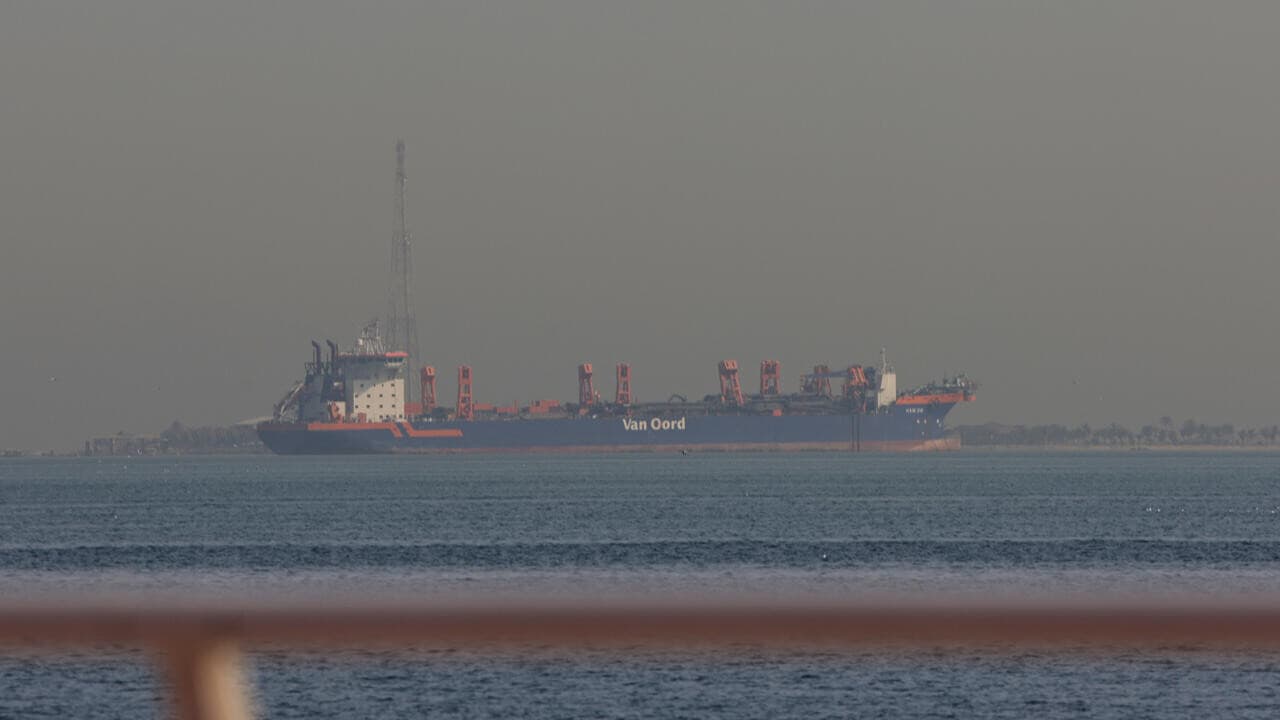
Most of this crude is loaded at Kharg Island in the Persian Gulf, which handles over 90% of Iranian shipments. The tankers then transit through the Strait of Hormuz and head towards Southeast Asia. Often, they anchor off the coast of Malaysia or in the South China Sea, where the so-called “ship-to-ship transfers” occur. This is a key method to obscure the oil’s origin. After these transfers, the crude is typically rebranded as Malaysian, Omani or Emirati before finally being unloaded in China, particularly along the Shandong coast, where the independent refineries – known as “teapots” – are located.
These teapots are relatively immune to US sanctions, because they have no assets in the US and are specifically configured to process Iranian crude. It’s important to understand that Beijing doesn’t orchestrate this directly – the market largely self-regulates. Iran applies discounts ranging from 6 to 10%, sometimes more, to compensate for sanctions-related difficulties. Over several years, this likely cost Tehran about a third of what it could have earned at market prices.
At the moment, China is not in immediate danger of supply disruption. There are 40 to 45 million barrels in floating storage, so for the coming weeks, the country is covered. But the real vulnerability lies with the Strait of Hormuz: about 45% of China’s oil imports pass through this chokepoint, and that has been a long-standing strategic concern.
China also imports other petrochemical products from Iran, like methanol. While exact figures vary, reports suggest Iran supplies significant portions of Asian methanol markets. This is relevant because methanol feeds into plastics and industrial chemicals, which China relies on for manufacturing. However, the volumes are still smaller than crude oil imports and fluctuate with market dynamics and pricing.
Why does China condemn the attacks on Iran, and how does its doctrine shape its response?
China has always condemned attacks on Iran. This is not new. Even when Israel bombed the Iranian consulate annex in Damascus, Beijing issued statements of condemnation.
That said, China often acts with caution and delay. For instance, in June last year, it waited almost 48 hours before reacting to a major strike, seemingly assessing whether the Iranian regime could withstand the situation. That delay did not please Tehran.
China’s foreign policy is grounded in the idea of absolute national sovereignty. Any form of interference in another state, particularly military or regime-change operations, is fundamentally incompatible with their doctrine. This explains why China’s public statements are strong in principle but limited in actual engagement.
In the Middle East, China has two clear priorities. The first one is energy security – ensuring uninterrupted oil flows, especially through the Strait of Hormuz, which is crucial for Chinese consumption. The second is regional stability, a concern tied not only to energy but also to the potential resurgence of radical Islamism. Although jihadist activity has declined compared to the 2000-2020 period, unrest can quickly flare. China remains sensitive due to past issues in Xinjiang and potential spillovers into Central Asia or Pakistan, where Chinese nationals have been targeted by attacks.
If Iran were forced into an existential struggle, there could be an asymmetric response, including indirect or proxy actions, but these remain unpredictable. Chinese doctrine keeps it in a wait-and-see posture, avoiding direct involvement unless absolutely necessary.
Is the Sino-Iranian cooperation also strategic militarily?
On paper, there is a China-Iran Comprehensive Strategic Partnership signed in 2021. But in practice, this partnership has never been fully structured or systemic. It’s largely conjunctural, sectoral and ad hoc. While there have been announcements of $400 billion in Chinese investment, most of these projects have not materialised at scale.
There are targeted infrastructure projects: railway renovations, port upgrades and some work in the Chabahar/Makran region. Militarily, China supplied Iran with anti-ship missiles and industrial know-how between 1985 and 1997. But since 2010, verifiable cooperation is limited. Some Chinese components may enter Iranian missile production, and Iran participates in naval exercises with [mutual ally] Russia. Iranian use of China’s Beidou satellite navigation system is also plausible but hard to verify.
The relationship is therefore pragmatic and real, but constrained by US sanctions. Iran has significant geostrategic potential, an educated workforce and industrial capacity, but systematic collaboration with China remains fragmented.
Overall, China’s cooperation with Iran is tactical rather than strategic, focused on energy, selective infrastructure and limited military coordination – all while being careful not to violate sanctions or escalate tensions.





Comments