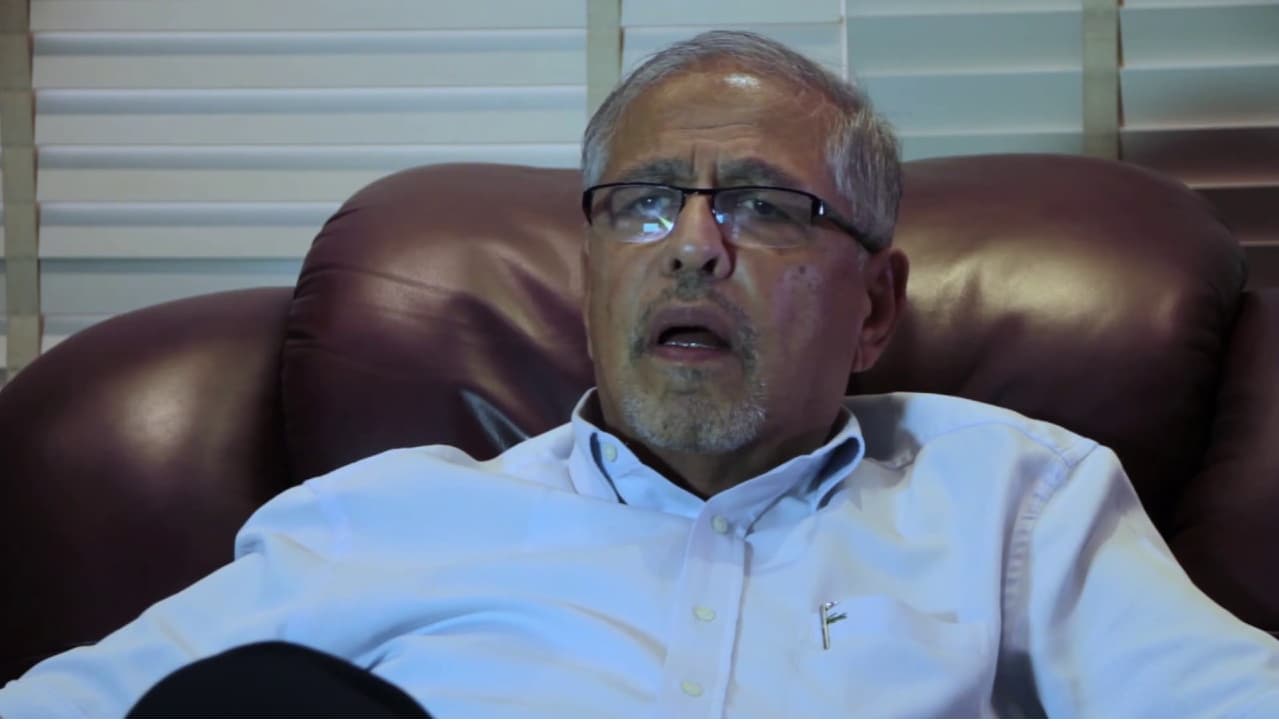
MOMBASA—In what appears to be a rare victory amid mounting business pressures, controversial Mombasa tycoon Mohamed Jaffer has secured a major legal win after the Environment and Land Court ordered the Kenya National Highways Authority and the National Land Commission to compensate him for land seized during the expansion of the Mombasa-Nairobi highway.
The court’s November 26 ruling represents a temporary reprieve for the businessman whose once-unassailable dominance in Kenya’s port logistics sector has come under sustained assault from powerful rivals and political heavyweights, setting the stage for what insiders describe as the most vicious business war ever witnessed in the coastal region.
Justice presiding over the Malindi court directed KeNHA and NLC to pay Jaffer and his business associate, industrialist Ashok Doshi, full compensation for parcels of land in Mariakani, Kilifi County, within 60 days.
The two businessmen had sued after government authorities demolished their perimeter wall and began construction work without following proper land acquisition procedures.
The court found that there had been no notice of intent to acquire, no inquiry, no participation by the petitioners, no valuation, no award, and critically, no compensation before the authorities bulldozed onto the private property and tore down the boundary wall in January this year.
However, this legal victory comes at a time when Jaffer’s business fortunes appear increasingly besieged on multiple fronts.
The tycoon, who has enjoyed what competitors describe as a three-decade monopoly in the lucrative cooking gas and grain handling sectors at Mombasa port, now finds himself fighting battles in courtrooms, boardrooms and the unforgiving arena of public opinion.
Just weeks before his land compensation victory, Jaffer suffered a crushing defeat when the High Court cleared Tanzanian billionaire Rostam Aziz to proceed with the construction of a massive Sh16 billion LPG terminal at Dongo Kundu Special Economic Zone in Likoni.
The 30,000-metric-ton facility, which Aziz claims will be the largest in Africa, will operate right at Jaffer’s doorstep, directly challenging his Africa Gas and Oil Ltd plant in the same area.
The court ruled that a petition seeking to stop the Taifa Gas project was improperly filed and that environmental concerns should have been addressed through the National Environmental Tribunal rather than the courts.
For Aziz, who was ranked Tanzania’s first dollar billionaire by Forbes in 2013, the ruling represents a significant breakthrough after years of what he described as bureaucratic stonewalling by Kenyan authorities.
Industry analysts predict the entry of Taifa Gas will trigger fierce competition that could finally break Jaffer’s iron grip on Kenya’s cooking gas market, potentially leading to lower prices for the 2.87 million Kenyan households that rely on LPG for cooking.

Aziz has already begun supplying the Kenyan retail market via road from Tanzania, but the new terminal will give him the capacity to compete directly with established players like Vivo, Rubis and Total.
The stakes are enormous.
Jaffer’s AGOL plant, which has a storage capacity of 25,000 tonnes following upgrades to the facility originally built in 2013, has operated with minimal competition, allowing the tycoon to charge fees that industry insiders suggest have remained artificially high due to lack of market pressure.
His ownership of Proto Energy, the maker of Pro Gas, along with AGOL, has given him what competitors describe as a stranglehold on the sector.
But the threat from Aziz pales in comparison to the scorched-earth confrontation between Jaffer and the politically connected Joho family, a feud that has spilled from business competition into character assassination and criminal courts.
At the center of the storm is Abubakar Ali Joho, brother to Cabinet Secretary for Mining and Blue Economy Hassan Joho, whose entry into the port logistics business through Autoport Freight Terminus and Portside Freight Terminal has allegedly triggered what he describes as a sustained smear campaign orchestrated by Jaffer.
The bad blood between the two business titans exploded into public view when Matilda Maodo Kinzani, an employee of Jaffer’s Bulkstream Ltd, was charged in court with publishing false and defamatory information linking Abu Joho to a Sh40 billion fraud scheme.
The document, which allegedly circulated on WhatsApp and social media, made grave accusations against the Joho family including involvement in drug trafficking and illegal acquisition of Kenya Railways land.
During explosive court testimony, Abu Joho directly blamed Jaffer for the attacks. “He has had a monopoly for 30 years. Now that I have entered the port business, that’s where our troubles began. He is the monopoly; I am not,” Abu Joho told the court, his voice heavy with frustration. “This is not business competition. It’s character assassination. It has affected me, my business, and my family.”
The case took a dramatic turn when it emerged that Philip Mainga, Managing Director of Kenya Railways Corporation, allegedly alerted Abu Joho to the existence of the defamatory document.
Police Constable Fredrick Muchiri of the Anti-Terror Police Unit testified that Mainga informed Abu Joho about the circulating document, though he admitted he had not examined Mainga’s phone to verify the communication.
The involvement of seven Anti-Terror Police Unit officers in raiding Kinzani’s home and workplace to seize electronic devices raised eyebrows, with defense lawyers questioning why an anti-terrorism unit was investigating what appeared to be a straightforward cybercrime case.
Muchiri defended the unit’s involvement, insisting they were not investigating terrorism.
Forensic analysis traced the defamatory document to Kinzani’s electronic devices, leading to her being charged with four counts under the Computer Misuse and Cybercrimes Act.
She has denied all accusations and is currently out on Sh300,000 cash bail.
For Jaffer, who also controls Grain Bulk Handlers with its near-monopoly on discharge and handling of bulk grain cargo at Mombasa port, the convergence of these battles represents the greatest threat to his business empire in decades.
His dominance has been built not just on infrastructure and capital, but on carefully cultivated political networks that have helped him navigate the treacherous waters of Kenyan business.
The same could be said of his adversaries.
Aziz served as an MP and treasurer of Tanzania’s ruling party Chama Cha Mapinduzi, while the Joho family’s political connections need no introduction, with Hassan Joho serving in President William Ruto’s Cabinet after years as Mombasa Governor.
The land compensation ruling, while a victory, does little to address the fundamental challenge facing Jaffer.
His business model, predicated on monopolistic control of critical port infrastructure, is being systematically dismantled by competitors with deep pockets, political backing, and the determination to break his grip on the coastal economy.
The National Land Commission’s claim that it had conducted a review of grants and dispositions in Kilifi, Mombasa and Kwale counties, arriving at recommendations published in a Gazette Notice that potentially affected Jaffer and Doshi’s land titles, suggests that even this week’s court victory may face further legal challenges.
As the billionaire’s brawl intensifies, ordinary Kenyans can only watch and hope that the competition ultimately translates into lower costs for essential services like cooking gas and port logistics.
Whether Jaffer can weather this perfect storm of legal battles, business competition and political vendettas remains to be seen.
What is certain is that the era of unchallenged dominance in Mombasa’s port economy is over.
The question now is not whether Jaffer’s monopoly will be broken, but how much of his business empire will remain standing when the dust finally settles.


Comments