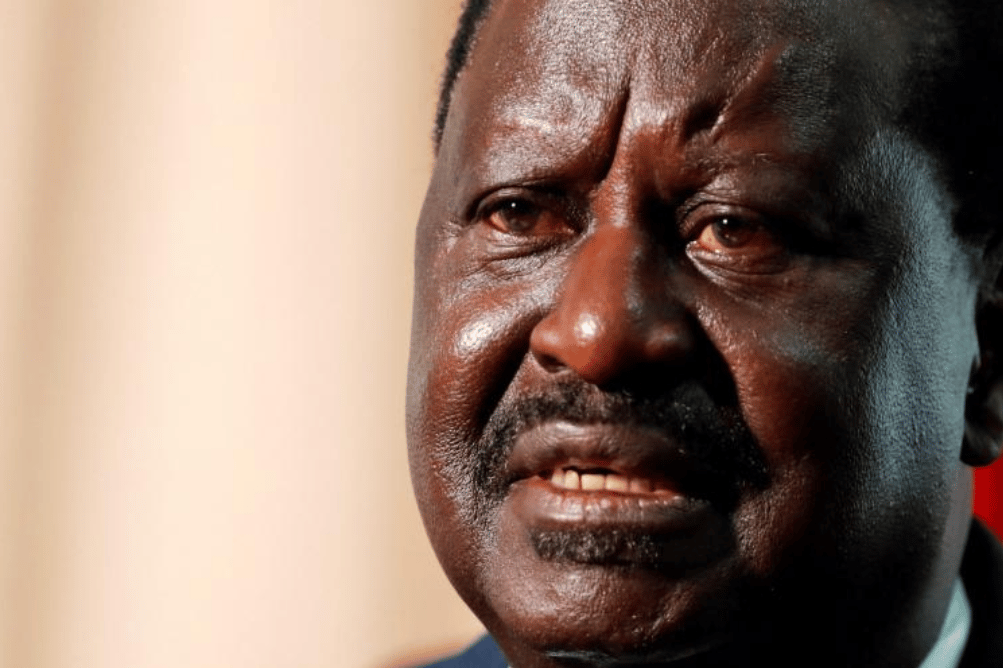
Opposition leader dismisses police use of lethal force, calls for constitutional rights protection amid ongoing protests
Former Prime Minister Raila Odinga has issued a scathing rebuke of President William Ruto’s controversial directive ordering police to shoot protesters in the legs, describing such orders as fundamentally wrong and unconstitutional.
In a strongly worded statement released on July 11, 2025, through his secretariat, Odinga condemned what he termed as “shoot to kill, maim, or shock orders to police,” arguing that such directives violate the rule of law and constitutional principles that should guide law enforcement in Kenya.
“In a protest or any other environment that requires law enforcement, all the above orders – shoot to kill, maim, disorient or shock citizens are wrong,” Odinga stated in his statement, which comes amid escalating tensions between the government and protesters demanding political and economic reforms.
The ODM leader emphasized that Kenya must “at all times opt for the Rule of Law and due process” and reject any temptation to give police illegitimate powers over citizens, even when those citizens are perceived to have broken the law.
“We are all better served as a country when we stick to the principle that everyone is innocent until proven guilty; a determination that can only be made by a competent court of law,” Odinga argued, calling for prioritizing arrests and court arraignments over violent confrontations.
The statement comes in direct response to President Ruto’s July 9 directive during the launch of a police housing project in Kilimani, where he ordered security forces to shoot protesters who vandalize property in the legs.
“Anyone who burns down someone else’s business and property, let them be shot in the leg and go to the hospital as they head to court,” Ruto had declared.
Escalating political tensions

The controversy has intensified following recent protests that have turned deadly. According to reports, eleven people were killed nationwide during anti-government demonstrations on July 7, 2025, marking the 35th anniversary of Kenya’s pro-democracy uprising known as Saba Saba.
Odinga’s opposition to the shoot-to-kill directive puts him at odds with some government officials who have supported tougher measures.
Belgut MP Nelson Koech, who chairs the Defence Committee, recently called for even more aggressive action, stating that police should have the authority to shoot and kill individuals involved in violent protests, particularly those who attack government institutions.
“These people cannot be terrorising others. Anyone who has to go to a protected area like the State House is not an ordinary person. That is a criminal, that is an armed person that must be dealt with using equal force,” Koech argued on July 10.
International concern
The directive has drawn criticism from international media and human rights organizations, with concerns raised about potential escalation of violence during demonstrations.
The UN and human rights groups have previously accused Kenyan police of using excessive force during protests.
Odinga warned that militarized approaches to policing only increase risks of violence, stating: “A militarized approach to policing endangers both the suspect and the law enforcement officers.”
In his statement, the opposition leader advocated for de-escalation and constitutional adherence, arguing that the country should “do everything to avoid the militarized approach to policing” and cited examples from across the continent showing how such approaches increase violence risks.
“Let’s prioritize arrests and arraignment in courts over killing, maiming or brutalizing of suspects. This preserves the dignity and respects the human rights of suspects while at the same time confers credibility to the actions of the State,” Odinga concluded.
The statement by Odinga, represents a clear ideological divide between the opposition and government on how to handle ongoing civil unrest that has gripped the country amid calls for political and economic reforms.
As Kenya grapples with mounting public pressure for change, the debate over police use of force continues to highlight deeper questions about governance, human rights, and the balance between maintaining order and protecting constitutional freedoms.







Comments