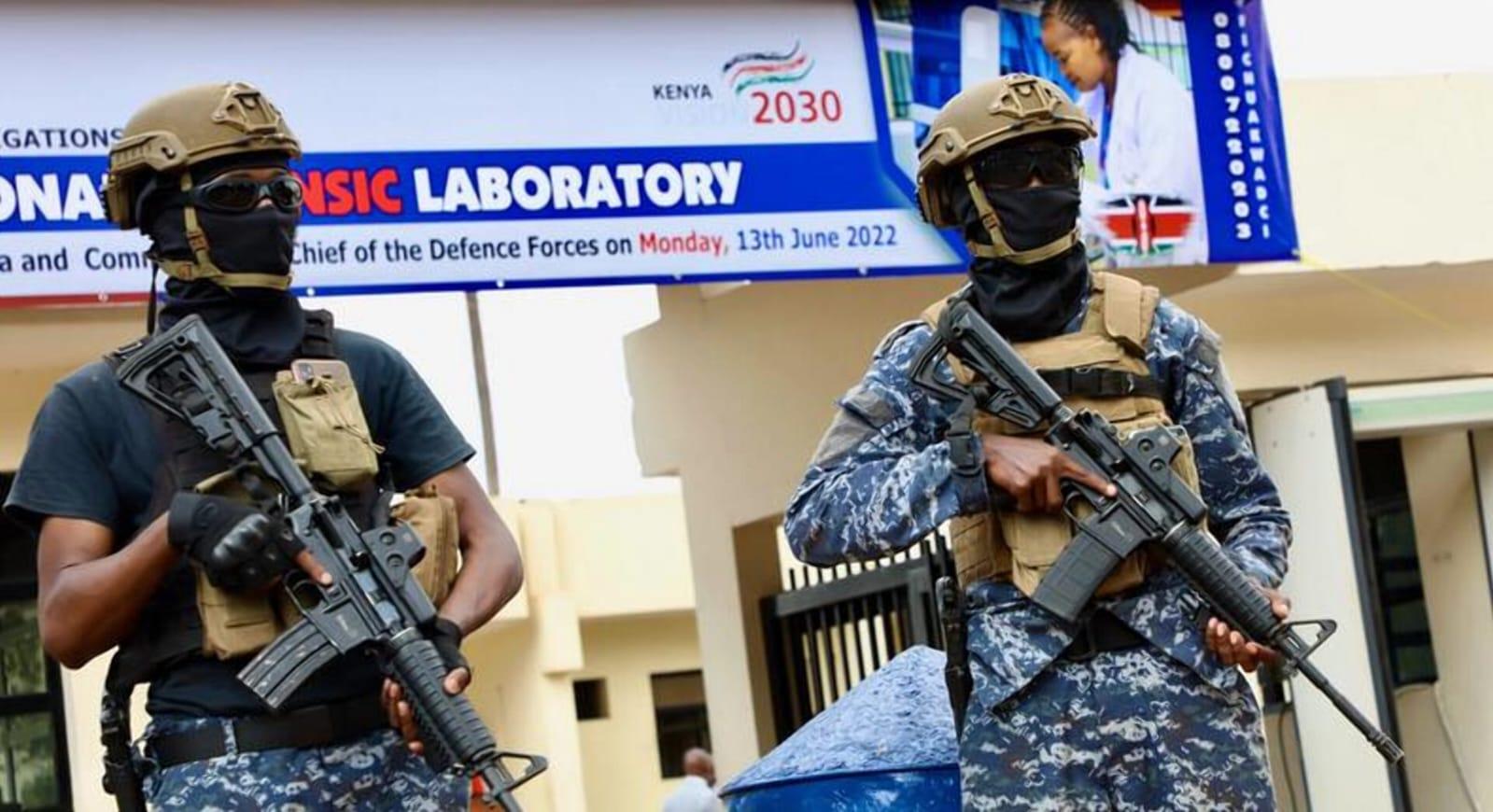
Law enforcement agencies have dismantled a sophisticated criminal network that exploited government systems to illegally process national identity cards, passports and birth certificates, arresting 26 suspects in a sweeping two-day operation that has exposed the rot within Kenya’s vital document issuance machinery.
The dramatic crackdown, which netted civil servants from the National Registration Bureau and the Directorate of Immigration alongside local chiefs, businessmen and middlemen, has laid bare a disturbing web of collusion that security experts warn posed grave threats to national security and the integrity of Kenya’s identity verification systems.
Among those arrested were registrars, clerks, fingerprint technicians and even assistant chiefs from Eastleigh, the Nairobi suburb that has become the epicentre of document fraud operations in Kenya. The suspects allegedly conspired to bypass established procedures, processing crucial government documents for anyone willing to pay the right price through corrupt channels that have flourished in plain sight.
The operation, which saw detectives raid homes and offices across Nairobi, unearthed a shocking haul of government property that should never have left official premises. Officers discovered fingerprint-taking equipment including slabs and rollers, stacks of filled and blank national ID application forms, birth and death certificates, passports and official government stamps hidden in the residences of suspects who had brazenly turned their homes into illegal processing centres.
The scale of the criminal enterprise has sent shockwaves through law enforcement circles. Investigators believe the syndicate facilitated the undocumented entry and exit of individuals whose backgrounds and intentions remain unknown, creating gaping holes in Kenya’s border security at a time when the country faces mounting concerns over terrorism, human trafficking and organised crime.
The timing of the bust is particularly significant given Kenya’s troubled history with identity document fraud, especially concerning the Somali community. For decades, ethnic Somalis have faced discriminatory vetting processes that made obtaining legitimate identification documents a Kafkaesque ordeal, creating a parallel economy where desperate applicants turned to corrupt officials and middlemen who promised to cut through the red tape for a fee.
President William Ruto recently abolished the controversial secondary vetting process for Kenyan Somalis in February this year, declaring that all Kenyan children should be equal. But the latest arrests suggest that even as one discriminatory system was being dismantled, another criminal network had already taken root, exploiting both the old system’s complexities and the new one’s transition period.
Among those arrested in the operation were Judy Kemunto Ondari, a registrar at the Embakasi office, Moses Mugoya Margaret, a clerk at the National Registration Bureau headquarters in the NSSF Building, and Ruth Osebe Sukuru from the Kamukunji registrar’s office. The presence of government employees at multiple levels suggests the syndicate had embedded itself deeply within the registration system.
Two assistant chiefs from Eastleigh, Jawahir Mohamed Muse and Mohamed Issack Gedow, were also taken into custody, highlighting how local administrators allegedly betrayed their positions of trust to facilitate the fraud. Their arrests raise troubling questions about oversight and accountability at the grassroots level where identity verification should begin.
The businessman angle adds another layer to the conspiracy. Suspects including Moulid Yusuf Dige, Samatar Osman Robne, Fuadh Bulle Mohamed and AbdiKadir Mohamed Dahir are believed to have financed the illegal operations, providing the capital that kept the corrupt machinery running while reaping profits from desperate applicants who saw no other path to obtaining documents.
Freelance middlemen formed the crucial link between applicants and corrupt officials. Abdirizak Osman Rage, Alfred Opia Ayaway and Abdirizack Bashir Farah allegedly served as fixers who knew which officials could be bought and exactly how much it would cost to fast-track an application that might otherwise languish in bureaucratic limbo for months or even years.
The arrest of Festus Bahati Chai, a fingerprints technician at the registrar’s head office, is especially concerning. Fingerprint data forms the backbone of Kenya’s biometric identification system, and having someone in that position compromised means the entire verification process was potentially corrupted at its most fundamental level.
Geoffrey Mokoro Mutanya, a clerk at the Immigration head office, and Joseph Mwendwa Munyithia from the Kariokor registrar’s office represent yet another category of suspects, mid-level officials who allegedly used their access to systems and documents to circumvent checks and balances designed to prevent fraud.
The operation comes amid growing public frustration with corruption in Kenya’s document issuance agencies. According to the National Ethics and Corruption Survey released earlier this year, the National Registration Bureau ranked among the most corruption-prone government departments, with the Directorate of Immigration also featuring prominently on the list of shame.
The survey found that Kenyans perceive both the immigration directorate and the registration bureau as riddled with unethical gatekeeping practices around passport and ID issuance. These perceptions have now been validated by hard evidence, with detectives catching officials red-handed with the tools of their trade hidden in their private residences.
The syndicate’s operations appear to have been particularly concentrated in Eastleigh, a neighbourhood that has long been a flashpoint in Kenya’s identity politics. The area is home to a large Somali population, many of whom have struggled with the bureaucratic nightmare of proving their Kenyan citizenship despite being born and raised in the country.
This vulnerability created a perfect breeding ground for exploitation. Corrupt officials and middlemen could charge premium rates to process documents for people who had been turned away through legitimate channels, often multiple times. For applicants facing discrimination or endless bureaucratic delays, paying a bribe to a middleman seemed like the only viable option.
The security implications of this fraud network cannot be overstated. In a region grappling with terrorism threats from Al-Shabaab and other extremist groups, the ability to obtain genuine Kenyan identification documents through corrupt means represents a catastrophic security breach. Individuals with unknown backgrounds and potentially hostile intentions could have been moving freely across borders with documents that passed all official checks because they were processed using genuine government systems.
The investigation has also revealed how the syndicate operated with remarkable sophistication. Rather than producing crude forgeries that might be detected, the criminals allegedly used their positions within the system to generate genuine documents for ineligible applicants. This means the fraudulent IDs and passports would pass muster at any checkpoint or border crossing because they were, in technical terms, real documents issued through official channels.
The arrests are part of a broader crackdown by the Directorate of Criminal Investigations on document fraud and identity theft. Earlier operations have targeted various fraud syndicates, from fake government officials extorting money to crypto-scammers defrauding Kenyans of billions of shillings. The consistency of these busts suggests law enforcement has ramped up its focus on crimes that undermine public trust in government institutions.
For the legitimate users of these services, particularly young Kenyans who have been waiting months or even years for their identity documents, the revelations are both vindicating and infuriating. They have long complained that their applications languish while others who know the right people or can afford the right bribes receive their documents within days.
The backlog of nearly 900,000 ID applications that has accumulated in recent years now appears in a different light. How many of these legitimate applications were deliberately delayed while corrupt officials prioritised processing illegal documents for paying customers? The question hangs heavy as the accused face arraignment.
All 26 suspects are currently in custody undergoing multi-agency processing before being presented in court. They face charges related to abuse of office, corruption, forgery and facilitating illegal immigration. If convicted, they could face lengthy prison sentences that would serve as a warning to others tempted to exploit their positions for personal gain.
The DCI has emphasised its unwavering commitment to safeguarding the integrity of government systems and holding accountable those who exploit them.
But beyond the arrests and the coming prosecutions, the scandal raises fundamental questions about oversight and accountability in Kenya’s identity document ecosystem.
How were these officials able to remove government equipment and blank documents from secure facilities? Why were there no systems in place to detect when documents were being processed outside normal protocols? How many other corrupt networks might still be operating undetected?
The answers to these questions will determine whether this crackdown represents a genuine turning point in the fight against document fraud or merely scratches the surface of a much deeper rot.
For now, investigators are focused on building airtight cases against the 26 suspects in custody, knowing that successful prosecutions could send shockwaves through other corrupt networks and serve as a deterrent.
As the accused prepare to face justice, thousands of Kenyans who have been legitimately waiting for their identity documents can only hope that dismantling this criminal syndicate will finally clear the path for their applications to be processed honestly and efficiently. The promise of equal treatment under the law, which President Ruto articulated when abolishing discriminatory vetting, rings hollow when corruption creates a parallel system where only those who can pay or who know the right people get served.
The case serves as a stark reminder that Kenya’s fight against corruption requires more than policy changes and presidential proclamations. It demands robust oversight mechanisms, harsh consequences for those who betray public trust, and a cultural shift that makes corruption socially unacceptable rather than simply another cost of doing business with government.
For the National Registration Bureau and Directorate of Immigration, the scandal represents an institutional crisis that will require comprehensive reform to restore public confidence. The agencies must demonstrate through concrete actions that they are committed to rooting out corruption, protecting the integrity of their systems, and serving all Kenyans fairly regardless of ethnicity, connections or ability to pay bribes.
As the legal process unfolds and more details emerge about how this criminal network operated, one thing is clear: the price of allowing corruption to fester in agencies responsible for verifying citizen identity and controlling borders is simply too high for any nation to pay. Kenya’s security, its democratic processes and its social fabric all depend on systems that work with integrity and serve all citizens equally.
The question now is whether this crackdown will catalyse the deep systemic reforms needed to prevent such networks from taking root again, or whether it will merely create a temporary disruption in business as usual.








Comments