
News
DCI Kinoti Goes After 130 Bank Hackers

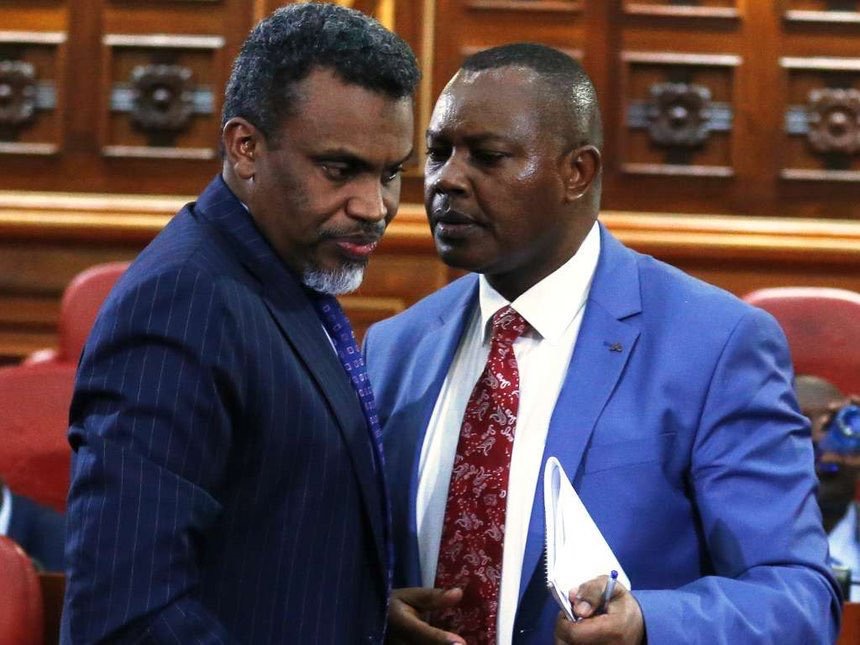
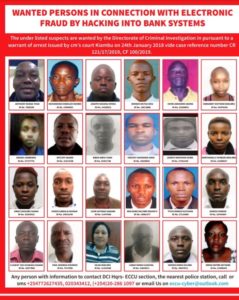
DCI has released 130 photos of suspected criminals engaged in hacking banking systems in Kenya. This doesn’t come as a surprise with recent visit to Kenya by Interpol heads and previously FBI who’ve marked Kenya as a hub for cyber criminals and need for combined efforts to contain them.
According to a Cyber Security report by Serianu which also reveals that Africa lost Sh350 billion to cybersecurity with financial institutions most affected. Kenya lost approximately Sh21.2 billion to cybersecurity in 2017, second only to Nigeria which lost Sh65.5 billion.
The report showed that over Sh18 billion was withdrawn from victim accounts with banks compensating nearly the same amount.
Overall, banks and financial institutions in 10 of the African countries surveyed lost $248 million in 2017 with governments losing $204 million.
The highest cost and threats for financial institutions in relation to cyber crimes came from insider threats, investments in anti-cybercrime technologies, banking malware and ATM skimming.
According to the Communications Authority of Kenya’s latest findings, the National Kenya Computer Incident Response Team Coordination Centre (KE-CIRT-CC) analysed and validated 4,589 cyber threats.
CA’s Second Quarter Statistics Report for the 2017/2018 financial year (October-December 2017), said 539 cyber threats were resolved.
System misconfigurations, largely ride on weaknesses where users access their company portals using default 0000 passwords that are not regularly changed (updated) from any gadget at any level.
While most Kenyan companies remained mute over attacks on their individual portals, albeit to protect their business interests, CA’s report said 140 malware attacks (malicious software) were reported with the 2017 prolonged political period blamed for 104 incidents of impersonation, which were reported.
Dozens of sites belonging to the Kenyan and Nigerian governments have been hacked in recent years, highlighting their vulnerability. CA’s website was defaced in 2017 while, National Bank reported thwarting an online bid to transfer Sh29 million from its accounts by an unknown hackers to mobile money accounts, a technique at the heart of massive bank theft locally and internationally.
Banks and internal-revenue authorities are getting hit the most, especially through their web apps. Nairobi and the bigger cities in particular have become highly exposed to cyber crime targeting individuals as residential internet connection rises phenomenally.
With 130 persons now facing imminent arrest, could this be the breakthrough into the the murky underworld of cybercrime? Here are the listed suspects.





Kenya Insights allows guest blogging, if you want to be published on Kenya’s most authoritative and accurate blog, have an expose, news TIPS, story angles, human interest stories, drop us an email on [email protected] or via Telegram


IEBC Registers Nearly 1 Million New Voters In 11 Days

Australian Investor Reveals How He Was Scammed Sh77 Million In Fake Gold Deal, Detained At JKIA And Now Wants Law Firm Probed

Wattanga Fired Over Incompetence in Tech, Insiders Say

Why Kisumu Senator Tom Ojienda Is Suspected as the Hidden Hand Behind the Brutal Beating of Senator Godfrey Osotsi

Bia Tosha vs EABL: Why the Dispute Isn’t What You Might Have Been Told

The Lawyer at the Centre of Kenya’s State Machine: Eric Gumbo, the AG’s Bypassed Office, and the Half-Billion-Shilling Question

Mombasa Lawyer Exposed In Sh600 Million Alleged Double-Dealing Diani Property Transaction

THE POISON THAT WON’T GO AWAY: Why Rejected Fuel From One Petroleum May Still Be Circulating Despite Assurances

Eric Omondi Tops Kenya Influencers With Sh57mn Earnings

Both Sides Claim Victory After US, Iran Agree To 11th-Hour Truce

Tuju Forcefully Removed From His Karen Property With Masked Officers In Unmarked Vehicles In Early Morning Raid

Named: Havi Says Mutava Confessed He Was Collecting The Bribe For Lady Justice Josephine Mongare, So Why Is JSC Still Silence?

‘They Will Eat You Alive’: Retired Teacher Warns Against Bashy African Credit as Sh500,000 Loan Spirals Into Sh1.5 Million Fight

THE HANDSHAKE THAT BECAME A NOOSE: How Tuju’s Alleged Intimate Access to EADB’s Yeda Apopo Produced a Sh294 Million Deal With No Written Contract, and Why That Trust Destroyed an Empire

Forged Legacy: How Kaplan and Stratton’s Peter Gachuhi Is Accused of Faking a Top AG’s Will as State Claims Damning Evidence

How Firm Linked To Mombasa Tycoon Jaffer Was Allowed To Import Fuel At Bloated Price And Set To Make Billions In Profits From Iranian War Crisis In Kenya

Sold And Abandoned: How Diageo and Asahi Are Locking Kenya’s EABL Minority Shareholders Out Of East Africa’s Biggest Corporate Heist

Men Linked to Akasha Drug Dynasty Charged With Death Threats and Assault at Nairobi Nightclub

The Teflon Company: How Gulf Energy’s Insiders Built Billions on Kenya’s Fuel, and Walked Away Clean

Poison at the Pump: How Kenya’s Fuel Marking System May Be Exposing Millions to Cancer-Causing Chemicals
-
 Investigations1 week ago
Forged Legacy: How Kaplan and Stratton’s Peter Gachuhi Is Accused of Faking a Top AG’s Will as State Claims Damning Evidence
-
 Business1 week ago
How Firm Linked To Mombasa Tycoon Jaffer Was Allowed To Import Fuel At Bloated Price And Set To Make Billions In Profits From Iranian War Crisis In Kenya
-
 Business1 week ago
Sold And Abandoned: How Diageo and Asahi Are Locking Kenya’s EABL Minority Shareholders Out Of East Africa’s Biggest Corporate Heist
-
 Investigations4 days ago
The Teflon Company: How Gulf Energy’s Insiders Built Billions on Kenya’s Fuel, and Walked Away Clean
-
 Business1 week ago
Poison at the Pump: How Kenya’s Fuel Marking System May Be Exposing Millions to Cancer-Causing Chemicals
-

 News1 week ago
Treasury Hands Sh358M Brief to Eric Gumbo’s Firm While Bypassing Standard Rules — and the Lawyer Is Already Deep Inside Ruto’s State Machine
-

 Investigations1 week ago
Inside Nyayo House: The Kitchen Cartel That Demands Sh100,000 for a Stove
-
 Business1 week ago
THE BANK THAT BROKE THE TRUCKER: How NCBA’s Asset Financing Empire Is on Trial Before London’s Most Feared Arbitral Tribunal