
News
Safaricom Foundation Director Karen Basiye At The Center of A Multibillion Money Laundering and Corruption Scandal
The allegations, which first surfaced in mid-2025 and exploded into public consciousness in February 2026, point to the systematic misappropriation of funds across flagship programmes including Ndoto Zetu, Usamaria and the foundation’s broader community investment portfolio.

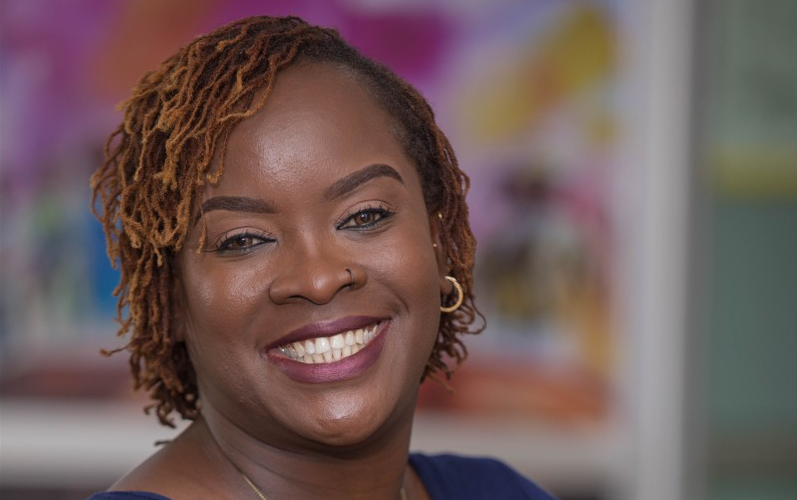
AWARD IN DAVOS, CHAOS AT HOME: HOW KENYA’S CELEBRATED SOCIAL IMPACT QUEEN IS FIGHTING THE BIGGEST BATTLE OF HER CAREER
She stood in the glittering halls of Davos in January 2026, celebrated before the world’s most powerful business and policy leaders as the Schwab Foundation Corporate Social Innovator of the Year — a crowning recognition bestowed in partnership with the World Economic Forum.
Karen Basiye, Director of Sustainable Business, Social Impact and Foundations at Safaricom, smiled for photographs alongside global titans, her name spoken in the same breath as pioneers changing the world across 190 countries.
But back home in Nairobi, a very different story was unfolding. One that sources close to the Safaricom Foundation describe as a scandal of breathtaking proportions, involving the alleged systematic looting of billions of shillings meant for Kenya’s most vulnerable citizens — schoolchildren without classrooms, mothers dying in underfunded hospitals, and economically crushed communities that had been promised a lifeline.
Kenya Insights has spent weeks piecing together a devastating picture of alleged corruption, internal warfare, and a desperate, coordinated campaign to bury the story before it reaches the public domain. What we have found raises urgent questions about one of Kenya’s most trusted corporate philanthropic institutions, and the woman who has sat at its centre for nearly two decades.
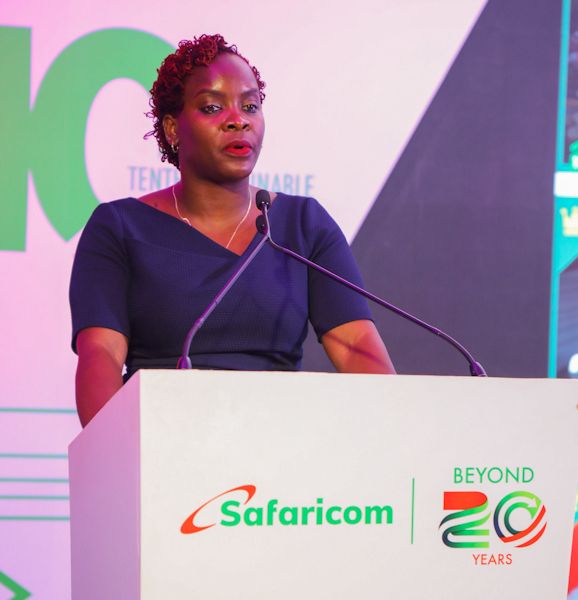
THE ALLEGATIONS: BILLIONS GONE MISSING
Sources inside the Safaricom Foundation, speaking on condition of anonymity for fear of retaliation, allege that Karen Basiye has been the key architect of a sophisticated financial scheme that has seen millions, and potentially billions, of shillings siphoned from social impact projects under her watch.
The allegations, which first surfaced in mid-2025 and exploded into public consciousness in February 2026, point to the systematic misappropriation of funds across flagship programmes including Ndoto Zetu, Usamaria and the foundation’s broader community investment portfolio.
The numbers involved are staggering. Since 2019 alone, the Safaricom Foundation has invested Sh271 million in over 1,400 Ndoto Zetu community projects.
A further Sh170 million was committed to support community initiatives projected to positively impact over 1.6 million Kenyans across the country, with Sh100 million of that specifically ring-fenced for Ndoto Zetu and Sh20 million allocated to Usamaria, the initiative that covers medical bills for economically disadvantaged patients in public hospitals.
It is within these massive financial flows, insiders allege, that the rot has taken hold. Sources tell Kenya Insights that the foundation has been turned into a conduit for the misappropriation of funds, with projects either grossly inflated in cost, poorly implemented, or in some cases, allegedly not implemented at all, while the money disappears into channels that have nothing to do with the communities Safaricom’s millions of subscribers believe they are supporting.
“Every airtime top-up, every M-PESA transaction, every data bundle — Kenyans are contributing to this foundation. They believe their money is building schools and saving mothers. The question that must be answered is: where exactly is it going?” one source told this reporter.
INTERNAL WAR TEARS THE FOUNDATION APART
Far from being a well-oiled machine of social good, the Safaricom Foundation is in the grip of a bitter internal war that has split management down the middle, with the Basiye question at its explosive heart.
Foundation Chairman Joseph Ogutu is said to have raised serious concerns about the manner in which Basiye has been handling her office, according to sources familiar with the board’s deliberations.
Those concerns, our sources say, have been repeatedly stymied by the protective hand of trustee Dr. Githinji Gitahi, who is said to have been instrumental in Basiye’s original recruitment to the foundation and who continues to shield her from accountability.
The management team, which includes Henry Kilonzo in charge of foundation programmes, John Kinoti running the finance office, Gilbert Ebole as monitoring manager, Eunice Kibathi and Sophie Onyango as programme managers, David Mwaniki in finance, and Nicholas Wechuli and George Gathua, has been cleaved into factions, with insiders saying that the Basiye factor has created a toxic environment in which colleagues are exposing one another and trust has completely broken down.
“The people who should be focusing on delivering impact to communities are instead spending their energy fighting each other, covering tracks, and watching their backs,” a source familiar with the foundation’s internal workings told Kenya Insights.
THE DAVOS PARADOX: CELEBRATING ABROAD, ACCUSED AT HOME
The timing of the corruption allegations landing in February 2026 carries a bitter irony that is not lost on observers of Kenya’s corporate sector.
Just weeks before the scandal exploded in public view, Basiye was in Davos-Klosters, being feted at the World Economic Forum Annual Meeting as one of 21 global pioneers recognised by the Schwab Foundation for Social Entrepreneurship.
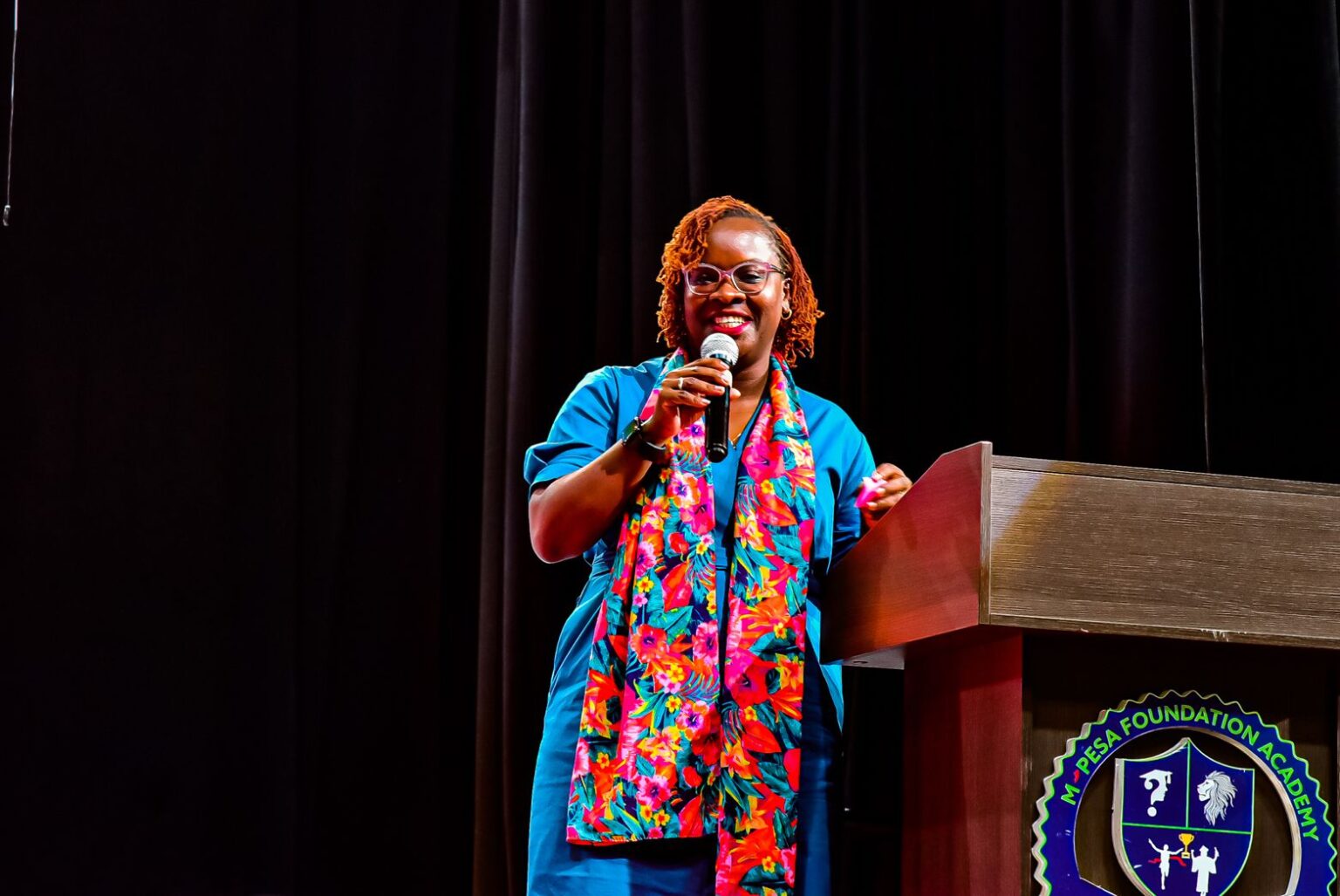
She joined a community of 510 social innovators who, the Foundation says, have collectively improved the lives of over 950 million people across the world.
Safaricom itself issued an effusive statement celebrating her recognition. “She embodies what it means to use ESG and the SDGs not as a checklist, but as an enabler for a net-positive future,” the company declared publicly, adding that the award was testament to the “Spirit of Safaricom — a belief that business thrives when society thrives.”
Investigative sources and civil society actors who have been tracking the foundation’s activities say the contrast between Basiye’s global image and the allegations swirling around her domestically is precisely the kind of paradox that should prompt urgent, independent scrutiny. Prominent blogger Cyprian Nyakundi was among the first to publicly put Basiye on the spot, pointing to alleged graft claims involving foundation officials in development projects.
“Recognition at Davos does not immunise anyone from accountability. If anything, it should heighten the expectations placed on her,” one civil society observer told this publication. “The question is not whether she received a global award. The question is whether the money entrusted to her care actually reached the communities it was supposed to serve.”
THE COVER-UP: HOW A SOPHISTICATED PR MACHINE WENT TO WORK
What has alarmed sources who spoke to Kenya Insights perhaps more than the original allegations is what allegedly happened next.
According to multiple insiders and media practitioners who spoke to this publication, the moment the corruption story began gaining traction in mid-2025 and intensified in early 2026, a well-resourced and coordinated campaign swung into action to bury it.
Public relations firms are alleged to have been engaged, their brief not to answer the substance of the allegations but to flood the digital and media space with glowing, carefully crafted content about Basiye’s legacy, her awards, her vision for Kenya’s future.
Articles presenting her as a blameless champion of communities began appearing in online outlets, some written with a suspicious uniformity of tone and a strikingly selective engagement with the facts in dispute.
Multiple journalists and bloggers who attempted to pursue the story have told Kenya Insights that they encountered unusual pressure to drop their investigations or soften their coverage.
Stories that were published on certain platforms were subsequently pulled down without explanation. Bloggers who had mentioned the allegations say they faced coordinated efforts to silence them, including harassment and intimidation campaigns.
The pattern that has emerged, sources say, is unmistakable: a concerted attempt to use financial muscle and media influence to create a wall of silence around one of the most serious corruption allegations to touch Kenya’s corporate philanthropy sector in recent memory.
“This is what happens when powerful people inside powerful institutions feel cornered,” one senior Kenyan journalist who wished not to be named told Kenya Insights. “They do not answer questions. They kill the questions.”
In an environment where Safaricom commands enormous advertising budgets across Kenya’s mainstream media landscape, the silence of established outlets on a story this significant has not gone unnoticed.
A lobby group, according to sources, is now actively planning to formally demand an independent forensic audit of the Safaricom Foundation’s financial records, a move that would strip away any ability to manage the narrative through public relations.
THE COMMUNITIES LEFT BEHIND
Beyond the politics and the boardroom battles lies the most sobering dimension of this scandal: the communities that were promised transformation and are still waiting.
The Ndoto Zetu programme, which Basiye oversees, was designed to provide infrastructure support to schools and health centres.
The Usamaria initiative exists to cover the medical bills of patients who cannot afford care in public hospitals. These are not abstract line items in a corporate social responsibility report. They are promises made to real people: schoolchildren studying under leaking roofs, mothers seeking care they cannot afford, young people whose futures were supposed to be changed.
If the allegations of fund misappropriation are true, then every shilling diverted from these programmes represents a real person let down, a promise broken, a life not transformed. That is the human cost at the centre of this scandal that no award from Davos and no PR campaign can erase.
WHAT SAFARICOM MUST NOW DO
As this story was going to press, neither Karen Basiye nor Safaricom had responded to Weekly Citizen’s requests for comment on the specific allegations detailed in this report.
Safaricom has previously stated that it operates under a strict Code of Conduct with zero tolerance for corruption or unethical activities, and that the company takes its corporate responsibilities very seriously.
But statements of principle, however sincerely meant, are not sufficient answers to the specific, detailed and increasingly loud allegations now surrounding the Safaricom Foundation.
What Kenya’s ordinary citizens — those who trust Safaricom with their airtime, their money transfers, and their faith in corporate accountability — deserve is not carefully worded press releases or reputation management campaigns. They deserve an independent forensic audit, full transparency on how every shilling of foundation funds has been allocated and disbursed, and accountability that begins at the very top.
The shine of Davos fades fast when the lights come on at home.
Kenya Insights sought comment from Karen Basiye and Safaricom PLC. No response was received by the time of publication. This publication stands by its commitment to fair reporting and will publish any response received in full.
Do you have information on this story? Contact our investigative desk confidentially.
Kenya Insights allows guest blogging, if you want to be published on Kenya’s most authoritative and accurate blog, have an expose, news TIPS, story angles, human interest stories, drop us an email on [email protected] or via Telegram


El Mencho Net Worth: How Rich Was Jalisco Cartel leader Nemesio Oseguera?

How Close Ruto Allies Make Billions From Affordable Housing Deals

Calls Mount For EACC To Probe Nyandarua Governor Badilisha Over Brazen Corruption Crippling the County

Babu Owino Accuses Interior PS Omollo of Sponsoring Goons in Kisumu Airport Attack That Left One Dead

Joncil Enterprises Director Jonathan Ngenga, Partner Charged in Sh106 Million Fraud

Funyula MP Aspirant Boris Owiye Agonga Charged in High-End Car Theft Case

Safaricom Foundation Director Karen Basiye At The Center of A Multibillion Money Laundering and Corruption Scandal

Railways Boss Philip Mainga Faces The Axe After Scaling Down His Bribe Protection Racket

I Am 100pc Coming Back to Kenya, IShowSpeed Announces

Mexican Army Kills Drug Lord ‘El Mencho’ During Operation To Capture Him

Alleged Male Lover Claims His Life Is in Danger, Leaks Screenshots and Private Videos Linking SportPesa CEO Ronald Karauri

The General’s Fall: From Barracks To Bankruptcy As Illness Ravages Karangi’s Memory And Empire

Russian Man’s Secret Sex Recordings Ignite Fury as Questions Mount Over Consent and Easy Pick-Ups in Nairobi

Multi-Million Dollar Fraud: Three Kenyans Face US Extradition in Massive Cybercrime Conspiracy

THE FIRM IN THE DOCK: How Kaplan and Stratton Became the Most Scrutinised Law Firm in Kenya

Iran Demands Arrest, Prosecution Of Kenya’s Cup of Joe Director Director Over Sh2.6 Billion Tea Fraud

Epstein Files: Bill Clinton and George Bush Accused Of Raping A Boy In A Yacht Of ‘Ritualistic Sacrifice’

Epstein Files: Sultan bin Sulayem Bragged on His Closeness to President Uhuru Then His Firm DP World Controversially Won Port Construction in Kenya, Tanzania

Cooking Fuel Firm Koko Collapses After Govt Blocks Sh23bn Carbon Deal

AUDIT EXPOSES INEQUALITY IN STAREHE SCHOOLS: PARENTS BLED DRY AS FEES HIT Sh300,000 AGAINST Sh67,244 CAP
-
 Grapevine2 weeks ago
Alleged Male Lover Claims His Life Is in Danger, Leaks Screenshots and Private Videos Linking SportPesa CEO Ronald Karauri
-
 Grapevine1 week ago
Russian Man’s Secret Sex Recordings Ignite Fury as Questions Mount Over Consent and Easy Pick-Ups in Nairobi
-
 Investigations6 days ago
Multi-Million Dollar Fraud: Three Kenyans Face US Extradition in Massive Cybercrime Conspiracy
-
 News4 days ago
THE FIRM IN THE DOCK: How Kaplan and Stratton Became the Most Scrutinised Law Firm in Kenya
-
 Economy5 days ago
Iran Demands Arrest, Prosecution Of Kenya’s Cup of Joe Director Director Over Sh2.6 Billion Tea Fraud
-

 Business6 days ago
A Farm in Kenya’s Rift Valley Ignites a National Reckoning With Israeli Investment
-

 Africa1 week ago
FBI Investigates Congresswoman Ilhan Omar’s Husband’s Sh3.8 Billion Businesses in Kenya, Somalia and Dubai
-

 Business2 weeks ago
M-Gas Pursues Carbon Credit Billions as Koko Networks Wreckage Exposes Market’s Dark Underbelly