
News
After Witnesses and Evidence, ODPP Now Places Obado At The Centre Of Sharon Otieno’s Gruesome Murder
The prosecution brought before the court 42 witnesses and 81 exhibits, including forensic reports, phone data analysis, cybercrime investigations and eyewitness accounts to build what it described as a complete, interlocking picture of premeditated murder.

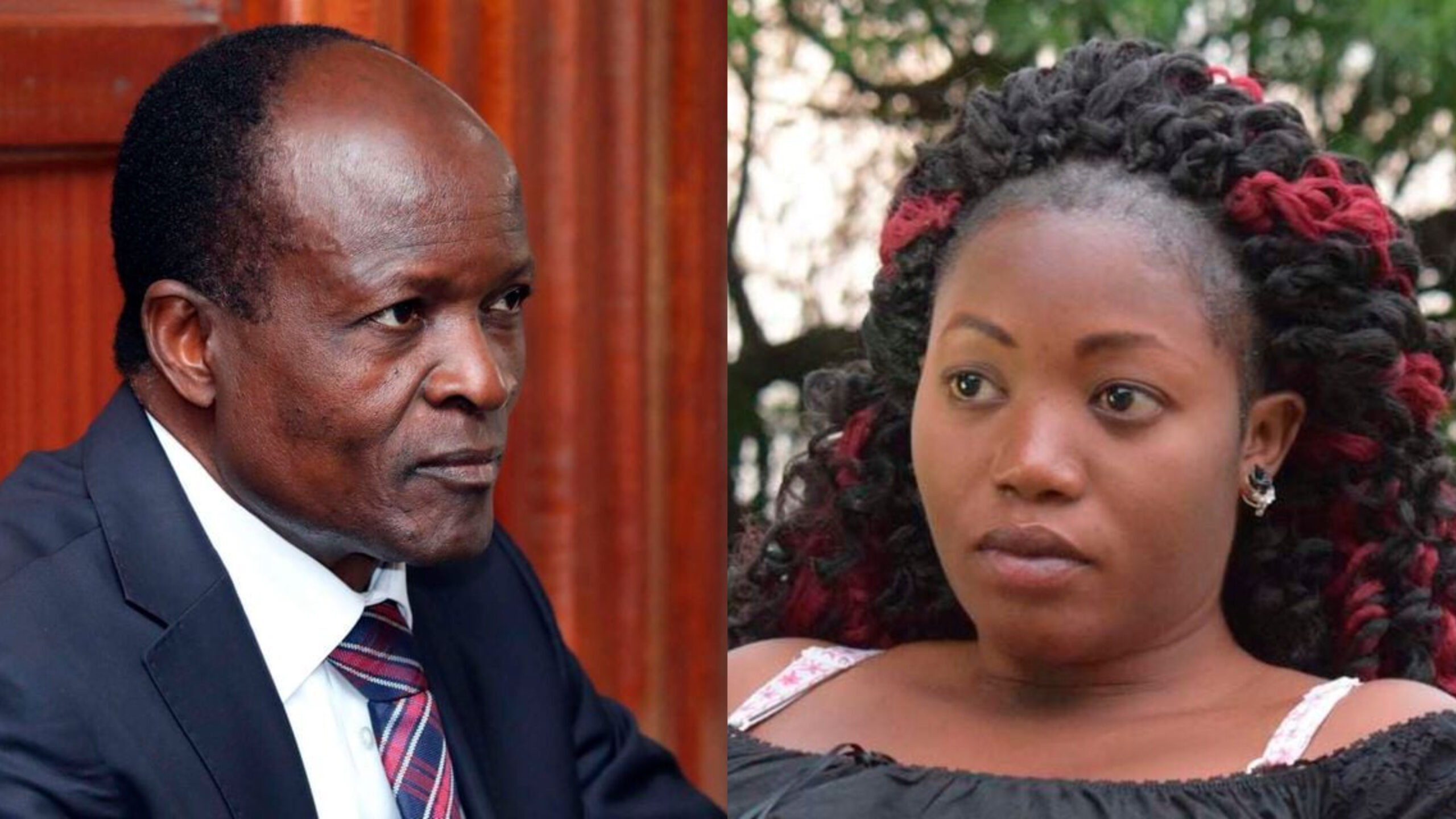
NAIROBI — Seven years after the savage killing of a 26-year-old pregnant university student sent shockwaves across Kenya, the Office of the Director of Public Prosecutions has delivered what it calls an iron-clad case against former Migori Governor Zacharia Okoth Obado, painting him not merely as a man with motive, but as the architect of one of the country’s most chilling political murders.
In final submissions filed before the Milimani High Court on Friday, the prosecution placed Obado squarely at the centre of the September 2018 killing of Sharon Otieno, a former Rongo University student who was abducted, sexually assaulted, stabbed eight times, strangled and dumped in a thicket in Oyugis, Homa Bay County. She was 28 weeks pregnant at the time of her death, carrying Obado’s child.
The prosecution’s case, led by Senior Assistant Director of Public Prosecutions Gikui Gichuhi, rested on a simple but devastating proposition: that Sharon Otieno had become a political liability that Obado could not afford, and that he used the machinery around him to eliminate her.
“The evidence paints a coherent picture of the accused acting in concert, with a shared intention to eliminate Sharon Otieno and silence a key witness to avoid political fallout, reputational harm and embarrassment,” Gichuhi submitted before presiding judge Cecilia Githua.
A Web of Trusted Insiders
What makes the prosecution’s narrative particularly damning is the structure it attributes to the alleged murder plot. Obado did not act alone, the State argues. He allegedly deployed his most trusted operatives: personal assistant Michael Juma Oyamo and close associate Caspal Obiero. These were not strangers hired off the street. These were men embedded in Obado’s inner circle, men who knew his secrets and, prosecutors allege, were willing to act on his behalf.
Both Oyamo and Obiero were allegedly present at Graca Hotel in Rongo town on the evening of September 3, 2018, the night Sharon and a protected witness identified only as XYZ were lured into a waiting vehicle and abducted. The vehicle used in the abduction, registration number KCL 418K, was linked to Obiero’s household and driven by a close associate of the accused persons.
“They were not casual employees; they were trusted insiders,” the prosecution stated, underlining what it described as the hallmark of a joint criminal enterprise. “The actions of the three accused persons were complementary and directed toward silencing the deceased and neutralising XYZ.”
The Motive: Pregnancy, Media, and Political Survival
The prosecution’s theory of motive is as straightforward as it is devastating. Sharon, according to the State, had threatened to go public with her relationship with the then-sitting governor. She had already made contact with the media, and XYZ, a journalist, was actively pursuing the story. For a governor with political ambitions and a public image to protect, the exposure of an extramarital affair and an out-of-wedlock pregnancy was, prosecutors argue, an existential threat.
“The evidence shows that Sharon Otieno’s pregnancy and engagement with XYZ posed a real and imminent threat to the first accused’s public standing,” the prosecution submitted. “He was the ultimate beneficiary of the offence.”
The prosecution brought before the court 42 witnesses and 81 exhibits, including forensic reports, phone data analysis, cybercrime investigations and eyewitness accounts to build what it described as a complete, interlocking picture of premeditated murder. Two used condoms were among items recovered from the scene where Sharon’s mutilated body was found.
Gichuhi told the court the killing was not a spontaneous act of passion but a calculated operation, planned, facilitated, executed and subsequently concealed by all three accused persons acting together.
Obado Fires Back: “Not A Shred of Direct Evidence”
Obado, never one to shrink from confrontation, came before the court with submissions that were as forceful as they were emotional. Represented by Senior Counsel Kioko Kilukumi, the former governor denied any involvement in Sharon’s killing, insisting that being her lover and the father of her unborn child was the only basis upon which he had been dragged into the dock.
“I did not kill Sharon Otieno. I did not conspire with my two co-defendants or anyone to kill the late Sharon Otieno. I did not procure anybody to kill the late Sharon Otieno,” Obado told the court in his own voice, a rare moment of raw denial in a trial that has wound through years of legal argument.
Through his legal team, Obado maintained that the prosecution had built its case on speculation, suspicion and arm-chair theories that fell far short of the standard of proof beyond reasonable doubt. He argued that his call data records confirmed he was in Nairobi on the night in question, preparing for an official trip to Rwanda, and that no direct evidence had ever been placed before the court linking him to the planning, procurement or execution of the killing.
“No evidence was ever adduced to demonstrate that the first accused knew of a meeting at Graca Hotel, Rongo, at the material time,” his submissions read. “No evidence was adduced that the accused hired, procured or otherwise contracted the killers directly or indirectly.”
Kilukumi went further, alleging that the vehicle presented by the prosecution as the abduction vehicle had been planted by police, and that investigators had deliberately destroyed or avoided obtaining independent evidence that would have verified or challenged their own theory. The defence also alleged that the driver’s mobile phone had been falsely reported as switched off to prevent call data from revealing his actual location.
“Regrettably, instead of pursuing objective, independent, scientific and professional criminal investigations, the investigators were consumed by suspicions and devoted their efforts to proving those suspicions correct,” Obado submitted.
The Weight of Seven Years
The Sharon Otieno case has cast a long shadow over Kenyan public life since that September night in 2018. It surfaced during a period of heightened scrutiny of political impunity, prompted national debate about the safety of women who dare to challenge powerful men, and has remained a touchstone for accountability advocates ever since.
Obado, who served as Migori Governor from 2013 to 2022, acknowledged that he had a romantic relationship with Sharon and that he had financially supported her, sending her Sh100,000 as recently as August 17, 2018, just 16 days before her death. He also acknowledged an agreement to purchase her land in Homa Bay and build her a three-bedroom house. He maintained, however, that these gestures reflected his commitment to her welfare, not guilt over her killing.
The court had previously ruled that all three accused persons, Obado, Oyamo and Obiero, had a case to answer after the prosecution closed its evidence. That ruling was itself significant, signalling that the evidence presented had met the threshold required to demand an explanation from the accused.
With both the prosecution and defence having closed their cases and filed final submissions, the matter now rests entirely in the hands of Justice Cecilia Githua. The court is set to reconvene on March 18, 2026, when procedural matters will be finalised and a formal date set for delivery of the judgment.
For Sharon Otieno’s family, for accountability watchers, and for a Kenyan public that has followed this case through years of hearings, adjournments and revelations, that date cannot come soon enough. The question of whether Obado, once one of the country’s most powerful county bosses, will be held criminally responsible for the death of a young woman carrying his child is one that will define, for many, whether Kenya’s justice system can reach even the most politically connected.
The prosecution’s closing message to the court was unambiguous: “There is no reasonable doubt.”
Obado’s answer was equally unequivocal: “The prosecution has miserably failed.”
Between those two positions, Justice Githua must now decide.
This story was compiled from court submissions and proceedings at the Milimani High Court, Nairobi.
Kenya Insights allows guest blogging, if you want to be published on Kenya’s most authoritative and accurate blog, have an expose, news TIPS, story angles, human interest stories, drop us an email on [email protected] or via Telegram


KETRACO CEO Advert Marred By Controversies As Fears Grow That Kipkemoi Kibias Is A Predetermined Candidate

I Will Bribe Every Judge in Town- MP Jack Wamboka

KNH ON THE BRINK: How Corruption, Revenue Plunder and State Neglect Are Destroying Kenya’s Flagship Hospital

Receivers In TransCentury Sh6B KRA Tax Arrears Are Biased And Must Be Removed, COFEK Claims

The Man Behind the Badge: How Prof. Erastus Kanga Turned Kenya’s Premier Wildlife Agency into a Theatre of Corruption, Fear and Impunity

City Lawyer Conrad Maloba Arrested Over Fake Ambulance Fraud

How Little Known KwikBet Leveraged Stolen Kenyans Data To Build Its Empire

THE FIXER IN THE FILE ROOM: How Parliamentary Health Committee Clerk Adan Gindicha Cleared Mediheal Hospital of Organ Harvesting Claims Despite Mounting Evidence

Nairobi Freezes Binance Accounts in Sweeping Anti-Fraud Crackdown as Global Scandal Record Haunts World’s Largest Crypto Exchange

EXCLUSIVE: Odibets Bought Stolen Data From Millions Of Kenyans

Forged Legacy: How Kaplan and Stratton’s Peter Gachuhi Is Accused of Faking a Top AG’s Will as State Claims Damning Evidence

Inside Details Of Sh78 Billion Fraud in KPC’s Mombasa-Nairobi Line 5 Pipeline Project That Has Continued To Bleed The Country

The Lawyer at the Centre of Kenya’s State Machine: Eric Gumbo, the AG’s Bypassed Office, and the Half-Billion-Shilling Question

Sold And Abandoned: How Diageo and Asahi Are Locking Kenya’s EABL Minority Shareholders Out Of East Africa’s Biggest Corporate Heist

Poison at the Pump: How Kenya’s Fuel Marking System May Be Exposing Millions to Cancer-Causing Chemicals

How Firm Linked To Mombasa Tycoon Jaffer Was Allowed To Import Fuel At Bloated Price And Set To Make Billions In Profits From Iranian War Crisis In Kenya

THE ZAKHEM-ECOBANK MACHINE: How Kenya’s Courts Were Weaponised to Drain a State Corporation of Over KES 78 Billion

The Teflon Company: How Gulf Energy’s Insiders Built Billions on Kenya’s Fuel, and Walked Away Clean

Mombasa Lawyer Exposed In Sh600 Million Alleged Double-Dealing Diani Property Transaction

Kenyan Motorists Stare At Possible Engine Damage And Heavy Losses As Report Confirms Substandard Fuel In Circulation
-
 Business2 weeks ago
Kenyan Motorists Stare At Possible Engine Damage And Heavy Losses As Report Confirms Substandard Fuel In Circulation
-

 Business1 week ago
THE FUEL CABAL: How Mohamed Jaffer, a KPC Insider, and a Ministry Official Are Alleged to Have Manufactured Kenya’s Worst Petroleum Crisis in Three Years, While Kenyans Burned
-

 Business2 weeks ago
Getting Away With It: How Kenya’s Most Politically Connected Fuel Company Gulf Energy Is Pocketing Billions While Rival Firms Face Public Wrath
-

 Business2 weeks ago
How Safaricom Could Sell You Out To KRA
-
 Business5 days ago
Nairobi Freezes Binance Accounts in Sweeping Anti-Fraud Crackdown as Global Scandal Record Haunts World’s Largest Crypto Exchange
-
 Investigations5 days ago
EXCLUSIVE: Odibets Bought Stolen Data From Millions Of Kenyans
-

 Business2 weeks ago
Sugar Empire in the Dock: How Kibos’s Mombasa Refinery Landed 1,481 Phantom Tonnes at the Port — and Why Nine Government Agencies Are Now Watching Its Every Move
-

 Investigations6 days ago
THE BRAZEN RETURN: Triton Thief Yagnesh Devani, Who Pillaged Kenya of Sh7.6 Billion and Fled, Now Asks the Same Courts He Escaped to Restore His Stolen Wealth