
Business
Treasury’s Sh40 Billion Safaricom Gamble Could Cost Kenya Trillions, Auditor Warns
Gathungu flags ‘significant risk’ as government trades perpetual goldmine for quick cash

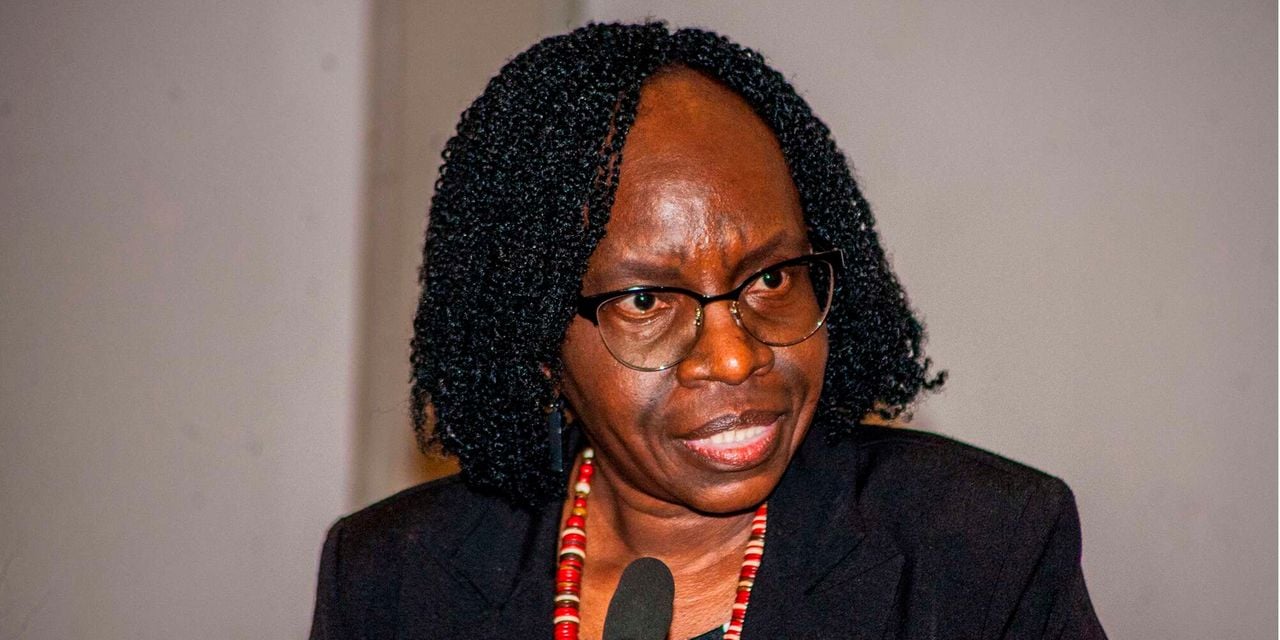
The Kenyan government stands accused of mortgaging the nation’s financial future for immediate cash as Auditor General Nancy Gathungu delivers a scathing assessment of the controversial Safaricom dividend deal that could see taxpayers lose out on trillions of shillings over the coming decades.
In explosive submissions to Parliament, Gathungu has warned that the Treasury’s plan to accept a one-off payment of Sh40.2 billion from telecoms giant Vodacom instead of receiving future dividends represents a dangerous conversion of Kenya’s most reliable revenue stream into what she terms an arbitrary lump sum that significantly undervalues long-term returns.
The warning comes as the government pushes ahead with plans to offload a 15 percent stake in Safaricom to Vodacom at Sh34 per share, generating Sh204 billion in gross proceeds. However, the devil lies in the details of what happens to the remaining 20 percent government stake.
Under the proposed structure, Vodacom would make an upfront payment of Sh40.2 billion to compensate the government for future dividends from its residual shareholding. But Gathungu argues this arrangement warrants intense scrutiny given Safaricom’s profit-generating prowess.
The telecommunications behemoth has historically delivered annual dividends of between Sh15 billion and Sh20 billion to the government when it held a 35 percent stake. Even with the reduced 20 percent holding, proportionate dividend flows would still represent substantial recurring income for decades to come.
“This arrangement effectively forfeits long-term returns that would otherwise accrue to the government’s remaining stake,” Gathungu told the joint parliamentary committees on Finance and National Planning, and on Debt and Privatisation. “The Sh40.2 billion payment represents only a few years of potential dividend income.”
The mathematics paint a troubling picture for Kenya’s fiscal future. If Safaricom continues generating dividends at historical rates, the government’s 20 percent stake could reasonably be expected to yield between Sh8 billion and Sh12 billion annually. Over a 20-year period, that translates to between Sh160 billion and Sh240 billion, potentially reaching Sh600 billion over 50 years without accounting for inflation or growth in Safaricom’s profitability.
Gathungu has demanded that Treasury disclose exactly how it arrived at the Sh40.2 billion figure and how many years of dividends were factored into the calculation. If no definite period was used, she insists the valuation should be based on perpetual cash flows, reflecting the reality that dividends from a profitable entity like Safaricom are expected to continue indefinitely.
“Use of the perpetual cash flow approach ensures the government captures the true economic value of an ongoing dividend stream rather than accepting an arbitrary lump sum,” the Auditor General stated in her written submissions.
The concerns extend beyond the dividend arrangement. Gathungu has also questioned whether the Sh34 per share price, despite representing a 17 percent premium over the six-month volume-weighted average, truly reflects optimal value for such a strategic national asset, particularly given the absence of competitive bidding.
She has called for additional valuation benchmarks including Discounted Cash Flow analysis, Comparable Company Analysis, and simulations of what the shares might fetch through a public tender or Initial Public Offering.
The government currently owns 35 percent of Safaricom, with the total stake valued at between Sh280 billion and Sh300 billion based on current market prices. The proposed sale would reduce this to 20 percent while Vodacom, which already holds the majority stake, would further consolidate its control.
In another red flag, Gathungu has warned that the Sh204 billion proceeds must be ring-fenced to prevent diversion to recurrent expenditure, citing previous instances where funds from Eurobond proceeds were misallocated. She noted that while the government claims the money will fund critical infrastructure including energy projects, roads, water systems, airports and digital transformation, the sessional paper makes no mention of the proposed Sovereign Wealth Fund or National Infrastructure Fund.
“Without a clear legal and governance framework, there is a risk of misallocation or opaque utilisation of the proceeds, which could compromise fiscal discipline and accountability,” Gathungu cautioned, insisting that enabling legislation must be enacted before any funds are credited to such vehicles.
The Kenya Bankers Association has added its voice to growing concerns, recommending that five percent of the shares under divestiture be reserved for public purchase to broaden ownership of the national asset and deepen capital market participation.
Parliament now faces mounting pressure to scrutinize a deal that critics have already labeled a monumental mistake in terms of national sovereignty. With regulators including the Communications Authority, Central Bank, Nairobi Securities Exchange and Competition Authority expected to maintain heightened vigilance over Safaricom’s operations post-sale, the question remains whether Kenya is selling off its most valuable asset at fire-sale prices while simultaneously trading future prosperity for immediate cash to plug budget holes.
The joint parliamentary committees are currently seeking public views on the transaction, but with the government eager to conclude the deal and access the proceeds, time may be running out for Kenya to reconsider what could prove to be one of the most consequential financial decisions in the nation’s history.
Kenya Insights allows guest blogging, if you want to be published on Kenya’s most authoritative and accurate blog, have an expose, news TIPS, story angles, human interest stories, drop us an email on [email protected] or via Telegram


Blocked: How Mombasa Tycoon Ashok Doshi Has Stopped Imperial Bank Depositors From Getting Their Money

SEX SCANDAL ROCKS KISUMU POLYTECHNIC: Top Officials Linked as Secretary Accuses New Council Chairman of Naivasha Advances

Why Ruto’s Favourite Candidate Adan Mohammed Could Be Locked Out of the KRA Top Job

DCI Arrests Woman in Sh55.7 Million Gold Fraud Targeting American Citizen in Nairobi

Court Confirms Safaricom Customers Data Was Sold To Betting Companies In Seven-Year Cover-Up

Paybill 585555: How Airtel Kenya’s Interoperability Gateway Became A Criminal Pipeline Draining Millions From Unsuspecting M-Pesa Users

The Man Who Starved Kenya’s Voice

The Rot Inside Absa: How Bank Insiders Are Looting Nairobi’s Customers

The President’s Helicopter: How Ruto’s Aviation Empire Lands a Historic Airbus Milestone While His Government Writes the Tax Code

“TikTok Who? YouTube Sorry. A Kenyan-Built Platform Just Dropped—and 20 African Ministers Showed Up To Launch It.”

How Did a Sh468K KRA Salary Allegedly Turn Into Sh30 Billion? Questions Deepen Over Commissioner George Obel and Ciala Resort Owner’s Wealth

Nairobi Freezes Binance Accounts in Sweeping Anti-Fraud Crackdown as Global Scandal Record Haunts World’s Largest Crypto Exchange

THE UNTOUCHABLE CLERK: How Fatuma Mwalupa Allegedly Turned Kwale Assembly Into a Personal Treasury and Outsmarted Scrutiny

The Man Behind the Badge: How Prof. Erastus Kanga Turned Kenya’s Premier Wildlife Agency into a Theatre of Corruption, Fear and Impunity

THE BRAZEN RETURN: Triton Thief Yagnesh Devani, Who Pillaged Kenya of Sh7.6 Billion and Fled, Now Asks the Same Courts He Escaped to Restore His Stolen Wealth

Green Gold, Rotten Roots: How Kenya’s Biggest Avocado Firms Hijacked a Sh5.8 Billion Harvest Ban

Why the April 21 Flopped Protests Expose Kenya’s Rudderless Opposition
Why Ruto’s Favourite Candidate Adan Mohammed Could Be Locked Out of the KRA Top Job

KETRACO CEO Advert Marred By Controversies As Fears Grow That Kipkemoi Kibias Is A Predetermined Candidate

THE PHANTOM COVER: Unlicensed Broker Vanishes With Sh42M, Hussein Mohammed Fingered In The Alleged CHAN 2024 Insurance Scandal
-
 News1 day ago
Why Ruto’s Favourite Candidate Adan Mohammed Could Be Locked Out of the KRA Top Job
-

 Business2 weeks ago
Safaricom’s Sh1.4 Billion Reckoning: How Kenya’s Most Profitable Company Stole a Man’s Idea and Got Caught
-
 Investigations1 week ago
Denial Under Duress: The Untold Collapse Threatening David Lagat’s DL Group’s Empire
-
 Business2 weeks ago
THE INSURER THAT TOOK YOUR PREMIUM AND FORGOT YOUR NAME: How ICEA Lion Left a Client Begging for Sh7.8 Million Across Four Months
-
 Business5 days ago
The Rot Inside Absa: How Bank Insiders Are Looting Nairobi’s Customers
-

 Business2 weeks ago
Bush Air Safaris Founder John Ndiritu Risks Losing Property Over Disputed Loan Claim
-
 Business6 days ago
The President’s Helicopter: How Ruto’s Aviation Empire Lands a Historic Airbus Milestone While His Government Writes the Tax Code
-

 Africa1 week ago
Stung By West Africa Rejections, France Courts Rest Of Continent at Kenya Summit